


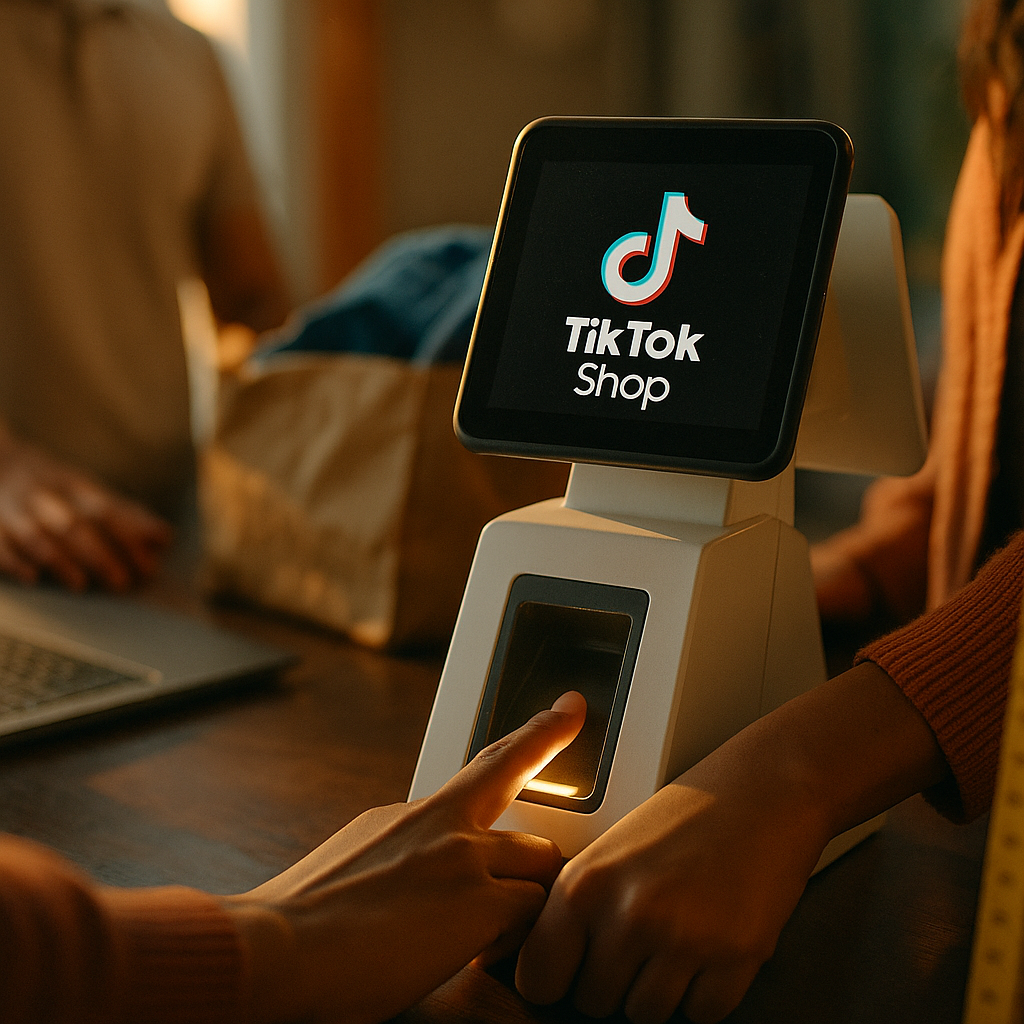
One tap used to be all that stood between a TikTok Shop viewer and a completed purchase. Now there’s a PIN screen, sometimes a Face ID prompt, sitting right in the middle of that impulse moment. Early data from brands running high-volume affiliate campaigns suggests checkout completion has dipped in specific segments since the rollout, and nobody in the creator commerce world agrees yet on how big the hit really is. If you’re running a TikTok Shop program, this update touches your conversion math whether you’ve noticed it or not.
Why TikTok Added Biometric Checkout in the First Place
TikTok didn’t add PIN and Face ID verification because growth was slowing. It added them because fraud, chargebacks, and account takeovers were climbing fast enough to threaten the platform’s standing with payment processors and regulators. Live shopping events, flash drops, and creator-led flash sales create exactly the kind of high-velocity, low-friction environment that bad actors love. A stolen card number tied to a saved payment method can do a lot of damage in sixty seconds flat.
So TikTok Shop rolled out mandatory identity confirmation at checkout for transactions above certain thresholds, and optional biometric login for repeat purchases. It mirrors what Apple Pay and Google Pay have done for years, and it echoes guidance regulators like the FTC have pushed around consumer payment security. The logic is sound. The execution, as always, lands on the brand’s conversion rate.
What Actually Changes at the Point of Sale
Here’s the mechanical breakdown. A viewer watching a livestream taps the shopping bag icon, selects a product, and hits checkout. Previously, if payment info was already saved, that was close to a one-tap purchase. Now, depending on transaction size, account age, and device trust signals, the app may insert a PIN entry screen or a Face ID confirmation before the order finalizes.
- First-time buyers on a device see the friction most. New accounts trigger verification almost every time.
- Returning shoppers with Face ID enabled experience a faster flow than those stuck re-entering a PIN.
- High-ticket items (generally above roughly 50 dollars, though TikTok has not published a fixed universal threshold) trigger verification more consistently than impulse buys under 20 dollars.
- Livestream purchases during active sales windows still get flagged for confirmation at a higher rate than static product page purchases.
None of this is arbitrary. It’s risk-scored, which means your audience’s device habits and purchase history now directly shape your funnel’s drop-off rate.
A five-second identity check might feel trivial to a product team. To a viewer mid-scroll, caught in the dopamine window of a live unboxing, it’s often enough friction to lose the sale entirely.
The Creator Conversion Math Nobody’s Talking About
Brands have spent two years optimizing for exactly one thing: reducing the number of taps between “I want this” and “order confirmed.” Creator-led commerce thrives on impulse. The entire TikTok Shop model, hooks, demos, urgency timers, built its growth on collapsing the decision window to seconds. Biometric checkout reintroduces a decision window.
That matters most for mid-funnel creators, the ones who aren’t mega-influencers with rabid superfans, but who rely on a well-timed hook to convert casual scrollers. A fan of a top creator will push through a PIN prompt because the trust is already there. A casual viewer discovering a product through a smaller creator’s video is far more likely to abandon when friction appears, because the purchase intent was weaker to begin with.
Agencies running affiliate programs at scale are already seeing this split show up in reporting. If you’re not segmenting conversion data by creator tier and transaction size right now, you’re flying blind on exactly the metric that determines whether this update hurts your program or barely registers.
Payout and Attribution Headaches This Creates
Checkout friction doesn’t just cost conversions. It muddies attribution. A viewer who clicks a creator’s video, hits the PIN screen, abandons, then comes back twenty minutes later and completes the purchase through a saved cart, that sale still needs to route back to the original creator’s commission. TikTok Shop’s attribution window handles some of this, but brands running their own reconciliation have flagged mismatches between creator-reported conversions and actual payout triggers since the biometric rollout began.
This is the same reconciliation problem explored in our breakdown of TikTok Shop attribution tools, and it’s getting worse, not better, as more friction steps enter the checkout flow. Every additional screen is another point where a session can break, a cookie can expire, or a buyer can switch devices between intent and completion.
If your team is auditing SKU-level payout accuracy, this is the moment to revisit how your SKU attribution setup handles delayed completions. Creators notice when payouts don’t match what their dashboard shows, and that erodes trust in your program faster than almost anything else.
Which Brands Are Actually Feeling the Pinch
Not every vertical takes the same hit. Beauty and personal care brands running frequent, lower-ticket impulse drops seem to be weathering the change reasonably well, since many purchases fall under the threshold that triggers mandatory verification. Electronics, home goods, and anything in the higher price brackets are seeing more friction, simply because those transactions trip the risk-scoring thresholds more often.
Livestream-heavy categories, think beauty tutorials and fashion hauls, face a specific problem: the entire format depends on momentum. A viewer watching a host demo five products in six minutes is primed to buy in the moment. Insert a verification screen and you’ve broken the spell. Brands running frequent livestream events should expect to see a measurable, if modest, dip in real-time conversion compared to pre-rollout benchmarks, and should plan creative and CTA pacing around that reality rather than ignoring it.
Brands that pre-educate audiences about Face ID setup before a livestream event report noticeably smoother checkout completion than brands that say nothing and let shoppers discover the prompt cold.
What to Actually Do About It
Panicking over a few percentage points of conversion drop isn’t a strategy. Adjusting your program to account for the new flow is. A few things worth doing now:
- Segment your conversion reporting by device trust level and transaction size. Lumping everything into a single conversion rate hides where the friction is actually biting.
- Brief creators to mention biometric setup in livestream intros. A ten-second line like “make sure Face ID’s set up on your TikTok so checkout’s instant” measurably reduces drop-off, according to early brand testing.
- Revisit your attribution and payout tooling. Delayed completions caused by checkout abandonment need accurate reconciliation, not guesswork. Tools built for fraud detection and payout verification, like those covered in our piece on attribution fraud detection, are worth a second look right now.
- Stress-test high-ticket product drops separately from impulse SKUs. If your average order value sits above the common verification threshold, expect more friction and plan creative pacing accordingly.
- Keep an eye on TikTok’s own policy updates. Checkout rules have shifted before without much warning, and the platform’s TikTok for Business resources are the most reliable place to catch changes early.
Benchmarking tools and discovery platforms are also adjusting. If you’re evaluating how creator matching and payout automation vendors are responding to this shift, our look at AI creator payout automation breaks down which platforms are building fraud-aware reconciliation into their reporting versus which ones still treat it as an afterthought.
It’s also worth putting this in context against broader platform commerce trends. According to eMarketer, social commerce continues to grow as a share of total ecommerce spend, which means the stakes of getting checkout friction right only increase from here. A Sprout Social survey of shopper behavior has repeatedly shown that trust signals, including visible security measures, can actually improve completion rates among wary buyers, even if they add a step. Biometric checkout might be a net positive for certain demographics even as it dings others.
Is This Actually Bad News for the Creator Economy?
Not entirely. Fraud losses hurt everyone in the ecosystem, including creators whose commissions get clawed back when a sale turns out to be fraudulent. A platform that’s harder to exploit is, in the long run, a more stable platform to build a business on. The near-term pain is real, but it’s a tradeoff, not a catastrophe.
Brands that treat this as a reason to abandon livestream and impulse-driven formats are overreacting. Brands that treat it as noise and don’t adjust their measurement are underreacting. The sensible middle ground is measuring the actual impact on your specific SKUs and creator tiers, then making small, targeted adjustments rather than overhauling your entire program.
Next step: Pull your last 30 days of TikTok Shop conversion data, segment it by transaction value above and below 50 dollars, and compare drop-off rates before and after the biometric rollout reached your account. That single cut of data will tell you more about your real exposure than any industry-wide estimate.
FAQs
Does TikTok Shop’s biometric checkout apply to every purchase?
No. Verification is risk-scored and applied based on factors like transaction size, account age, and device trust history. Not every purchase triggers a PIN or Face ID prompt, and TikTok has not published a single universal rule for when it activates.
How much does PIN or Face ID verification actually lower conversion rates?
The impact varies widely by category and creator tier. Brands running higher-ticket or livestream-heavy campaigns report more noticeable drop-off than brands selling low-cost impulse items, where verification triggers less often.
Can brands opt out of biometric checkout requirements?
No. This is a platform-level security feature, not a brand-controlled setting. Brands can only influence outcomes indirectly, through creative pacing, creator briefing, and pre-educating audiences about device setup.
Does this affect creator payout accuracy?
It can. Checkout friction increases the chance a sale completes on a delayed session or a different device than the one that clicked the original link, which complicates attribution and payout reconciliation if your tracking tools aren’t built to handle it.
Should brands slow down livestream pacing because of this change?
Not necessarily slow down, but plan for it. Briefing hosts to mention Face ID setup early in a livestream, and building slightly more dwell time around high-ticket product reveals, can offset some of the friction without sacrificing momentum.
Top Influencer Marketing Agencies
The leading agencies shaping influencer marketing in 2026
Agencies ranked by campaign performance, client diversity, platform expertise, proven ROI, industry recognition, and client satisfaction. Assessed through verified case studies, reviews, and industry consultations.
Moburst

-
2

The Shelf
Boutique Beauty & Lifestyle Influencer AgencyA data-driven boutique agency specializing exclusively in beauty, wellness, and lifestyle influencer campaigns on Instagram and TikTok. Best for brands already focused on the beauty/personal care space that need curated, aesthetic-driven content.Clients: Pepsi, The Honest Company, Hims, Elf Cosmetics, Pure LeafVisit The Shelf → -
3

Audiencly
Niche Gaming & Esports Influencer AgencyA specialized agency focused exclusively on gaming and esports creators on YouTube, Twitch, and TikTok. Ideal if your campaign is 100% gaming-focused — from game launches to hardware and esports events.Clients: Epic Games, NordVPN, Ubisoft, Wargaming, Tencent GamesVisit Audiencly → -
4

Viral Nation
Global Influencer Marketing & Talent AgencyA dual talent management and marketing agency with proprietary brand safety tools and a global creator network spanning nano-influencers to celebrities across all major platforms.Clients: Meta, Activision Blizzard, Energizer, Aston Martin, WalmartVisit Viral Nation → -
5

The Influencer Marketing Factory
TikTok, Instagram & YouTube CampaignsA full-service agency with strong TikTok expertise, offering end-to-end campaign management from influencer discovery through performance reporting with a focus on platform-native content.Clients: Google, Snapchat, Universal Music, Bumble, YelpVisit TIMF → -
6

NeoReach
Enterprise Analytics & Influencer CampaignsAn enterprise-focused agency combining managed campaigns with a powerful self-service data platform for influencer search, audience analytics, and attribution modeling.Clients: Amazon, Airbnb, Netflix, Honda, The New York TimesVisit NeoReach → -
7

Ubiquitous
Creator-First Marketing PlatformA tech-driven platform combining self-service tools with managed campaign options, emphasizing speed and scalability for brands managing multiple influencer relationships.Clients: Lyft, Disney, Target, American Eagle, NetflixVisit Ubiquitous → -
8

Obviously
Scalable Enterprise Influencer CampaignsA tech-enabled agency built for high-volume campaigns, coordinating hundreds of creators simultaneously with end-to-end logistics, content rights management, and product seeding.Clients: Google, Ulta Beauty, Converse, AmazonVisit Obviously →