


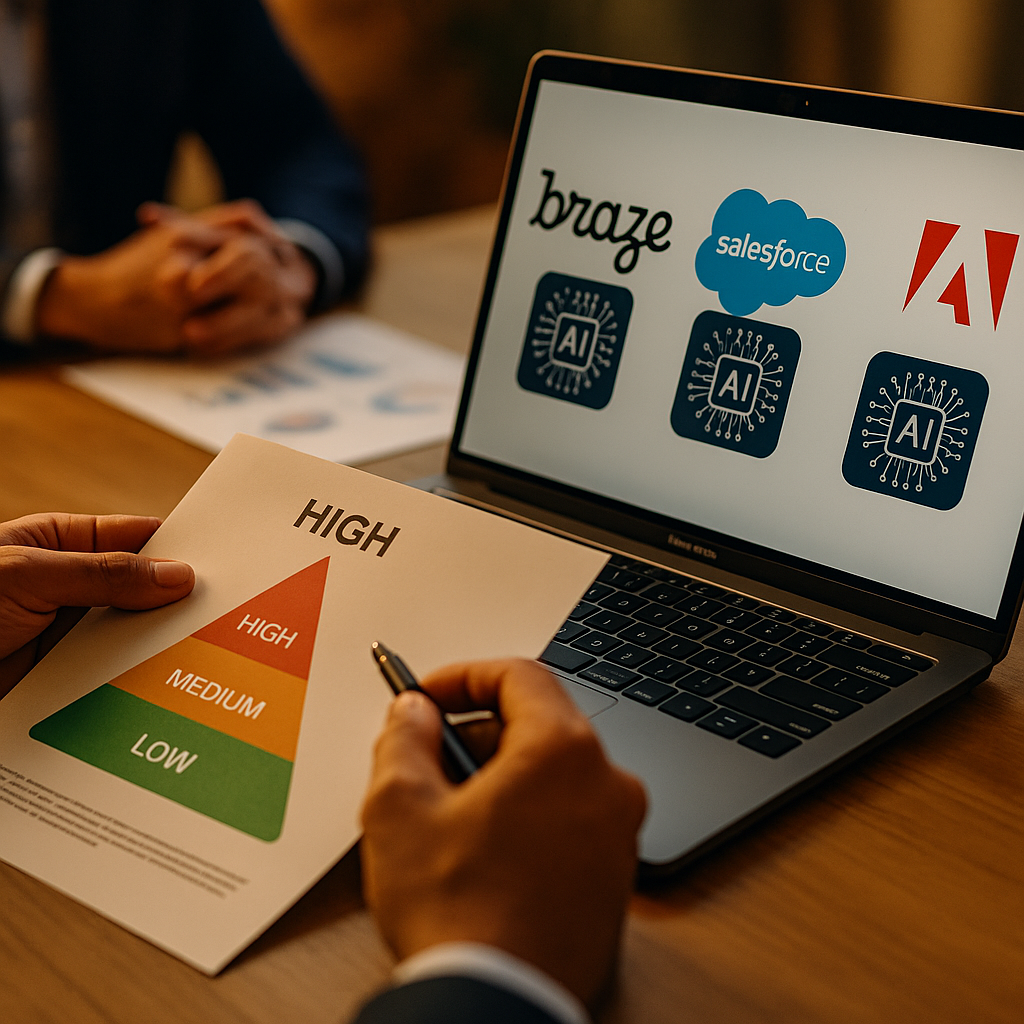
Gartner estimates that by the end of this year, over 60% of customer engagement decisions at large enterprises will involve some form of automated decisioning. Creator marketing is next in line. The question brands are quietly asking in procurement meetings: can an AI decisioning suite actually run creator journeys without a human catching the mistakes before they become PR problems?
Braze, Salesforce, and Adobe have all rushed AI decisioning layers into their platforms over the past eighteen months, each claiming it can orchestrate creator touchpoints the way it already orchestrates email and push. But creator journeys carry risks that a loyalty email never will: FTC disclosure rules, brand safety exposure, contract terms tied to individual humans who post opinions in real time. Comparing these suites purely on automation speed misses the point. The real comparison is accuracy, auditability, and how much risk you’re willing to hand to a model.
What “AI Decisioning” Actually Means Here
Strip away the marketing language and decisioning suites do three things: score a next-best-action, time it, and execute it without waiting for a marketer to click send. Applied to creator programs, that means a platform deciding which creator content to push into a paid journey, when to trigger a payout, or which audience segment gets a specific creator’s video next. It is not creator discovery. It is not content generation. It is the orchestration layer sitting between your creator data and your customer’s inbox or feed.
That distinction matters because vendors blur it constantly. A platform that recommends a creator is doing matching, which we’ve covered in our look at AI creator discovery databases. A platform that decides, in real time, whether to send a creator’s content to a customer segment and then fires the payout trigger is doing decisioning. The three suites below all claim the second capability, with varying degrees of honesty about how “autonomous” that process really is.
Braze: Fast, Opinionated, Thin on Vetting
Braze built its reputation on real-time customer engagement, and its AI decisioning layer (branded around Sage AI and Canvas Flow automation) extends that speed into creator content distribution. If a creator’s UGC clip is tagged and ingested, Braze can slot it into a live customer journey within minutes, picking the variant that its model predicts will convert best for a given segment.
The strength is undeniable: latency is low, and marketers running high-velocity lifecycle campaigns like the speed. The weakness, which we examined in depth in our piece on vetting accuracy before autonomous sends, is that Braze’s model does not natively verify whether a creator’s content still complies with disclosure requirements or contract usage windows before it fires. It assumes the content was clean when ingested and never checks again. For brands running always-on creator libraries where usage rights expire or get renegotiated, that’s a live risk, not a theoretical one.
Speed without a compliance checkpoint isn’t efficiency. It’s just risk moving faster.
Salesforce: Enterprise Guardrails, Slower Cycle Time
Salesforce’s Einstein-driven decisioning (now wrapped into its broader Agentforce push) takes the opposite approach. It layers creator journey automation on top of Salesforce’s existing consent management and data governance stack, which means every automated decision passes through the same permission and compliance checks that govern a brand’s regular CRM data. That’s reassuring if you’re a regulated vertical like financial services or healthcare, where a mistimed influencer send can trigger a regulatory headache, not just a bad tweet.
The tradeoff is cycle time. Einstein’s decisioning engine is built for accuracy over speed, which means creator content often sits in a review queue longer than marketers expect from a platform billed as “AI-powered.” Teams coming from faster point solutions sometimes find this frustrating, especially if they’re used to the near-instant triggers available in platforms built specifically for influencer workflows, like the tools discussed in our reporting API requirements piece. Salesforce isn’t trying to be the fastest. It’s trying to be the one that doesn’t get your company a letter from the FTC.
Adobe: Content-Rich, Creator-Thin
Adobe’s decisioning suite, built around Adobe Experience Platform and its Sensei GenAI layer, has the deepest content intelligence of the three. It can analyze a creator asset’s visual composition, brand lift potential, and historical performance pattern with more nuance than Braze or Salesforce. If your creator strategy leans heavily on repurposing UGC into paid social and CTV, Adobe’s content scoring genuinely outperforms.
Where it falls short is creator-specific context. Adobe’s decisioning models were built for content broadly, not for the particulars of creator relationships: usage rights expiration, exclusivity clauses, FTC-mandated disclosure tags, payout triggers tied to performance thresholds. Brands often end up building a parallel compliance layer manually because Adobe doesn’t natively track it. That’s an operational cost that doesn’t show up in the sales demo but shows up fast in your first quarterly audit.
Comparing the Three on the Things That Actually Matter
- Decisioning latency: Braze is fastest, Adobe is mid-pack, Salesforce is deliberately slower due to governance checks.
- Compliance and disclosure handling: Salesforce leads, Adobe requires manual layering, Braze has the thinnest native coverage.
- Content quality scoring: Adobe leads clearly, thanks to its creative intelligence heritage.
- Creator-specific data model (contracts, payout triggers, exclusivity): None of the three handle this natively as well as dedicated creator platforms do.
- Total cost of ownership: All three require significant implementation investment; none is a plug-and-play creator decisioning tool out of the box.
That last point is the one procurement teams underweight. These are general-purpose customer engagement platforms with creator features bolted on, not creator-native systems. If your influencer program is a small slice of a much larger lifecycle marketing operation, that bolt-on approach might be fine. If creator spend is a primary growth lever, you’re likely going to need a specialized layer sitting alongside whichever suite you choose, similar to the pattern we’ve seen with enterprise creator platforms like Grin and CreatorIQ.
The Hidden Cost: Stack Fragmentation
Here’s what nobody puts in the vendor pitch deck. Bolting an AI decisioning suite onto a creator program usually means running it alongside your existing creator relationship management tool, your payout system, and your attribution stack. That’s four systems trying to agree on a single source of truth for who posted what, when, and whether it converted.
We’ve written before about how this fragmentation quietly inflates martech costs and introduces reconciliation errors, particularly in our vendor audit checklist. The same logic applies here. Before signing a multi-year contract with any of these three suites, map exactly where creator data enters, where it gets scored, and where the decisioning output has to sync back to your CRM or commerce platform. If that map has more than three handoff points, expect data drift within two quarters.
The suite that wins the demo rarely wins the integration. Ask vendors for a live data flow diagram, not a slide.
Does Any of This Actually Improve Conversion?
Fair question, and the honest answer is: it depends heavily on implementation maturity, not the vendor logo. eMarketer data has consistently shown that automated journey orchestration improves conversion rates when the underlying data is clean, and actively hurts performance when it isn’t. AI decisioning amplifies whatever data quality you feed it. Garbage in, fast garbage out.
Brands seeing real lift are the ones that treated the decisioning rollout as a data governance project first, automation project second. That means auditing creator attribution accuracy before trusting a model to act on it autonomously, a theme we unpacked in intelligent attribution tools. Skip that step and you’re just automating your existing blind spots at a faster clip.
Which Suite Fits Which Brand?
Braze suits brands with high campaign velocity and a tolerance for post-send corrections, think DTC and retail with large creator libraries and frequent content refresh. Salesforce suits regulated industries or enterprises where legal and compliance teams have veto power over marketing automation, think financial services, healthcare, and insurance. Adobe suits brands where creative quality and cross-channel content repurposing matter more than real-time creator-specific compliance, think media, entertainment, and CPG brands running heavy paid amplification of UGC.
None of the three is purpose-built for creator economics specifically. That’s worth saying plainly because vendor marketing implies otherwise. If your program depends on tight payout accuracy and fraud controls, pair whichever suite you choose with a dedicated layer, similar to what we found when benchmarking AI creator payout automation tools for accuracy and fraud risk.
Questions Worth Asking in the RFP
Before any vendor call, bring these to the table: How does the model handle expired usage rights mid-journey? What’s the audit trail when a decisioning engine fires an action autonomously? Can legal pull a full log of every automated creator-related decision made in the last 90 days? If a vendor hesitates on any of these, that’s your answer about readiness, regardless of how polished the AI narrative sounds.
Industry bodies like the IAB have started pushing for standardized reporting requirements around automated ad and content decisioning, and that pressure will only increase. Suites that can’t produce a clean audit trail today will struggle to meet compliance demands within the next product cycle.
Bottom line: pick the suite that matches your risk tolerance, not the one with the flashiest AI demo, and budget for a dedicated creator-data layer regardless of which vendor you choose.
Frequently Asked Questions
What is an AI decisioning suite in the context of creator marketing?
It’s a software layer that automatically decides which creator content to deploy, when to trigger it, and to which audience segment, without a marketer manually approving each send. It handles orchestration, not creator discovery or content creation.
Is Braze, Salesforce, or Adobe best for creator journey automation?
There’s no universal winner. Braze offers the fastest execution but weaker native compliance checks, Salesforce offers the strongest governance but slower cycle times, and Adobe offers the best content scoring but the thinnest creator-specific data handling.
Can these platforms replace a dedicated creator relationship management tool?
Generally not. All three are general-purpose customer engagement platforms with creator features added on. Brands with significant creator spend typically still need a specialized CRM or payout layer running alongside the decisioning suite.
What compliance risks come with autonomous creator content decisioning?
The biggest risks are expired usage rights being sent automatically, missing FTC disclosure tags, and a lack of audit trail for actions the AI took without human review. Brands should require a full decision log from any vendor before deployment.
How should a brand evaluate these suites during procurement?
Ask for a live data flow diagram showing how creator data enters the system, gets scored, and syncs back to CRM or commerce platforms. Also request audit logs and a clear answer on how the model handles expired contracts or usage rights mid-journey.
FAQs
What is an AI decisioning suite in the context of creator marketing?
It’s a software layer that automatically decides which creator content to deploy, when to trigger it, and to which audience segment, without a marketer manually approving each send. It handles orchestration, not creator discovery or content creation.
Top Influencer Marketing Agencies
The leading agencies shaping influencer marketing in 2026
Agencies ranked by campaign performance, client diversity, platform expertise, proven ROI, industry recognition, and client satisfaction. Assessed through verified case studies, reviews, and industry consultations.
Moburst

-
2

The Shelf
Boutique Beauty & Lifestyle Influencer AgencyA data-driven boutique agency specializing exclusively in beauty, wellness, and lifestyle influencer campaigns on Instagram and TikTok. Best for brands already focused on the beauty/personal care space that need curated, aesthetic-driven content.Clients: Pepsi, The Honest Company, Hims, Elf Cosmetics, Pure LeafVisit The Shelf → -
3

Audiencly
Niche Gaming & Esports Influencer AgencyA specialized agency focused exclusively on gaming and esports creators on YouTube, Twitch, and TikTok. Ideal if your campaign is 100% gaming-focused — from game launches to hardware and esports events.Clients: Epic Games, NordVPN, Ubisoft, Wargaming, Tencent GamesVisit Audiencly → -
4

Viral Nation
Global Influencer Marketing & Talent AgencyA dual talent management and marketing agency with proprietary brand safety tools and a global creator network spanning nano-influencers to celebrities across all major platforms.Clients: Meta, Activision Blizzard, Energizer, Aston Martin, WalmartVisit Viral Nation → -
5

The Influencer Marketing Factory
TikTok, Instagram & YouTube CampaignsA full-service agency with strong TikTok expertise, offering end-to-end campaign management from influencer discovery through performance reporting with a focus on platform-native content.Clients: Google, Snapchat, Universal Music, Bumble, YelpVisit TIMF → -
6

NeoReach
Enterprise Analytics & Influencer CampaignsAn enterprise-focused agency combining managed campaigns with a powerful self-service data platform for influencer search, audience analytics, and attribution modeling.Clients: Amazon, Airbnb, Netflix, Honda, The New York TimesVisit NeoReach → -
7

Ubiquitous
Creator-First Marketing PlatformA tech-driven platform combining self-service tools with managed campaign options, emphasizing speed and scalability for brands managing multiple influencer relationships.Clients: Lyft, Disney, Target, American Eagle, NetflixVisit Ubiquitous → -
8

Obviously
Scalable Enterprise Influencer CampaignsA tech-enabled agency built for high-volume campaigns, coordinating hundreds of creators simultaneously with end-to-end logistics, content rights management, and product seeding.Clients: Google, Ulta Beauty, Converse, AmazonVisit Obviously →