


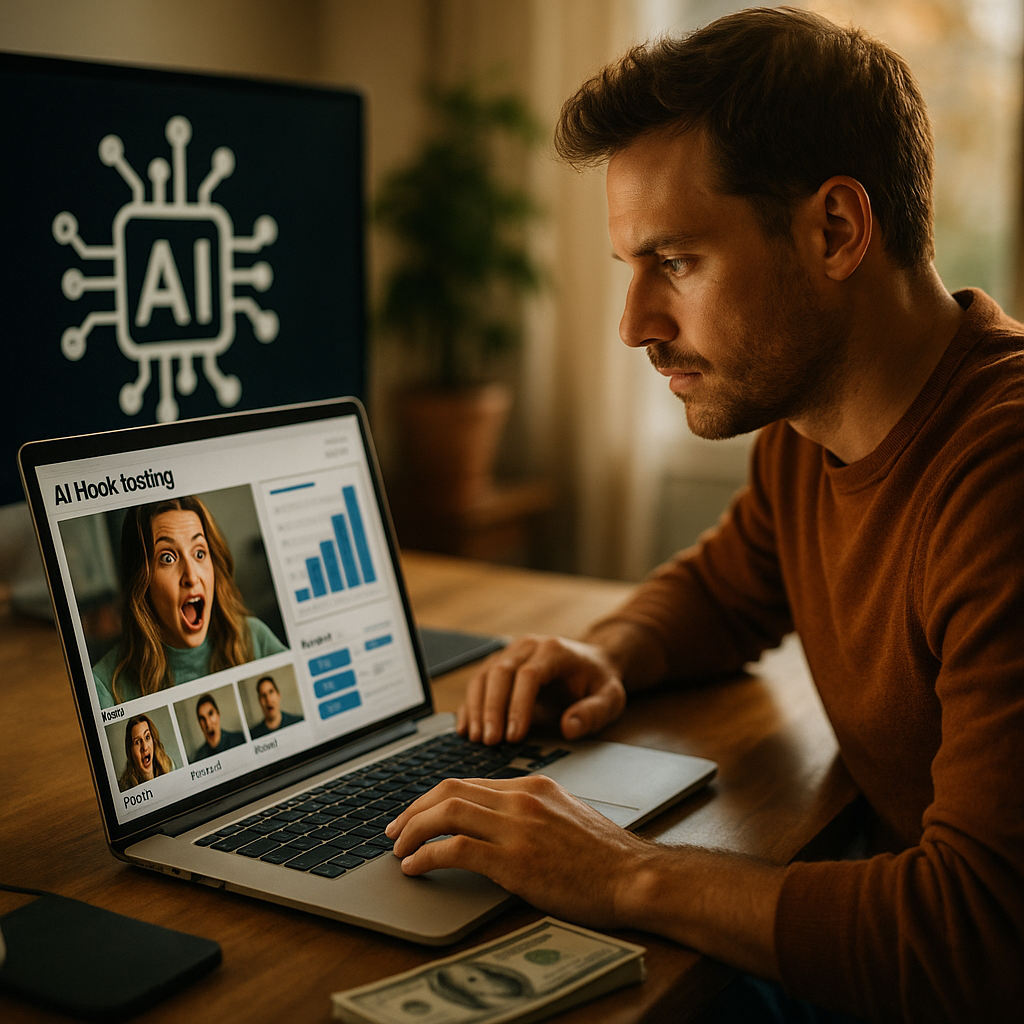
One brand ran 47 hook variations of a single creator ad before spending a cent on media. The winning version outperformed the agency’s “safe bet” by 3.4x on hook rate. Total cost to produce those 47 variants: less than what one traditional reshoot used to cost. This is the quiet revolution behind AI short form creative testing, and it’s rewriting the economics of creator advertising faster than most procurement teams have noticed.
For years, the influencer marketing playbook treated creative testing as a luxury. You picked a creator, briefed them once, shot the content, and hoped the algorithm liked it. If it flopped, you ate the cost and tried again next quarter. That model made sense when production meant flights, studios, and multi-day shoots. It makes a lot less sense now that generative AI can produce, remix, and test dozens of short form variants in the time it used to take to schedule a single call with a creator’s manager.
Why Testing Used to Be the Expensive Part, Not the Creative
Here’s the thing nobody said out loud for years: the creative itself was rarely the budget killer. It was the testing infrastructure around it. Multiple shoots to cover hook variations, reshoots because a hook underperformed in week one, agency hours spent manually clipping and captioning alternate cuts. Add media spend burned on underperforming variants before anyone caught the signal, and you’re looking at testing costs that often eclipsed the original production budget.
A mid-funnel creator campaign running six figures in media spend might have tested two or three creative hooks, tops. Not because more variants wouldn’t help performance. Because producing them was expensive and slow. Brands were optimizing blind, locking in a “hero” creative based on gut instinct or a single creator’s take, then praying the algorithm agreed.
The real cost of creative testing was never the idea generation. It was the production and iteration cycle required to validate those ideas before wasting media budget on the wrong one.
What AI Short Form Creative Testing Actually Looks Like Now
The mechanics have shifted in a meaningful way. Instead of briefing one creator for one asset, teams are now feeding a single piece of raw creator footage into an AI pipeline that generates multiple hook variations, pacing edits, caption overlays, and CTA placements automatically. Tools in this space (think platforms built around automated video editing and dynamic creative optimization, similar in spirit to what Meta’s Advantage+ creative tools and TikTok’s Smart Video creative suite already do at the ad platform level) are now being paired directly with creator-sourced raw footage rather than brand-owned assets.
Practically, this means a single UGC-style clip from a creator can be sliced into 10 to 20 test variants: different opening three seconds, different text overlay timing, different pacing on the product reveal. Each variant gets pushed into a small-budget test wave, usually across TikTok Spark Ads or Meta’s dynamic creative testing environment, and the winners get identified within 48 to 72 hours instead of weeks.
This isn’t about replacing the creator. It’s about squeezing far more testable value out of the footage they already shot. One creator session now fuels a testing matrix that used to require five or six separate productions.
The Cost Math That’s Actually Changing Budgets
Let’s get concrete, because vague claims about “efficiency” don’t survive a CFO conversation. Here’s roughly how the math has shifted for a mid-size DTC brand running creator-led paid social:
- Old model: 3 creators, 1 hook each, full production and editing fees, roughly $15,000 to $25,000 for a testable creative set, with testing itself taking 2 to 3 weeks of live media spend to find a winner.
- AI-assisted model: 1 to 2 creators, raw footage licensed for variant generation, AI tooling fees plus editor oversight, roughly $4,000 to $8,000 for a comparable or larger testable set, with winner identification in days rather than weeks.
- Media waste reduction: because low-performing variants get killed faster, wasted impression spend on underperforming creative often drops by 30 to 40 percent across a campaign flight.
That second number, faster kill decisions, is arguably more valuable than the production savings themselves. eMarketer research has repeatedly flagged that short form video ad fatigue sets in within days, not weeks, which means the brands still running single-hook creative for a full month are bleeding budget on an asset that already stopped working.
Where This Intersects With Creator Relationships
There’s a legitimate tension here worth naming. Creators are being asked to hand over raw footage knowing a brand will chop it into a dozen AI-remixed variants, sometimes with altered pacing or AI-generated captions they never approved line by line. That’s a contract and consent issue, not just a production one.
Smart brands are building this into creator agreements upfront: licensing terms that explicitly cover derivative variant creation, compensation structures that account for the expanded usage, and approval checkpoints so creators aren’t blindsided by a version of their content they’d never have greenlit. This mirrors the broader governance conversations happening around automated content approval thresholds, where speed and compliance have to coexist rather than compete.
It also connects to seeding strategy. If you know a creator’s raw footage is going to fuel a multi-variant testing engine, you’re better off scoring creators before shipping product based on how well their content style lends itself to variant generation, not just their follower count or past engagement rate.
The Production Teams Still Doing the Heavy Lifting
AI isn’t removing humans from this workflow, despite what some vendor pitch decks imply. Editors are still deciding which variants are worth generating, creative strategists are still writing the hook hypotheses the AI tests against, and compliance teams are still checking that auto-generated captions don’t misrepresent product claims. The FTC’s endorsement guidelines still apply to every single variant, not just the hero asset, which means legal review workflows need to scale alongside creative output or you’re trading production risk for compliance risk.
This is the same tension playing out across AI workflow rebuilds industry-wide: speed gains are real, but only when the governance layer scales with them. Teams that skip that step tend to find out the hard way, usually after a creative variant ships with a claim nobody signed off on.
Faster variant production without faster compliance review just moves the bottleneck. It doesn’t remove it.
How to Actually Pilot This Without Blowing Up Your Workflow
If you’re a brand marketer trying to figure out whether this is worth adopting now versus next budget cycle, here’s a reasonable on-ramp:
- Start with one campaign, not your whole roster. Pick a creator partnership with strong raw footage and low creative risk, test the variant generation workflow there first.
- Set a kill-threshold before launch. Decide in advance what underperformance looks like (hook rate below X percent in the first 500 impressions, for example) so you’re not emotionally attached to a variant that isn’t working.
- Loop legal in at the variant stage, not the final approval stage. Review the generation rules, not just the outputs.
- Audit the cost savings honestly. Compare total cost per validated winning creative, not just production cost per asset. Sometimes the cheaper-looking workflow still costs more once wasted media spend is factored in, a gap covered well in audits exposing fake AI efficiency discounts.
- Build the licensing language before you need it. Retrofitting creator contracts after a dispute is far more expensive than writing clear variant usage terms upfront.
Agencies pitching this capability should also be vetted the way you’d vet any new AI vendor claim, not taken at face value. The agency vetting checklist approach applies directly here: ask for before and after cost data on a comparable campaign, not just a demo reel.
What This Means for Budget Planning Next Cycle
Finance teams reading this should expect two shifts. First, creative production line items shrink, but tooling and licensing fees grow, so the net savings are real but smaller than the headline production number suggests. Second, media testing budgets can shrink too, since AI-assisted variant testing requires less raw spend to find a statistically meaningful winner. HubSpot’s marketing benchmark research has consistently shown that faster creative iteration correlates with lower overall customer acquisition cost, and this workflow is essentially industrializing that iteration speed for creator content specifically.
None of this works, though, without a clean data layer connecting creative performance back to the creator and SKU level. Brands still running disconnected spreadsheets for creative testing and SKU-level seeding decisions are leaving the best part of this efficiency gain on the table.
The takeaway: pilot AI short form creative testing on one campaign this quarter, measure cost per validated winner (not just cost per asset), and lock in creator licensing terms before you scale the workflow across your full roster.
Frequently Asked Questions
What is AI short form creative testing?
It’s the process of using AI tools to automatically generate and test multiple short form video variants (different hooks, pacing, captions, CTAs) from a single piece of creator footage, then using small-scale paid media tests to identify the top performer before scaling spend.
How much can brands actually save using this approach?
Early adopters report production cost reductions of roughly 50 to 70 percent compared to traditional multi-creator, multi-shoot testing models, plus a 30 to 40 percent reduction in wasted media spend from faster kill decisions on underperforming variants.
Does AI creative testing replace creators?
No. It increases the testable value of footage creators already shoot. Creators still produce the raw content, and their licensing agreements need to explicitly cover how that footage can be remixed into additional variants.
What compliance risks come with AI-generated variant testing?
Every variant, including auto-generated captions and hooks, is subject to the same FTC endorsement and disclosure rules as the original asset. Brands need legal review workflows that scale with variant volume, not just a single approval step for the hero creative.
What platforms support this kind of testing?
Meta’s Advantage+ creative tools and TikTok’s Smart Video suite both support dynamic creative testing at the ad platform level, and several third-party tools now integrate directly with creator-sourced footage to generate variants before media spend begins.
How do I know if this is worth adopting for my brand?
Pilot it on one campaign with strong existing creator footage, set clear kill thresholds in advance, and compare total cost per validated winning creative against your current workflow rather than just comparing production line items.
FAQs
What is AI short form creative testing?
It’s the process of using AI tools to automatically generate and test multiple short form video variants (different hooks, pacing, captions, CTAs) from a single piece of creator footage, then using small-scale paid media tests to identify the top performer before scaling spend.
Top Influencer Marketing Agencies
The leading agencies shaping influencer marketing in 2026
Agencies ranked by campaign performance, client diversity, platform expertise, proven ROI, industry recognition, and client satisfaction. Assessed through verified case studies, reviews, and industry consultations.
Moburst

-
2

The Shelf
Boutique Beauty & Lifestyle Influencer AgencyA data-driven boutique agency specializing exclusively in beauty, wellness, and lifestyle influencer campaigns on Instagram and TikTok. Best for brands already focused on the beauty/personal care space that need curated, aesthetic-driven content.Clients: Pepsi, The Honest Company, Hims, Elf Cosmetics, Pure LeafVisit The Shelf → -
3

Audiencly
Niche Gaming & Esports Influencer AgencyA specialized agency focused exclusively on gaming and esports creators on YouTube, Twitch, and TikTok. Ideal if your campaign is 100% gaming-focused — from game launches to hardware and esports events.Clients: Epic Games, NordVPN, Ubisoft, Wargaming, Tencent GamesVisit Audiencly → -
4

Viral Nation
Global Influencer Marketing & Talent AgencyA dual talent management and marketing agency with proprietary brand safety tools and a global creator network spanning nano-influencers to celebrities across all major platforms.Clients: Meta, Activision Blizzard, Energizer, Aston Martin, WalmartVisit Viral Nation → -
5

The Influencer Marketing Factory
TikTok, Instagram & YouTube CampaignsA full-service agency with strong TikTok expertise, offering end-to-end campaign management from influencer discovery through performance reporting with a focus on platform-native content.Clients: Google, Snapchat, Universal Music, Bumble, YelpVisit TIMF → -
6

NeoReach
Enterprise Analytics & Influencer CampaignsAn enterprise-focused agency combining managed campaigns with a powerful self-service data platform for influencer search, audience analytics, and attribution modeling.Clients: Amazon, Airbnb, Netflix, Honda, The New York TimesVisit NeoReach → -
7

Ubiquitous
Creator-First Marketing PlatformA tech-driven platform combining self-service tools with managed campaign options, emphasizing speed and scalability for brands managing multiple influencer relationships.Clients: Lyft, Disney, Target, American Eagle, NetflixVisit Ubiquitous → -
8

Obviously
Scalable Enterprise Influencer CampaignsA tech-enabled agency built for high-volume campaigns, coordinating hundreds of creators simultaneously with end-to-end logistics, content rights management, and product seeding.Clients: Google, Ulta Beauty, Converse, AmazonVisit Obviously →