


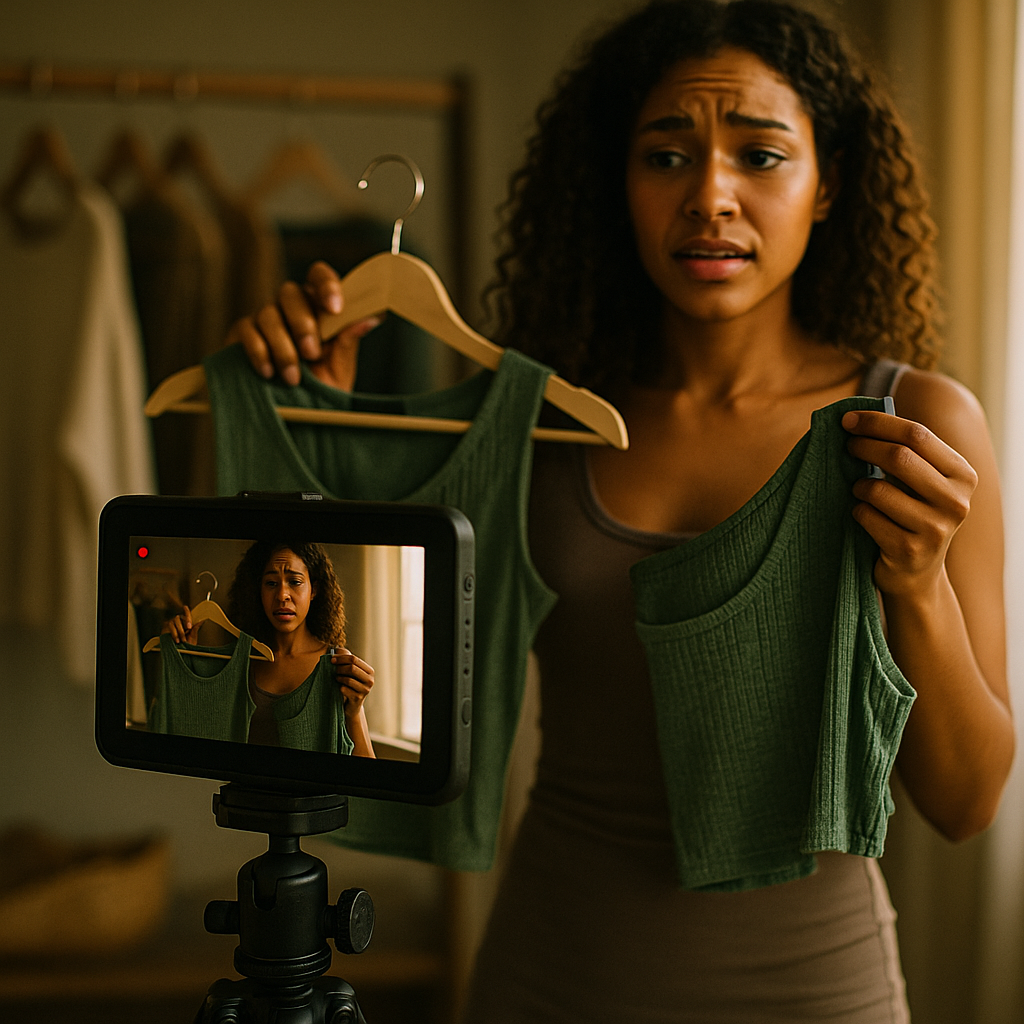
Return rates for apparel bought online sit near 24% according to the industry benchmarks most ops teams already track, and fit uncertainty is still the number one reason. So why do brands keep saying the try on haul script is “dead content”? It isn’t. It’s just being run badly. The format that built TikTok Shop’s apparel category is still the highest converting unit most brands have, if the script actually does its job.
The Format Everyone Wrote Off Too Early
Try on hauls got written off as oversaturated sometime around the platform’s early growth years. Every creator was doing the same five-item closet dump, the same “wait for it” transitions, the same vague captions. Agencies got tired of briefing it. Brands got tired of paying for it. But the saturation was never in the format itself, it was in the execution. A lazy try on haul is forgettable. A structured one, built around fit data and real objections, is still one of the few formats where a viewer can watch a stranger’s body move in the garment and make a purchase decision in under forty seconds.
That’s the actual value proposition, and it hasn’t changed. Static product photography shows you a garment on one model, under studio light, at one angle. A try on haul shows you movement, multiple body types if the brief is written right, and the honest moment where a creator tugs at a waistband or says “runs small.” Shoppers don’t want polish here. They want proof.
Try on hauls convert because they answer the one question product pages can’t: “will this actually look right on a body like mine?” No amount of studio photography replaces that.
Why the Script, Not the Creator, Is the Real Lever
Brands love to blame creator selection when a haul underperforms. Wrong creator, wrong audience, wrong niche. Sometimes that’s true. But pull the underperforming briefs from any mid-size apparel program and you’ll usually find the same root cause: no script. Just a product shipment and a vague ask to “show it off.” That’s not a brief, that’s a hope.
A strong try on haul script works the same way a product explainer script does: it has a beat sheet, not just a vibe. The difference is the haul format needs beats built around the body and the fabric, not just the feature list.
The Beat Sheet That Still Works in 2026
- Size called out on-screen. Creator states their usual size and the size they’re wearing in the first five seconds. No scrolling to the caption to find this.
- The honest first reaction. A genuine beat, good or mixed, before the polished turn. This is the moment viewers trust most.
- Movement test. Sitting, walking, arm raise. Static try-on footage reads as staged. Movement reads as real.
- The fabric and fit callout. Stretch, structure, where it runs tight or loose. This is the line that gets screenshotted into comment sections as “the review.”
- The verdict and the CTA. Keep, return, or size up/down, stated plainly, followed by a direct shoppable link or on-screen tag.
Notice what’s missing: no forced enthusiasm, no “obsessed” five times in ninety seconds. The script rewards specificity over hype. That’s what separates a haul that converts from one that just racks up watch time.
Casting for Fit Diversity, Not Just Follower Count
If every creator in your haul program is a size 2 with the same torso length, you’re leaving conversion on the table and inviting the exact return-rate problem the format is supposed to solve. Fit diversity isn’t a DEI checkbox here, it’s a performance lever. Brands running multi-creator haul slates across three or four body types consistently see broader size-range sell-through and fewer “didn’t look like the video” complaints driving returns.
This is also where the format intersects with trust-building content more broadly. Viewers increasingly cross-reference a haul against other proof points before buying, which is part of why formats like reverse unboxing content and myth busting explainers have grown alongside hauls rather than replacing them. Shoppers are stacking formats now. A haul gets the initial interest, a myth busting clip or a return video closes the remaining doubt.
Where Try On Hauls Fit in the Funnel
Treat the try on haul as a mid-funnel conversion tool, not a top-of-funnel awareness play. It performs best against warm traffic, retargeting audiences, and TikTok Shop’s shoppable feed placements where the viewer has already shown category interest. Running it as a cold awareness ad against broad audiences wastes its strongest asset: specificity. A size-specific, fit-specific video needs a viewer who already cares about that product category.
This is also where shoppable video overlays matter more than most briefs account for. A haul without a tappable product tag at the exact moment the creator says “I’m keeping this one” is a haul leaking revenue. The purchase intent spikes for maybe three seconds. If the overlay isn’t synced to that moment, you’re relying on the viewer to remember and go search later. Most won’t.
Pairing Hauls With Commission Structures
Because hauls are inherently multi-item (most run three to seven products per video), they’re a natural fit for performance-based pay. A flat fee per video undervalues a format where one standout item can drive the bulk of conversions. More apparel brands are now structuring haul deals as commission ready briefs, paying a lower base rate plus a cut of attributed sales. This also fixes a creator incentive problem: when pay is tied to sales, creators naturally lean into the honest “this one runs small” beats, because that honesty builds the long-term trust that keeps commissions flowing.
What Brands Get Wrong Operationally
Three recurring mistakes show up across haul programs that underperform:
- Shipping without size documentation. If the creator doesn’t know their measurements relative to your size chart before filming, the fit callout is guesswork. Send the chart with the product, every time.
- No hook variation testing. Most briefs lock a single opening line. Running multi hook testing across the same haul footage, swapping the first five seconds while keeping the body of the video intact, is one of the cheapest ways to find the highest-converting entry point without reshooting anything.
- Treating the haul as disposable. Raw haul footage is a goldmine for repurposing. Cut the strongest fit callout into a standalone fifteen-second ad. Pull the honest reaction beat into a split screen reaction demo. One shoot, five assets, if someone on the team is actually mining the footage.
That last point deserves more attention than it gets. Most brands pay for a haul, post it once, and move on. The actual ROI math improves dramatically when one shoot session gets sliced into a hook library rather than treated as single-use content.
Measuring What Actually Matters
Views and likes tell you almost nothing about whether a haul is doing its job. The metrics that matter here are return rate on tagged SKUs, size-exchange rate, and attributed revenue per video against production cost. If a haul drives sales but the return rate on that SKU climbs afterward, the script lied somewhere, usually in the fit callout being too generous. Finance teams running apparel programs are increasingly demanding this level of tracking before approving repeat budgets, the same trend covered in product explainer KPI reporting for other formats.
Platforms are making this easier to track natively. TikTok Shop’s analytics dashboard, documented on TikTok’s advertising platform, now attributes sales and returns at the video level for shoppable content, which means there’s no excuse left for brands running hauls blind. Pull the SKU-level return data before renewing any creator contract.
A haul that drives sales but spikes the return rate on that SKU isn’t a win, it’s a delayed refund with extra shipping costs attached.
Compliance is the other piece brands underweight. The FTC’s endorsement guidance still applies fully to haul content, particularly around disclosure when items are gifted or discounted. Review the current FTC endorsement guidelines before scaling any multi-creator haul program, and make disclosure a non-negotiable line in the brief rather than an afterthought creators handle themselves.
So Is the Format Actually “Still Driving Conversion”?
Yes, measurably, but only where the brief forces specificity. The brands still winning with try on hauls aren’t the ones chasing the biggest creator names. They’re the ones treating the script like a conversion instrument: size stated early, honest reaction preserved, fabric behavior named, overlay synced to the verdict moment. Strip those elements out and you’re left with the generic closet-dump content that earned the format its “oversaturated” reputation in the first place.
For context on what the shift looks like at the format level, eMarketer’s creator commerce research continues to show shoppable video outperforming static product listings on apparel conversion, and haul-style demonstration remains the dominant shoppable subformat within that data.
FAQs
Frequently Asked Questions
Are try on hauls still effective in 2026, or has audience fatigue killed the format?
The format is still effective, but generic execution has fatigued audiences, not the format itself. Hauls built around specific fit, fabric, and sizing callouts continue to convert well, particularly on TikTok Shop and in retargeting campaigns.
How many products should a try on haul feature?
Three to seven items tends to perform best. Fewer items limits the format’s natural commission-pay structure, while more than seven dilutes attention and makes it harder for viewers to recall the verdict on any single piece.
Should brands pay creators a flat fee or commission for haul content?
A hybrid model works best for most apparel programs: a lower base production fee plus a commission on attributed sales. This rewards creators for honest fit callouts rather than blanket enthusiasm, which improves long-term trust and reduces returns.
What metrics indicate a try on haul is actually working?
Track attributed sales per SKU alongside return and size-exchange rates on those same SKUs. High sales with climbing returns usually signals the fit callout in the script was too generous or vague.
Do try on hauls work better as paid ads or organic content?
Both, but they perform strongest as retargeting or mid-funnel paid placements against audiences who’ve already shown category interest. Cold awareness campaigns waste the format’s main advantage, which is specific fit proof for a viewer who already wants the product.
Audit one underperforming haul this week against the five-beat structure above. If the size callout, honest reaction, and verdict aren’t all present in the first thirty seconds, that’s your fix, not a new creator.
FAQs
Are try on hauls still effective in 2026, or has audience fatigue killed the format?
The format is still effective, but generic execution has fatigued audiences, not the format itself. Hauls built around specific fit, fabric, and sizing callouts continue to convert well, particularly on TikTok Shop and in retargeting campaigns.
How many products should a try on haul feature?
Three to seven items tends to perform best. Fewer items limits the format’s natural commission-pay structure, while more than seven dilutes attention and makes it harder for viewers to recall the verdict on any single piece.
Should brands pay creators a flat fee or commission for haul content?
A hybrid model works best for most apparel programs: a lower base production fee plus a commission on attributed sales. This rewards creators for honest fit callouts rather than blanket enthusiasm, which improves long-term trust and reduces returns.
What metrics indicate a try on haul is actually working?
Track attributed sales per SKU alongside return and size-exchange rates on those same SKUs. High sales with climbing returns usually signals the fit callout in the script was too generous or vague.
Do try on hauls work better as paid ads or organic content?
Both, but they perform strongest as retargeting or mid-funnel paid placements against audiences who’ve already shown category interest. Cold awareness campaigns waste the format’s main advantage, which is specific fit proof for a viewer who already wants the product.
Top Influencer Marketing Agencies
The leading agencies shaping influencer marketing in 2026
Agencies ranked by campaign performance, client diversity, platform expertise, proven ROI, industry recognition, and client satisfaction. Assessed through verified case studies, reviews, and industry consultations.
Moburst

-
2

The Shelf
Boutique Beauty & Lifestyle Influencer AgencyA data-driven boutique agency specializing exclusively in beauty, wellness, and lifestyle influencer campaigns on Instagram and TikTok. Best for brands already focused on the beauty/personal care space that need curated, aesthetic-driven content.Clients: Pepsi, The Honest Company, Hims, Elf Cosmetics, Pure LeafVisit The Shelf → -
3

Audiencly
Niche Gaming & Esports Influencer AgencyA specialized agency focused exclusively on gaming and esports creators on YouTube, Twitch, and TikTok. Ideal if your campaign is 100% gaming-focused — from game launches to hardware and esports events.Clients: Epic Games, NordVPN, Ubisoft, Wargaming, Tencent GamesVisit Audiencly → -
4

Viral Nation
Global Influencer Marketing & Talent AgencyA dual talent management and marketing agency with proprietary brand safety tools and a global creator network spanning nano-influencers to celebrities across all major platforms.Clients: Meta, Activision Blizzard, Energizer, Aston Martin, WalmartVisit Viral Nation → -
5

The Influencer Marketing Factory
TikTok, Instagram & YouTube CampaignsA full-service agency with strong TikTok expertise, offering end-to-end campaign management from influencer discovery through performance reporting with a focus on platform-native content.Clients: Google, Snapchat, Universal Music, Bumble, YelpVisit TIMF → -
6

NeoReach
Enterprise Analytics & Influencer CampaignsAn enterprise-focused agency combining managed campaigns with a powerful self-service data platform for influencer search, audience analytics, and attribution modeling.Clients: Amazon, Airbnb, Netflix, Honda, The New York TimesVisit NeoReach → -
7

Ubiquitous
Creator-First Marketing PlatformA tech-driven platform combining self-service tools with managed campaign options, emphasizing speed and scalability for brands managing multiple influencer relationships.Clients: Lyft, Disney, Target, American Eagle, NetflixVisit Ubiquitous → -
8

Obviously
Scalable Enterprise Influencer CampaignsA tech-enabled agency built for high-volume campaigns, coordinating hundreds of creators simultaneously with end-to-end logistics, content rights management, and product seeding.Clients: Google, Ulta Beauty, Converse, AmazonVisit Obviously →