


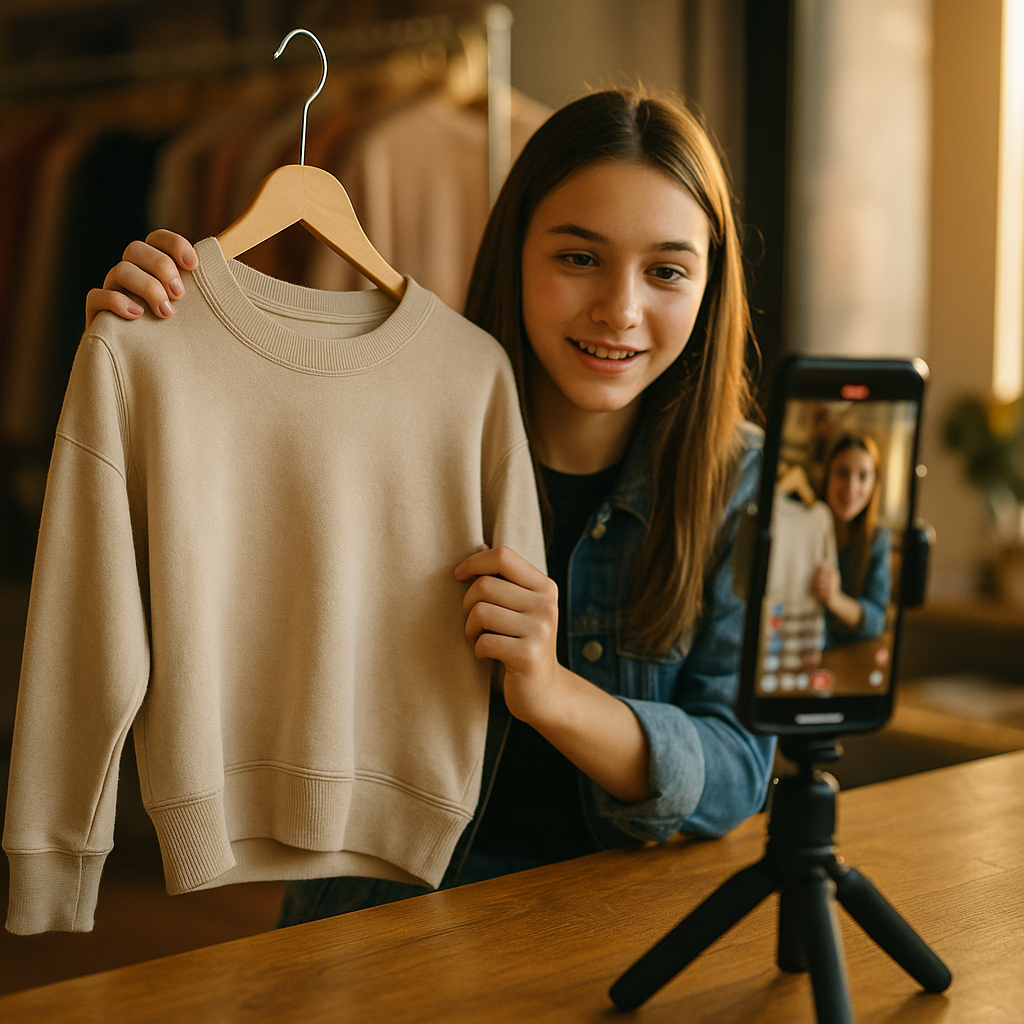
One unboxing segment featuring a nine-year-old “co-host” can trigger a COPPA investigation, a state AG inquiry, and a platform ban, all before the livestream even hits its sales goal. Child safety and minor disclosure standards have quietly become the most under-resourced compliance category in creator commerce, even as family-vlog and kidfluencer talent shows up constantly in livestream shopping formats. Brands chasing the conversion lift of live shopping are discovering that the rules protecting minors on camera are patchier, stricter, and more enforcement-happy than almost anything else in the influencer compliance stack.
Why Livestream Shopping Puts Minors in a Different Risk Category
Livestream shopping is not a scripted ad. It is unscripted, real-time, and often features children who did not sign a contract, read a script, or consent to anything. Family creators routinely bring kids into haul videos, toy reviews, and “get ready with us” shopping streams because audiences love it. Engagement is real. So is the legal exposure.
The core problem is that livestream commerce blends three regulatory zones that used to stay separate: child labor and earnings law, child privacy law (COPPA and its state-level cousins), and FTC endorsement disclosure rules. A single 20-minute shopping stream can touch all three at once. If a brand’s affiliate link appears on screen while a minor is speaking about the product, that is an endorsement. If the platform collects data from viewers interacting with that minor’s content, that is a privacy question. And if the minor is earning commission, that is a labor and trust-account question in several states.
A minor appearing in a livestream shopping segment is simultaneously a potential endorser, a potential data subject, and a potential child worker. Few brand compliance teams are built to evaluate all three at once.
What Counts as a “Minor Disclosure” in Live Commerce?
Disclosure in this context means two separate things, and brands routinely conflate them.
- Material connection disclosure: the standard FTC requirement that any paid or incentivized endorsement, including one delivered by a child, be flagged clearly to viewers (think #ad, verbal disclosure, or on-screen tags).
- Minor status disclosure: an emerging, less standardized requirement that platforms or state laws impose when a visible on-camera participant is under 18, regardless of whether that minor is the “creator of record.”
The second category is where most brands get caught flat-footed. A livestream might be hosted by an adult parent-influencer, fully disclosed as sponsored, and still run afoul of rules because the child appearing beside them is treated as a de facto performer under state entertainment or labor statutes. California, Illinois, and a handful of other states now require earnings from a minor’s content appearances (including livestream segments) to be tracked and partially held in trust. If a brand’s affiliate commission flows to a household where a child is visibly driving sales, that commission may legally belong, in part, to the child, not the parent account holder.
The Regulatory Patchwork Brands Actually Have to Navigate
There is no single federal “livestream minor” law in the United States. Instead, brands are stitching together obligations from several directions:
- The FTC’s endorsement guidance, which applies regardless of the endorser’s age and holds the brand jointly responsible for clear disclosure.
- COPPA, which governs data collection from users under 13 and increasingly gets interpreted to cover platforms where minors appear as content subjects, not just account holders.
- State-level “kidfluencer” earnings laws that require trust accounts and time logging for minors in monetized content.
- Platform-specific live commerce policies (TikTok Shop, Amazon Live, Instagram Live Shopping) that each define minor appearance and disclosure differently.
This patchwork mirrors what we have already seen play out in other state-by-state compliance fights. The same fragmentation logic covered in our breakdown of state disclosure law variance applies here: a campaign that is compliant in Texas can be a violation in Illinois, and livestream shopping makes that distinction harder to police because the content is live, not pre-reviewed.
Enforcement is also shifting away from the FTC alone. State attorneys general have been filling gaps the FTC leaves open, and livestream commerce featuring minors is squarely in their sightlines. For a fuller picture of that enforcement shift, see our coverage of how state AG enforcement is outpacing federal action.
Platform Rules Are Tightening Faster Than Brand Playbooks
TikTok Shop, Amazon Live, and Instagram Live Shopping have all updated creator eligibility and content policies around minors in the past cycle. TikTok’s commerce policies generally restrict monetization features for accounts primarily featuring minors and require clearer labeling when family content includes commerce links. Amazon Live has tightened its creator vetting for livestream hosts, and Meta has layered additional restrictions onto Instagram Live Shopping sessions that include visible minors.
The friction point for brands: platform policy and legal compliance are not the same thing. A livestream can pass TikTok’s content moderation and still violate a state earnings law. Brands need both checks running in parallel, not sequentially, because live content does not pause for review the way a pre-recorded TikTok Shop video does. This is the same operational gap we flagged in our look at TikTok’s biometric checkout liability exposure, where platform-level convenience features quietly outpace brand legal review cycles.
Building an Actual Vetting Process (Not Just a Policy PDF)
Most brand influencer agreements have a single boilerplate line about “no minors without parental consent.” That line does not hold up anymore. A working vetting process for livestream shopping needs to answer four questions before a single product link goes live:
- Will a minor appear on screen during any portion of the stream, even briefly?
- Is the minor compensated directly, indirectly through household income, or not at all?
- Does the creator’s home state require trust accounting or work-hour logging for minors in monetized content?
- Is the disclosure language (verbal and on-screen) adequate for both FTC material connection rules and any applicable minor-status disclosure?
Brands running high-volume gifting or affiliate programs are especially exposed here, because gifting at scale means less individualized review of who actually appears in the content. We covered a parallel version of this problem in our analysis of high-volume gifting disclosure gaps, and the same scale-versus-oversight tension applies directly to family-creator livestream partnerships.
If your vetting checklist does not ask “who appears on screen” separately from “who signed the contract,” you have a gap, and livestream formats will find it faster than pre-recorded content ever did.
Documentation Is the Difference Between a Mistake and a Violation
Regulators and platforms consistently treat documented good-faith effort differently than silence. A brand that can show it asked about minor appearances, logged the answer, and adjusted disclosure accordingly is in a materially better position than one with no record at all. That documentation should live in the same consent and compliance trail brands already maintain for AI-generated content and data handling. Our piece on creator CRM breach notification timelines makes a similar point: the paper trail is often the entire difference in an enforcement outcome, not the underlying mistake itself.
Practical steps worth building into the contract and briefing stage:
- Require creators to flag, in writing, whether any minor will appear during the livestream window, including unplanned appearances.
- Build a disclosure script that explicitly covers minor status alongside material connection, read aloud at stream start.
- Set a commission structure that routes minor-attributable earnings into a documented trust mechanism where state law requires it.
- Audit live replays within 24 hours, not just pre-approve the plan, since live content can deviate from the brief.
According to eMarketer, live shopping continues to grow as a share of total social commerce spend in the United States, which means the volume of family and multigenerational creator content running through these programs is only going to increase. Compliance teams that wait for a formal federal livestream-minor standard will be working from enforcement actions, not guidance.
Where This Is Headed
Expect platform self-regulation to move faster than legislation in the near term, similar to how TikTok’s advertising policies have evolved ahead of formal US federal rules in other creator categories. But self-regulation is inconsistent across platforms, which leaves brands running cross-platform livestream programs exposed to the lowest common denominator unless they set an internal standard higher than any single platform requires. The FTC’s endorsement guidance remains the enforceable floor regardless of platform policy, and that floor applies whether the endorser is 35 or 13.
Brands that treat minor disclosure as a creator-side problem rather than a brand-side liability are the ones most likely to get caught flat when a stream goes sideways, a parent-creator’s account gets flagged, or a state AG opens an inquiry into a trust account that never existed.
FAQs
Frequently Asked Questions
What counts as a minor “appearing” in a livestream shopping event?
Any visible or audible presence, even briefly, generally counts. A child walking into frame, speaking about a product, or being referenced as a reason for a purchase decision can trigger disclosure and compliance obligations, regardless of how long they are on screen.
Does FTC endorsement guidance apply when the endorser is a child?
Yes. The FTC’s material connection disclosure rules apply regardless of the endorser’s age. The brand remains jointly responsible for ensuring disclosure happens clearly and in real time during a livestream.
Which states require trust accounts for minors in monetized livestream content?
California and Illinois have specific statutes addressing minors’ earnings in monetized online content, including requirements around trust accounts and work-hour logging. Other states are considering similar legislation, so brands running multi-state programs should check creator location on a rolling basis.
Do platform policies replace the need for brand-level compliance checks?
No. Platform policies (TikTok Shop, Amazon Live, Instagram Live Shopping) address content moderation and monetization eligibility, not state labor or privacy law. A stream can fully comply with platform rules and still violate state-level minor earnings or disclosure statutes.
What documentation should brands keep for livestream events involving family creators?
Written confirmation from the creator about whether minors will appear, the disclosure script used, a recording of the actual broadcast, and any trust accounting records tied to minor-attributable earnings. This record becomes critical if a regulator or platform later reviews the event.
Next step: audit your last three livestream shopping briefs for family and parent creators, check whether any asked explicitly about minor appearances, and if the answer is no, fix the briefing template before your next scheduled stream, not after a regulator asks you to.
Top Influencer Marketing Agencies
The leading agencies shaping influencer marketing in 2026
Agencies ranked by campaign performance, client diversity, platform expertise, proven ROI, industry recognition, and client satisfaction. Assessed through verified case studies, reviews, and industry consultations.
Moburst

-
2

The Shelf
Boutique Beauty & Lifestyle Influencer AgencyA data-driven boutique agency specializing exclusively in beauty, wellness, and lifestyle influencer campaigns on Instagram and TikTok. Best for brands already focused on the beauty/personal care space that need curated, aesthetic-driven content.Clients: Pepsi, The Honest Company, Hims, Elf Cosmetics, Pure LeafVisit The Shelf → -
3

Audiencly
Niche Gaming & Esports Influencer AgencyA specialized agency focused exclusively on gaming and esports creators on YouTube, Twitch, and TikTok. Ideal if your campaign is 100% gaming-focused — from game launches to hardware and esports events.Clients: Epic Games, NordVPN, Ubisoft, Wargaming, Tencent GamesVisit Audiencly → -
4

Viral Nation
Global Influencer Marketing & Talent AgencyA dual talent management and marketing agency with proprietary brand safety tools and a global creator network spanning nano-influencers to celebrities across all major platforms.Clients: Meta, Activision Blizzard, Energizer, Aston Martin, WalmartVisit Viral Nation → -
5

The Influencer Marketing Factory
TikTok, Instagram & YouTube CampaignsA full-service agency with strong TikTok expertise, offering end-to-end campaign management from influencer discovery through performance reporting with a focus on platform-native content.Clients: Google, Snapchat, Universal Music, Bumble, YelpVisit TIMF → -
6

NeoReach
Enterprise Analytics & Influencer CampaignsAn enterprise-focused agency combining managed campaigns with a powerful self-service data platform for influencer search, audience analytics, and attribution modeling.Clients: Amazon, Airbnb, Netflix, Honda, The New York TimesVisit NeoReach → -
7

Ubiquitous
Creator-First Marketing PlatformA tech-driven platform combining self-service tools with managed campaign options, emphasizing speed and scalability for brands managing multiple influencer relationships.Clients: Lyft, Disney, Target, American Eagle, NetflixVisit Ubiquitous → -
8

Obviously
Scalable Enterprise Influencer CampaignsA tech-enabled agency built for high-volume campaigns, coordinating hundreds of creators simultaneously with end-to-end logistics, content rights management, and product seeding.Clients: Google, Ulta Beauty, Converse, AmazonVisit Obviously →