


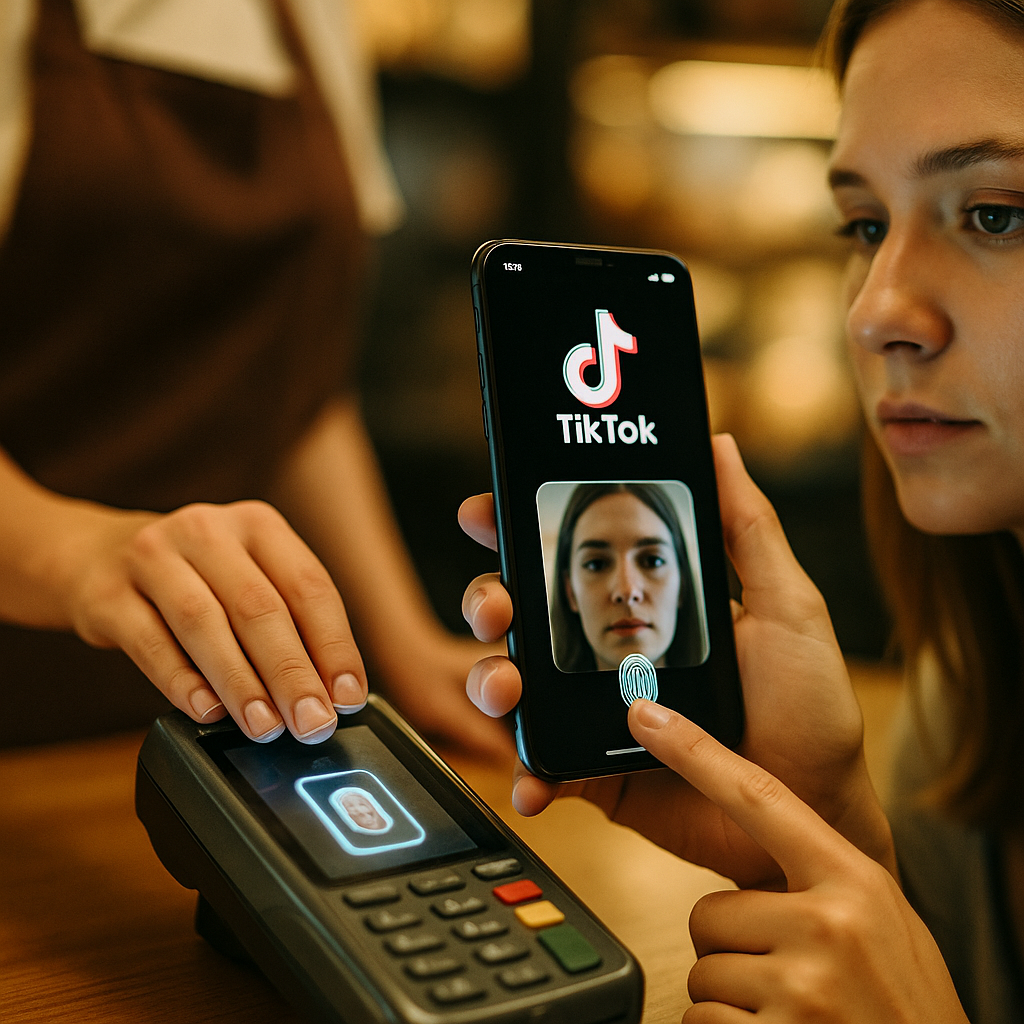
Ninety seconds. That’s roughly how long it takes a shopper to abandon a TikTok Shop checkout if friction creeps in. Now TikTok wants to replace that friction with a face scan. Biometric checkout verification is rolling out across TikTok Shop’s highest-volume commerce markets, and it’s forcing brands, agencies, and commerce creators to answer a question they haven’t had to face before: who owns the liability when a face scan goes wrong?
What TikTok’s Biometric Verification Actually Does
TikTok Shop’s new checkout layer uses facial recognition and, in some markets, fingerprint matching to confirm a buyer’s identity before a high-value transaction clears. The stated goal is fraud reduction. Chargebacks on live shopping and affiliate-driven purchases have been a persistent headache, and biometric confirmation theoretically closes the gap between “someone clicked buy” and “the actual cardholder authorized this.”
In practice, it works like Face ID for commerce. A buyer scans their face at checkout, the system cross-references it against a stored biometric template, and the transaction either clears instantly or gets flagged for manual review. For creators running live shopping events or affiliate storefronts, this changes the checkout experience their audience sees, and it changes what data TikTok is collecting on their behalf.
Biometric data isn’t just another data point. In most regulated jurisdictions it carries its own legal category, its own consent requirements, and its own statutory damages, separate from ordinary personal data.
Why Brands Should Actually Care
If you’re running an affiliate or commerce creator program on TikTok Shop, you’re not a passive bystander here. Your brand name is attached to every transaction your creators drive. When a platform introduces biometric verification on top of that funnel, the compliance exposure doesn’t stay with TikTok. It flows through to you.
- Fraud reduction is real money. Lower chargeback rates mean better margins on commerce creator programs, particularly for high-ticket categories like beauty devices and electronics.
- Consent gaps create liability. If a buyer didn’t clearly understand they were handing over a facial scan, that’s a potential claim against anyone who profited from the transaction, not just the platform.
- Cross-border complexity multiplies. A biometric consent flow that’s fine in one market can be flatly illegal in another.
This is the same pattern we’ve tracked with other TikTok Shop mechanics. Commission structures have already reshaped how creators get paid, as we covered in TikTok Shop commission deals, and biometric checkout is the next layer of operational change brands need to budget for, not just react to.
The Legal Patchwork Brands Can’t Ignore
Biometric data regulation is a mess of overlapping, sometimes contradictory state and national rules, and that’s exactly the problem. Illinois’ Biometric Information Privacy Act (BIPA) remains the most aggressive statute in the United States, requiring written consent before any biometric identifier is collected, with statutory damages per violation that have already produced nine-figure settlements against other tech companies. If TikTok’s checkout verification captures facial geometry from an Illinois resident without airtight consent language, every brand in that commerce funnel is a potential co-defendant.
Europe adds another layer. Under GDPR, biometric data is classified as a “special category” requiring explicit consent and a documented lawful basis, not just a checkbox buried in terms of service. The UK’s Information Commissioner’s Office has been explicit that facial recognition for commercial purposes faces heightened scrutiny compared to ordinary data processing.
Then there’s the state attorney general angle. We’ve already seen state regulators move faster than federal agencies on influencer marketing enforcement, a trend detailed in state AG enforcement surges. Biometric data is a natural next target for state AGs looking to make an example out of a platform, and commerce creators sitting on top of that data flow won’t be invisible.
Does This Overlap With China’s Creator Data Rules?
Yes, and it’s worth understanding the parallel. China’s tightened data governance for creators, which we broke down in China creator data rules, established a template other markets are now following: platforms collecting sensitive personal data from creators and their audiences face direct accountability, not just a slap on the wrist for the brand that hired the creator. TikTok operating biometric checkout across multiple jurisdictions simultaneously means brands need a market-by-market compliance map, not a single global policy.
What This Means for Creator Contracts
Here’s where it gets operationally messy. Most influencer agreements were never written with biometric data flows in mind. If your creator is hosting a live shopping event where buyers scan their faces to check out, your contract needs language covering:
- Who is responsible for ensuring checkout consent screens meet local biometric disclosure requirements.
- Whether the creator or the brand carries indemnification if a buyer sues over improper biometric collection.
- Data retention terms for any biometric templates tied to a specific commerce event or storefront.
- Audit rights so the brand can verify TikTok’s consent flow actually matches what regulators require.
This isn’t hypothetical paranoia. We’ve already seen indemnification gaps blow up in creator commerce, most visibly in the licensing dispute covered in Paramount Fanatics settlement. Biometric checkout data is a far more sensitive category than licensed merchandise, and the indemnification clauses in your creator agreements need to reflect that difference now, not after a claim lands.
A standard influencer agreement that covers content usage and FTC disclosure says nothing about who’s liable when a platform’s checkout tech mishandles a facial scan. That gap is where brands get exposed.
Vetting Creators and Vendors on Data Handling
Brands running at scale need a way to score creators and commerce partners on data governance maturity, not just engagement metrics. This is the same logic behind the vendor vetting frameworks discussed in creator scoring tools: if a creator’s livestream setup, checkout widget, or third-party commerce tool touches biometric data, that creator needs to pass a higher compliance bar than a standard affiliate.
Practically, that means asking creators direct questions before greenlighting a live shopping event:
- Does the checkout flow disclose biometric collection in plain language before the scan happens?
- Is there an opt-out path that doesn’t kill the sale entirely?
- Who holds the biometric template after the transaction closes, TikTok or a third-party payment processor?
If a creator can’t answer these, that’s a red flag worth pausing the partnership over, regardless of how strong their conversion numbers look.
Record Keeping Is the Real Risk Mitigator
Regulators increasingly care less about whether something went wrong and more about whether you can prove you tried to prevent it. Kuwait’s new influencer record law, which we analyzed in Kuwait influencer record law, is part of a broader global trend toward mandatory audit trails for creator commerce. Biometric checkout data makes that audit trail non-negotiable.
Brands should be archiving, at minimum: screenshots of the consent disclosure shown to buyers at the point of biometric collection, the specific commerce creator or livestream event tied to each transaction batch, and written confirmation from TikTok Shop’s merchant dashboard about data retention policy for biometric templates. None of this is glamorous work. All of it is the difference between a defensible compliance posture and a six-figure settlement.
Industry benchmarking from eMarketer and Statista continues to show social commerce fraud rates outpacing traditional ecommerce, which is exactly why platforms like TikTok are moving toward biometric solutions in the first place. The fraud problem is real. The compliance solution just needs to be built with the same rigor as the fraud detection itself. TikTok’s own TikTok for Business resources are a starting point for understanding merchant-side requirements, but they shouldn’t be your only compliance reference.
A Quick Operational Checklist
- Audit every active commerce creator contract for biometric data language. If it’s missing, amend before the next live shopping event.
- Map which markets your commerce creators sell into and flag biometric consent requirements for each (Illinois BIPA, EU GDPR, and emerging APAC rules in particular).
- Build an indemnification clause specific to biometric checkout failures, separate from your standard content liability terms.
- Require creators to disclose any third-party checkout plugins layered on top of TikTok’s native flow.
None of this needs to slow down commerce creator programs. It just needs to be built in, the same way disclosure review and FTC substantiation already are for sponsored content, a discipline we’ve covered extensively in blended CPM reporting. Biometric checkout is simply the next compliance layer in an already crowded stack.
The brands that win here won’t be the ones avoiding biometric checkout entirely. They’ll be the ones who treat consent documentation and contract updates as a launch requirement, not an afterthought, before their next TikTok Shop live event goes live.
FAQs
What is TikTok’s biometric checkout verification?
It’s a checkout layer on TikTok Shop that uses facial recognition, and in some markets fingerprint matching, to confirm a buyer’s identity before a transaction clears, primarily to reduce fraud and chargebacks.
Do brands bear legal liability for TikTok’s biometric data collection?
Potentially, yes. If a brand’s commerce creator program drives sales through a checkout flow with inadequate consent disclosure, the brand can be named alongside the platform in biometric privacy claims, particularly under statutes like Illinois’ BIPA.
How does biometric checkout verification affect creator contracts?
Most existing creator agreements don’t address biometric data at all. Brands need updated clauses covering consent compliance responsibility, indemnification for biometric data mishandling, and audit rights over checkout consent flows.
Which regulations matter most for biometric checkout compliance?
Illinois BIPA in the US, GDPR’s special category provisions in the EU, and a growing set of state attorney general enforcement actions are the most immediate concerns, with additional country-specific rules emerging across APAC markets.
What should brands do before their next livestream shopping event?
Review the checkout consent screen shown to buyers, confirm biometric data retention terms with TikTok Shop, update creator contracts with specific indemnification language, and document every disclosure for audit purposes.
Top Influencer Marketing Agencies
The leading agencies shaping influencer marketing in 2026
Agencies ranked by campaign performance, client diversity, platform expertise, proven ROI, industry recognition, and client satisfaction. Assessed through verified case studies, reviews, and industry consultations.
Moburst

-
2

The Shelf
Boutique Beauty & Lifestyle Influencer AgencyA data-driven boutique agency specializing exclusively in beauty, wellness, and lifestyle influencer campaigns on Instagram and TikTok. Best for brands already focused on the beauty/personal care space that need curated, aesthetic-driven content.Clients: Pepsi, The Honest Company, Hims, Elf Cosmetics, Pure LeafVisit The Shelf → -
3

Audiencly
Niche Gaming & Esports Influencer AgencyA specialized agency focused exclusively on gaming and esports creators on YouTube, Twitch, and TikTok. Ideal if your campaign is 100% gaming-focused — from game launches to hardware and esports events.Clients: Epic Games, NordVPN, Ubisoft, Wargaming, Tencent GamesVisit Audiencly → -
4

Viral Nation
Global Influencer Marketing & Talent AgencyA dual talent management and marketing agency with proprietary brand safety tools and a global creator network spanning nano-influencers to celebrities across all major platforms.Clients: Meta, Activision Blizzard, Energizer, Aston Martin, WalmartVisit Viral Nation → -
5

The Influencer Marketing Factory
TikTok, Instagram & YouTube CampaignsA full-service agency with strong TikTok expertise, offering end-to-end campaign management from influencer discovery through performance reporting with a focus on platform-native content.Clients: Google, Snapchat, Universal Music, Bumble, YelpVisit TIMF → -
6

NeoReach
Enterprise Analytics & Influencer CampaignsAn enterprise-focused agency combining managed campaigns with a powerful self-service data platform for influencer search, audience analytics, and attribution modeling.Clients: Amazon, Airbnb, Netflix, Honda, The New York TimesVisit NeoReach → -
7

Ubiquitous
Creator-First Marketing PlatformA tech-driven platform combining self-service tools with managed campaign options, emphasizing speed and scalability for brands managing multiple influencer relationships.Clients: Lyft, Disney, Target, American Eagle, NetflixVisit Ubiquitous → -
8

Obviously
Scalable Enterprise Influencer CampaignsA tech-enabled agency built for high-volume campaigns, coordinating hundreds of creators simultaneously with end-to-end logistics, content rights management, and product seeding.Clients: Google, Ulta Beauty, Converse, AmazonVisit Obviously →