


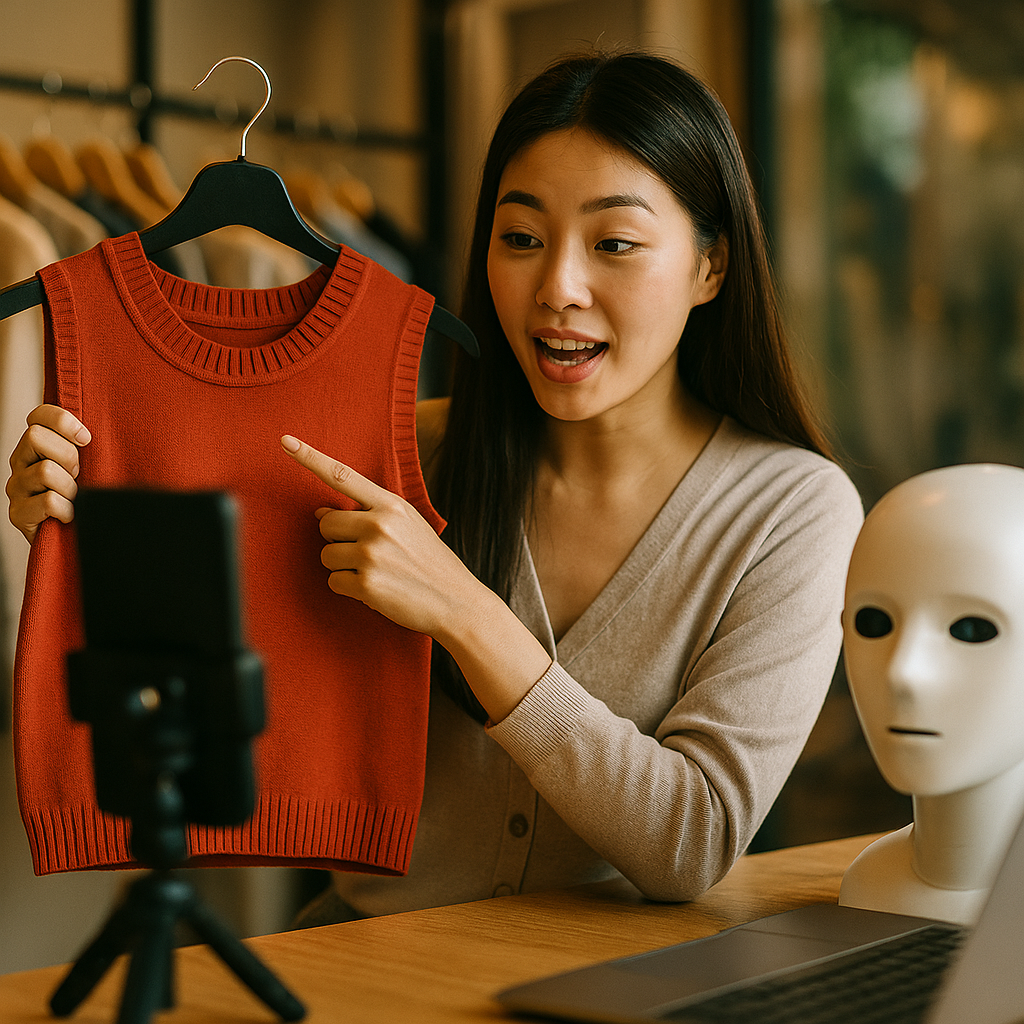
Live commerce in APAC now moves more product in a single streamed hour than some brands sell in a quarter through traditional retail. That’s the headline stat vendors repeated at C26 Hong Kong this year. But the quieter, more useful story from the summit wasn’t about growth. It was about the yawning gap between how fast live commerce is scaling and how slowly most brands are adopting the AI tooling needed to run it safely.
If you sat through the floor sessions, you noticed the pattern fast. Vendors pitched AI moderation, predictive inventory, and real time compliance scanning. Buyers mostly nodded, took notes, and admitted they weren’t budgeted to deploy any of it this cycle. That disconnect is the real signal from C26, and it matters for anyone running a regional influencer or commerce program.
Why C26 Hong Kong Became a Bellwether Event
C26 isn’t the biggest trade show in the region by ticket count, but it’s become the one where live commerce platforms, agencies, and brand buyers actually negotiate deals on the floor rather than just swap business cards. This year’s attendance skewed heavily toward operations and compliance leads rather than pure marketing titles, which tells you something on its own. Brands aren’t sending content people to Hong Kong anymore. They’re sending the people who have to answer for what happens when a livestream goes wrong.
That shift tracks with what we covered when APAC brands shifted influencer fees into live commerce slots. The budget has already moved. What hasn’t moved at the same pace is the governance layer that’s supposed to sit underneath it.
At C26, the AI tooling vendors demoed and the AI tooling brands actually deployed were two different conversations happening in the same room.
The Growth Numbers Everyone Quotes
Live commerce in APAC is projected to keep expanding at double digit rates through the next several years, with China, Indonesia, and Vietnam leading volume and South Korea and Japan leading average order value. eMarketer’s retail data has consistently flagged APAC as the region where livestream shopping penetration outpaces North America and Europe by a wide margin, and Statista’s e-commerce tracking shows the same trend holding across multiple consumer categories, not just beauty and fashion.
Here’s the part that gets buried in those headline numbers: growth in gross merchandise value doesn’t tell you anything about operational maturity. A market can triple its livestream sales and still be running moderation with a single bilingual staffer watching three screens at once. Hong Kong buyers at C26 admitted as much, often with a tired laugh.
What “AI Adoption Gap” Actually Means on the Floor
Three gaps kept surfacing in panel after panel.
- Moderation lag: Most livestream operators still rely on human moderators for real time claims checking, even though AI tools exist that can flag prohibited product claims or pricing violations within seconds. Adoption of automated moderation sat well below what vendors expected given the volume of streams running daily.
- Attribution blindness: Brands can tell you total GMV from a stream. Far fewer can tell you which creator segment, which minute of the stream, or which gifting spike actually drove the conversion. That’s the same attribution problem we flagged when AI chatbot dark traffic started hiding creator influence and inflating customer acquisition cost in other channels.
- Payment and identity verification: Live commerce checkout flows in several fast growing APAC markets still lack the identity verification layer that agentic and AI driven checkout now demands, echoing concerns raised around agentic commerce payment and identity gaps.
None of these are exotic problems. They’re the same risk categories that show up in any fast scaling commerce channel. What’s different in APAC live commerce is the velocity. A stream can rack up six figures in GMV in under an hour, and if moderation or attribution AI isn’t already running, there’s no catching up mid stream.
Market by Market, the Gap Looks Different
Hong Kong itself sits in an odd middle position. It has the financial infrastructure and regulatory clarity to adopt AI commerce tooling fast, but the live commerce creator base is smaller than mainland China’s or Indonesia’s, so vendor investment in localized AI tools lags. Mainland China, by contrast, has the scale to justify heavy AI investment and platforms like Taobao Live and Douyin have baked in real time compliance scanning for years. Southeast Asia is the messiest tier: huge growth, fragmented regulation across Indonesia, Vietnam, Thailand, and the Philippines, and uneven platform support for AI moderation tools depending on which app dominates locally.
Japan and South Korea sit closer to the mature end. Buyers there have been slower to adopt livestream formats at all, but when they do move, they tend to bring AI compliance tooling with them from day one, partly because both markets already have stricter advertising disclosure norms. Regulatory bodies focused on data and consumer protection in these markets have also been more active in pushing platforms toward transparent disclosure standards, which indirectly forces AI tooling adoption.
Is Budget the Real Blocker, or Is It Something Else?
Ask a brand buyer at C26 why they haven’t deployed AI moderation and the first answer is usually cost. Push a little further and you get a more honest answer: nobody owns the decision. Marketing owns the creator relationships. Legal owns the compliance risk. IT owns the platform integrations. AI commerce tooling sits uncomfortably across all three, and in most APAC regional offices, there’s no single budget line for it.
That organizational gap is arguably bigger than the technology gap. The tools exist. TikTok Shop’s seller tools and equivalent features on regional platforms already include automated compliance flagging in several markets. The adoption problem is less “does the tool exist” and more “who signs off on turning it on.”
The technology gap in APAC live commerce is smaller than the organizational gap. Tools exist. Ownership doesn’t.
What This Means for Budget Allocation
If you’re a brand or agency running influencer and commerce spend across APAC, C26 offered a clear signal: treat AI commerce tooling as a line item, not an add on. That means building it into the same conversation where you’re shifting fees from influencer posts to live commerce slots, not bolting it on after the fact once a compliance incident forces the issue.
This also connects to the broader shift we’ve tracked toward cost per sale overtaking engagement in influencer budgets. If you’re measuring live commerce success by cost per sale, you need the attribution AI to actually calculate it accurately. Otherwise you’re optimizing against numbers you can’t trust.
And the regional risk here isn’t hypothetical. Our earlier coverage of the 2 trillion dollar creator economy forecast flagged exactly this kind of gap: aggregate growth numbers that hide uneven infrastructure maturity underneath. Live commerce in APAC is the clearest example of that pattern playing out in real time.
Gifting, Moderation, and the Risk Nobody Budgets For
One under discussed risk at C26: live gifting mechanics. Fan tipping during streams has become a meaningful revenue stream in several APAC markets, but it’s also a growing compliance headache, something we’ve covered in depth around how live stream gifting turns fan tips into a brand risk signal. AI monitoring tools that flag unusual gifting spikes or coordinated inflation attempts were demoed at the summit, but adoption among brand side buyers remains thin. Most brands still treat gifting as a platform level concern rather than something they need to monitor directly, which is a mistake once a brand’s own creator roster is involved.
Platforms like Sprout Social’s social commerce tracking and Meta’s business tools for live shopping have started building in anomaly detection for exactly this reason, but regional live commerce platforms in Southeast Asia haven’t caught up at the same pace.
The Practical Next Step
Don’t wait for a regional AI commerce standard to emerge before acting. Audit your current live commerce partners market by market, confirm which ones already run automated moderation and attribution tooling, and make AI compliance capability a scoring criterion in your next vendor or agency RFP rather than an afterthought.
Frequently Asked Questions
What is live commerce and how does it differ from standard e-commerce?
Live commerce combines real time video streaming with direct in stream checkout, letting viewers purchase products while a host or creator demonstrates them live. Unlike standard e-commerce, it relies heavily on real time engagement, gifting, and social proof moments that happen in seconds, which is why AI moderation and attribution tools matter more here than in static online stores.
Why is APAC leading global live commerce growth?
APAC markets, particularly China, Indonesia, and Vietnam, have high mobile payment penetration, strong creator ecosystems, and consumer comfort with in app purchasing that predates similar habits in North America and Europe. Platforms built specifically for livestream shopping have also matured faster in the region.
What does the “AI adoption gap” in live commerce actually refer to?
It refers to the difference between the pace of live commerce sales growth and the pace at which brands and platforms deploy AI tools for moderation, attribution, and payment verification. Growth has outrun the infrastructure needed to manage risk at scale.
Which AI tools matter most for live commerce compliance?
Real time claims moderation, gifting anomaly detection, and attribution modeling tend to matter most. These tools catch prohibited product claims, suspicious gifting spikes, and help brands understand which parts of a stream actually drove conversions.
How should brands prioritize AI investment across different APAC markets?
Prioritize markets where live commerce GMV is growing fastest and regulatory clarity is lowest, since that combination carries the highest risk exposure. Southeast Asia’s fragmented regulatory landscape typically warrants earlier investment than more mature markets like Japan or South Korea.
Top Influencer Marketing Agencies
The leading agencies shaping influencer marketing in 2026
Agencies ranked by campaign performance, client diversity, platform expertise, proven ROI, industry recognition, and client satisfaction. Assessed through verified case studies, reviews, and industry consultations.
Moburst

-
2

The Shelf
Boutique Beauty & Lifestyle Influencer AgencyA data-driven boutique agency specializing exclusively in beauty, wellness, and lifestyle influencer campaigns on Instagram and TikTok. Best for brands already focused on the beauty/personal care space that need curated, aesthetic-driven content.Clients: Pepsi, The Honest Company, Hims, Elf Cosmetics, Pure LeafVisit The Shelf → -
3

Audiencly
Niche Gaming & Esports Influencer AgencyA specialized agency focused exclusively on gaming and esports creators on YouTube, Twitch, and TikTok. Ideal if your campaign is 100% gaming-focused — from game launches to hardware and esports events.Clients: Epic Games, NordVPN, Ubisoft, Wargaming, Tencent GamesVisit Audiencly → -
4

Viral Nation
Global Influencer Marketing & Talent AgencyA dual talent management and marketing agency with proprietary brand safety tools and a global creator network spanning nano-influencers to celebrities across all major platforms.Clients: Meta, Activision Blizzard, Energizer, Aston Martin, WalmartVisit Viral Nation → -
5

The Influencer Marketing Factory
TikTok, Instagram & YouTube CampaignsA full-service agency with strong TikTok expertise, offering end-to-end campaign management from influencer discovery through performance reporting with a focus on platform-native content.Clients: Google, Snapchat, Universal Music, Bumble, YelpVisit TIMF → -
6

NeoReach
Enterprise Analytics & Influencer CampaignsAn enterprise-focused agency combining managed campaigns with a powerful self-service data platform for influencer search, audience analytics, and attribution modeling.Clients: Amazon, Airbnb, Netflix, Honda, The New York TimesVisit NeoReach → -
7

Ubiquitous
Creator-First Marketing PlatformA tech-driven platform combining self-service tools with managed campaign options, emphasizing speed and scalability for brands managing multiple influencer relationships.Clients: Lyft, Disney, Target, American Eagle, NetflixVisit Ubiquitous → -
8

Obviously
Scalable Enterprise Influencer CampaignsA tech-enabled agency built for high-volume campaigns, coordinating hundreds of creators simultaneously with end-to-end logistics, content rights management, and product seeding.Clients: Google, Ulta Beauty, Converse, AmazonVisit Obviously →