


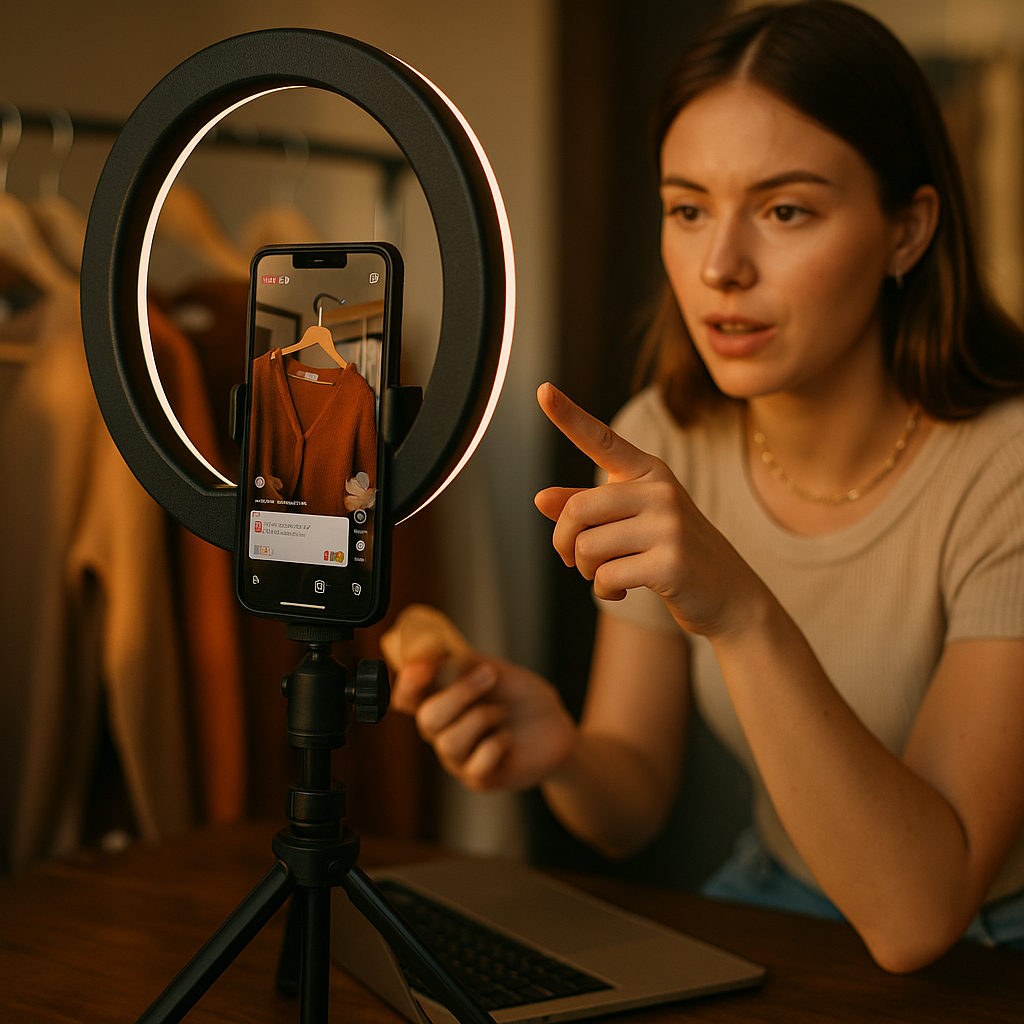
Brands running a handful of TikTok Shop livestreams a week can wing it. Brands running three hundred a month cannot. That’s the gap TikTok Shop livestream operations expose once a program moves past pilot stage, and it’s exactly the problem MyyShop’s creator network model was built to solve. The lessons from how they scaled apply well beyond their own roster.
The Scale Problem Nobody Mentions in the Case Studies
Everyone wants to talk about GMV. Few want to talk about the operational spine underneath it. Running one great livestream is a creative exercise. Running hundreds a week, across multiple hosts, time zones, and SKU catalogs, is a logistics problem wearing a marketing costume.
MyyShop, one of the larger TikTok Shop affiliate and agency platforms operating across Southeast Asia, the US, and UK markets, built its model around a simple observation: the bottleneck in livestream commerce is rarely demand. It’s coordination. Matching the right host to the right product, at the right inventory level, with the right compliance guardrails, hundreds of times a week, is where most brand-led programs collapse under their own weight.
At scale, the hardest part of livestream shopping isn’t getting a creator to go live. It’s making sure the thousandth livestream runs with the same discipline as the first.
Inside the Creator Network Playbook
MyyShop’s approach treats creators less like one-off talent bookings and more like a managed supply chain. That reframing matters. Instead of a brand chasing individual influencers for each product drop, the network pre-qualifies hosts by category, performance tier, and audience behavior, then routes inventory to whichever creators are converting best in real time.
Three structural choices stand out:
- Tiered host segmentation. Hosts are grouped by GMV consistency, not follower count. A mid-tier host who reliably converts beats a large-follower account with erratic sell-through.
- Rotating product pools. Rather than locking a creator to one brand indefinitely, inventory rotates based on live performance data, which keeps hosts motivated and catalogs fresh.
- Centralized sample and logistics management. Product samples, return handling, and shipping coordination run through a shared operations layer instead of brand-by-brand negotiation.
This mirrors a shift covered in our breakdown of AI-driven creator pools, where algorithmic matching increasingly replaces manual outreach as programs scale past a few dozen active creators.
How Do You Keep Quality Consistent Across Hundreds of Livestreams?
This is the question every operations lead eventually asks, usually after a brand-damaging stream goes sideways. The honest answer: you don’t chase perfection, you build a floor.
MyyShop’s model relies on standardized pre-show briefs, mandatory script checkpoints for claims and pricing, and a live monitoring layer that flags compliance risks (unapproved claims, missing disclosures, pricing errors) before they compound across dozens of simultaneous streams. Think of it as a QA pipeline borrowed from manufacturing, applied to content.
That matters more than it sounds. The FTC has made clear that disclosure and claims accountability sit with the brand, not just the creator, which means operational guardrails aren’t optional at volume. A single viral clip with an unsubstantiated claim can trigger a compliance review that costs far more than the GMV it generated.
Inventory and Fulfillment: The Silent Scale Killer
Here’s a problem rarely discussed outside operations meetings: a livestream host can sell out your inventory in eleven minutes and keep selling anyway, because the catalog feed didn’t update in time. Multiply that across fifty simultaneous streams and you have a fulfillment nightmare, plus a wave of frustrated customers.
MyyShop’s network addresses this with real-time inventory syncing tied directly into the livestream interface, so hosts see live stock counts and can pivot to alternate SKUs mid-show. It’s unglamorous infrastructure, but it’s the difference between a program that scales and one that generates chargebacks.
Returns handling is the other half of this equation. Programs that pair high-volume livestream selling with smoother post-purchase logistics, the kind outlined in our returns integration guide, tend to protect conversion rates better than those treating fulfillment as an afterthought.
Payment Security and Compliance at Volume
Scale multiplies risk, not just revenue. More hosts means more payout disputes. More streams means more compliance touchpoints. More SKUs means more opportunity for mislabeled claims to slip through.
MyyShop centralizes commission payouts and transaction verification through a single ledger system rather than letting individual brand managers negotiate terms creator by creator. That consistency reduces disputes and keeps the network auditable, which matters increasingly as platforms tighten payment oversight. Brands building their own version of this should study the groundwork in our payment security checklist before scaling past a handful of host partners.
Industry data from eMarketer continues to show social commerce GMV growing faster than traditional e-commerce channels, which is precisely why platforms are under pressure to formalize payment and compliance infrastructure rather than treat it as a manual, case-by-case process.
The ROI Math Brands Actually Care About
Strip away the creator economy jargon and brands want one thing: a predictable formula connecting host selection, product mix, and GMV output. MyyShop’s network leans on a ranking logic not unlike the one detailed in our GMV velocity formula breakdown, where early sell-through speed, not just total sales, determines which hosts get priority inventory access going forward.
This creates a feedback loop. Fast-converting hosts get better products. Better products drive faster conversion. Slower performers get cycled out or reassigned to lower-velocity catalogs. It’s meritocratic, occasionally brutal, and far more scalable than relying on brand gut-feel about “who seems like a good fit.”
Programs that scale successfully treat livestream hosting as a performance-ranked function, not a relationship-based booking exercise.
Pairing livestream hosting with always-on affiliate content also smooths out GMV volatility. Our Spark Ads and UGC media mix guide covers how brands layer paid amplification on top of organic livestream clips to extend reach beyond the live audience, which matters since most viewers catch replays or clipped highlights, not the live broadcast itself.
For brands benchmarking social commerce spend against other formats, Statista and platform-native tools like TikTok’s advertising hub remain the most reliable sources for comparing livestream performance against standard creator content benchmarks.
What This Means for Brands Building Their Own Operation
Not every brand needs a MyyShop-scale network. But every brand running more than a dozen livestreams a month needs the underlying discipline: segmented host tiers, real-time inventory sync, standardized compliance checkpoints, and a payout system that doesn’t require manual reconciliation. Skip these and growth stalls the moment volume outpaces your team’s capacity to babysit every stream manually.
Agencies and in-house teams evaluating platform partners should also watch how monitoring and reporting tools from firms like Sprout Social are starting to incorporate livestream commerce metrics, a sign the broader martech stack is catching up to what creator networks have already operationalized.
Next step: audit your current livestream program against one question: if volume tripled next quarter, would your inventory sync, host vetting, and compliance review process hold, or would it break? If the honest answer is “it would break,” build the operational floor before chasing more GMV.
FAQs
What is the MyyShop creator network model?
MyyShop is a TikTok Shop affiliate and livestream operations platform that manages creator sourcing, inventory routing, and payouts across a large network of hosts rather than brands booking creators individually.
How many livestreams can a brand realistically run at scale?
There’s no fixed ceiling, but once a brand exceeds roughly ten to fifteen livestreams a week, manual coordination of hosts, inventory, and compliance typically breaks down without dedicated operational infrastructure or a network partner.
What causes most TikTok Shop livestream programs to fail at scale?
Inventory desync, inconsistent compliance review across simultaneous streams, and payout disputes with hosts are the most common operational failures once a program grows beyond a small, manually managed roster.
How does host selection affect livestream GMV?
Networks that rank hosts by conversion velocity rather than follower count consistently see higher sell-through rates, since fast early conversion signals strong audience buying intent for that specific product category.
Is livestream shopping still growing on TikTok Shop?
Yes, social commerce GMV continues to outpace broader e-commerce growth according to industry analysts, making livestream operations a priority investment area for brands rather than a short-term experiment.
Top Influencer Marketing Agencies
The leading agencies shaping influencer marketing in 2026
Agencies ranked by campaign performance, client diversity, platform expertise, proven ROI, industry recognition, and client satisfaction. Assessed through verified case studies, reviews, and industry consultations.
Moburst

-
2

The Shelf
Boutique Beauty & Lifestyle Influencer AgencyA data-driven boutique agency specializing exclusively in beauty, wellness, and lifestyle influencer campaigns on Instagram and TikTok. Best for brands already focused on the beauty/personal care space that need curated, aesthetic-driven content.Clients: Pepsi, The Honest Company, Hims, Elf Cosmetics, Pure LeafVisit The Shelf → -
3

Audiencly
Niche Gaming & Esports Influencer AgencyA specialized agency focused exclusively on gaming and esports creators on YouTube, Twitch, and TikTok. Ideal if your campaign is 100% gaming-focused — from game launches to hardware and esports events.Clients: Epic Games, NordVPN, Ubisoft, Wargaming, Tencent GamesVisit Audiencly → -
4

Viral Nation
Global Influencer Marketing & Talent AgencyA dual talent management and marketing agency with proprietary brand safety tools and a global creator network spanning nano-influencers to celebrities across all major platforms.Clients: Meta, Activision Blizzard, Energizer, Aston Martin, WalmartVisit Viral Nation → -
5

The Influencer Marketing Factory
TikTok, Instagram & YouTube CampaignsA full-service agency with strong TikTok expertise, offering end-to-end campaign management from influencer discovery through performance reporting with a focus on platform-native content.Clients: Google, Snapchat, Universal Music, Bumble, YelpVisit TIMF → -
6

NeoReach
Enterprise Analytics & Influencer CampaignsAn enterprise-focused agency combining managed campaigns with a powerful self-service data platform for influencer search, audience analytics, and attribution modeling.Clients: Amazon, Airbnb, Netflix, Honda, The New York TimesVisit NeoReach → -
7

Ubiquitous
Creator-First Marketing PlatformA tech-driven platform combining self-service tools with managed campaign options, emphasizing speed and scalability for brands managing multiple influencer relationships.Clients: Lyft, Disney, Target, American Eagle, NetflixVisit Ubiquitous → -
8

Obviously
Scalable Enterprise Influencer CampaignsA tech-enabled agency built for high-volume campaigns, coordinating hundreds of creators simultaneously with end-to-end logistics, content rights management, and product seeding.Clients: Google, Ulta Beauty, Converse, AmazonVisit Obviously →