


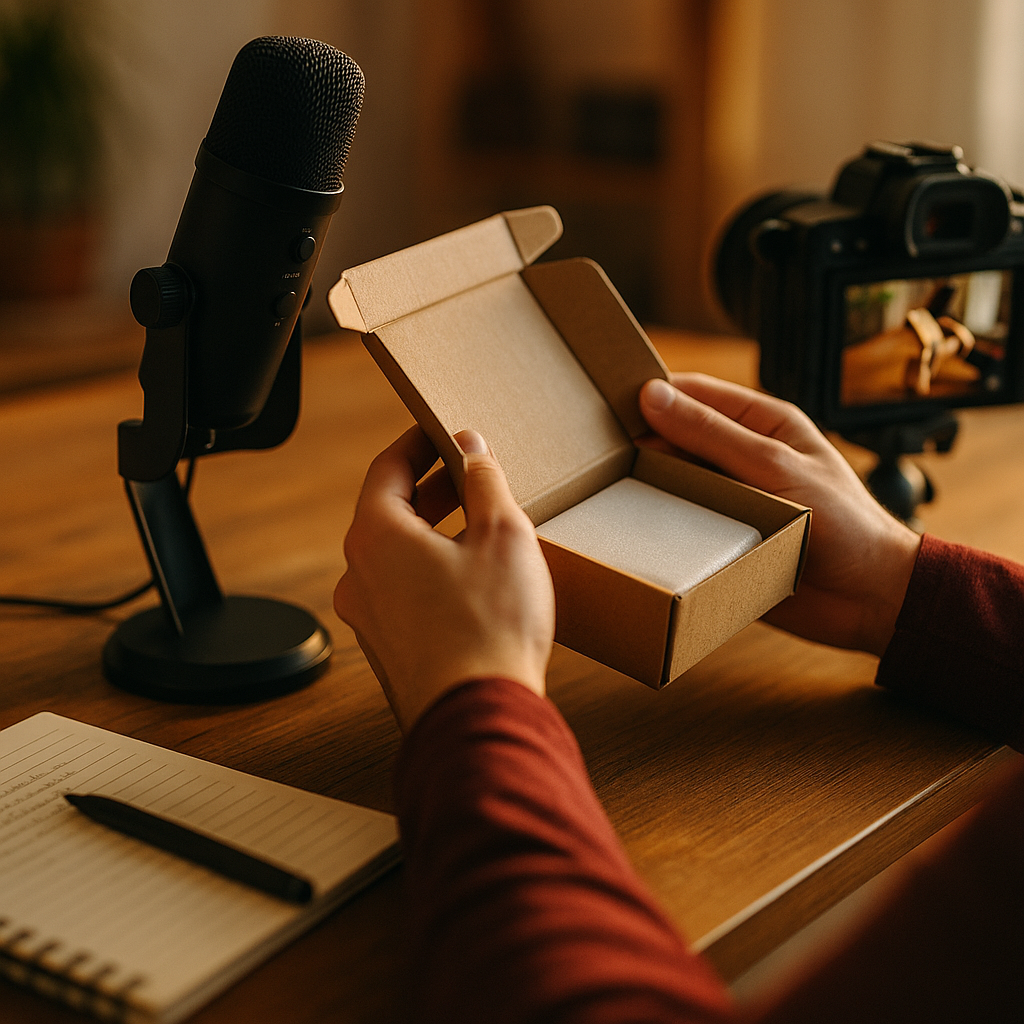
A single crinkle of tissue paper, slowed down and mic’d up, can outperform a polished product demo. ASMR unboxing content now routinely pulls watch times three to four times longer than standard reveal videos, and that retention is exactly what beauty and home brands need to push cold traffic toward checkout. The question isn’t whether the format works. It’s whether your brief is built to use it correctly.
Why Sound Is Doing the Selling
Most marketers still treat unboxing as a visual format: product, hands, reveal, done. But the ASMR variant flips the hierarchy. Sound becomes the primary conversion lever, not the backdrop. Tape peeling, lid clicks, tissue rustle, the soft thud of a jar on a countertop: these are the micro-cues that trigger the tingling, calming response ASMR audiences chase. For beauty and home categories specifically, that sensory layer maps directly onto the purchase decision. Shoppers buying skincare, candles, or home textiles are already buying a sensory experience. ASMR unboxing just lets them preview it before they pay.
This is why the format resonates so differently than a typical try-on or demo clip. A try-on haul script sells fit confidence. ASMR unboxing sells texture, weight, and tactile quality, which is arguably a harder sell to fake. Audiences can tell when the sound design is staged versus genuine, and that authenticity gap is where trust (or distrust) gets built fast.
Brands that script for sound design first and visuals second see materially longer average view duration, which platform algorithms reward with broader organic distribution.
The Format Breakdown: What Actually Converts
Not every quiet unboxing video performs. There’s a structural pattern separating the ones that drive clicks from the ones that just rack up passive views. Here’s the breakdown practitioners should brief against:
- The approach shot (0-3 seconds): hands entering frame, package untouched. This sets the sensory contract with the viewer immediately.
- The seal break (3-8 seconds): tape, box flaps, or shrink wrap removed slowly. This is the retention anchor; rushing it kills the ASMR effect entirely.
- The reveal (8-15 seconds): product surfaces with minimal narration, if any. Captions can carry brand or price info silently, similar to the approach used in silent captioned demos.
- The tactile beat (15-25 seconds): touching, tapping, or testing texture (lid twist, pump sound, fabric scrunch). This is where beauty and home products differentiate most clearly from electronics or apparel unboxing.
- The soft CTA (last 3-5 seconds): a low-key prompt, often text-based, pointing to a shop link or discount code.
Notice what’s missing: a hard sell. ASMR audiences actively disengage from loud, promotional language. The CTA has to feel like an afterthought, not a pitch. That’s a tough briefing conversation to have with a client who wants “more brand mentions,” but it’s non-negotiable for the format to retain its sensory credibility.
Beauty vs. Home: Different Triggers, Different Metrics
Beauty brands get the most mileage from product-in-hand sounds: pump dispensers, cap clicks, jar seals breaking for the first time. These micro-sounds signal freshness and quality, which matters enormously in a category where counterfeit and “is this expired” concerns run high. Home brands, on the other hand, lean into ambient and material sounds: candle wick trims, fabric unfolding, ceramic clinking against ceramic. The conversion driver shifts from “is this genuine” to “will this feel as good in my space as it looks in the video.”
This distinction matters for measurement too. According to eMarketer, short-form video engagement metrics increasingly diverge by category, meaning a beauty brand benchmarking against home decor creators (or vice versa) will draw the wrong conclusions about what “good” performance looks like. Pull category-specific benchmarks before setting KPI targets, not blended averages across your whole influencer roster.
Where ASMR Unboxing Fits in the Funnel
This format is not a top-of-funnel awareness play, despite looking passive. It performs best in the consideration stage, when a shopper has already seen a product ad or demo and is doing a final gut-check before buying. That’s a meaningfully different placement than, say, a product explainer hook, which is built to stop the scroll cold. ASMR unboxing rewards patience and works best retargeted to warm audiences who’ve already engaged with the brand once.
Practically, that means pairing ASMR unboxing creative with retargeting pixels or TikTok Shop product tags rather than treating it as a cold prospecting asset. Brands running it as a prospecting ad often see decent view-through but weak immediate conversion, then wrongly conclude the format doesn’t work. It works. It’s just being deployed at the wrong funnel stage.
Creator Selection Is the Make-or-Break Variable
Not every creator can do ASMR well, and casting is where most brands waste budget. The skill set required (controlled pacing, mic discipline, patience with slow movements) is closer to audio production than typical influencer content creation. Look for creators who already run ASMR or “satisfying content” channels rather than asking a general lifestyle creator to improvise it. The learning curve is steep, and a rushed, poorly mic’d attempt reads as cheap rather than premium, which actively damages brand perception for higher-price-point beauty and home SKUs.
Vet for technical setup too: lapel mics or shotgun mics, not phone-built-in audio. A quiet room. No background music competing with the product sounds. These are production details, but they’re the difference between content that converts and content that just sits there with modest view counts. If you’re building a creator brief around this, borrow structure from the pacing discipline used in short-form demo hook scripts, where every second is accounted for, then slow the whole thing down by roughly 40 percent for the ASMR cadence.
A poorly mic’d ASMR unboxing doesn’t just underperform, it actively signals low production value on a premium product, which can suppress conversion below a standard demo baseline.
Measurement: What to Actually Track
Standard influencer KPIs undersell this format if you’re only looking at likes and shares. The metrics that matter most for ASMR unboxing:
- Average view duration and completion rate: this is the primary signal the format is working. Anything under 70 percent completion suggests pacing or sound quality issues.
- Sound-on rate: platforms like TikTok surface this in creator analytics. ASMR content lives or dies by whether audiences keep sound enabled, unlike the mute-friendly approach covered in commentary overlay content.
- Saves and shares relative to likes: ASMR content tends to over-index on saves because viewers return to it, which is a strong secondary conversion signal even without an immediate click.
- Click-through from the soft CTA: track this separately from engagement metrics, since the two don’t always correlate the way they do in louder formats.
For attribution, treat this content the way you’d treat affiliate-first tracking templates, with clean UTM parameters or unique discount codes per creator. Blended attribution across a whole campaign will wash out the format’s real contribution, especially since its strength is consideration-stage influence rather than last-click conversion.
Compliance Still Applies, Even When Nobody’s Talking
A common misconception is that disclosure rules are lighter for ASMR because there’s minimal spoken promotion. They’re not. The FTC’s endorsement guidance applies regardless of whether the promotion is spoken, written, or purely visual with a product placement. Captions need clear #ad or #sponsored disclosure, placed where viewers will actually see it before they scroll past, not buried in a description box. Brands running paid ASMR unboxing through TikTok Shop or Instagram Reels should also check platform-specific branded content tools; both Meta Business and TikTok Ads have built-in disclosure labeling that reduces legal exposure and keeps the content eligible for paid amplification.
Repurposing and Scaling the Format
Once a creator nails the pacing, that single video is worth more than one placement. Cut 6 to 8 second clips of the most satisfying sound beats (the seal break, the pump click) for use as Reels or TikTok loops, which tend to perform well as standalone satisfying-content snippets even stripped of brand context. For paid media, test the unboxing as a pre-roll alongside more conventional formats like testimonial compilation reels, since the sensory hook often lifts completion rates on the harder-sell creative that follows it in a sequence.
Don’t over-rotate the same creator’s unboxing style across every SKU, though. Audiences notice repetition fast in ASMR content, and the format’s power comes partly from novelty of sound. Rotate packaging types, textures, and creators quarterly to keep the sensory payoff fresh.
Frequently Asked Questions
FAQs
What makes ASMR unboxing different from a standard unboxing video?
Standard unboxing prioritizes visual reveal and spoken commentary. ASMR unboxing prioritizes sound design, slow pacing, and minimal or no narration, with the sensory audio cues (tape, tissue, product sounds) doing the persuasive work instead.
Which products perform best with this format?
Beauty products with distinct packaging sounds (pumps, jars, caps) and home products with tactile or material qualities (candles, textiles, ceramics) perform strongest. Products without a meaningful unboxing sound or texture tend to underperform in this format.
Where should ASMR unboxing sit in a marketing funnel?
It performs best at the consideration stage, retargeted to audiences who’ve already seen a product ad or explainer. It’s a weaker cold-prospecting asset because its strength is building purchase confidence, not stopping the scroll.
Do FTC disclosure rules apply if the creator isn’t speaking?
Yes. Disclosure requirements apply regardless of whether promotion is spoken or purely visual. Brands should ensure captions clearly state #ad or #sponsored and use platform branded content tools where available.
How do you measure success beyond views?
Track completion rate, sound-on rate, saves relative to likes, and click-throughs from the soft CTA separately from general engagement metrics. Use unique discount codes or UTM links per creator to isolate the format’s actual contribution to conversion.
Start by auditing one existing unboxing asset against the five-beat structure above (approach, seal break, reveal, tactile beat, soft CTA), then rebrief your next creator shoot around sound design before visuals. The brands that treat ASMR unboxing as an audio-first format, not a video trend, are the ones seeing it move conversion numbers rather than just watch time.
Top Influencer Marketing Agencies
The leading agencies shaping influencer marketing in 2026
Agencies ranked by campaign performance, client diversity, platform expertise, proven ROI, industry recognition, and client satisfaction. Assessed through verified case studies, reviews, and industry consultations.
Moburst

-
2

The Shelf
Boutique Beauty & Lifestyle Influencer AgencyA data-driven boutique agency specializing exclusively in beauty, wellness, and lifestyle influencer campaigns on Instagram and TikTok. Best for brands already focused on the beauty/personal care space that need curated, aesthetic-driven content.Clients: Pepsi, The Honest Company, Hims, Elf Cosmetics, Pure LeafVisit The Shelf → -
3

Audiencly
Niche Gaming & Esports Influencer AgencyA specialized agency focused exclusively on gaming and esports creators on YouTube, Twitch, and TikTok. Ideal if your campaign is 100% gaming-focused — from game launches to hardware and esports events.Clients: Epic Games, NordVPN, Ubisoft, Wargaming, Tencent GamesVisit Audiencly → -
4

Viral Nation
Global Influencer Marketing & Talent AgencyA dual talent management and marketing agency with proprietary brand safety tools and a global creator network spanning nano-influencers to celebrities across all major platforms.Clients: Meta, Activision Blizzard, Energizer, Aston Martin, WalmartVisit Viral Nation → -
5

The Influencer Marketing Factory
TikTok, Instagram & YouTube CampaignsA full-service agency with strong TikTok expertise, offering end-to-end campaign management from influencer discovery through performance reporting with a focus on platform-native content.Clients: Google, Snapchat, Universal Music, Bumble, YelpVisit TIMF → -
6

NeoReach
Enterprise Analytics & Influencer CampaignsAn enterprise-focused agency combining managed campaigns with a powerful self-service data platform for influencer search, audience analytics, and attribution modeling.Clients: Amazon, Airbnb, Netflix, Honda, The New York TimesVisit NeoReach → -
7

Ubiquitous
Creator-First Marketing PlatformA tech-driven platform combining self-service tools with managed campaign options, emphasizing speed and scalability for brands managing multiple influencer relationships.Clients: Lyft, Disney, Target, American Eagle, NetflixVisit Ubiquitous → -
8

Obviously
Scalable Enterprise Influencer CampaignsA tech-enabled agency built for high-volume campaigns, coordinating hundreds of creators simultaneously with end-to-end logistics, content rights management, and product seeding.Clients: Google, Ulta Beauty, Converse, AmazonVisit Obviously →