


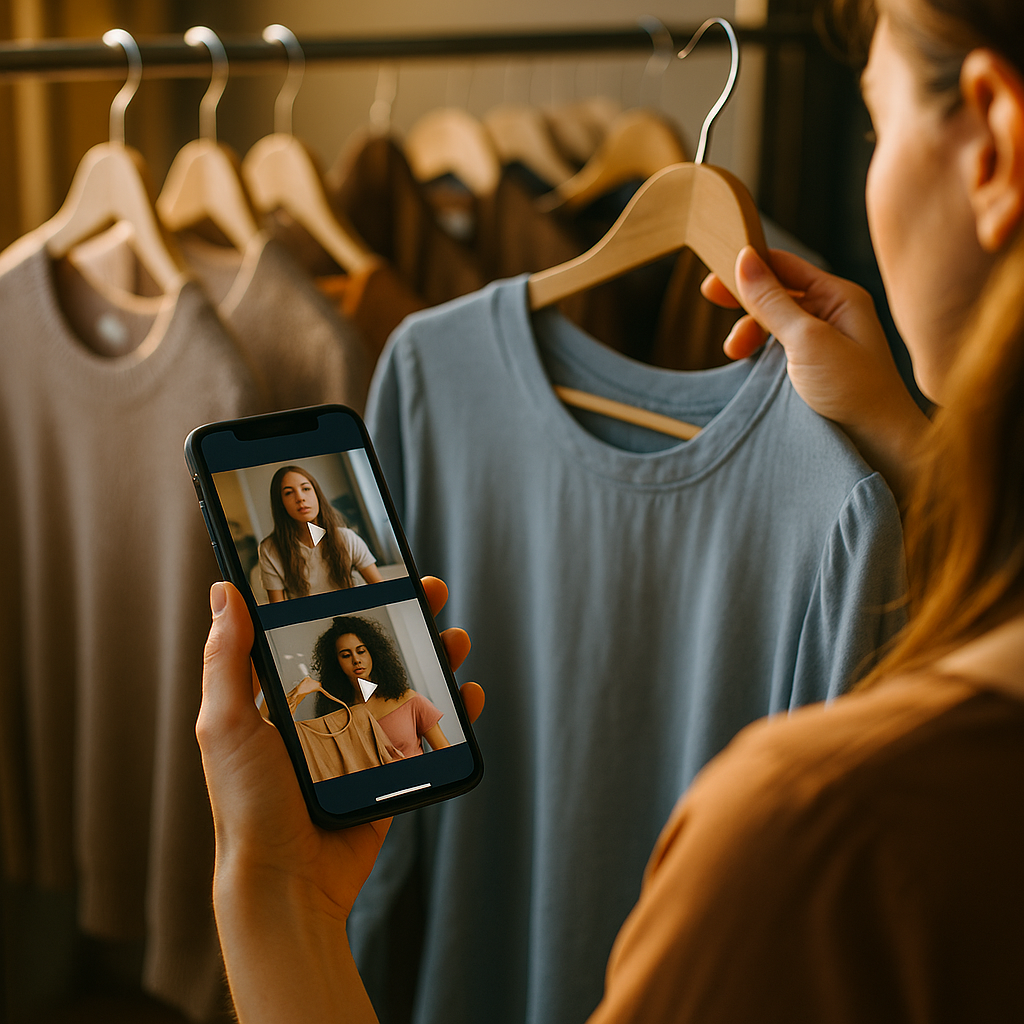
Seventy percent of shoppers say they trust influencer recommendations more than branded content, yet most brands still force every visitor into one review format whether they’re a skeptical first timer or a ready to buy repeat customer. What if you let the shopper pick? Choose your creator format is quietly becoming the most effective trust lever on the product page, and brands sitting on multiple creator formats are leaving conversion on the table by only showing one.
The One Size Fits All Review Is Dying
For years, the brand playbook was simple: pick one creator, one format, maybe a 60 second UGC clip, and bolt it onto the product detail page. Job done. But shopper behavior has splintered. Some people want a 15 second demo. Others want a full try on haul with fit notes. A third group wants someone to roast the product honestly before they commit.
Serving all three audiences the same clip is like running one ad creative forever and wondering why fatigue sets in. It doesn’t work on social, and it doesn’t work on the PDP either.
Brands running format choice tests on product pages report conversion lifts in the double digits simply by letting shoppers self select the review style that matches their buying stage.
What “Choose Your Format” Actually Looks Like
This isn’t a vague concept. In practice, it means building a lightweight review carousel or tabbed module on the PDP (or in a shoppable ad unit) that offers three to five creator formats for the same product, and letting the shopper click into whichever one resonates. Common format sets include:
- Quick demo: a creator showing the product in action, no narrative, just proof. See how short form demo hooks are scripted for fast comprehension.
- Try on or fit check: useful for apparel, beauty, and anything size dependent. The try on haul format still converts fit anxious shoppers better than static sizing charts.
- Unfiltered reaction or critique: a creator pointing out flaws before praising the product, which builds credibility precisely because it isn’t a pure sell. This maps closely to expectation versus reality skits.
- Testimonial compilation: a stitched reel of multiple real customers, good for social proof heavy categories. These work the same way as testimonial compilation reels used in paid social.
- Cost or value breakdown: for considered purchases where price justification matters, similar to cost breakdown unboxings.
The shopper picks the lens that matches their hesitation. That’s the whole mechanic, and it’s deceptively simple to build with most modern UGC and review platforms.
Why This Beats the Single Hero Video Approach
Marketers love a hero asset. One polished creator video, pushed everywhere, optimized to death. The problem is that “optimized” usually means optimized for the average shopper, and the average shopper doesn’t exist. A 25 year old buying their first retinol serum has different objections than a 45 year old replacing a product they’ve used for a decade. Forcing both into the same 30 second clip means you’re underselling to one group and overselling to the other.
Letting shoppers choose format solves this without requiring you to guess who’s landing on the page. You’re not segmenting by demographic data you may not even have. You’re segmenting by intent signal, which is far more reliable. Someone who clicks “show me the honest review” is telling you something different than someone who clicks “quick demo.”
This is also why formats like split screen reviews and demo to drama hybrids have grown in popularity. They’re not single purpose clips, they’re building blocks brands can mix and match inside a choose your own format experience.
The Returns Angle Nobody Talks About
Here’s the part that should matter most to anyone owning a P&L: mismatched expectations are the number one driver of returns in ecommerce. A shopper who only saw a polished demo and never saw an honest “this runs small” review is far more likely to return the item. Giving shoppers access to returns proof demo videos as one of the selectable formats directly reduces this risk. It sounds counterintuitive to show refund footage on a sales page, but transparency format options consistently reduce post purchase regret, which is the single biggest hidden cost in influencer driven commerce.
Building the Format Library Without Blowing the Budget
The objection every CMO raises here is predictable: “We can barely afford one creator per SKU, now you want five formats?” Fair point. But this doesn’t require five separate production budgets. Most brands can build a format library using a mix of:
- Repurposed affiliate and gifting content you already have rights to, organized by format tag rather than by creator name.
- A single content day with one or two creators who shoot multiple formats back to back (demo, try on, critique) in one session.
- UGC platform submissions, filtered and tagged by format type using the same clean tracking structure described in affiliate first content templates.
The real cost isn’t production, it’s organization. You need a tagging system (demo, try on, critique, testimonial, cost breakdown) applied consistently across your content library so it can be pulled into a format selector module without manual sorting every time a new SKU launches.
Which Formats Actually Move the Needle?
Not every format deserves a permanent slot. Run a quarterly audit using your PDP analytics (most ecommerce platforms and tools like HubSpot or your CDP can track module level engagement) to see which formats get clicked and which drive add to cart. Categories differ wildly here. Beauty and apparel lean heavily on try on formats. Electronics and home goods skew toward demo and critique. Supplements and wellness products over index on testimonial compilations because the buying decision is trust based, not visual.
Don’t guess at which formats matter. The data from your own PDP will tell you within one quarter, and it will differ by category every time.
Platform and Compliance Considerations
If you’re running this through paid placements on TikTok Shop or Meta, format choice modules need to stay within each platform’s disclosure and ad policy rules. Review TikTok’s advertising policies and Meta’s branded content guidelines at Meta Business before building multi format carousels that mix organic and paid creator content, since disclosure requirements can vary by format and placement type.
And don’t skip the basics: every format, no matter how casual it looks, still needs a clear material connection disclosure under FTC endorsement guidelines. An “unfiltered critique” format is especially risky here because it’s designed to feel organic. That’s exactly why it needs the clearest disclosure, not the least. Regulators in the UK should also check ICO guidance on data handling if format selection data feeds into personalization engines.
Where This Is Headed
The next evolution is dynamic format serving, where AI matches the shopper’s browsing behavior to the format most likely to convert them, without requiring a manual click. Think of it as the PDP equivalent of discovery feed hooks that adapt based on scroll behavior. A shopper who hovers over the size chart gets served the try on format automatically. A shopper who reads three reviews gets served the testimonial compilation. Choice becomes implicit rather than explicit.
We’re not fully there yet industry wide, but platforms are moving fast on this. eMarketer’s recent commerce research points to personalized social proof as one of the highest leverage, lowest cost conversion levers available to mid market brands right now, precisely because the content already exists, it just needs smarter serving logic.
Next Step: Start With Three Formats, Not Five
Don’t try to build the full library on day one. Pick your highest return rate SKU, produce or source three formats (demo, try on or critique, testimonial), and run a four week A/B test against your current single video PDP module. Let the conversion and return data tell you whether to expand the format library from there.
Frequently Asked Questions
What is the choose your creator format strategy?
It’s a PDP or ad experience where shoppers select which style of influencer content they want to watch, such as a quick demo, a try on, an honest critique, or a testimonial compilation, instead of being shown one fixed video for everyone.
Does letting shoppers pick a format actually improve conversion?
Early adopters report meaningful lifts because the shopper is matching content to their own specific objection or hesitation rather than watching generic content that may not address their concern.
How many creator formats should a brand offer per product?
Three is a practical starting point: a quick demo, a more detailed try on or critique format, and a testimonial compilation. Expand based on what your PDP analytics show shoppers actually engaging with.
Does this require hiring more creators?
Not necessarily. Many brands build format libraries from existing affiliate, gifting, and UGC content by tagging it by format type, or by booking a single content day where one creator shoots multiple formats back to back.
Are there compliance risks with multiple review formats?
Yes. Every format still requires clear FTC compliant disclosure, and critique style content needs especially clear labeling since it’s designed to feel organic. Review platform specific policies before launch.
Which product categories benefit most from format choice?
Apparel and beauty tend to favor try on formats, electronics and home goods perform best with demo and critique content, and supplements or wellness products often rely more heavily on testimonial compilations.
Top Influencer Marketing Agencies
The leading agencies shaping influencer marketing in 2026
Agencies ranked by campaign performance, client diversity, platform expertise, proven ROI, industry recognition, and client satisfaction. Assessed through verified case studies, reviews, and industry consultations.
Moburst

-
2

The Shelf
Boutique Beauty & Lifestyle Influencer AgencyA data-driven boutique agency specializing exclusively in beauty, wellness, and lifestyle influencer campaigns on Instagram and TikTok. Best for brands already focused on the beauty/personal care space that need curated, aesthetic-driven content.Clients: Pepsi, The Honest Company, Hims, Elf Cosmetics, Pure LeafVisit The Shelf → -
3

Audiencly
Niche Gaming & Esports Influencer AgencyA specialized agency focused exclusively on gaming and esports creators on YouTube, Twitch, and TikTok. Ideal if your campaign is 100% gaming-focused — from game launches to hardware and esports events.Clients: Epic Games, NordVPN, Ubisoft, Wargaming, Tencent GamesVisit Audiencly → -
4

Viral Nation
Global Influencer Marketing & Talent AgencyA dual talent management and marketing agency with proprietary brand safety tools and a global creator network spanning nano-influencers to celebrities across all major platforms.Clients: Meta, Activision Blizzard, Energizer, Aston Martin, WalmartVisit Viral Nation → -
5

The Influencer Marketing Factory
TikTok, Instagram & YouTube CampaignsA full-service agency with strong TikTok expertise, offering end-to-end campaign management from influencer discovery through performance reporting with a focus on platform-native content.Clients: Google, Snapchat, Universal Music, Bumble, YelpVisit TIMF → -
6

NeoReach
Enterprise Analytics & Influencer CampaignsAn enterprise-focused agency combining managed campaigns with a powerful self-service data platform for influencer search, audience analytics, and attribution modeling.Clients: Amazon, Airbnb, Netflix, Honda, The New York TimesVisit NeoReach → -
7

Ubiquitous
Creator-First Marketing PlatformA tech-driven platform combining self-service tools with managed campaign options, emphasizing speed and scalability for brands managing multiple influencer relationships.Clients: Lyft, Disney, Target, American Eagle, NetflixVisit Ubiquitous → -
8

Obviously
Scalable Enterprise Influencer CampaignsA tech-enabled agency built for high-volume campaigns, coordinating hundreds of creators simultaneously with end-to-end logistics, content rights management, and product seeding.Clients: Google, Ulta Beauty, Converse, AmazonVisit Obviously →