


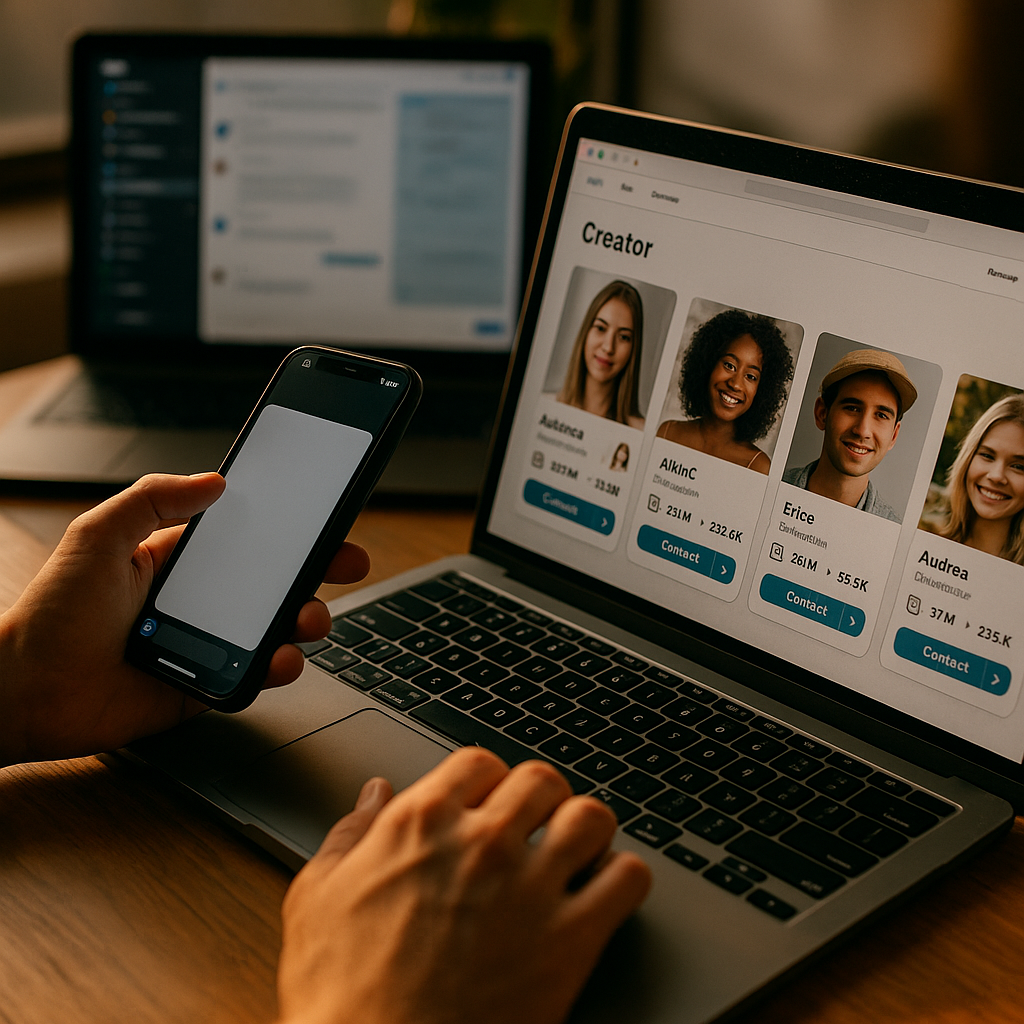
73 percent of marketers say finding the right creator still takes longer than negotiating the deal itself. That single stat explains why the creator marketplace is shifting away from cold outreach and into structured, searchable networks. Brands no longer want to slide into DMs and hope. They want filters, verified data, and a paper trail.
The Spray-and-Pray Era Is Over
For years, influencer discovery looked like a sales funnel built on hope. A brand manager would scroll TikTok, screenshot a few handles, and fire off templated emails to fifty creators hoping five would respond. It worked when the market was small. It does not work when there are millions of monetized creators across a dozen platforms, each with wildly different rate cards and audience quality.
Cold outreach is slow, unscalable, and nearly impossible to audit. Legal and compliance teams hate it because there is no consistent record of how a creator was vetted, what representations were made, or whether disclosure language was agreed upon in writing. When an FTC inquiry or a brand safety incident hits, “we found them on Instagram and DMed them” is not a defensible process.
Structured marketplaces turn creator sourcing from a manual guessing game into a documented, repeatable procurement function, which is exactly what finance and legal teams have been demanding for years.
This is the backdrop for the rise of structured creator networking: platforms, marketplaces, and verified directories that replace cold DMs with searchable profiles, performance history, and built-in diligence trails.
What Does “Structured Networking” Actually Mean?
It is not a buzzword for yet another influencer database. Structured networking refers to a set of operational shifts happening across the creator marketplace:
- Searchable, verified profiles replacing unverified bios and inflated follower counts.
- Standardized rate benchmarking so brands know whether a quote is fair before they negotiate, similar to the rate transparency documented in micro influencer rate tracking.
- Diligence rooms and audit trails that log every negotiation step, contract version, and disclosure confirmation.
- Performance based matching that connects brands to creators based on historical conversion data, not vanity metrics.
Platforms like IMCX have pushed this further by building debate and diligence rooms directly into the deal flow, a shift covered in depth in our piece on how creator deals become auditable. The idea is simple: every claim a creator makes about reach or engagement gets checked against platform data before a brand signs anything.
Why Agencies Are Rebuilding Their Sourcing Stack
Agencies feel this shift first because they carry the operational burden of sourcing at scale. A mid-sized agency running fifteen brand programs simultaneously cannot afford account managers spending eight hours a week manually vetting creator engagement rates in spreadsheets. It is not a staffing problem, it is a tooling problem.
That is why so many agencies are consolidating their creator discovery into fewer, deeper platform relationships instead of juggling a dozen outreach inboxes. The retail media shift documented in how agencies rebuild margins shows the same pattern: when budgets compress, operational waste gets cut first, and cold outreach is the most waste-heavy part of the influencer workflow.
There is also a quieter driver here. Procurement departments, especially at enterprise brands, are now requiring vendor diligence documentation before any creator payment clears finance. Structured marketplaces generate that documentation automatically. Cold outreach does not generate anything except an email thread nobody wants to read during an audit.
The Nano and Micro Tier Changed the Math
Structured networking would matter less if brands were still signing five celebrity deals a year. But budgets have moved decisively toward nano and micro creators, and that shift multiplies the number of relationships a brand needs to manage. Research referenced in nano creator budget growth shows brands now running programs with hundreds of small creators instead of a handful of big names.
You cannot cold-DM your way through 300 nano creator relationships and expect consistent contract terms, consistent disclosure language, or consistent payment timelines. The volume alone forces structure. Nano creators also tend to outperform mid-tier influencers on cost efficiency, a point covered in cost per sale comparisons, which gives brands another reason to scale the tier up and therefore another reason to need a marketplace instead of a contacts spreadsheet.
More relationships, lower average deal size, and tighter margins mean brands need a system that scales without adding headcount. That is the entire value proposition of structured marketplaces.
Risk and Compliance Finally Get a Seat at the Table
Here is the part marketers do not love talking about: cold outreach creates liability. When a creator is sourced through an unverified DM relationship, there is no consistent record of audience authenticity checks, no standardized disclosure agreement, and often no clear chain of custody for usage rights. Regulators are not sympathetic to “we didn’t know.” The FTC’s endorsement guidance puts the compliance burden squarely on the brand, not just the creator.
Structured marketplaces bake compliance checks into the sourcing step itself. A creator’s disclosure history, platform strikes, and brand safety flags show up in the profile before a brand even opens negotiations. That is a very different risk posture than hoping a creator mentions #ad somewhere in a caption.
When diligence happens before the deal instead of after a crisis, brand safety stops being a reactive scramble and becomes a sourcing filter.
This also matters for international programs. Live commerce growth in APAC, for example, is outpacing the safety tooling built to support it, according to coverage in APAC live commerce growth. Markets expanding faster than their compliance infrastructure are exactly where structured marketplaces add the most value, because they standardize vetting across regions that otherwise have wildly inconsistent creator regulation.
Regional creator hubs are feeling this pressure too. Cities positioned as emerging creator economy centers, as detailed in our coverage of regional creator hubs, are seeing brand budgets flow in specifically because local creator networks offer more traceable vetting than scattered national outreach.
How AI Discovery Is Reshaping the Matchmaking Layer
AI powered matching is quietly becoming the backbone of structured marketplaces. Instead of a brand manager searching hashtags manually, platforms now surface creators based on historical conversion lift, audience overlap, and even how often a creator gets cited in AI generated answers. That last point matters more than most marketers realize. As AI answer engines reshape discovery, brands are starting to measure creator value by citation frequency, not just engagement, a shift explored in citation based measurement.
This is not a side trend. AI search surges, including the 392 percent spike documented in our funnel rebuild coverage, are forcing brands to rethink what “reach” even means. A creator who ranks well in AI generated shopping answers might be worth more than one with a bigger follower count but zero AI visibility. Structured marketplaces are starting to surface this data natively, which cold outreach simply cannot replicate because there is no database behind a DM.
Platforms are also starting to apply this matching logic to cost efficiency. Instead of flat creator fees, several marketplaces now price deals per validated content asset, a model detailed in cost per validated asset pricing. That pricing structure only works if the marketplace already has verified performance history on the creator, which is precisely what structured networks provide and unsolicited outreach never could.
What This Means for Budget Planning
If discovery is now structured and data backed, budget conversations change too. Marketers can forecast cost per qualified creator relationship instead of guessing at outreach conversion rates. Platforms report average sourcing cost drops of 20 to 40 percent when brands move from manual outreach to marketplace based discovery, largely because fewer hours get spent chasing creators who were never a good fit in the first place.
Tools like those tracked by eMarketer’s creator economy research and benchmarking data from Sprout Social consistently show that brands with structured sourcing processes report higher campaign ROI, largely because the matching happens on performance data rather than gut feel.
Common Objections, Answered
Some marketers push back, arguing structured marketplaces remove the personal relationship building that made influencer marketing work in the first place. Fair point, but it misunderstands where the relationship actually matters. Structured platforms handle discovery and vetting. The creative collaboration, the actual campaign brief, the back-and-forth on content direction, still happens human to human. Nobody is suggesting AI should write the creative brief. The marketplace just makes sure you are briefing someone worth your budget.
Others worry that marketplaces favor creators who are already popular, making it harder for genuinely emerging talent to break through. That is a real risk, and it is worth asking any platform you evaluate how they surface new or niche creators rather than just ranking by follower count. The best marketplaces weight engagement authenticity and conversion history over raw audience size, which tends to level the playing field rather than reinforce it.
For a practical next step: before your next campaign cycle, audit how many of your current creator relationships came from cold outreach versus a structured or referral based source, then compare performance between the two groups. The data usually makes the case for structured sourcing on its own.
Frequently Asked Questions
What is a structured creator marketplace?
A structured creator marketplace is a platform where brands discover, vet, and negotiate with creators using verified profiles, standardized rate data, and documented diligence processes, rather than relying on unsolicited direct messages or manual research.
Why are brands moving away from cold outreach to creators?
Cold outreach is slow, hard to audit, and creates compliance gaps because there is no consistent record of vetting or disclosure agreements. Structured marketplaces generate that documentation automatically and scale better as brands manage hundreds of smaller creator relationships.
Does structured sourcing cost more than cold outreach?
Most brands report lower overall sourcing costs because platform fees are offset by reduced staff hours spent on manual vetting and by fewer failed partnerships from mismatched creators.
How does AI influence creator matchmaking in these marketplaces?
AI powered matching now factors in conversion history, audience overlap, and increasingly how often a creator is cited in AI generated search answers, giving brands a more predictive signal than follower count alone.
Is this shift relevant for small and mid-sized brands, not just enterprise advertisers?
Yes. Nano and micro creator programs, which now dominate budget allocation for many brands, generate too many relationships to manage manually, making structured discovery valuable even for smaller marketing teams.
Top Influencer Marketing Agencies
The leading agencies shaping influencer marketing in 2026
Agencies ranked by campaign performance, client diversity, platform expertise, proven ROI, industry recognition, and client satisfaction. Assessed through verified case studies, reviews, and industry consultations.
Moburst

-
2

The Shelf
Boutique Beauty & Lifestyle Influencer AgencyA data-driven boutique agency specializing exclusively in beauty, wellness, and lifestyle influencer campaigns on Instagram and TikTok. Best for brands already focused on the beauty/personal care space that need curated, aesthetic-driven content.Clients: Pepsi, The Honest Company, Hims, Elf Cosmetics, Pure LeafVisit The Shelf → -
3

Audiencly
Niche Gaming & Esports Influencer AgencyA specialized agency focused exclusively on gaming and esports creators on YouTube, Twitch, and TikTok. Ideal if your campaign is 100% gaming-focused — from game launches to hardware and esports events.Clients: Epic Games, NordVPN, Ubisoft, Wargaming, Tencent GamesVisit Audiencly → -
4

Viral Nation
Global Influencer Marketing & Talent AgencyA dual talent management and marketing agency with proprietary brand safety tools and a global creator network spanning nano-influencers to celebrities across all major platforms.Clients: Meta, Activision Blizzard, Energizer, Aston Martin, WalmartVisit Viral Nation → -
5

The Influencer Marketing Factory
TikTok, Instagram & YouTube CampaignsA full-service agency with strong TikTok expertise, offering end-to-end campaign management from influencer discovery through performance reporting with a focus on platform-native content.Clients: Google, Snapchat, Universal Music, Bumble, YelpVisit TIMF → -
6

NeoReach
Enterprise Analytics & Influencer CampaignsAn enterprise-focused agency combining managed campaigns with a powerful self-service data platform for influencer search, audience analytics, and attribution modeling.Clients: Amazon, Airbnb, Netflix, Honda, The New York TimesVisit NeoReach → -
7

Ubiquitous
Creator-First Marketing PlatformA tech-driven platform combining self-service tools with managed campaign options, emphasizing speed and scalability for brands managing multiple influencer relationships.Clients: Lyft, Disney, Target, American Eagle, NetflixVisit Ubiquitous → -
8

Obviously
Scalable Enterprise Influencer CampaignsA tech-enabled agency built for high-volume campaigns, coordinating hundreds of creators simultaneously with end-to-end logistics, content rights management, and product seeding.Clients: Google, Ulta Beauty, Converse, AmazonVisit Obviously →