


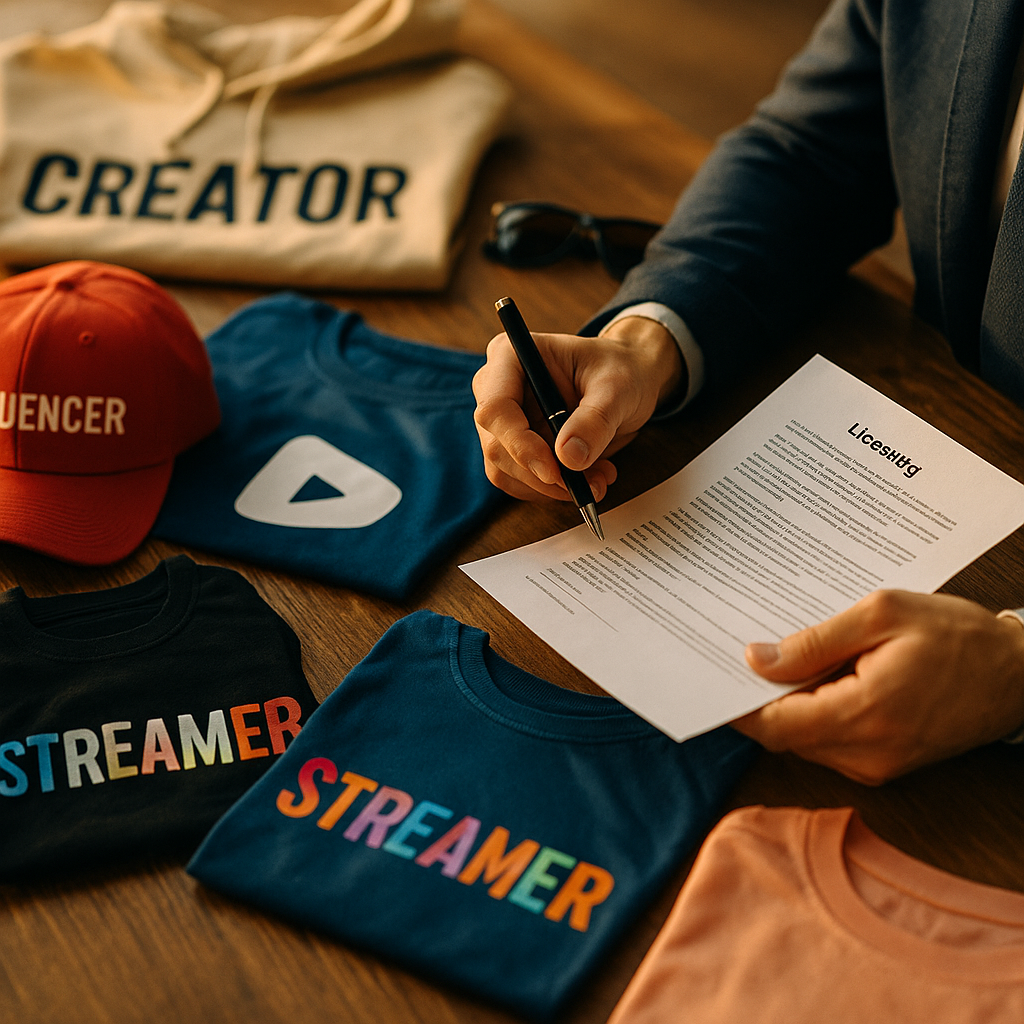
One viral hoodie drop can undo three years of brand safety work. When a creator’s merch line ships with unlicensed artwork, a defective product, or a political slogan nobody vetted, the brand that funded the partnership eats the fallout, not the creator. A brand safety audit for creator merchandise lines and spinoff IP is no longer optional due diligence. It is the line between a profitable licensing deal and a product recall with your logo on it.
Creator merch has quietly become one of the riskiest categories in influencer marketing. It is not just a sponsored post anymore. It is a physical product, a supply chain, a trademark filing, and a customer service obligation all bundled into one deal.
Why Merch Deals Carry More Risk Than Sponsored Content
A standard brand deal lives and dies in a few weeks. A merch line or spinoff IP product lives on shelves, in warehouses, and in customer hands for months or years. That timeline changes the risk calculus entirely.
Think about what’s actually bundled into a single creator merchandise launch: trademark clearance, manufacturing compliance, labeling law, platform commerce policies, consumer protection rules, and the creator’s own behavior risk. If the creator gets canceled six months after launch, the product is still sitting on Amazon with your co-brand on it. Sponsored posts disappear from feeds. Physical inventory does not.
A sponsored post has a shelf life of days. A merch line has a shelf life of months, and every one of those months is a window for something to go wrong that you did not plan for.
Brands have learned this the hard way. Several high-profile creator apparel and beauty lines have faced recalls, trademark disputes, or quiet shelf-pulls after the fact. Nobody publishes a press release about a failed audit. They just quietly stop restocking.
What a Brand Safety Audit Actually Covers
“Brand safety” used to mean keeping your ad off extremist content. For merchandise, the definition expands considerably. A real audit touches legal, operational, and reputational layers at once.
- IP and trademark clearance: Does the creator actually own the rights to the catchphrase, logo, or character on the product? Fan-made spinoff IP is a minefield here, especially when a creator’s “original” bit started as a parody of someone else’s copyrighted material.
- Manufacturing and safety compliance: Who is the factory? Are materials certified for the markets you are shipping to? A plushie or skincare line has entirely different regulatory exposure than a t-shirt.
- Labeling and disclosure: Ingredient lists, country-of-origin marks, and sizing disclosures all carry legal weight, and errors here trigger regulatory action faster than most marketers expect.
- Creator behavior risk: What happens to unsold inventory if the creator is embroiled in a scandal mid-launch? Does your contract have a pause or pull clause?
- Platform commerce policy: TikTok Shop, Amazon, and Shopify each have their own rules on claims, categories, and prohibited content that a creator’s team may not know exist.
- Advertising claims: Any “clinically proven,” “handmade,” or “limited edition” language needs documentation to back it up, or it becomes an FTC complaint waiting to happen.
Most brands only audit the first two items. The other four are where the expensive surprises live.
The Licensing Trap Nobody Talks About
Here’s a scenario that plays out more often than the industry admits: a creator builds a bit, a catchphrase, a character, around content that references or parodies existing IP. It gets huge. A brand signs on to turn it into a product line. Only later does anyone check whether the original bit infringes on a copyright that was never cleared in the first place.
Spinoff IP, almost by definition, builds on something else. That “something else” needs a paper trail. Who created the original concept? Was it developed under a platform’s terms of service that claim some ownership stake? Did a co-creator or editor contribute enough to claim joint authorship? These questions feel pedantic until a cease-and-desist letter arrives three weeks before a product launch date you already paid a factory deposit on.
This is exactly the kind of gap that data provenance issues in creator partnerships tend to expose. If you cannot trace where content, characters, or concepts originated, you cannot confidently license them for a physical product.
Building the Audit Checklist: A Practical Framework
An effective merch audit is not a one-time legal review. It is a recurring checklist that touches every stage of the product lifecycle, from concept to post-launch monitoring.
Start pre-production. Before a single unit ships, confirm trademark searches have been run in every market where the product will sell, not just the brand’s home country. Verify the creator’s contract explicitly grants merchandise licensing rights, separate from content usage rights. These are frequently bundled incorrectly, and a generic influencer agreement rarely covers physical goods.
Move to manufacturing. Request factory audit reports, safety certifications, and material compliance documentation before committing to a production run. If a third-party licensing agency is involved, confirm they carry their own liability coverage, not just the brand’s.
Then comes launch and post-launch monitoring, which is where most brands drop the ball entirely. Set a recurring review cadence, quarterly at minimum, to check whether product claims still hold up, whether the creator’s public conduct has changed the risk profile, and whether any customer complaints have surfaced patterns worth escalating. This mirrors the discipline brands are already applying to influencer content review through quarterly audit cadences, and merch deserves the same rigor, arguably more, because the financial exposure is larger.
If your influencer compliance team is auditing sponsored posts quarterly but reviewing merch lines once at launch and never again, you have a blind spot sized exactly like your inventory liability.
Contracts Need a Merchandise Rider, Not a Footnote
Generic influencer contracts were built for content, not commerce. A merchandise rider should specify who owns the final product design, who is liable for manufacturing defects, what happens to unsold inventory if the deal terminates early, and whether the creator can simultaneously license competing products elsewhere.
It should also address what happens if the creator faces reputational damage mid-run. This is the same logic behind indemnification clauses gaining traction across the industry: brands need contractual language that assigns liability before a crisis hits, not during one.
Insurance matters here too. Product liability coverage for creator merch is a different policy than standard influencer marketing insurance, and brands that assume their existing influencer marketing insurance covers physical product recalls are often wrong. Check the policy language specifically for product liability and recall coverage before a single unit goes to manufacturing.
Regulatory Pressure Is Rising, Not Falling
Regulators have started paying closer attention to the commerce side of influencer marketing, not just the content side. The FTC has made clear that endorsement guides apply regardless of whether the product being promoted is the creator’s own line or a third-party brand, and enforcement actions increasingly target undisclosed material connections in product promotion. The agency’s guidance on endorsements and testimonials is the baseline every brand legal team should already have memorized.
TikTok Shop, in particular, has drawn scrutiny over product claims and seller vetting, a trend covered in depth around the platform’s publisher vetting gaps. When a creator sells merch directly through an in-app shop, the platform’s commerce policies stack on top of standard consumer protection law, and brands co-branding on those storefronts inherit both sets of obligations.
International expansion adds another layer. A product line cleared for the U.S. market may run into entirely different labeling, safety, or advertising claim standards elsewhere. Brands scaling creator merch globally should look at how other markets are tightening rules, such as the heightened penalty structures discussed in coverage of global ad penalty increases. What passes in one jurisdiction can trigger fines in another.
Platform Disclosure Rules Still Apply to Product Promotion
It is a common misconception that disclosure requirements only apply to content promoting someone else’s brand. They apply equally when a creator promotes their own merchandise, especially if a sponsoring brand co-owns the product or profits from sales. Building one unified disclosure standard, rather than platform-by-platform guesswork, is the approach outlined in frameworks for cross-platform disclosure compliance, and it applies directly to merch promotion across TikTok, Instagram, and YouTube simultaneously.
Industry data backs up why this matters financially, not just legally. According to eMarketer research on creator commerce trends, product-based revenue streams are growing faster than traditional sponsored content for top-tier creators, meaning the financial stakes of getting merch wrong are climbing in parallel. Brands running these programs at scale should also review how data from licensing deals, customer lists, and co-branded storefronts is retained, since merchandise partnerships often generate far more consumer data exposure than a typical sponsored post, a gap explored in detail around creator data retention policy.
Who Owns the Audit Internally?
This is the operational question that trips up most organizations. Brand safety audits for merch do not fit neatly into one department. Legal owns the licensing review. Procurement owns the manufacturing vetting. Marketing owns the creator relationship. Compliance owns the ongoing monitoring.
Without a single owner, the audit becomes everyone’s job and therefore nobody’s. The brands handling this well have created a cross-functional sign-off process, where no merchandise product ships without documented approval from legal, compliance, and the brand safety function specifically, not just a marketing director eager to hit a launch date.
Set a standing review board if your merch pipeline includes more than two or three creator partnerships annually. It pays for itself the first time it catches a trademark conflict before a factory deposit, rather than after a product is already in a fulfillment warehouse.
FAQs
Frequently Asked Questions
What is a brand safety audit for creator merchandise?
It is a structured review process that checks a creator merchandise line or spinoff IP product for legal, operational, and reputational risk before and during its market life, covering trademark clearance, manufacturing compliance, labeling accuracy, and the creator’s ongoing conduct risk.
How is a merchandise audit different from a standard influencer content review?
Content reviews focus on disclosure compliance and messaging within a sponsored post that disappears within days. Merchandise audits cover a physical product with a multi-month lifecycle, including manufacturing liability, inventory risk, and consumer protection law that content deals never touch.
Who should be responsible for auditing creator merch lines internally?
Responsibility should be shared across legal, procurement, and compliance teams with a single designated owner for final sign-off, rather than leaving the decision solely with the marketing team managing the creator relationship.
Does standard influencer marketing insurance cover merchandise liability?
Not always. Standard influencer marketing insurance often excludes product liability and recall coverage, so brands should confirm separately that their policy addresses physical goods before launching a creator merchandise line.
What happens to merchandise contracts if a creator faces a scandal mid-launch?
This depends entirely on contract language. Brands should include specific pause, pull, or termination clauses addressing creator reputational risk before launch, since generic influencer agreements rarely account for ongoing physical inventory obligations.
Do FTC disclosure rules apply to a creator’s own product line?
Yes. FTC endorsement guidance applies when a creator promotes their own merchandise, particularly if a sponsoring brand has a financial or ownership stake in the product being sold.
Next step: If your brand has more than one creator merchandise deal in the pipeline, formalize the audit checklist now, before the next product moves past concept stage, and assign a single accountable owner for sign-off so licensing, manufacturing, and compliance risk never ship unchecked.
Top Influencer Marketing Agencies
The leading agencies shaping influencer marketing in 2026
Agencies ranked by campaign performance, client diversity, platform expertise, proven ROI, industry recognition, and client satisfaction. Assessed through verified case studies, reviews, and industry consultations.
Moburst

-
2

The Shelf
Boutique Beauty & Lifestyle Influencer AgencyA data-driven boutique agency specializing exclusively in beauty, wellness, and lifestyle influencer campaigns on Instagram and TikTok. Best for brands already focused on the beauty/personal care space that need curated, aesthetic-driven content.Clients: Pepsi, The Honest Company, Hims, Elf Cosmetics, Pure LeafVisit The Shelf → -
3

Audiencly
Niche Gaming & Esports Influencer AgencyA specialized agency focused exclusively on gaming and esports creators on YouTube, Twitch, and TikTok. Ideal if your campaign is 100% gaming-focused — from game launches to hardware and esports events.Clients: Epic Games, NordVPN, Ubisoft, Wargaming, Tencent GamesVisit Audiencly → -
4

Viral Nation
Global Influencer Marketing & Talent AgencyA dual talent management and marketing agency with proprietary brand safety tools and a global creator network spanning nano-influencers to celebrities across all major platforms.Clients: Meta, Activision Blizzard, Energizer, Aston Martin, WalmartVisit Viral Nation → -
5

The Influencer Marketing Factory
TikTok, Instagram & YouTube CampaignsA full-service agency with strong TikTok expertise, offering end-to-end campaign management from influencer discovery through performance reporting with a focus on platform-native content.Clients: Google, Snapchat, Universal Music, Bumble, YelpVisit TIMF → -
6

NeoReach
Enterprise Analytics & Influencer CampaignsAn enterprise-focused agency combining managed campaigns with a powerful self-service data platform for influencer search, audience analytics, and attribution modeling.Clients: Amazon, Airbnb, Netflix, Honda, The New York TimesVisit NeoReach → -
7

Ubiquitous
Creator-First Marketing PlatformA tech-driven platform combining self-service tools with managed campaign options, emphasizing speed and scalability for brands managing multiple influencer relationships.Clients: Lyft, Disney, Target, American Eagle, NetflixVisit Ubiquitous → -
8

Obviously
Scalable Enterprise Influencer CampaignsA tech-enabled agency built for high-volume campaigns, coordinating hundreds of creators simultaneously with end-to-end logistics, content rights management, and product seeding.Clients: Google, Ulta Beauty, Converse, AmazonVisit Obviously →