


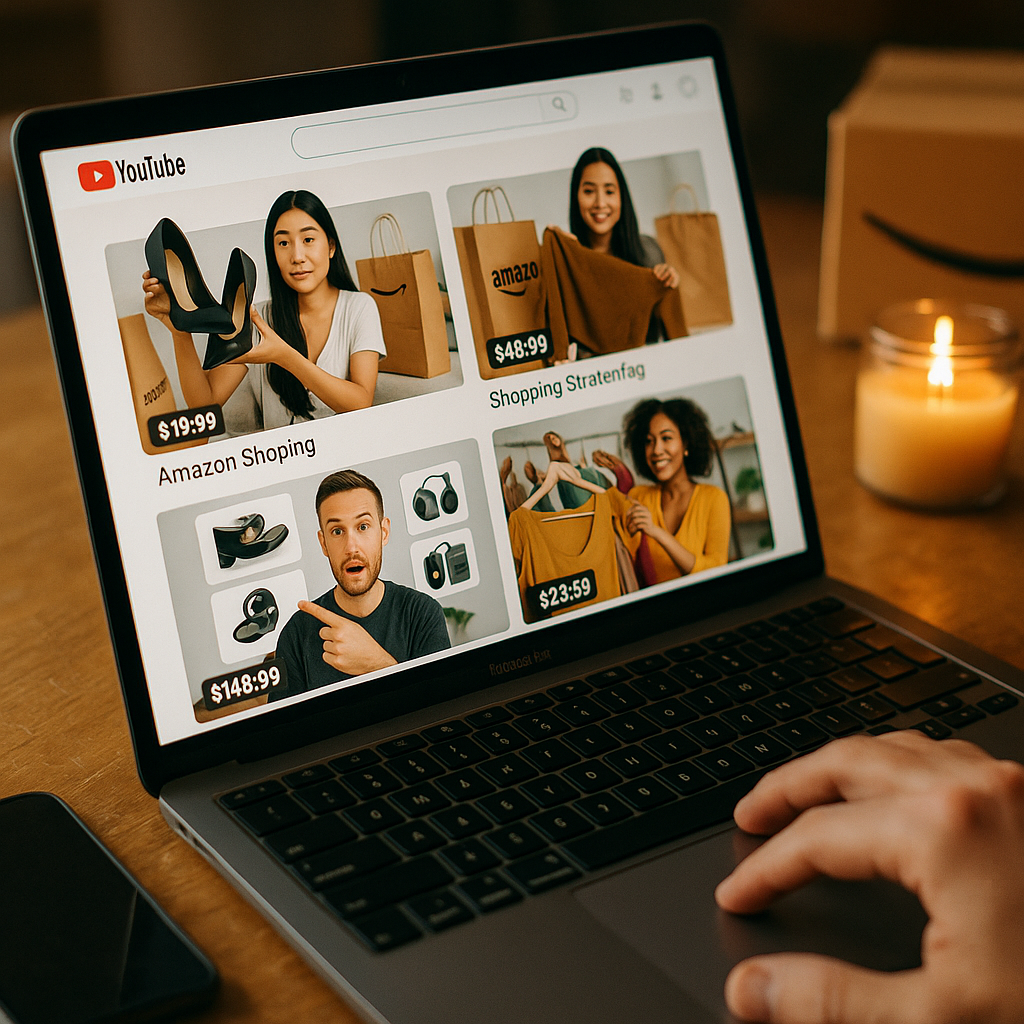
YouTube now has more than 2.5 billion logged-in monthly users browsing a shopping tab that most brands still treat like an afterthought. Here’s the uncomfortable part: ranking well in YouTube Shopping’s affiliate program has almost nothing to do with the Shorts algorithm your team has spent a year reverse-engineering. Different signals. Different stakes. Different scoreboard entirely.
If your affiliate strategy is just “post more Shorts and hope the shelf fills up,” you’re optimizing for the wrong system.
The Affiliate Ranking Stack Nobody Talks About
YouTube Shopping’s affiliate product shelf, the one that appears below videos and on creator storefronts, runs on a separate weighting model from Shorts distribution. Shorts rewards completion rate, replay behavior, and session continuation. The affiliate shelf rewards something closer to e-commerce logic: does this product actually sell when this creator talks about it?
That distinction matters because most brand teams assign the same creators and the same content strategy to both goals. Wrong move. A creator who crushes Shorts reach might be mediocre at affiliate conversion, and vice versa. We’ve seen mid-tier unboxing channels with modest subscriber counts outperform six-figure-subscriber Shorts specialists on actual shelf placement and commission volume, simply because their audience buys.
YouTube’s affiliate shelf doesn’t care how many people watched. It cares how many people clicked “add to cart” and didn’t return the item three days later.
Google has been gradually documenting how product tagging, merchant feed quality, and creator-level sales history factor into shelf visibility. Review the current mechanics directly through Google’s support documentation before you brief a single creator, because the rules shift quarterly and most agencies are working from outdated playbooks.
Conversion Velocity Beats Raw Views
Think of it like TikTok Shop’s GMV velocity model, but with a YouTube accent. The platform appears to track how quickly a tagged product converts after a video publishes, not just total conversions over its lifetime. A video that drives thirty sales in the first 48 hours signals stronger product-market fit than one that trickles out the same thirty sales over three months.
This is nearly identical logic to what we documented in our breakdown of affiliate ranking velocity on TikTok Shop. The platforms differ, but the underlying incentive is the same: reward creators whose audience acts fast, because fast conversion correlates with trust and relevance, not just reach.
- Front-load your product drops around a creator’s highest-engagement posting windows.
- Brief creators to pin affiliate links in the first comment and video description simultaneously, not sequentially.
- Track time-to-first-sale as a KPI, not just total attributed revenue.
If your reporting dashboard only shows cumulative numbers, you’re blind to the signal that actually moves shelf placement. Ask your creator management platform for timestamped conversion data, or you’re negotiating future affiliate rates with incomplete information.
Watch Time Still Matters, Just Not the Way Shorts Trained You to Think
Shorts watch time is about keeping someone in the swipe loop. Affiliate watch time is about whether someone watched long enough to understand the product before clicking through. Those are different behaviors, and YouTube’s recommendation models appear to weight them differently for shopping-tagged content.
A 90-second product demo that holds 70% of viewers to the “how it works” segment will likely outperform a 12-second Shorts hook with 95% completion but zero product context. Completion rate alone is a vanity metric here. What matters is whether the viewer stayed through the part of the video that actually justifies a purchase decision.
This is also why affiliate-focused creators are shifting budget back toward long-form and mid-form content, even as Shorts RPM and creator payouts get more attention in trade coverage. We covered the economics of that shift in our guide to Shorts RPM and live shopping splits, and the pattern holds: affiliate commerce rewards depth, ad revenue rewards volume.
Disclosure Compliance Is Now a Ranking Input, Not Just a Legal Checkbox
Here’s what most brand compliance teams miss: YouTube appears to be factoring disclosure consistency into affiliate program standing, not just flagging violations after the fact. Creators with clean, consistent FTC-compliant disclosure patterns seem to get more stable shelf placement than creators who disclose sporadically or bury it in a description nobody reads.
This tracks with regulatory pressure. The FTC’s endorsement guidelines have gotten sharper enforcement attention over the past two years, and platforms have every incentive to self-police before regulators force the issue. If your creator roster is inconsistent on disclosure, you’re not just risking a complaint. You’re likely risking algorithmic downgrade.
We built out the mechanics of this in our piece on disclosure requirements for affiliate links, which is worth a close read if your legal team hasn’t audited creator contracts in the past two quarters. The fix is usually simple: standardized disclosure language in your creator brief, verified before publish, not after.
A creator with 40,000 subscribers and spotless disclosure history can outrank a creator with 400,000 subscribers and inconsistent labeling. Compliance is now a competitive advantage.
Channel Authority vs. Video-Level Signals
Does a creator’s overall channel history matter more than a single video’s performance? Both, actually, but in different proportions than Shorts distribution. YouTube’s affiliate system appears to weight channel-level trust signals, things like return rate on previously affiliated products, chargeback frequency, and sustained subscriber growth, more heavily than a single viral moment.
That means a brand chasing one home-run video is playing the wrong game. Affiliate shelf stability comes from cumulative trust, built over months of clean transactions. This is closer to how YouTube Shorts distribution signals work at the channel level, where consistency outperforms spikes, except the affiliate version punishes you financially (via return rates and merchant standing) in ways the Shorts algorithm never did.
Brands running multi-creator affiliate programs should segment their roster by channel maturity. New creators need a probation period with lower-risk, lower-return-rate products. Established creators with clean transaction history earn access to higher-ticket items where shelf placement carries more commission upside.
Originality Signals Are Creeping Into Shopping Content Too
YouTube’s broader originality push, the one that reshaped Shorts recall and recommendation logic, is starting to bleed into shopping-tagged content as well. Reposted or lightly edited affiliate content appears to get deprioritized on the shelf, mirroring what we’ve already seen with the platform’s originality enforcement on standard Shorts.
If your creator program leans on repurposed UGC or cross-posted TikTok content slapped with a YouTube affiliate tag, read our breakdown of the originality compliance requirements before you scale further. The penalty isn’t just reduced reach anymore. It’s reduced shelf visibility, which directly hits revenue.
What This Means for Budget Allocation
Stop measuring affiliate creator value purely on follower count or Shorts engagement rate. Build a scorecard that weights conversion velocity, disclosure consistency, return rate, and channel-level trust history. According to eMarketer’s retail media forecasts, creator-led commerce is one of the fastest-growing line items in brand media budgets, which means the cost of getting this ranking logic wrong compounds quickly.
Run a quarterly audit comparing your top Shorts performers against your top affiliate revenue generators. In most programs we’ve reviewed, there’s surprisingly little overlap. That’s not a bug in your strategy. It’s the platform telling you these are two different games requiring two different rosters.
How Brands Should Reallocate Creator Spend
- Shift a portion of pure-reach budget toward mid-tier creators with proven conversion history.
- Require standardized disclosure templates across every affiliate brief, verified pre-publish.
- Build return-rate monitoring into your creator scorecard, not just click-through and GMV.
- Separate Shorts-first creators from affiliate-first creators in your briefing documents.
None of this is complicated, but it does require your team to stop treating the affiliate shelf as a byproduct of Shorts strategy. It isn’t. It’s its own system with its own incentives, and brands that recognize that first will own disproportionate shelf space before competitors catch up.
FAQs
Does posting more Shorts improve affiliate shelf placement on YouTube?
Not directly. Shorts distribution and affiliate shelf ranking run on different signal sets. Conversion velocity, disclosure consistency, and channel-level trust matter more for affiliate placement than raw Shorts view counts.
What is conversion velocity in YouTube Shopping’s affiliate program?
It refers to how quickly a tagged product generates sales after a video publishes. Faster early conversion appears to signal stronger product-market fit than conversions spread out over a longer period.
Can inconsistent disclosure labeling hurt affiliate ranking, not just invite legal risk?
Yes. Evidence suggests YouTube factors disclosure consistency into affiliate program standing. Creators with sporadic or unclear disclosure tend to see less stable shelf placement than those with standardized, compliant labeling.
Do high-subscriber creators automatically outperform smaller creators on the affiliate shelf?
No. Channel-level trust signals like return rate, chargeback frequency, and disclosure history often matter more than subscriber count. A smaller, high-trust channel can outrank a larger channel with inconsistent transaction history.
How often should brands audit their YouTube affiliate creator roster?
A quarterly audit is a reasonable baseline, comparing conversion velocity, return rates, and disclosure compliance against reach metrics to ensure budget is allocated to creators actually driving shelf-eligible sales.
Next step: Pull your last two quarters of YouTube affiliate data, split it by conversion velocity and disclosure consistency rather than view count, and you’ll likely find your real top performers aren’t the creators your Shorts dashboard says they are.
Top Influencer Marketing Agencies
The leading agencies shaping influencer marketing in 2026
Agencies ranked by campaign performance, client diversity, platform expertise, proven ROI, industry recognition, and client satisfaction. Assessed through verified case studies, reviews, and industry consultations.
Moburst

-
2

The Shelf
Boutique Beauty & Lifestyle Influencer AgencyA data-driven boutique agency specializing exclusively in beauty, wellness, and lifestyle influencer campaigns on Instagram and TikTok. Best for brands already focused on the beauty/personal care space that need curated, aesthetic-driven content.Clients: Pepsi, The Honest Company, Hims, Elf Cosmetics, Pure LeafVisit The Shelf → -
3

Audiencly
Niche Gaming & Esports Influencer AgencyA specialized agency focused exclusively on gaming and esports creators on YouTube, Twitch, and TikTok. Ideal if your campaign is 100% gaming-focused — from game launches to hardware and esports events.Clients: Epic Games, NordVPN, Ubisoft, Wargaming, Tencent GamesVisit Audiencly → -
4

Viral Nation
Global Influencer Marketing & Talent AgencyA dual talent management and marketing agency with proprietary brand safety tools and a global creator network spanning nano-influencers to celebrities across all major platforms.Clients: Meta, Activision Blizzard, Energizer, Aston Martin, WalmartVisit Viral Nation → -
5

The Influencer Marketing Factory
TikTok, Instagram & YouTube CampaignsA full-service agency with strong TikTok expertise, offering end-to-end campaign management from influencer discovery through performance reporting with a focus on platform-native content.Clients: Google, Snapchat, Universal Music, Bumble, YelpVisit TIMF → -
6

NeoReach
Enterprise Analytics & Influencer CampaignsAn enterprise-focused agency combining managed campaigns with a powerful self-service data platform for influencer search, audience analytics, and attribution modeling.Clients: Amazon, Airbnb, Netflix, Honda, The New York TimesVisit NeoReach → -
7

Ubiquitous
Creator-First Marketing PlatformA tech-driven platform combining self-service tools with managed campaign options, emphasizing speed and scalability for brands managing multiple influencer relationships.Clients: Lyft, Disney, Target, American Eagle, NetflixVisit Ubiquitous → -
8

Obviously
Scalable Enterprise Influencer CampaignsA tech-enabled agency built for high-volume campaigns, coordinating hundreds of creators simultaneously with end-to-end logistics, content rights management, and product seeding.Clients: Google, Ulta Beauty, Converse, AmazonVisit Obviously →