


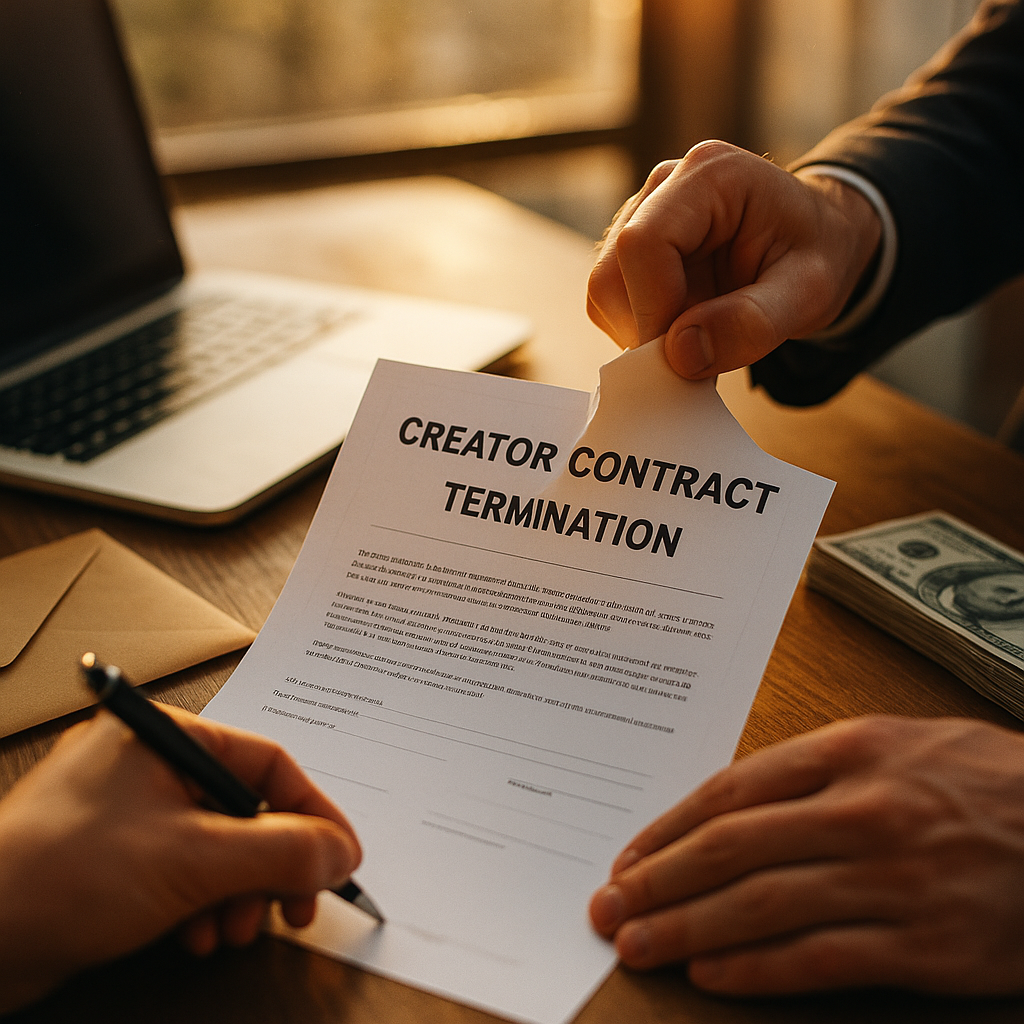
Roughly a third of influencer partnerships end before the contract term is up, whether from missed deadlines, brand safety flare-ups, or creators who simply ghost mid-campaign. Yet most brands still negotiate deal terms, deliverables, and usage rights in exhaustive detail while leaving the exit clause as boilerplate. A creator contract termination clause is the single most underused tool for protecting marketing budgets when a partnership goes sideways.
If your legal team is still using a generic “either party may terminate with written notice” line, you’re exposed. Here’s what a termination clause actually needs to do, and why treating it as an afterthought is costing brands real money.
Why Termination Clauses Get Ignored Until It’s Too Late
Nobody signs a creator deal expecting it to fall apart. That optimism bias is exactly why termination language gets rushed. Brand teams spend weeks on deliverable specs, usage windows, and content approval workflows, then wave through a termination section that was copy pasted from the last contract.
The problem shows up later, usually at the worst possible moment. A creator posts something off-brand two days before a campaign launch. A partnership built around a product line gets scrapped after a reorg. An agency discovers the influencer they vetted has a background issue that surfaces after the deal closes (a scenario covered in more depth in our piece on creator background checks). Without a clause that anticipates these scenarios, the brand’s only options are to pay out the full contract, eat legal fees fighting it, or quietly absorb the loss and move on.
A termination clause isn’t about predicting every way a partnership can fail. It’s about making sure the financial consequences of failure land on the party best positioned to control the risk.
The Core Components a Termination Clause Must Cover
Strong termination language does four things: it defines what counts as a breach, it sets the notice and cure period, it spells out what happens to payments already made, and it addresses content that’s already live. Miss any one of these and you’re negotiating from a weak position when things actually break down.
- Termination for cause. This covers breach of brand safety guidelines, failure to deliver, disclosure violations, or conduct that damages brand reputation. Define it specifically. “Conduct unbecoming” won’t hold up; “engagement in conduct that generates sustained negative press coverage or violates FTC disclosure requirements” will.
- Termination for convenience. Sometimes the brand needs out for reasons unrelated to creator performance, a budget cut, a strategy pivot, a product recall. This clause should specify notice periods (typically 14 to 30 days) and what, if anything, the creator is owed for work already in progress.
- Cure periods. Minor breaches, like a late posting or a missed hashtag, should trigger a chance to fix the problem before termination kicks in. Reserve immediate termination rights for serious violations: legal issues, safety concerns, or reputational harm.
- Payment reconciliation. This is where most disputes actually happen. Does the creator keep the upfront deposit? Are milestone payments prorated? Is there a clawback mechanism for content that underperforms or gets pulled? Our breakdown of mid campaign clawback provisions goes deeper on structuring this fairly.
- Content disposition. When the relationship ends, what happens to posts that are already live? Does the brand have the right to request immediate removal, or does usage continue under the original license? This should tie directly into your broader IP ownership terms so there’s no gap between termination and content rights.
Termination for Cause vs. Convenience: Know the Difference
These two categories get conflated constantly, and that confusion is expensive. Termination for cause means the creator did something wrong, so the brand typically owes little beyond work already delivered. Termination for convenience means the brand is walking away for its own reasons, which usually means some form of compensation is owed regardless of fault.
Courts and arbitrators look closely at which category a dispute actually falls into. If your contract treats every exit as “for cause” to avoid paying out, expect pushback, especially from creators represented by talent agencies who’ve seen this tactic before. Define both paths clearly and separately. It protects the brand’s credibility as much as its budget.
There’s also a reputational dimension here that’s easy to underweight. Creator communities talk. A brand known for weaponizing vague “for cause” language to avoid paying creators will find it harder to book quality talent down the line, and agencies will price in that risk with higher rates or stricter upfront terms.
What Happens to Live Content When the Deal Dies?
This is the piece that trips up even experienced brand teams. A termination clause can perfectly resolve payment disputes and still leave the brand exposed if it doesn’t address content already published. If a creator’s contract ends but their sponsored posts stay live indefinitely, the brand may still be on the hook for disclosure compliance, and any later controversy involving that creator can retroactively drag the brand into it.
Build in a content disposition clause that requires takedown within a defined window (72 hours is common) once termination is triggered for cause, with a shorter window for anything tied to legal or safety issues. For termination for convenience, brands often negotiate a continued usage period since the creator isn’t at fault. If removal isn’t feasible or desired, make sure the disclosure requirements still apply for as long as the content remains live, because the FTC doesn’t care that the partnership technically ended.
Worth noting: AI-generated or AI-remixed content adds another wrinkle here. If a creator’s likeness was used to generate derivative assets before the relationship soured, termination needs to explicitly address whether the brand retains rights to that AI-derived content or has to destroy it. This is exactly the gap outlined in our coverage of AI remix rights, and it’s becoming a standard negotiation point rather than an edge case.
Building Termination Triggers Around Real Risk Categories
Generic termination language fails because it doesn’t map to the actual ways partnerships collapse. Smart brand legal teams build triggers around specific, documented risk categories instead of vague “material breach” language.
Consider structuring triggers around:
- Disclosure and compliance failures, including repeated FTC violations across platforms
- Brand safety incidents, including the kind of controversy that emerges from background issues discovered post-signing
- Deepfake or likeness misuse, particularly relevant as state deepfake likeness laws expand and create new liability exposure if a creator’s image is manipulated without consent
- Financial and sanctions red flags surfaced through standard payment compliance screening
- Non-performance, meaning missed deadlines or deliverables that fall materially short of brief
Each trigger category should have its own notice period and cure window. A late deliverable deserves 48 hours to fix. A sanctions flag or deepfake controversy deserves immediate suspension pending review. Treating every breach the same way, whether it’s a typo in a caption or a legal violation, is how brands end up either overreacting to minor issues or underreacting to serious ones.
The ROI Case for Getting This Right
Legal teams sometimes treat termination clauses as a cost center, extra negotiation time, extra redlines, extra friction with talent agencies. Flip that framing. According to eMarketer, influencer marketing spend in the US continues to climb into double digit billions annually, and a growing share of that budget flows through multi-deliverable, longer-term creator relationships rather than one-off posts. The longer the engagement, the more exposure accumulates if termination terms are weak.
Run the math on a mid-tier creator partnership worth $75,000 across a six-month term. If the relationship collapses at month three with no clear termination structure, the brand could end up paying the full contract value in a settlement, losing the content rights anyway, and absorbing legal fees on top. A well-drafted clause turns that into a prorated payout tied to actual deliverables completed, with content rights and takedown obligations clearly resolved. That’s not legal overhead. That’s budget protection.
It’s also worth building termination scenarios into your overall risk posture rather than treating each contract in isolation. Brands running high-volume creator programs, especially nano creator programs at scale, benefit from standardized termination templates reviewed quarterly rather than one-off negotiations per deal. Pairing this with broader coverage like influencer marketing insurance gives brands a second layer of protection when a termination dispute escalates beyond what the contract alone can resolve.
Negotiating Termination Terms Without Scaring Off Talent
There’s a legitimate tension here. Creators and their agents are increasingly wary of one-sided termination language, and rightfully so, since some brands have used broad “for convenience” clauses to walk away from deals without compensation. If you want access to top-tier talent, your termination terms need to be fair in both directions.
Practical approach: offer creators their own limited termination rights, typically tied to late payment, brief changes that materially alter the scope of work, or brand conduct that creates reputational risk for the creator. Reciprocity builds trust and, frankly, makes your contracts easier to defend if a dispute ever reaches arbitration. One-sided termination clauses invite exactly the kind of adversarial relationship that makes partnerships collapse in the first place.
Transparency tools help too. Platforms that centralize contract terms, deliverable tracking, and approval workflows, similar to the matching infrastructure discussed in our piece on AI creator matching platforms, reduce the ambiguity that leads to disputed terminations in the first place. The fewer gray areas in deliverable definitions, the fewer arguments about whether a breach actually occurred.
For brands building out contract templates from scratch, resources like HubSpot’s marketing resources and guidance from the FTC on endorsement disclosure provide useful baselines, though neither substitutes for contract review by counsel familiar with influencer marketing specifically. General commercial contract templates routinely miss the content rights and disclosure nuances unique to creator deals.
FAQs
What should a creator contract termination clause always include?
At minimum, it needs separate provisions for termination for cause and termination for convenience, defined notice and cure periods, a payment reconciliation formula, and clear instructions for what happens to content already published. Leaving any of these out creates ambiguity that gets expensive during an actual dispute.
Can a brand terminate a creator contract without paying anything?
Only if the termination is clearly for cause and the contract specifically ties non-payment to that category. Even then, the brand typically still owes payment for deliverables already completed and accepted. Courts generally disfavor forfeiture clauses that leave creators uncompensated for finished work.
How long should a cure period be in a creator contract?
It depends on the severity of the breach. Minor issues like late posting typically warrant 48 to 72 hours to correct. Serious issues involving legal exposure, brand safety, or reputational harm often justify immediate suspension with no cure period at all.
What happens to sponsored content if the contract is terminated?
This should be spelled out explicitly in the clause itself. Common approaches include a mandatory takedown window (often 72 hours for cause-based termination) or continued usage rights under the original license if the brand terminated for convenience and the creator wasn’t at fault.
Do termination clauses need to be reciprocal?
They don’t have to be, but one-sided clauses are increasingly contested by creator agents and can make it harder to book quality talent. Giving creators limited termination rights tied to late payment or scope changes tends to produce more durable, lower-conflict partnerships.
Treat your termination clause as a budget protection tool, not legal filler. Review existing creator contracts this quarter, flag any vague “either party may terminate” language, and rebuild it around specific breach categories, defined cure periods, and clear content disposition rules before your next partnership collapses on you.
FAQs
What should a creator contract termination clause always include?
At minimum, it needs separate provisions for termination for cause and termination for convenience, defined notice and cure periods, a payment reconciliation formula, and clear instructions for what happens to content already published. Leaving any of these out creates ambiguity that gets expensive during an actual dispute.
Can a brand terminate a creator contract without paying anything?
Only if the termination is clearly for cause and the contract specifically ties non-payment to that category. Even then, the brand typically still owes payment for deliverables already completed and accepted. Courts generally disfavor forfeiture clauses that leave creators uncompensated for finished work.
How long should a cure period be in a creator contract?
It depends on the severity of the breach. Minor issues like late posting typically warrant 48 to 72 hours to correct. Serious issues involving legal exposure, brand safety, or reputational harm often justify immediate suspension with no cure period at all.
What happens to sponsored content if the contract is terminated?
This should be spelled out explicitly in the clause itself. Common approaches include a mandatory takedown window (often 72 hours for cause-based termination) or continued usage rights under the original license if the brand terminated for convenience and the creator wasn’t at fault.
Do termination clauses need to be reciprocal?
They don’t have to be, but one-sided clauses are increasingly contested by creator agents and can make it harder to book quality talent. Giving creators limited termination rights tied to late payment or scope changes tends to produce more durable, lower-conflict partnerships.
Top Influencer Marketing Agencies
The leading agencies shaping influencer marketing in 2026
Agencies ranked by campaign performance, client diversity, platform expertise, proven ROI, industry recognition, and client satisfaction. Assessed through verified case studies, reviews, and industry consultations.
Moburst

-
2

The Shelf
Boutique Beauty & Lifestyle Influencer AgencyA data-driven boutique agency specializing exclusively in beauty, wellness, and lifestyle influencer campaigns on Instagram and TikTok. Best for brands already focused on the beauty/personal care space that need curated, aesthetic-driven content.Clients: Pepsi, The Honest Company, Hims, Elf Cosmetics, Pure LeafVisit The Shelf → -
3

Audiencly
Niche Gaming & Esports Influencer AgencyA specialized agency focused exclusively on gaming and esports creators on YouTube, Twitch, and TikTok. Ideal if your campaign is 100% gaming-focused — from game launches to hardware and esports events.Clients: Epic Games, NordVPN, Ubisoft, Wargaming, Tencent GamesVisit Audiencly → -
4

Viral Nation
Global Influencer Marketing & Talent AgencyA dual talent management and marketing agency with proprietary brand safety tools and a global creator network spanning nano-influencers to celebrities across all major platforms.Clients: Meta, Activision Blizzard, Energizer, Aston Martin, WalmartVisit Viral Nation → -
5

The Influencer Marketing Factory
TikTok, Instagram & YouTube CampaignsA full-service agency with strong TikTok expertise, offering end-to-end campaign management from influencer discovery through performance reporting with a focus on platform-native content.Clients: Google, Snapchat, Universal Music, Bumble, YelpVisit TIMF → -
6

NeoReach
Enterprise Analytics & Influencer CampaignsAn enterprise-focused agency combining managed campaigns with a powerful self-service data platform for influencer search, audience analytics, and attribution modeling.Clients: Amazon, Airbnb, Netflix, Honda, The New York TimesVisit NeoReach → -
7

Ubiquitous
Creator-First Marketing PlatformA tech-driven platform combining self-service tools with managed campaign options, emphasizing speed and scalability for brands managing multiple influencer relationships.Clients: Lyft, Disney, Target, American Eagle, NetflixVisit Ubiquitous → -
8

Obviously
Scalable Enterprise Influencer CampaignsA tech-enabled agency built for high-volume campaigns, coordinating hundreds of creators simultaneously with end-to-end logistics, content rights management, and product seeding.Clients: Google, Ulta Beauty, Converse, AmazonVisit Obviously →