


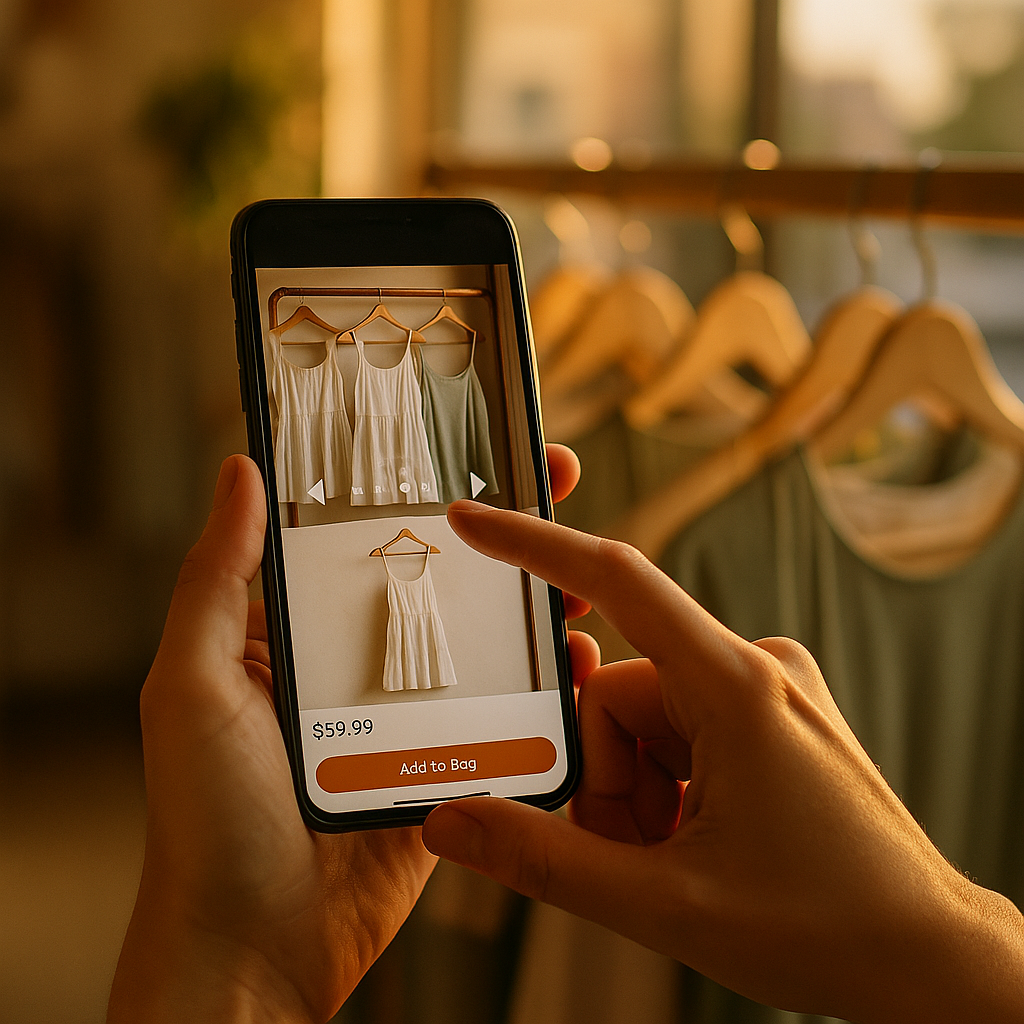
Instagram carousels already earn 1.4 times more reach than single-image posts, according to data platforms like Sprout Social track every quarter. But reach isn’t the problem for most brands. Conversion is. Swipe to reveal carousels fix that gap by turning a passive scroll into a deliberate, hand-on-screen decision, and that single behavioral shift is why the format is quietly outperforming static product posts across retail, beauty, and DTC verticals right now.
What Is a Swipe to Reveal Carousel, Exactly?
A swipe to reveal carousel is a multi-slide Instagram post (or Reel-adjacent format) built around a deliberate information gap. Slide one poses a question, hides a price, or teases a transformation. The following slides pay it off, one swipe at a time. It’s not a new mechanic. Direct response marketers have used “curiosity gap” copy for decades. What’s new is applying it to shoppable carousels, where each swipe can carry a product tag, a sticker, or a link.
Think of it as the carousel version of a cliffhanger. The format rewards patience with payoff, and that payoff is exactly where brands insert the shoppable moment: the final price reveal, the “after” photo, the discount code slide.
Why This Format Is Winning Right Now
Attention is the scarcest resource in paid and organic social, full stop. Static single-image posts ask nothing of the viewer. A reveal carousel asks for one thing: a swipe. That tiny commitment changes everything downstream. Once someone swipes once, they’re statistically far more likely to swipe to the end, and that completion behavior correlates directly with higher link clicks and tag taps.
A single swipe is a micro-commitment. Once a user invests that first gesture, completion rates on the remaining slides climb sharply, which is exactly why reveal structures outperform flat product grids on tap-through.
There’s also a platform incentive at play. Meta’s own creator and business guidance, available through Meta Business Suite, has repeatedly flagged carousel completion rate as a signal that favors distribution. Posts that hold attention across slides tend to get shown to more of the audience that already follows the account, and sometimes beyond it. That’s a free lift most brands aren’t scripting for.
The Anatomy of a High Converting Reveal Carousel
Every reveal carousel that actually drives sales follows a similar skeleton, even when the creative looks wildly different. Here’s the structure we see working across categories:
- Slide 1, the hook: A question, a bold claim, or a half-hidden image. No product name yet. No price. Just tension.
- Slides 2 to 4, the build: Context, proof, or process. This is where you can lean on formats like before and after documentation to build credibility before the ask.
- Second-to-last slide, the twist: The moment that justifies the swipe. Price drop, surprise ingredient, comparison to a competitor.
- Final slide, the shoppable CTA: Product tag, swipe up equivalent, or a clear “link in bio” with urgency language.
Brands that skip the build and jump straight to the pitch lose the entire psychological mechanism. The reveal only works if there’s something worth revealing. A product shot on slide two with a price tag on slide three isn’t a reveal carousel, it’s just a slower product post.
Scripting the Reveal: Borrow From Video, Apply to Static
The best reveal carousels steal pacing techniques straight from video scripting. If you’ve read our breakdown of price breakdown videos, you already know the formula: withhold the number, build justification, then land it. Carousels do the same job with far less production cost. No filming, no editing software, just a tight sequence of images and copy overlays.
Comparison structures work especially well here too. A “versus” carousel, where slide one shows a competitor’s claim and the final slide reveals your product’s actual test result, mirrors the logic in split screen comparison videos, just adapted for swipe pacing instead of a timeline. The legal caution that applies to video comparisons applies here too: stick to verifiable claims, and if you’re naming a competitor, keep language factual rather than disparaging.
One more borrow worth making: low-polish aesthetics. Data shared around the photo dump format shows that overly produced carousels often underperform looser, more candid ones. A reveal carousel doesn’t need studio lighting on every slide. It needs pacing. Save the polish for the final shoppable frame.
Common Mistakes That Kill Swipe Through Rate
Most reveal carousels fail quietly. They get posted, they get some reach, and nobody on the brand side ever diagnoses why the swipe-through dropped off a cliff after slide two. The usual culprits:
- Front-loading the payoff. If the price or the result is visible in the thumbnail or caption, there’s no reason to swipe.
- Too many slides. Instagram allows up to 20, but most reveal carousels lose steam after 7 or 8. Tight is better than complete.
- Burying the shoppable tag. If the product tag only lives on slide one, you’ve tagged the wrong moment. Tag the payoff slide, not the hook.
- Weak caption framing. A caption that gives away the ending kills curiosity before the first swipe even happens.
- No sound-off consideration for Reels crossposts. If you’re repurposing carousel logic into video, the pacing lessons from sound off scripting apply directly.
Shoppable Tagging: Getting the Mechanics Right
This is where a lot of otherwise strong creative gets undone by sloppy setup. Instagram’s product tagging, managed through the commerce settings in Meta Business Suite, lets you tag individual slides within a carousel, not just the whole post. Brands routinely skip this and tag only the cover image, which means the shoppable moment never lines up with the emotional payoff slide.
A few operational notes worth building into your brief template:
- Confirm your catalog is synced before the post goes live. A broken tag on a high-performing reveal slide is a wasted spike in attention.
- Tag the specific SKU shown on the reveal slide, not a generic category page. Friction kills intent-driven swipes.
- If you’re running the carousel as a paid boost, check that shopping tags carry through to the ad unit. Not all placements support it the same way, and platform help centers and Meta’s own documentation are the only reliable sources for current placement rules, since they change often.
Pair the carousel with a mid-funnel asset where it makes sense. If the product needs more explanation after the swipe, a format like shoppable video chapters can catch the user who swiped through but still has questions before checkout.
Measuring What Matters (Not Just Likes)
Vanity metrics mislead here more than almost anywhere else. A reveal carousel can rack up likes on slide one’s hook without a single person making it to the shoppable slide. Track these instead:
- Slide-by-slide drop-off, available through Instagram Insights at the post level.
- Tag taps on the specific reveal slide, not just total post engagement.
- Swipe-through completion rate, the percentage of viewers who reach the final slide.
- Attributed revenue per carousel, pulled from your commerce dashboard or a third-party attribution tool, since Instagram’s native reporting undercounts assisted conversions.
Benchmark data from research firms like eMarketer and Statista can help set realistic expectations by category, since swipe-through norms in beauty differ significantly from those in electronics or apparel. Don’t let a generic “good engagement rate” benchmark tell you whether your reveal structure is actually converting.
Compliance: Don’t Let a Good Hook Become a Bad Headline
Curiosity gaps can tip into deceptive advertising if the reveal doesn’t match the setup. The FTC’s endorsement guidance still applies to carousel content the same way it applies to video: if a creator is paid or gifted product, disclosure needs to be clear and unmissable, not buried in slide seven. Build disclosure into slide one, not as an afterthought on the caption. It’s a two-second fix that prevents a much bigger headache later, and it keeps the format sustainable for repeat use rather than a one-time stunt that draws scrutiny.
FAQs
What makes a swipe to reveal carousel different from a regular product carousel?
A regular carousel shows product information in sequence. A swipe to reveal carousel deliberately withholds a key piece of information, like a price, result, or comparison, until a later slide, which creates a reason to keep swiping rather than scrolling past.
How many slides should a shoppable reveal carousel have?
Most high-performing reveal carousels run between 5 and 8 slides. Instagram technically allows up to 20, but completion rates tend to drop sharply after slide 7 or 8, so tighter pacing usually outperforms longer sequences.
Where should I place the shoppable product tag in a reveal carousel?
Tag the payoff slide, not the hook slide. The product tag should sit on the slide where the reveal happens, since that’s the moment of highest purchase intent, not the opening slide where curiosity is still being built.
Do swipe to reveal carousels work for paid ads or only organic posts?
They work for both, though shopping tag behavior can vary by ad placement. Confirm tag functionality carries through correctly when boosting a post, since not all placements support slide-level shopping tags identically.
How do I avoid compliance issues with curiosity-driven carousel hooks?
Keep disclosure of paid partnerships or gifted products visible on the first slide, not buried later in the sequence. The hook can build curiosity about the product or outcome, but it should never obscure whether the post is sponsored.
Next step: Audit your last five carousel posts for slide-by-slide drop-off before you script another one. If swipe-through collapses after slide two, the fix usually isn’t the product, it’s the pacing.
Top Influencer Marketing Agencies
The leading agencies shaping influencer marketing in 2026
Agencies ranked by campaign performance, client diversity, platform expertise, proven ROI, industry recognition, and client satisfaction. Assessed through verified case studies, reviews, and industry consultations.
Moburst

-
2

The Shelf
Boutique Beauty & Lifestyle Influencer AgencyA data-driven boutique agency specializing exclusively in beauty, wellness, and lifestyle influencer campaigns on Instagram and TikTok. Best for brands already focused on the beauty/personal care space that need curated, aesthetic-driven content.Clients: Pepsi, The Honest Company, Hims, Elf Cosmetics, Pure LeafVisit The Shelf → -
3

Audiencly
Niche Gaming & Esports Influencer AgencyA specialized agency focused exclusively on gaming and esports creators on YouTube, Twitch, and TikTok. Ideal if your campaign is 100% gaming-focused — from game launches to hardware and esports events.Clients: Epic Games, NordVPN, Ubisoft, Wargaming, Tencent GamesVisit Audiencly → -
4

Viral Nation
Global Influencer Marketing & Talent AgencyA dual talent management and marketing agency with proprietary brand safety tools and a global creator network spanning nano-influencers to celebrities across all major platforms.Clients: Meta, Activision Blizzard, Energizer, Aston Martin, WalmartVisit Viral Nation → -
5

The Influencer Marketing Factory
TikTok, Instagram & YouTube CampaignsA full-service agency with strong TikTok expertise, offering end-to-end campaign management from influencer discovery through performance reporting with a focus on platform-native content.Clients: Google, Snapchat, Universal Music, Bumble, YelpVisit TIMF → -
6

NeoReach
Enterprise Analytics & Influencer CampaignsAn enterprise-focused agency combining managed campaigns with a powerful self-service data platform for influencer search, audience analytics, and attribution modeling.Clients: Amazon, Airbnb, Netflix, Honda, The New York TimesVisit NeoReach → -
7

Ubiquitous
Creator-First Marketing PlatformA tech-driven platform combining self-service tools with managed campaign options, emphasizing speed and scalability for brands managing multiple influencer relationships.Clients: Lyft, Disney, Target, American Eagle, NetflixVisit Ubiquitous → -
8

Obviously
Scalable Enterprise Influencer CampaignsA tech-enabled agency built for high-volume campaigns, coordinating hundreds of creators simultaneously with end-to-end logistics, content rights management, and product seeding.Clients: Google, Ulta Beauty, Converse, AmazonVisit Obviously →