


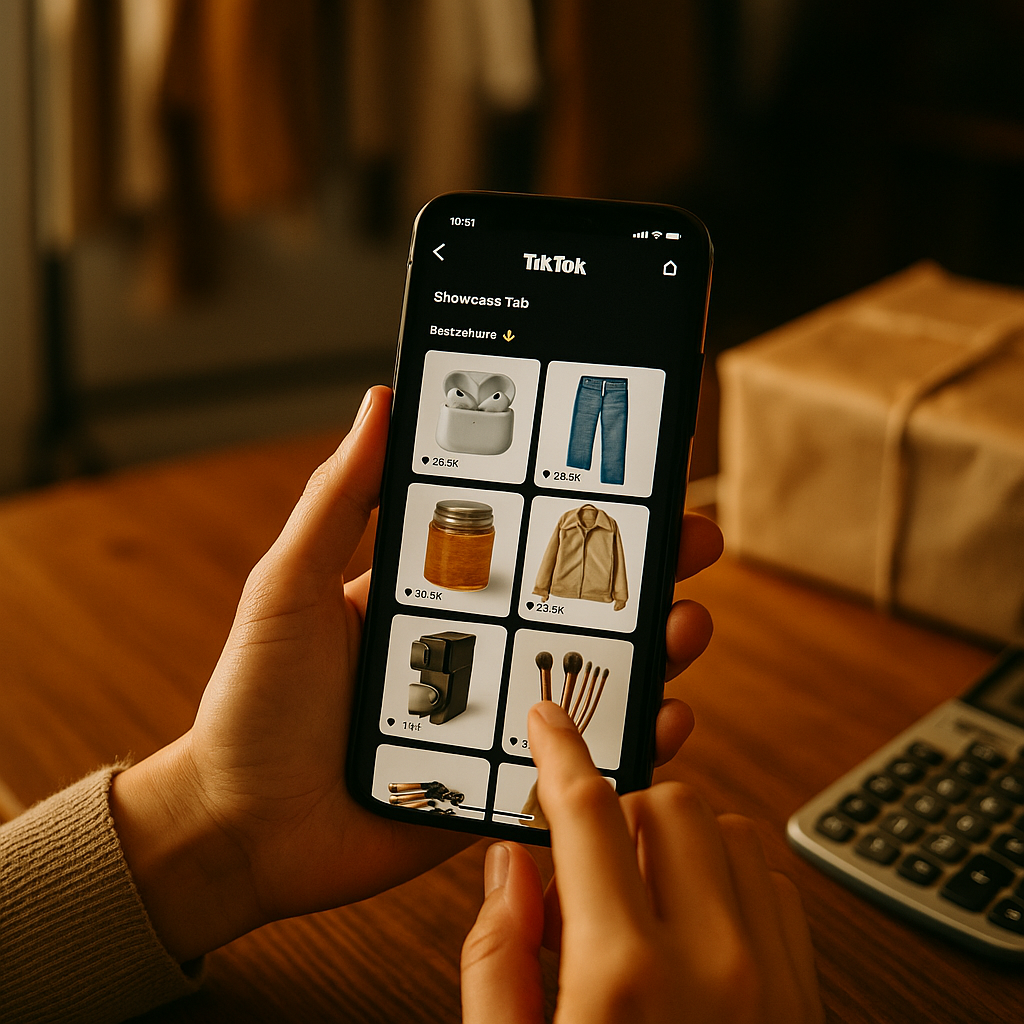
Only a fraction of the millions of products listed in TikTok Shop’s Affiliate Marketplace ever get picked up by a creator. The rest sit invisible, buried under commission rates that don’t compete and product pages that give affiliates nothing to work with. If your brand wants real estate on the Showcase tab, where TikTok actively recommends products to its creator base, you need to understand how that surfacing logic actually works. This guide breaks down the TikTok Shop Affiliate Marketplace from a brand operator’s seat: what gets ranked, what gets ignored, and how to build a listing that creators want to claim.
What the Showcase Tab Actually Rewards
The Showcase tab isn’t a static catalog. It’s a ranked feed inside the Affiliate Marketplace that TikTok’s algorithm populates based on signals that look a lot like the ones powering the For You Page: recent sales velocity, commission competitiveness, creator claim rate, and content performance from affiliates who’ve already promoted the product. Brands that treat their marketplace listing like a set it and forget it SKU sheet lose the slot within days.
Think of it less like a product catalog and more like a casting call. Creators scroll Showcase looking for products that will convert fast and pay well for the effort. TikTok’s own seller education materials, available through TikTok’s advertiser resources, emphasize that commission rate and sample availability are two of the heaviest weighted inputs for affiliate discovery. If either is weak, your product simply doesn’t surface.
Products with commission rates below the category median rarely clear the first page of Showcase results, regardless of how good the product photography looks.
Commission Rates: The Price of Admission, Not the Whole Game
Here’s the uncomfortable math. Beauty and personal care affiliates on TikTok Shop routinely see 15 to 30 percent commission offers from competing brands. If you’re listing at 8 percent hoping volume will make up the difference, you’re competing in a market where creators can simply scroll to the next product. Commission is table stakes, not a differentiator.
That said, chasing the highest commission in your category isn’t sustainable either. Margin erosion kills repeat campaigns faster than slow GMV growth does. The brands winning Showcase placement long term are the ones running tiered commission structures: a baseline rate for cold affiliates, and a bonus tier unlocked once a creator hits a GMV threshold. This rewards your best-performing affiliates without torching margin on every single sale. For a deeper breakdown of how to structure these tiers without wrecking unit economics, our creator pay models guide walks through the math by category.
Free Samples Still Move the Needle
Samples remain one of the most underused levers in the Affiliate Marketplace. A product with a sample program available visibly outperforms an identical product without one, because it removes the single biggest barrier for a nano or micro creator: upfront cash risk. If your product cost allows for it, run a capped sample pool (say, 200 units per month) and refresh it regularly. Scarcity actually helps here. Creators who see “12 samples left” move faster than creators who see unlimited stock sitting untouched.
Build a Product Page Creators Can Actually Sell
Most brands write their TikTok Shop product pages like Amazon listings: bullet points, specs, a few lifestyle photos. That’s a mistake. Affiliates are scanning your page for content hooks, not purchase justification. They want to know what to say in the first three seconds of a video, what pain point to lead with, and whether there’s existing user-generated content they can reference or remix.
- Lead product titles with the benefit, not the brand name. “Overnight Lip Mask, Cracked Lips Fix” outperforms a branded title every time.
- Upload at least one creator-style vertical video to the product gallery, even a rough one. It signals the format works.
- Include a short affiliate brief in the product description: target audience, suggested angle, and any claims to avoid for compliance reasons.
- Keep return and shipping policy visible. Creators lose trust in a product fast if buyer complaints show up in comments.
This last point connects directly to retention. A high return rate doesn’t just hurt your margin, it actively suppresses your Showcase ranking because TikTok factors post-purchase signals into long-term product health. If returns are already a pain point for your shop, our returns integration guide covers how to tighten that loop before it drags down your affiliate performance.
Vetting Affiliates Before They Claim Your Product
Open marketplace listings mean anyone can claim your product and post about it, which is both the strength and the risk of this channel. You don’t get the same pre-approval control you’d have in a managed influencer campaign. That’s fine for low-risk categories, but for regulated products (supplements, skincare with active ingredients, financial products) it creates real compliance exposure.
Set up a two-tier system. Let the open marketplace run for broad-reach, low-risk SKUs, and build an invite-only collaboration list for anything that requires specific disclosure language or claims review. The FTC has been explicit that brands share liability for creator disclosure failures, not just the creator, so review the FTC’s endorsement guidance before assuming the open marketplace is hands-off from a legal standpoint.
Nano creators are often where Showcase visibility starts, since TikTok tends to surface new listings to high-frequency affiliate accounts first regardless of follower count. If you’re building volume through smaller creators specifically, our nano creator seeding playbook has a workable outreach cadence for this exact tier.
Timing and Livestream Overlap Matter More Than You Think
Affiliate Marketplace performance doesn’t exist in a vacuum from your livestream calendar. Products that are actively featured in livestream sessions see a visibility bump in Showcase during and shortly after the stream, because TikTok’s recommendation system treats live sales velocity as a strong, recent signal. If you’re running scheduled livestreams, sync your top Showcase push around those windows rather than spreading commission bumps evenly across the week.
Brands running both channels in tandem tend to see compounding effects: livestream sales boost the product’s marketplace ranking, which pulls in more affiliate claims, which then feeds more organic video content back into the discovery loop. If your livestream scheduling isn’t dialed in yet, the prime time scheduling guide and the livestream staffing blueprint are both worth reviewing before you build this into your quarterly plan.
Should You Use a Creator Network Instead of Going Direct?
For brands without the internal bandwidth to manage affiliate relationships, livestream timing, and sample fulfillment simultaneously, third-party creator networks like MyyShop have become a common middle layer. They handle creator matching and campaign logistics in exchange for a cut, which can be worth it if your team is stretched thin. Our creator network model breakdown covers the trade offs in more detail, including where the margin math stops making sense.
Measuring Whether Showcase Placement Is Actually Working
GMV is the obvious metric, but it tells you very little about why something worked or didn’t. Track claim rate (how many affiliates added your product versus how many viewed it), content-to-sale ratio, and repeat affiliate rate, meaning creators who come back to promote the product a second time without being prompted. That last metric is the clearest signal that your commission and creative support are actually competitive, not just adequate.
Industry benchmarking from eMarketer and category data from Statista both point to social commerce continuing to outpace general ecommerce growth, which means the competition for affiliate attention inside TikTok Shop is only going to get tighter. Brands that treat the Showcase tab as a performance channel requiring ongoing optimization, rather than a one-time listing task, are the ones compounding results quarter over quarter.
Start with one high-margin SKU, build out a proper affiliate-ready product page, set a commission tier structure, and run it for 30 days before judging results. Showcase ranking responds to sustained signals, not a single good week, so give the algorithm time to notice before you pull the budget.
FAQs
How do products get selected for the TikTok Shop Showcase tab?
TikTok’s algorithm ranks products based on commission competitiveness, recent sales velocity, affiliate claim rate, and the performance of content already created around that product. Listings with weak commission or no sample availability rarely surface near the top.
What commission rate is competitive on TikTok Shop’s Affiliate Marketplace?
It varies heavily by category, but beauty, fashion, and wellness products typically need 15 to 30 percent to compete for creator attention. Below-median commission rates usually result in low or no affiliate claims regardless of product quality.
Can brands control who promotes their product in the open marketplace?
Not fully. Any eligible creator can claim and promote an open marketplace listing without brand pre-approval. Brands that need tighter control, especially for regulated categories, should use invite-only collaborations instead of the fully open marketplace.
Does livestream activity affect Showcase tab ranking?
Yes. Products actively featured in livestream sessions tend to see a temporary visibility boost in the Affiliate Marketplace, since live sales velocity is treated as a strong, recent ranking signal by TikTok’s recommendation system.
Are free samples necessary to succeed in the Affiliate Marketplace?
Not strictly necessary, but they significantly increase claim rates, especially among nano and micro creators who are hesitant to spend their own money upfront. A capped, regularly refreshed sample pool tends to outperform unlimited stock with no urgency.
FAQs
Top Influencer Marketing Agencies
The leading agencies shaping influencer marketing in 2026
Agencies ranked by campaign performance, client diversity, platform expertise, proven ROI, industry recognition, and client satisfaction. Assessed through verified case studies, reviews, and industry consultations.
Moburst

-
2

The Shelf
Boutique Beauty & Lifestyle Influencer AgencyA data-driven boutique agency specializing exclusively in beauty, wellness, and lifestyle influencer campaigns on Instagram and TikTok. Best for brands already focused on the beauty/personal care space that need curated, aesthetic-driven content.Clients: Pepsi, The Honest Company, Hims, Elf Cosmetics, Pure LeafVisit The Shelf → -
3

Audiencly
Niche Gaming & Esports Influencer AgencyA specialized agency focused exclusively on gaming and esports creators on YouTube, Twitch, and TikTok. Ideal if your campaign is 100% gaming-focused — from game launches to hardware and esports events.Clients: Epic Games, NordVPN, Ubisoft, Wargaming, Tencent GamesVisit Audiencly → -
4

Viral Nation
Global Influencer Marketing & Talent AgencyA dual talent management and marketing agency with proprietary brand safety tools and a global creator network spanning nano-influencers to celebrities across all major platforms.Clients: Meta, Activision Blizzard, Energizer, Aston Martin, WalmartVisit Viral Nation → -
5

The Influencer Marketing Factory
TikTok, Instagram & YouTube CampaignsA full-service agency with strong TikTok expertise, offering end-to-end campaign management from influencer discovery through performance reporting with a focus on platform-native content.Clients: Google, Snapchat, Universal Music, Bumble, YelpVisit TIMF → -
6

NeoReach
Enterprise Analytics & Influencer CampaignsAn enterprise-focused agency combining managed campaigns with a powerful self-service data platform for influencer search, audience analytics, and attribution modeling.Clients: Amazon, Airbnb, Netflix, Honda, The New York TimesVisit NeoReach → -
7

Ubiquitous
Creator-First Marketing PlatformA tech-driven platform combining self-service tools with managed campaign options, emphasizing speed and scalability for brands managing multiple influencer relationships.Clients: Lyft, Disney, Target, American Eagle, NetflixVisit Ubiquitous → -
8

Obviously
Scalable Enterprise Influencer CampaignsA tech-enabled agency built for high-volume campaigns, coordinating hundreds of creators simultaneously with end-to-end logistics, content rights management, and product seeding.Clients: Google, Ulta Beauty, Converse, AmazonVisit Obviously →