


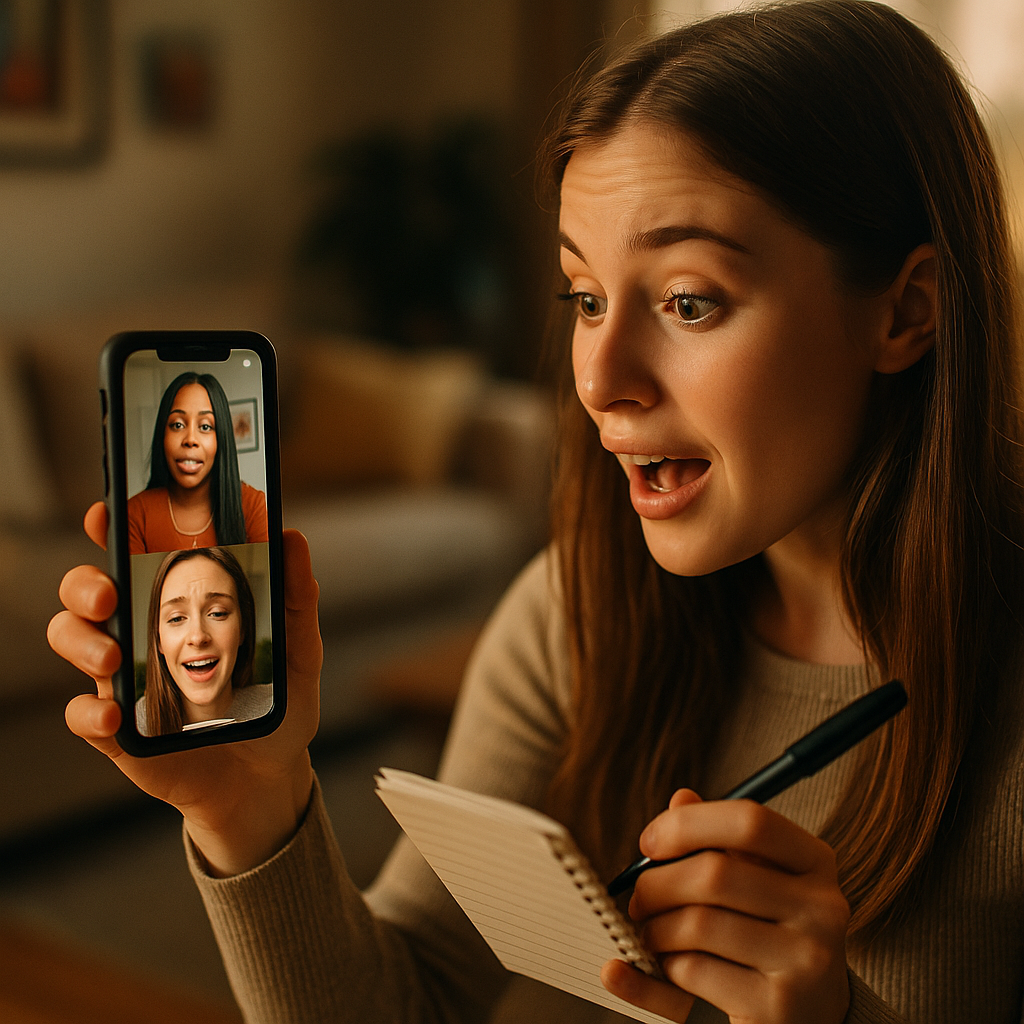
Reaction content now outperforms traditional reviews by a wide margin on watch time, but most brands are still scripting it like a commercial. Split screen duet reviews, where a creator’s genuine reaction sits next to the product moment that triggered it, have become one of the fastest-growing formats on TikTok and Instagram Reels. Done right, they read as proof. Done wrong, they read as theater. The difference is almost entirely in the script.
What Is a Split Screen Duet Review, Really?
The format is simple on the surface. One side of the screen shows the original content (an unboxing, a demo, a founder claim, a competitor callout). The other side shows a second creator reacting in real time, usually via TikTok’s native duet tool or a manually edited split screen in CapCut. The reaction creator isn’t pitching. They’re responding, and that response is the content.
What makes this different from a standard testimonial is the implied authenticity of an unscripted reaction. Viewers have learned to discount polished reviews. They have not yet learned to discount someone’s face reacting in real time to a price reveal or a product fail. That trust gap is exactly why this format works, and exactly why brands need to handle it carefully. The moment a reaction looks rehearsed, the entire trust mechanism collapses.
A reaction that feels scripted doesn’t just underperform. It actively damages credibility for every other piece of creator content the brand runs afterward.
Why This Format Builds Trust Faster Than Standard Reviews
Standard review content asks viewers to trust a claim. Split screen duet reviews ask viewers to trust a reaction, and reactions are harder to fake convincingly on camera. That’s the psychological hook. A raised eyebrow, a pause, a “wait, really?” lands differently than a scripted line reading “I was so impressed with the results.”
There’s also a structural advantage: the format inherently includes social proof twice over. The original creator vouches for the product. The reacting creator vouches for the original creator’s honesty. For brands running performance campaigns, this double layer tends to show up in lower cost-per-acquisition numbers, particularly in categories like beauty, skincare, and consumer tech where skepticism about marketing claims runs high. This pairs naturally with the broader unscripted honesty trend that’s been reshaping brief writing across the creator economy.
It also complements existing comparison formats. If a brand has already run split screen comparison videos pitting product against competitor, duet reactions can extend that content’s life by adding a second layer of commentary months later, without reshooting the original.
The Script Skeleton That Keeps Reactions Honest
Here’s the uncomfortable truth: you can script authenticity without faking it. The goal isn’t to write dialogue. It’s to engineer the conditions where a genuine reaction is likely to happen on camera, and then give the creator enough structure to capture it cleanly.
- Set the stimulus, not the response. Tell the creator what they’ll see or try, not what to say about it. “You’ll taste this blind” is a stimulus. “Say it tastes amazing” is a script violation.
- Build in a genuine surprise element. Price reveals, ingredient reveals, or before/after cuts work because the reacting creator often doesn’t know the outcome in advance. This is the same mechanic behind before and after documentation series, applied to a live reaction format instead of a timeline format.
- Specify the first ten seconds. Reaction videos live or die on the hook. Brief the creator on exactly what beat triggers the reaction, then let the face do the rest.
- Allow a negative beat. A mild critique (“this packaging is annoying, but the product itself is solid”) increases perceived credibility far more than unreserved praise. Brands that ban all criticism from briefs are quietly sabotaging the format’s core trust mechanism.
- Cap the claims. Any factual statement about performance, efficacy, or comparison needs to be pre-approved language, not improvised in the moment. This is where legal review earns its keep.
Notice what’s missing from that list: dialogue. You’re scripting the architecture of the moment, not the words. That distinction is what separates a format that converts from one that gets reported as misleading.
Casting Matters More Than the Script
Who sits on the reaction side of the screen determines whether the whole thing reads as credible. A reaction creator who has zero prior connection to the brand carries more weight than one who’s clearly a repeat partner, at least for the first impression. This is the same logic driving hybrid account scripting, where trust gets built before any pitch appears.
Consider running a tiered casting approach:
- First reaction video: a creator with no disclosed brand relationship, reacting cold.
- Follow-up reactions: known partners and micro-creators who duet the original for reach, not for first-impression credibility.
- Founder or internal team reaction: useful for addressing a specific criticism or myth directly, similar to the approach in founder duet videos.
Nano and micro-creators tend to outperform larger accounts in this format specifically because their reactions read as unpaid commentary rather than endorsement. A 50,000-follower creator reacting with genuine confusion to a product claim will often out-convert a 2-million-follower creator delivering the same reaction with visible polish.
Disclosure Still Applies, Even When It’s “Just a Reaction”
This is the part brands skip and later regret. If the reacting creator received the product free, got paid, or has any material connection to the brand, FTC disclosure rules apply regardless of how spontaneous the reaction looks. The FTC’s endorsement guidance doesn’t carve out an exception for “reaction content.” Neither does the UK’s ICO guidance on data and marketing transparency when creator content touches personal information or testimonials.
Practical fix: bake the disclosure into the brief as a non-negotiable on-screen text overlay or spoken line, delivered before the reaction, not buried in a caption. Compliance teams should treat split screen duet reviews the same way they’d treat any paid partnership, because legally, that’s exactly what it is.
This same discipline shows up in adjacent formats. Brands scripting myth busting reels or versus content comparisons have already learned that the legal risk isn’t in the creativity, it’s in the unreviewed claim that slips through during a spontaneous moment.
Measuring What Actually Matters
Vanity metrics mislead here more than almost any other format. A reaction video with huge views but low completion rate usually means the hook worked and the payoff didn’t. Track these instead:
- Completion rate past the reveal moment, not just total views.
- Comment sentiment, specifically whether viewers are debating the reaction’s authenticity (a bad sign) or discussing the product (a good sign).
- Duet and stitch volume, since this format is built to be re-duetted, extending reach without added spend, a dynamic covered in depth in duet and stitch campaign scaling.
- Click-through to product page within the same session, which is a cleaner trust signal than broad engagement.
Platforms like Sprout Social and reporting from eMarketer have both noted that reaction-style formats generate disproportionately high comment-to-view ratios compared to standard product demos, which is a strong proxy for active trust-building rather than passive scrolling. If you’re running paid amplification, TikTok’s advertising platform now supports Spark Ads directly off organic duet content, meaning a strong reaction video can be boosted without reshooting anything.
If viewers are commenting on whether the reaction is real, the format has already failed, regardless of how many views it pulls in.
Where This Format Fits in a Broader Content Calendar
Split screen duet reviews shouldn’t carry an entire campaign alone. They work best as a trust-building layer sitting alongside other proof formats, feeding into stitch and reply content that answers skeptical comments, and complementing HubSpot’s broader recommendations on using authentic creator content across the full funnel rather than concentrating it at the top. Treat the reaction video as the spark, and build the rest of the proof chain around it.
Script the moment, not the mouth, cast for distance from the brand, disclose without exception, and this format will keep earning the trust that standard reviews have already lost. Start with one tightly briefed reaction video, measure completion past the reveal, then scale what actually holds attention.
FAQs
What makes a split screen duet review different from a regular testimonial video?
A regular testimonial delivers a prepared endorsement directly to camera. A split screen duet review captures a creator’s real-time reaction to someone else’s content or claim, which reads as less rehearsed and more credible to skeptical viewers.
Do brands need to disclose paid partnerships in reaction videos?
Yes. If the reacting creator received free product, payment, or any material benefit, FTC disclosure rules apply the same way they would to any sponsored content, regardless of how spontaneous the reaction appears.
Should the reaction creator know the product outcome in advance?
Generally no. The format performs best when the reaction is genuinely unrehearsed, which means briefing the stimulus (what they’ll see or try) rather than the response (what they should say).
Which creators perform best in this format?
Nano and micro-creators with no visible prior brand relationship tend to outperform larger, clearly affiliated accounts, because their reactions read as unpaid commentary rather than endorsement.
How should brands measure success for this format?
Prioritize completion rate past the reveal moment, comment sentiment about the product (not the reaction’s authenticity), and duet or stitch volume over raw view counts.
Top Influencer Marketing Agencies
The leading agencies shaping influencer marketing in 2026
Agencies ranked by campaign performance, client diversity, platform expertise, proven ROI, industry recognition, and client satisfaction. Assessed through verified case studies, reviews, and industry consultations.
Moburst

-
2

The Shelf
Boutique Beauty & Lifestyle Influencer AgencyA data-driven boutique agency specializing exclusively in beauty, wellness, and lifestyle influencer campaigns on Instagram and TikTok. Best for brands already focused on the beauty/personal care space that need curated, aesthetic-driven content.Clients: Pepsi, The Honest Company, Hims, Elf Cosmetics, Pure LeafVisit The Shelf → -
3

Audiencly
Niche Gaming & Esports Influencer AgencyA specialized agency focused exclusively on gaming and esports creators on YouTube, Twitch, and TikTok. Ideal if your campaign is 100% gaming-focused — from game launches to hardware and esports events.Clients: Epic Games, NordVPN, Ubisoft, Wargaming, Tencent GamesVisit Audiencly → -
4

Viral Nation
Global Influencer Marketing & Talent AgencyA dual talent management and marketing agency with proprietary brand safety tools and a global creator network spanning nano-influencers to celebrities across all major platforms.Clients: Meta, Activision Blizzard, Energizer, Aston Martin, WalmartVisit Viral Nation → -
5

The Influencer Marketing Factory
TikTok, Instagram & YouTube CampaignsA full-service agency with strong TikTok expertise, offering end-to-end campaign management from influencer discovery through performance reporting with a focus on platform-native content.Clients: Google, Snapchat, Universal Music, Bumble, YelpVisit TIMF → -
6

NeoReach
Enterprise Analytics & Influencer CampaignsAn enterprise-focused agency combining managed campaigns with a powerful self-service data platform for influencer search, audience analytics, and attribution modeling.Clients: Amazon, Airbnb, Netflix, Honda, The New York TimesVisit NeoReach → -
7

Ubiquitous
Creator-First Marketing PlatformA tech-driven platform combining self-service tools with managed campaign options, emphasizing speed and scalability for brands managing multiple influencer relationships.Clients: Lyft, Disney, Target, American Eagle, NetflixVisit Ubiquitous → -
8

Obviously
Scalable Enterprise Influencer CampaignsA tech-enabled agency built for high-volume campaigns, coordinating hundreds of creators simultaneously with end-to-end logistics, content rights management, and product seeding.Clients: Google, Ulta Beauty, Converse, AmazonVisit Obviously →