


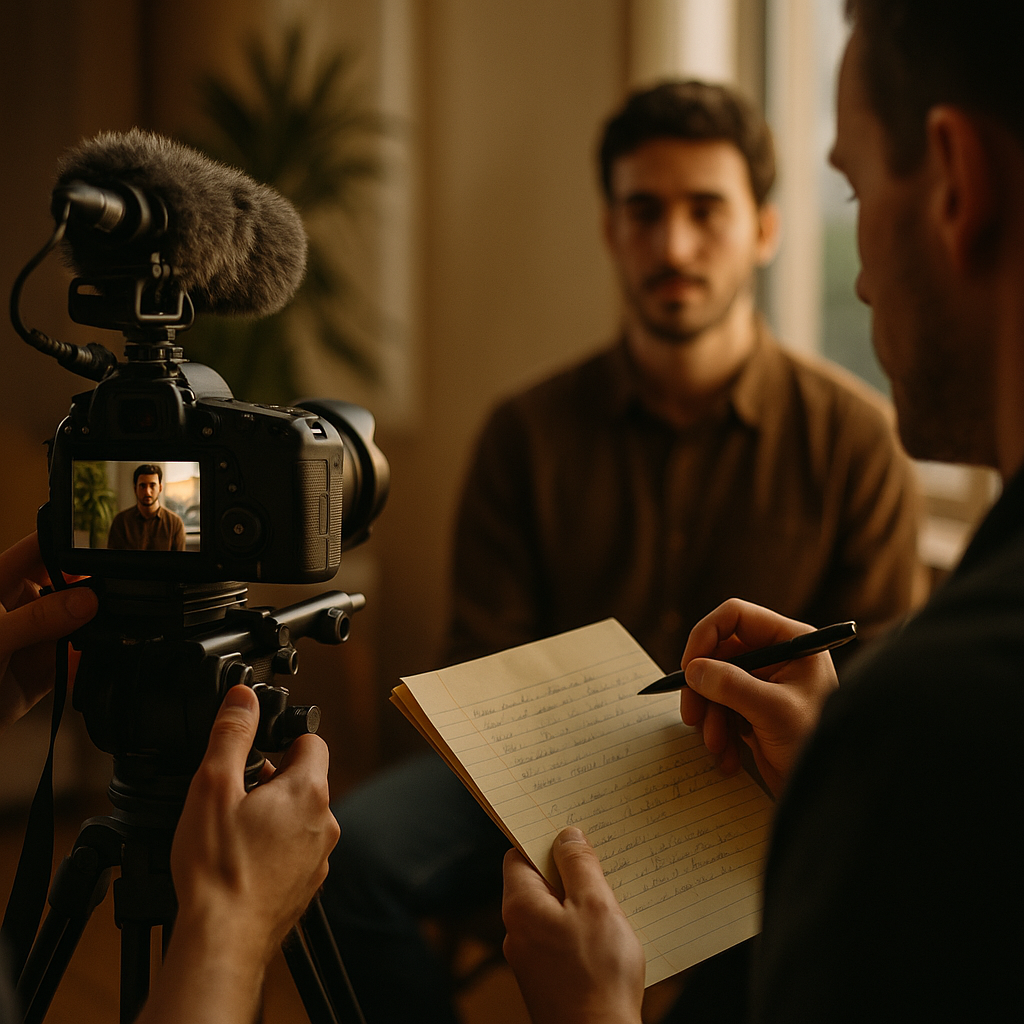
Only 4% of consumers trust brand-produced video as much as they trust a stranger talking about the same brand, according to Edelman’s Trust Barometer research on earned media. So why do so many founders still narrate their own origin story in a polished studio with a teleprompter? The mini documentary origin story, when scripted for a creator narrator instead of the founder, converts skepticism into curiosity. It borrows the credibility of an outsider telling an insider’s tale.
Why the Founder’s Own Voice Often Undersells the Story
Founders are too close to their own narrative. They know every pivot, every near-bankruptcy, every lucky break, and that familiarity makes them rush the emotional beats. A founder telling their own story sounds like a pitch. A creator telling that same story, framed as discovery rather than promotion, sounds like journalism.
This is the core insight behind the shift toward creator-narrated mini docs: audiences are wired to distrust self-interested narrators. A third-party voice, even a paid one, resets that skepticism. It is the same psychological mechanism behind founder duet formats, where proximity to the brand is diluted by a creator’s independent framing.
A founder explaining their own success sounds like marketing. A creator uncovering that same success, scene by scene, sounds like proof.
What a Mini Documentary Origin Story Actually Requires
This is not a five-minute brand film with b-roll of a warehouse. A mini documentary origin story runs 90 seconds to four minutes, structured like a condensed episode of a true-crime or business history podcast. It needs:
- A creator narrator with enough perceived objectivity to ask hard questions on camera.
- A three-act arc: the problem that birthed the company, the struggle or rejection, and the turning point.
- Archival-feeling assets (old photos, early product shots, founder voice memos) that make the story feel excavated rather than produced.
- A visible investigative process, where the creator narrates their own curiosity, not just the brand’s facts.
Brands that skip the investigative framing end up with a glorified testimonial. The format only works when the creator behaves like a narrator who stumbled onto something worth telling, not a spokesperson reading copy.
Scripting the Arc Without Losing Authenticity
Here is where most briefs go wrong. Marketing teams write origin stories the way they’d write a press release: founding year, mission statement, milestones. That is information, not narrative. A mini documentary script needs conflict early, ideally in the first eight seconds, because that is the window before a viewer scrolls past.
Structure the script around a question the creator genuinely wants answered: “Why would someone quit a six-figure job to sell candles out of their garage?” That question becomes the spine. Everything else, the founder soundbites, the archival photos, the slow reveal of current scale, hangs off that spine. This mirrors the tension-first approach used in branded microdrama scripts, where the hook has to earn the next ten seconds before any brand message appears.
Give the creator narrator latitude to insert their own reactions. Scripted gasps read as fake. Genuine surprise, built from a loose outline rather than word-for-word copy, reads as real. The best briefs provide beats, not lines.
Picking the Right Narrator: Credibility Over Reach
Follower count is almost irrelevant here. What matters is whether the creator’s existing audience already trusts them to tell factual, investigative-feeling stories. A creator known for comedy skits will struggle to carry documentary weight. A creator known for deep-dive explainers, business breakdowns, or history content brings built-in authority.
Look at niche-adjacent creators: people who cover small business failures, startup case studies, or “how this brand actually makes money” content. Their audience already expects a slower, narrative-driven format, which makes the origin story feel native rather than sponsored. This is the same casting logic behind nano creator ensemble casting, where relevance to format beats raw audience size.
Casting for documentary credibility means hiring for tone fit first and audience size second. A creator who already narrates business stories will out-convert a bigger creator who has never done long-form narrative work.
Vet the creator’s past long-form content before signing. Ask for examples where they’ve carried a narrative past the 60-second mark without losing retention. Most short-form creators have never done this, and the skill gap shows immediately in pacing.
Disclosure and Compliance Still Apply
Because the format feels editorial, brands sometimes assume disclosure rules are looser. They are not. The FTC’s endorsement guidelines apply regardless of format length or tone. A paid narrator telling a founder’s story is still a material connection that needs disclosure, typically in the first few seconds via on-screen text and verbal mention. Skipping this for the sake of “documentary realism” is a risk, not a creative choice, and it undermines the exact trust the format is built to earn.
Build disclosure into the script itself rather than bolting it on as a caption. A line like “This video was made in partnership with [brand], but I wanted to find out if the story was actually true” does double duty: it satisfies compliance and reinforces the investigative frame.
Where This Format Fits in the Funnel
Origin story docs are not conversion assets. They are trust assets. Expect them to perform best at the top and mid funnel, building brand affinity that shows up later in retargeting performance and branded search lift. According to eMarketer’s creator economy research, branded content with narrative depth tends to drive longer watch times and higher save rates than product-first UGC, even when direct click-through is lower.
Pair the mini doc with a retargeting sequence that includes more direct, lower-funnel formats. A price breakdown video or a split screen comparison video can follow up once the audience already trusts the brand’s backstory. The documentary opens the emotional door; the harder-sell formats close it.
Distribution matters too. These videos underperform as cold outbound ads. They work best seeded organically on the creator’s own channel first, then boosted via Meta’s branded content tools or TikTok’s Spark Ads once organic engagement signals validate the edit.
Budgeting and Production Reality Check
Mini documentaries cost more than a standard UGC brief because they require pre-production: research calls with the founder, archival asset collection, and often a half-day or full-day shoot instead of a quick phone recording. Budget accordingly. A rough range for a well-produced two to three minute piece with a mid-tier creator narrator runs from a few thousand dollars to five figures, depending on travel, archival licensing, and edit complexity.
Where brands overspend is in over-polishing the final cut. Documentary credibility depends on texture, slightly imperfect audio, handheld b-roll, natural pauses. A hyper-polished edit kills the “discovered story” illusion the format depends on. If your internal review process keeps asking for cleaner cuts, you’re fighting the format, not improving it.
Smaller budgets can borrow the same narrative structure at lower cost by leaning on low cost UGC briefs and treating the founder’s own phone footage as the archival layer, with the creator narrator recording voiceover separately rather than traveling on-site.
Measuring Success Beyond Views
Views and watch time matter, but the real signal is downstream brand lift. Track:
- Branded search volume in the two to four weeks following release.
- Save and share rate relative to the creator’s average, since narrative content tends to get saved for rewatching.
- Comment sentiment specifically mentioning the founder or company history, which signals the story landed emotionally.
- Assisted conversions in retargeting sequences that follow up with product-focused content.
Tools like Sprout Social’s listening dashboards or HubSpot’s campaign attribution reports can help tie this softer engagement back to pipeline, even if the direct attribution window is longer than a typical UGC ad.
Next Step
Pick one founder story your brand hasn’t told publicly, pair it with a creator known for narrative-driven content, and script the first eight seconds around a real question rather than a company fact. Run it organically before paying for distribution, and let early engagement tell you whether the lore is worth scaling.
Frequently Asked Questions
What makes a mini documentary origin story different from a standard brand video?
The narrator is a third-party creator rather than the founder or an in-house voice, which transfers credibility the way earned media does. The structure also follows a documentary arc with conflict and discovery rather than a straightforward company history recap.
How long should a founder origin story mini documentary run?
Most effective versions run between 90 seconds and four minutes. Shorter cuts work for social feeds, while longer versions perform well as YouTube or website embeds where viewers already expect narrative depth.
Do these videos require FTC disclosure even though they feel editorial?
Yes. Any paid partnership between a brand and a creator narrator requires clear disclosure under FTC guidelines, regardless of how documentary or editorial the final piece feels.
What kind of creator works best as a narrator for this format?
Creators known for investigative, explainer, or business breakdown content tend to carry documentary tone better than creators known primarily for comedy or lifestyle content, since their audience already expects narrative-driven storytelling.
Where does this format fit in a paid media funnel?
It performs best at the top and mid funnel as a trust-building asset, typically followed by more direct conversion formats like comparison videos or price breakdowns once audience trust is established.
Top Influencer Marketing Agencies
The leading agencies shaping influencer marketing in 2026
Agencies ranked by campaign performance, client diversity, platform expertise, proven ROI, industry recognition, and client satisfaction. Assessed through verified case studies, reviews, and industry consultations.
Moburst

-
2

The Shelf
Boutique Beauty & Lifestyle Influencer AgencyA data-driven boutique agency specializing exclusively in beauty, wellness, and lifestyle influencer campaigns on Instagram and TikTok. Best for brands already focused on the beauty/personal care space that need curated, aesthetic-driven content.Clients: Pepsi, The Honest Company, Hims, Elf Cosmetics, Pure LeafVisit The Shelf → -
3

Audiencly
Niche Gaming & Esports Influencer AgencyA specialized agency focused exclusively on gaming and esports creators on YouTube, Twitch, and TikTok. Ideal if your campaign is 100% gaming-focused — from game launches to hardware and esports events.Clients: Epic Games, NordVPN, Ubisoft, Wargaming, Tencent GamesVisit Audiencly → -
4

Viral Nation
Global Influencer Marketing & Talent AgencyA dual talent management and marketing agency with proprietary brand safety tools and a global creator network spanning nano-influencers to celebrities across all major platforms.Clients: Meta, Activision Blizzard, Energizer, Aston Martin, WalmartVisit Viral Nation → -
5

The Influencer Marketing Factory
TikTok, Instagram & YouTube CampaignsA full-service agency with strong TikTok expertise, offering end-to-end campaign management from influencer discovery through performance reporting with a focus on platform-native content.Clients: Google, Snapchat, Universal Music, Bumble, YelpVisit TIMF → -
6

NeoReach
Enterprise Analytics & Influencer CampaignsAn enterprise-focused agency combining managed campaigns with a powerful self-service data platform for influencer search, audience analytics, and attribution modeling.Clients: Amazon, Airbnb, Netflix, Honda, The New York TimesVisit NeoReach → -
7

Ubiquitous
Creator-First Marketing PlatformA tech-driven platform combining self-service tools with managed campaign options, emphasizing speed and scalability for brands managing multiple influencer relationships.Clients: Lyft, Disney, Target, American Eagle, NetflixVisit Ubiquitous → -
8

Obviously
Scalable Enterprise Influencer CampaignsA tech-enabled agency built for high-volume campaigns, coordinating hundreds of creators simultaneously with end-to-end logistics, content rights management, and product seeding.Clients: Google, Ulta Beauty, Converse, AmazonVisit Obviously →