


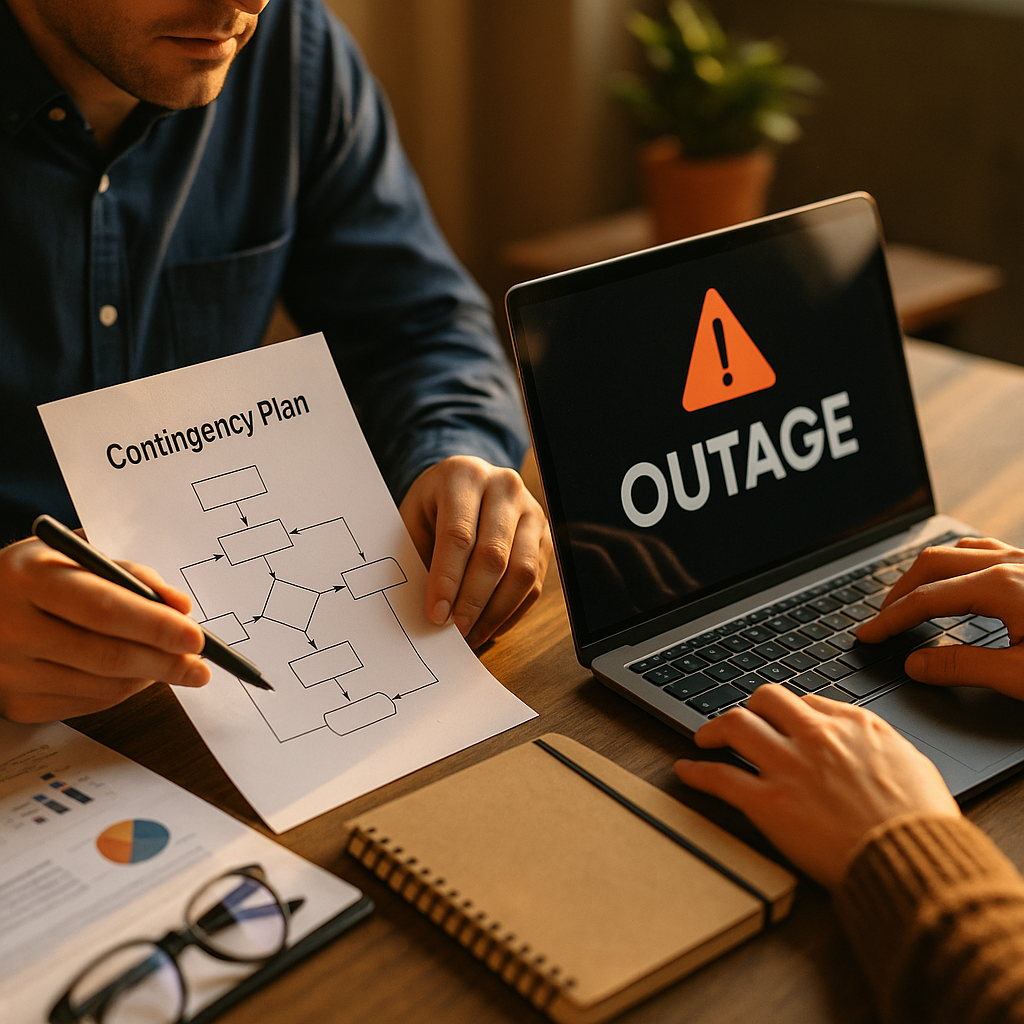
In 2024, TikTok went dark in the United States for roughly fourteen hours. Brands with six figure monthly spend on the platform had no export path, no backup content calendar, and no idea what to tell their creators. That blackout was a preview, not an anomaly. Vendor risk planning for creator platforms is no longer a nice to have on a compliance checklist. It is the difference between a program that survives a shutdown and one that evaporates with it.
Why Platform Risk Belongs on the CMO’s Desk
Marketers love to talk about creator platforms like they’re permanent infrastructure. They’re not. They’re venture backed or ad revenue dependent businesses, subject to regulatory action, algorithm pivots, acquisition fallout, or straightforward bankruptcy. Vine died. Clubhouse faded. Meta has killed off entire features (remember Instagram’s IGTV?) with a single blog post. And TikTok’s ongoing regulatory saga in the US proves that even the biggest platforms carry existential uncertainty.
Yet most brands treat their primary creator platform as a given, baking it into annual budgets, creator contracts, and reporting dashboards without a documented fallback. That’s not strategy. That’s hope dressed up as a media plan.
If your entire influencer program depends on one platform staying online, you don’t have a strategy. You have a single point of failure with a marketing budget attached.
What “Platform Failure” Actually Means
Failure isn’t always a dramatic shutdown. It’s a spectrum, and your playbook needs to cover all of it:
- Full shutdown or ban: regulatory action, national security order, or corporate wind down (the TikTok scenario).
- Algorithm or policy upheaval: a platform change that tanks organic reach or bans your content category overnight.
- Monetization collapse: creator payout structures change, causing mass creator exodus.
- Data and API lockout: loss of access to analytics, reporting, or audience data without warning.
- Acquisition or rebrand: think of how Twitter’s transition to X scrambled brand safety policies and ad tools mid-campaign.
Each of these demands a different response. A full shutdown needs a content migration plan. A policy shift needs a creative pivot. Treating them as one undifferentiated “platform risk” is how brands end up improvising in a crisis instead of executing a plan.
Build the Risk Matrix Before You Need It
Start with a simple exercise most teams skip: map every platform dependency in your creator program. Where does content live? Where is spend concentrated? Which creators are exclusive to one platform? Which KPIs can only be measured through that platform’s native analytics?
From there, score each platform on two axes: likelihood of disruption and severity of impact if it happens. A platform carrying 60% of your influencer budget with no in-house analytics backup sits in the danger zone regardless of how “stable” it looks today. This is the same logic used in creator fit scorecards, applied to infrastructure instead of individual creators.
Document this matrix somewhere more durable than a Slack thread. A shared risk register, reviewed quarterly, with explicit owners for each platform dependency. According to eMarketer, social platform ad spend concentration has only intensified over the past two years, which means the blast radius of any single platform’s failure keeps growing for brands that haven’t diversified.
The Four Pillars of a Contingency Playbook
1. Content and Asset Portability
If a platform disappears tomorrow, do you still own your content? This is where annual usage rights buyouts stop being a nice-to-have negotiation point and become operational insurance. Brands that secure broad usage rights and maintain an off-platform asset library (stored in a DAM, not just scattered across creator accounts) can repurpose content across email, paid social, and site merchandising within days of a shutdown instead of starting from zero.
Build this into every creator contract going forward: a clause requiring creators to deliver raw files directly to your asset library, not just post natively. It’s a small operational ask that pays off enormously the day a platform goes dark.
2. Creator Relationship Continuity
Your relationship is with the creator, not the platform. Too many brands forget this until it’s too late. Maintain direct contact channels (email, a CRM, a creator portal) independent of any single app’s DM system. When Vine shut down, the creators who survived the transition were the ones who had already built audiences on YouTube and Twitter in parallel, and brands that had their contact info moved with them seamlessly.
This is also where multi year creator retainers prove their worth. A retainer structure built around the creator’s output and audience, rather than a specific platform’s deliverables, survives a platform disruption far better than a one-off campaign tied to a single app’s content format.
3. Budget Reallocation Speed
Financial agility matters as much as creative agility. If 40% of your quarterly budget is locked into one platform’s ad products and that platform goes offline, how fast can finance move that money elsewhere? This connects directly to zero based budgeting principles: every dollar should be justifiable on its own merits, not auto-renewed because “that’s where we’ve always spent it.” Brands running zero based models can reroute budget to a secondary platform or live commerce channels within a single sprint cycle instead of waiting for the next fiscal quarter.
Pre-negotiate standby capacity with a secondary platform or agency partner. Some brands keep a “warm” presence on a backup channel, running minimal spend just to maintain account standing, creative formats, and audience data, so the ramp-up isn’t a cold start.
4. Measurement and Reporting Backup
What happens to your attribution model if the platform providing half your conversion data vanishes? This is a bigger problem than most dashboards admit. Teams relying solely on native platform analytics should already be building toward the signal stack approach outlined in influencer budgets without clean attribution, layering UTM tracking, promo codes, and post-purchase surveys so no single platform’s outage blinds the entire reporting function.
Pair this with the broader framework in forecasting creator ROI, which treats distribution channel as one input among several rather than the entire model. If your ROI math falls apart the moment one app disappears, your measurement strategy was never platform agnostic to begin with.
Who Owns the Playbook When the Alarm Goes Off?
A contingency plan without a named owner is a document, not a plan. Assign a cross functional incident lead (usually sitting within your creator economy center of excellence structure, see this governance blueprint for how to formalize that function) responsible for triggering the response: notifying creators, activating backup budget, and briefing leadership within the first 24 hours.
Build a simple decision tree:
- Confirm scope: is this a temporary outage, a policy change, or a permanent shutdown?
- Activate creator communication templates (pre-written, not drafted in a panic).
- Trigger budget reallocation to pre-approved secondary channels.
- Notify legal and finance of contract implications (especially for platform-exclusive creator deals).
- Brief leadership with a one-page impact summary within 48 hours.
Rehearse this. Not annually in a slide deck nobody rereads, but as a tabletop exercise, the way IT teams run breach simulations. Ask: if TikTok lost US access again tomorrow, who moves first? If the answer is “I’m not sure,” you’ve found your gap.
What Legal and Payment Terms Should Account For
Platform risk isn’t just a marketing problem, it’s a contract problem. Review creator agreements for platform-exclusivity clauses that could trap you if that platform disappears. Build in force majeure style language that addresses platform discontinuation specifically, not just generic “acts of God” boilerplate.
Payment structure matters too. Brands using revenue share payment models tied to a specific platform’s commerce tools need an explicit fallback clause: what happens to the revenue share calculation if the platform’s checkout or tracking goes down? Get specific. Vague contract language is exactly what turns a platform outage into a legal dispute with your own creators.
Similarly, review your creator crisis reserve allocation. Most brands build these reserves for brand safety incidents involving a creator’s behavior, but the same reserve logic applies to platform level disruptions. A dedicated contingency line, even a modest one, gives your team room to move fast without an emergency finance approval cycle slowing things down.
Diversification Isn’t Optional Anymore
The single clearest mitigation is also the most obvious one: stop concentrating spend on one platform. This doesn’t mean spreading budget thin across every app that exists. It means maintaining active, funded presence on at least two platforms at all times, structured through models like tiered creator volume models that can flex allocation by platform as conditions change.
Check how your omnichannel strategy holds up here too. The approach in omnichannel creator budgets is essentially a resilience strategy in disguise: owned channels like email and SMS don’t disappear when a platform does.
Platforms themselves are aware of this risk and have started building export and portability tools, though adoption varies. Review what’s available through Meta Business Suite and TikTok’s ad platform for data portability options, and don’t assume these tools will exist in their current form indefinitely.
Regulatory Risk Deserves Its Own Line Item
Platform shutdowns aren’t always corporate decisions. Increasingly, they’re government ones. The FTC has escalated scrutiny of influencer disclosure practices, and international regulators, including the ICO in the UK, continue tightening data handling rules that affect how creator platforms operate across borders. A platform that’s compliant today in one market could face a regional ban tomorrow, which means your contingency plan needs a market-by-market view, not just a single global assumption.
Next Step
Don’t wait for an outage to find out your program has no fallback. Pull your current platform spend concentration this week, score it against the risk matrix above, and assign one owner to draft the first version of your contingency playbook before the next budget cycle locks it in.
Frequently Asked Questions
What is vendor risk planning in the context of influencer marketing?
It’s the process of identifying, scoring, and preparing for disruptions to the platforms your creator program depends on, including outages, policy changes, regulatory bans, or full shutdowns, so your team can respond with a pre-built plan instead of improvising.
How much of our influencer budget should sit on one platform?
There’s no universal number, but most risk-aware teams cap single platform concentration well below 50% of total creator spend, using tiered or omnichannel budget models to maintain active presence elsewhere.
What should be in a creator platform contingency playbook?
At minimum: a risk matrix scoring platform dependencies, a content portability plan, direct creator contact channels independent of the platform, pre-approved budget reallocation paths, and a named incident owner with a documented response sequence.
Who should own platform risk planning inside a marketing organization?
Typically a cross functional lead within a creator economy center of excellence, working alongside legal, finance, and the creator ops team, so the response spans content, contracts, and budget simultaneously.
Does platform risk planning affect creator contracts?
Yes. Contracts should address platform-exclusivity clauses, usage rights for off-platform repurposing, and fallback terms for revenue share or performance payments tied to platform-specific commerce or tracking tools.
Top Influencer Marketing Agencies
The leading agencies shaping influencer marketing in 2026
Agencies ranked by campaign performance, client diversity, platform expertise, proven ROI, industry recognition, and client satisfaction. Assessed through verified case studies, reviews, and industry consultations.
Moburst

-
2

The Shelf
Boutique Beauty & Lifestyle Influencer AgencyA data-driven boutique agency specializing exclusively in beauty, wellness, and lifestyle influencer campaigns on Instagram and TikTok. Best for brands already focused on the beauty/personal care space that need curated, aesthetic-driven content.Clients: Pepsi, The Honest Company, Hims, Elf Cosmetics, Pure LeafVisit The Shelf → -
3

Audiencly
Niche Gaming & Esports Influencer AgencyA specialized agency focused exclusively on gaming and esports creators on YouTube, Twitch, and TikTok. Ideal if your campaign is 100% gaming-focused — from game launches to hardware and esports events.Clients: Epic Games, NordVPN, Ubisoft, Wargaming, Tencent GamesVisit Audiencly → -
4

Viral Nation
Global Influencer Marketing & Talent AgencyA dual talent management and marketing agency with proprietary brand safety tools and a global creator network spanning nano-influencers to celebrities across all major platforms.Clients: Meta, Activision Blizzard, Energizer, Aston Martin, WalmartVisit Viral Nation → -
5

The Influencer Marketing Factory
TikTok, Instagram & YouTube CampaignsA full-service agency with strong TikTok expertise, offering end-to-end campaign management from influencer discovery through performance reporting with a focus on platform-native content.Clients: Google, Snapchat, Universal Music, Bumble, YelpVisit TIMF → -
6

NeoReach
Enterprise Analytics & Influencer CampaignsAn enterprise-focused agency combining managed campaigns with a powerful self-service data platform for influencer search, audience analytics, and attribution modeling.Clients: Amazon, Airbnb, Netflix, Honda, The New York TimesVisit NeoReach → -
7

Ubiquitous
Creator-First Marketing PlatformA tech-driven platform combining self-service tools with managed campaign options, emphasizing speed and scalability for brands managing multiple influencer relationships.Clients: Lyft, Disney, Target, American Eagle, NetflixVisit Ubiquitous → -
8

Obviously
Scalable Enterprise Influencer CampaignsA tech-enabled agency built for high-volume campaigns, coordinating hundreds of creators simultaneously with end-to-end logistics, content rights management, and product seeding.Clients: Google, Ulta Beauty, Converse, AmazonVisit Obviously →