


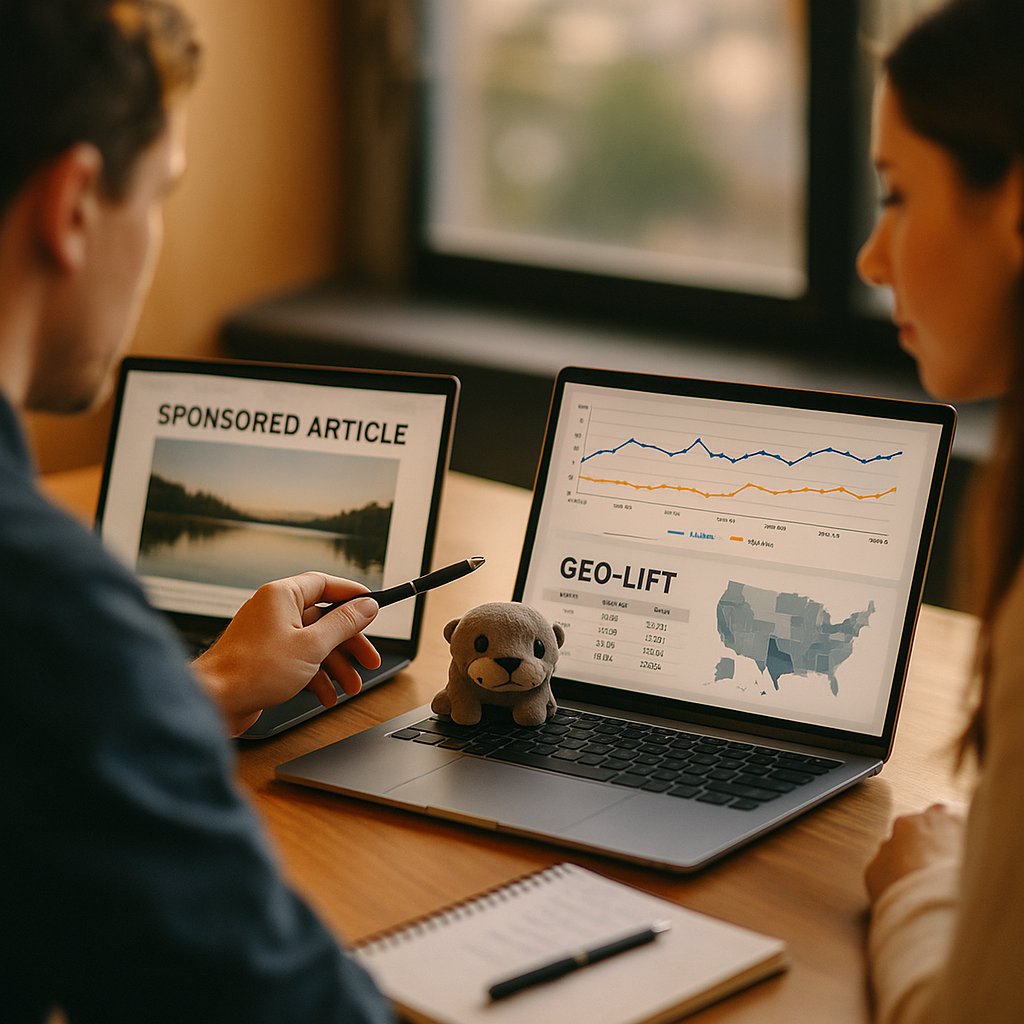
Only 23% of marketers currently track whether their content shows up in AI-generated answers, according to recent industry surveys, yet ChatGPT, Perplexity, and Google’s AI Overviews now shape purchase research for a growing share of consumers. Enter the Getfluence and OtterlyAI partnership: a pairing of sponsored content distribution and generative engine optimization (GEO) tracking that treats earned media placements as a direct input into AI answer visibility. For brand strategists who’ve spent years chasing backlinks and creator mentions for SEO, this is the next shift worth understanding before competitors lock in the inventory.
Two Companies, One Overlooked Gap
Getfluence runs a marketplace connecting brands with publishers for native advertising, sponsored articles, and brand journalism across thousands of media outlets. Think of it as programmatic earned media: you fund a placement on a trade publication or lifestyle site, and that content lives permanently on the publisher’s domain, carrying their authority with it.
OtterlyAI, on the other hand, tracks how often and how favorably a brand gets cited inside AI chatbot answers. It’s one of a handful of GEO visibility tools that have emerged as marketers realized traditional rank tracking doesn’t capture whether ChatGPT or Perplexity actually mentions your product when someone asks for a recommendation. We’ve covered this category before, including how GEO visibility tools stack up against each other on accuracy and coverage claims.
The partnership links these two functions directly. Brands place sponsored content through Getfluence’s publisher network, then use OtterlyAI to measure whether that specific placement moves the needle on AI citation frequency. It’s a closed loop that didn’t exist before: pay for earned-style media, then prove it influenced what an AI model says about you.
The real shift isn’t the technology. It’s that earned media now has a measurable downstream effect on AI discovery, something brands previously had to guess at.
Why Influencer Marketers Should Care
You might be asking why a publication covering creator economy and influencer strategy should pay attention to a sponsored content marketplace. The answer is that influencer marketing and GEO are converging fast. Large language models train and retrieve from a mix of publisher content, forums, and social signals. Creator reviews, brand mentions in trade press, and sponsored editorial all feed the same visibility pool that determines whether your brand gets surfaced when someone asks an AI assistant “what’s the best skincare serum for sensitive skin.”
This matters operationally for three reasons:
- Budget reallocation pressure. If sponsored placements can be shown to lift AI citation rates, CMOs will start pulling dollars from traditional influencer seeding toward hybrid earned/paid content plays.
- New KPIs enter the brief. Brand teams already track GMV, CAC payback, and reach from creator campaigns using tools like those covered in our piece on CRM dashboards for creator payback. GEO citation lift could become a parallel metric sitting alongside those numbers.
- Attribution gets murkier before it gets clearer. If a sponsored article and a creator’s TikTok review both influence a buyer who later asks an AI chatbot for a recommendation, which channel gets credit? Nobody has solved this yet.
What This Looks Like in Practice
Picture a DTC supplement brand running a Getfluence placement on a health and wellness publisher. Historically, success meant traffic referrals and maybe a backlink for domain authority. Now, the brand can layer OtterlyAI tracking on top, checking weekly whether that article’s claims and brand name start appearing when users query AI assistants about supplement recommendations in that category.
If citation frequency climbs within a few weeks of the placement going live, that’s a signal the content influenced the model’s retrieval or training signal (depending on which AI engine and how it sources answers). If nothing moves, the brand has evidence to renegotiate placement strategy or publisher selection. Either way, it’s a feedback loop that didn’t exist eighteen months ago.
The Skepticism Brands Should Bring to This
Before any CMO redirects budget toward this pairing, a few caveats deserve scrutiny. First, correlation isn’t causation. AI models update their retrieval indexes on inconsistent schedules, and attributing a citation bump to a single sponsored article ignores the dozens of other signals (social mentions, Reddit threads, Wikipedia edits, competitor activity) that could explain the same movement.
Second, GEO visibility tools themselves vary wildly in methodology. Some sample a narrow set of prompts, others claim broader coverage across engines but can’t verify how often those engines actually refresh their training data. We’ve flagged this exact problem in our analysis of AI search accuracy and scale tradeoffs, and the same scrutiny applies here. Ask any vendor for their sampling methodology before trusting a citation lift chart.
Third, there’s a compliance dimension that influencer marketers know well but sponsored content buyers sometimes forget. Native advertising still requires clear disclosure under FTC guidelines, and as this earned-media-meets-AI-visibility trend grows, regulators may start asking harder questions about whether paid placements that influence AI answers need the same disclosure rigor as a paid creator post. Brands running both creator campaigns and sponsored publisher content should keep disclosure standards consistent across the board. The FTC’s guidance on endorsements is a useful baseline to revisit.
If a sponsored article can move AI citation rates, it can also draw regulatory attention. Treat disclosure consistency as a risk mitigation line item, not an afterthought.
How This Fits Into a Broader Martech Stack
Most brands reading this already run a patchwork of tools: a creator CRM, a rights management system, maybe a GEO tracker bolted on separately. The Getfluence and OtterlyAI pairing is another node to evaluate rather than a replacement for existing infrastructure. Teams thinking through whether to build custom integrations or buy pre-wired solutions should revisit the framework in our composable martech stack piece, since the same build-versus-buy logic applies to GEO measurement layers.
There’s also a data ownership question. On-device AI search and first-party signal capture are reshaping how much visibility brands actually have into what’s driving citations versus what’s black-boxed inside the model provider’s infrastructure. Our coverage of how on-device AI search locks creator data is relevant context here: as more AI search moves on-device, third-party trackers like OtterlyAI may lose visibility into exactly which queries trigger which citations, which could limit how precisely brands can attribute sponsored content ROI going forward.
For brands already juggling unified data claims from AI marketing operating systems, this adds one more layer of complexity. Our piece on vetting unified data claims is a good gut check before assuming any single dashboard, Getfluence’s, OtterlyAI’s, or a combined view, gives you the full picture.
A Pragmatic First Step
If you’re a brand strategist curious about testing this, don’t commit a full-quarter budget to it. Run a small pilot: three to five sponsored placements through Getfluence’s network in a category where you already have GEO baseline data from OtterlyAI or a comparable tool. Measure citation frequency before and after, over a six to eight week window, and compare that lift against organic earned media or creator-driven mentions you’re already running. Industry benchmarking resources like eMarketer and Statista can help you contextualize whether the lift you’re seeing is meaningful relative to category norms, since AI citation behavior still lacks the mature benchmarking that search and social have had for years.
It’s also worth tracking how this plays against your existing social listening and brand mention tools. Platforms like Sprout Social already surface earned mention volume across traditional channels, and pairing that data with GEO citation tracking gives a fuller picture of whether your earned media strategy, sponsored or organic, is actually translating into AI-era discoverability.
Where This Leaves Brand Teams
The Getfluence and OtterlyAI partnership won’t single-handedly rewrite influencer marketing budgets this year. But it’s an early signal that earned media, long treated as a soft, hard-to-measure channel, is getting a measurement layer specifically built for the AI search era. Brands that ignore it entirely risk ceding visibility to competitors willing to run the experiment first. Brands that overcommit without demanding methodology transparency risk wasting budget on unverifiable lift claims.
The smart middle path: pilot small, demand sampling transparency from any GEO vendor, and keep disclosure practices consistent across both creator and sponsored content programs.
Next step: run a contained pilot, measure citation lift against a clean baseline, and only scale the spend once you can explain the methodology behind the numbers to your CFO without hand-waving.
FAQs
What exactly does the Getfluence and OtterlyAI partnership do?
It connects Getfluence’s sponsored content and publisher placement marketplace with OtterlyAI’s AI visibility tracking, letting brands measure whether a paid earned-media placement affects how often they’re cited in AI chatbot answers.
Is this the same thing as traditional SEO link building?
No. Traditional link building targets search engine rankings and domain authority. This partnership targets generative engine optimization (GEO), meaning visibility inside AI-generated answers from tools like ChatGPT, Perplexity, and Google’s AI Overviews, which use different retrieval and ranking logic than classic search.
How does this affect influencer marketing budgets?
It introduces competition for budget. If sponsored publisher content can be shown to lift AI citation rates, some brands may shift spend away from creator seeding toward hybrid earned and sponsored content strategies, though most practitioners expect the two channels to complement rather than replace each other.
Can brands trust the citation lift data these tools report?
Treat it with healthy skepticism. GEO visibility tools vary in sampling methodology, prompt coverage, and how frequently they refresh data. Ask vendors directly how they measure citation frequency before using their numbers to justify budget decisions.
Do sponsored placements need the same disclosure as influencer posts?
Native advertising and sponsored content already fall under FTC disclosure rules in most markets. As GEO measurement grows, brands should keep disclosure standards consistent across both creator partnerships and sponsored publisher placements to avoid regulatory risk.
FAQs
What exactly does the Getfluence and OtterlyAI partnership do?
It connects Getfluence’s sponsored content and publisher placement marketplace with OtterlyAI’s AI visibility tracking, letting brands measure whether a paid earned-media placement affects how often they’re cited in AI chatbot answers.
Is this the same thing as traditional SEO link building?
No. Traditional link building targets search engine rankings and domain authority. This partnership targets generative engine optimization (GEO), meaning visibility inside AI-generated answers from tools like ChatGPT, Perplexity, and Google’s AI Overviews, which use different retrieval and ranking logic than classic search.
How does this affect influencer marketing budgets?
It introduces competition for budget. If sponsored publisher content can be shown to lift AI citation rates, some brands may shift spend away from creator seeding toward hybrid earned and sponsored content strategies, though most practitioners expect the two channels to complement rather than replace each other.
Can brands trust the citation lift data these tools report?
Treat it with healthy skepticism. GEO visibility tools vary in sampling methodology, prompt coverage, and how frequently they refresh data. Ask vendors directly how they measure citation frequency before using their numbers to justify budget decisions.
Do sponsored placements need the same disclosure as influencer posts?
Native advertising and sponsored content already fall under FTC disclosure rules in most markets. As GEO measurement grows, brands should keep disclosure standards consistent across both creator partnerships and sponsored publisher placements to avoid regulatory risk.
Top Influencer Marketing Agencies
The leading agencies shaping influencer marketing in 2026
Agencies ranked by campaign performance, client diversity, platform expertise, proven ROI, industry recognition, and client satisfaction. Assessed through verified case studies, reviews, and industry consultations.
Moburst

-
2

The Shelf
Boutique Beauty & Lifestyle Influencer AgencyA data-driven boutique agency specializing exclusively in beauty, wellness, and lifestyle influencer campaigns on Instagram and TikTok. Best for brands already focused on the beauty/personal care space that need curated, aesthetic-driven content.Clients: Pepsi, The Honest Company, Hims, Elf Cosmetics, Pure LeafVisit The Shelf → -
3

Audiencly
Niche Gaming & Esports Influencer AgencyA specialized agency focused exclusively on gaming and esports creators on YouTube, Twitch, and TikTok. Ideal if your campaign is 100% gaming-focused — from game launches to hardware and esports events.Clients: Epic Games, NordVPN, Ubisoft, Wargaming, Tencent GamesVisit Audiencly → -
4

Viral Nation
Global Influencer Marketing & Talent AgencyA dual talent management and marketing agency with proprietary brand safety tools and a global creator network spanning nano-influencers to celebrities across all major platforms.Clients: Meta, Activision Blizzard, Energizer, Aston Martin, WalmartVisit Viral Nation → -
5

The Influencer Marketing Factory
TikTok, Instagram & YouTube CampaignsA full-service agency with strong TikTok expertise, offering end-to-end campaign management from influencer discovery through performance reporting with a focus on platform-native content.Clients: Google, Snapchat, Universal Music, Bumble, YelpVisit TIMF → -
6

NeoReach
Enterprise Analytics & Influencer CampaignsAn enterprise-focused agency combining managed campaigns with a powerful self-service data platform for influencer search, audience analytics, and attribution modeling.Clients: Amazon, Airbnb, Netflix, Honda, The New York TimesVisit NeoReach → -
7

Ubiquitous
Creator-First Marketing PlatformA tech-driven platform combining self-service tools with managed campaign options, emphasizing speed and scalability for brands managing multiple influencer relationships.Clients: Lyft, Disney, Target, American Eagle, NetflixVisit Ubiquitous → -
8

Obviously
Scalable Enterprise Influencer CampaignsA tech-enabled agency built for high-volume campaigns, coordinating hundreds of creators simultaneously with end-to-end logistics, content rights management, and product seeding.Clients: Google, Ulta Beauty, Converse, AmazonVisit Obviously →