


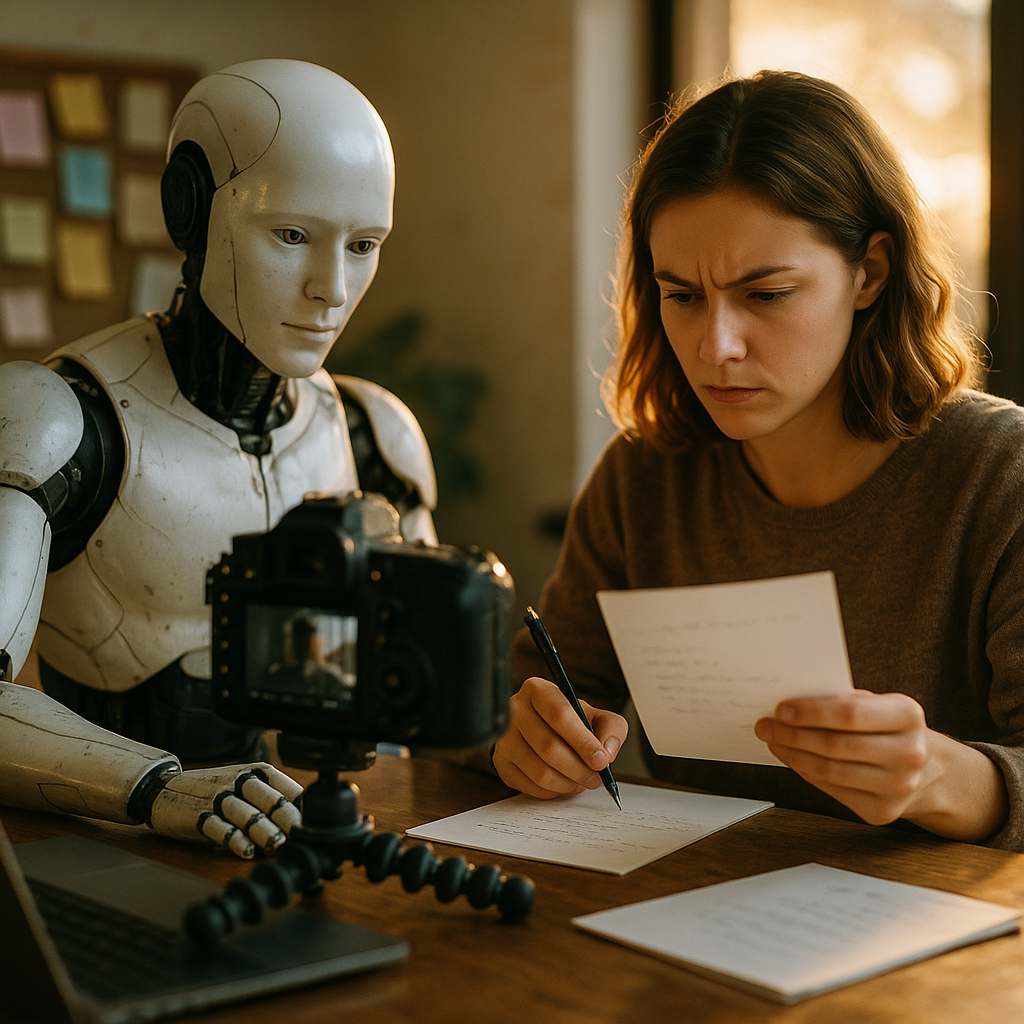
Forty percent of marketers say they’ve already used AI to generate some form of creator style content, yet fewer than one in ten trust it for top of funnel campaigns without human review. That gap between adoption and confidence is where the real story sits. AI generated creator assets are no longer a novelty act at marketing conferences. They’re showing up in A/B tests, retainer negotiations, and procurement decks across the industry, and brands are quietly figuring out where synthetic content earns its keep and where it still falls flat.
What Counts as an AI Generated Creator Asset?
The term covers more ground than most people assume. It’s not just deepfake avatars reciting ad copy. We’re talking about AI generated voiceovers layered onto real creator footage, synthetic UGC actors built from licensed likeness libraries, AI upscaled or extended b-roll, and fully generative talking head videos produced without a camera ever rolling.
Some brands use tools like Synthesia or HeyGen to produce multilingual product explainers. Others lean on generative video models to create “creator style” testimonials at a fraction of the cost of booking a real person. The common thread: synthetic media standing in for, or supplementing, content that used to require a human in front of a lens.
The brands getting the best results aren’t replacing creators with AI. They’re using AI to fill the gaps creators can’t economically cover, like localized variants, rapid iteration, and always on testing.
Where the Testing Is Actually Happening
Three categories dominate early adoption, and none of them are “hero” brand campaigns. That’s deliberate.
- Performance ad variants. Brands running paid social at scale need dozens of hook variations weekly. AI generated voiceovers and synthetic presenters let media buyers test headlines and angles without rebooking talent every time a variant underperforms.
- Localization at speed. Instead of reshooting with regional creators, some teams generate AI dubbed or AI presented versions of existing content for secondary markets where budget doesn’t justify a full production run. This pairs naturally with approaches covered in wordless creator collabs, where visual storytelling reduces dependency on spoken language entirely.
- Top of funnel filler content. Product explainer clips, FAQ style shorts, and comparison videos that don’t rely on personal credibility are prime candidates for synthetic production.
Notice what’s missing from that list. Nobody’s using full AI avatars for intimate “day in the life” trust building content, and for good reason. Formats like day in the life vlogs depend entirely on perceived authenticity. Swap in a synthetic presenter and the format collapses.
The Cost Math Brands Are Actually Running
Here’s the pitch every AI video vendor makes: a single creator partnership can run anywhere from a few hundred dollars for a nano influencer to six figures for a celebrity endorsement, according to industry benchmarks tracked by eMarketer. A synthetic asset, once the model is trained or licensed, can produce unlimited variants for a flat subscription fee.
On paper, that’s a compelling spreadsheet. In practice, brand teams are finding the savings are real but narrower than vendors promise. Production cost drops, sure. But performance often requires more testing cycles to find a synthetic format that doesn’t feel stiff, which eats into the savings. One mid-market DTC marketing lead told us her team cut video production spend by roughly 30% using AI generated product demos, but only after three months of trial and error on prompt engineering and avatar selection.
The honest takeaway: AI generated assets reduce marginal cost per variant, not necessarily total program cost, at least not yet.
Where Synthetic Content Is Winning
A few use cases are producing genuinely strong ROI signals.
- Scaling comparison and review formats. Structured, information dense formats like those in comparison grid carousels don’t rely on personality, so a synthetic voice reading structured data performs nearly as well as a human one.
- Rapid hook testing for paid media. Teams running POV script templates for paid campaigns are using AI generated variants to test dozens of hook angles before committing budget to a real creator shoot.
- B-roll and supplementary footage. AI generated or AI enhanced footage is increasingly used to fill gaps in b-roll shot lists when a creator can’t deliver every angle a brand needs for repurposing.
These wins share a pattern. They’re all formats where the content’s value comes from information or structure, not personal credibility. That distinction matters more than almost anything else in this conversation.
Where It’s Still Failing
Ask any platform trust and safety team and they’ll tell you the same thing: audiences are getting sharper at spotting synthetic content, and the backlash when it’s discovered undisclosed is severe. A 2024 Edelman trust study found that consumer trust in brands drops significantly when AI generated content is presented as organic creator testimony without disclosure, a finding that’s only intensified as generative tools have gotten better.
Formats built on perceived vulnerability or unscripted reaction, things like green screen duet reactions or split screen duet reviews, are nearly impossible to replicate convincingly with synthetic actors. Viewers are trained to read micro expressions, timing, and vocal imperfection as proof of authenticity. AI still struggles to fake that convincingly, and when it fails, it fails publicly.
The riskiest move a brand can make isn’t using AI content. It’s using AI content in a format that implies human authenticity without disclosing it.
Compliance Is Catching Up Fast
Regulators are not waiting around. The Federal Trade Commission has signaled that synthetic endorsements and testimonials fall under existing disclosure rules, meaning brands using AI generated creator content for anything resembling a review or testimonial need clear labeling. The UK’s Information Commissioner’s Office has similarly flagged AI generated likeness and synthetic media as an area of increased scrutiny, particularly where consent and data provenance are unclear.
For brand teams, this means legal review now needs a seat at the table earlier in the production process, not after a synthetic asset has already gone live. Questions worth settling before a single prompt is written: Is the AI model trained on licensed creator likeness or a generic synthetic actor? Does the platform’s branded content policy require disclosure labels, as outlined by Meta’s branded content guidelines and similar policies from TikTok’s advertising hub? Who owns the output if a creator’s style was used as training reference?
How Brands Are Structuring the Hybrid Model
The teams getting the best results aren’t choosing between human and synthetic content. They’re building hybrid production pipelines where real creators shoot the core footage and AI tools handle variation and scale.
A common pattern looks like this: a creator films a primary piece of content, brand lifts the raw footage and audio, then uses AI tools to generate localized voiceovers, shortened cutdowns, or alternate hook openings for paid testing. The creator gets paid for the original usage rights, the brand gets dozens of testable variants, and nothing synthetic is presented as organic creator opinion. This mirrors the logic behind trend audio jacking workflows, where speed and compliance have to move together rather than one sacrificing the other.
This hybrid approach also sidesteps a growing concern among creators themselves: that brands are quietly building AI models trained on their likeness and voice to eventually cut them out of the loop entirely. Transparent licensing terms in contracts are becoming standard practice for agencies managing creator rosters, and HubSpot’s marketing research suggests brands that formalize these terms see fewer disputes down the line.
What This Means for Budget Allocation
If you’re a brand strategist deciding where to put next quarter’s content budget, the practical guidance looks like this. Reserve human creators for anything that depends on trust, personality, or lived experience, think rate my routine videos or origin story formats. Allocate a smaller test budget toward AI generated supplements for high volume, low trust dependent formats like product explainers, localized variants, and paid media hook testing.
Track performance separately. Don’t lump synthetic asset performance into the same reporting bucket as human creator content, because the data will mislead you into thinking one is outperforming the other when they’re actually serving entirely different functions in the funnel.
The Next Twelve Months
Expect platform policy to tighten before technology plateaus. Sprout Social’s industry research has already flagged increased audience sensitivity to AI generated content, which means brands moving fast on synthetic assets without a disclosure framework are building risk into their media plans. The smarter operators are treating AI generated creator assets the way they’d treat any new ad format: test small, measure separately, disclose clearly, and scale only what survives contact with a skeptical audience.
Next step: Audit your current content calendar and flag every asset that relies on AI generation or enhancement, then confirm each one carries appropriate disclosure before your next platform audit catches it first.
FAQs
Are AI generated creator assets the same as deepfakes?
Not necessarily. Deepfakes typically involve replicating a specific real person’s likeness without consent. Most brand use cases involve licensed synthetic actors or AI tools layered onto content with proper rights, which is a legally and ethically different category.
Do platforms require disclosure for AI generated content?
Increasingly, yes. Meta and TikTok have both introduced labeling requirements for AI generated or significantly altered content in ads and branded posts, and failing to disclose can result in content removal or ad account penalties.
Can AI generated content replace influencer partnerships entirely?
For formats dependent on trust and personal credibility, no. Synthetic content performs best in supplementary roles like variant testing, localization, and informational formats where personality isn’t the primary driver of engagement.
What’s the biggest risk brands overlook with synthetic creator content?
Presenting AI generated content as organic creator opinion without disclosure. This creates both regulatory exposure under FTC guidelines and significant trust erosion if audiences discover the deception.
How should brands measure ROI on AI generated assets versus human creator content?
Track them separately. Synthetic assets typically serve top of funnel or testing functions, while human creator content drives trust and conversion, so combining the metrics obscures what’s actually working.
FAQs
Are AI generated creator assets the same as deepfakes?
Not necessarily. Deepfakes typically involve replicating a specific real person’s likeness without consent. Most brand use cases involve licensed synthetic actors or AI tools layered onto content with proper rights, which is a legally and ethically different category.
Do platforms require disclosure for AI generated content?
Increasingly, yes. Meta and TikTok have both introduced labeling requirements for AI generated or significantly altered content in ads and branded posts, and failing to disclose can result in content removal or ad account penalties.
Can AI generated content replace influencer partnerships entirely?
For formats dependent on trust and personal credibility, no. Synthetic content performs best in supplementary roles like variant testing, localization, and informational formats where personality isn’t the primary driver of engagement.
What’s the biggest risk brands overlook with synthetic creator content?
Presenting AI generated content as organic creator opinion without disclosure. This creates both regulatory exposure under FTC guidelines and significant trust erosion if audiences discover the deception.
How should brands measure ROI on AI generated assets versus human creator content?
Track them separately. Synthetic assets typically serve top of funnel or testing functions, while human creator content drives trust and conversion, so combining the metrics obscures what’s actually working.
Top Influencer Marketing Agencies
The leading agencies shaping influencer marketing in 2026
Agencies ranked by campaign performance, client diversity, platform expertise, proven ROI, industry recognition, and client satisfaction. Assessed through verified case studies, reviews, and industry consultations.
Moburst

-
2

The Shelf
Boutique Beauty & Lifestyle Influencer AgencyA data-driven boutique agency specializing exclusively in beauty, wellness, and lifestyle influencer campaigns on Instagram and TikTok. Best for brands already focused on the beauty/personal care space that need curated, aesthetic-driven content.Clients: Pepsi, The Honest Company, Hims, Elf Cosmetics, Pure LeafVisit The Shelf → -
3

Audiencly
Niche Gaming & Esports Influencer AgencyA specialized agency focused exclusively on gaming and esports creators on YouTube, Twitch, and TikTok. Ideal if your campaign is 100% gaming-focused — from game launches to hardware and esports events.Clients: Epic Games, NordVPN, Ubisoft, Wargaming, Tencent GamesVisit Audiencly → -
4

Viral Nation
Global Influencer Marketing & Talent AgencyA dual talent management and marketing agency with proprietary brand safety tools and a global creator network spanning nano-influencers to celebrities across all major platforms.Clients: Meta, Activision Blizzard, Energizer, Aston Martin, WalmartVisit Viral Nation → -
5

The Influencer Marketing Factory
TikTok, Instagram & YouTube CampaignsA full-service agency with strong TikTok expertise, offering end-to-end campaign management from influencer discovery through performance reporting with a focus on platform-native content.Clients: Google, Snapchat, Universal Music, Bumble, YelpVisit TIMF → -
6

NeoReach
Enterprise Analytics & Influencer CampaignsAn enterprise-focused agency combining managed campaigns with a powerful self-service data platform for influencer search, audience analytics, and attribution modeling.Clients: Amazon, Airbnb, Netflix, Honda, The New York TimesVisit NeoReach → -
7

Ubiquitous
Creator-First Marketing PlatformA tech-driven platform combining self-service tools with managed campaign options, emphasizing speed and scalability for brands managing multiple influencer relationships.Clients: Lyft, Disney, Target, American Eagle, NetflixVisit Ubiquitous → -
8

Obviously
Scalable Enterprise Influencer CampaignsA tech-enabled agency built for high-volume campaigns, coordinating hundreds of creators simultaneously with end-to-end logistics, content rights management, and product seeding.Clients: Google, Ulta Beauty, Converse, AmazonVisit Obviously →