


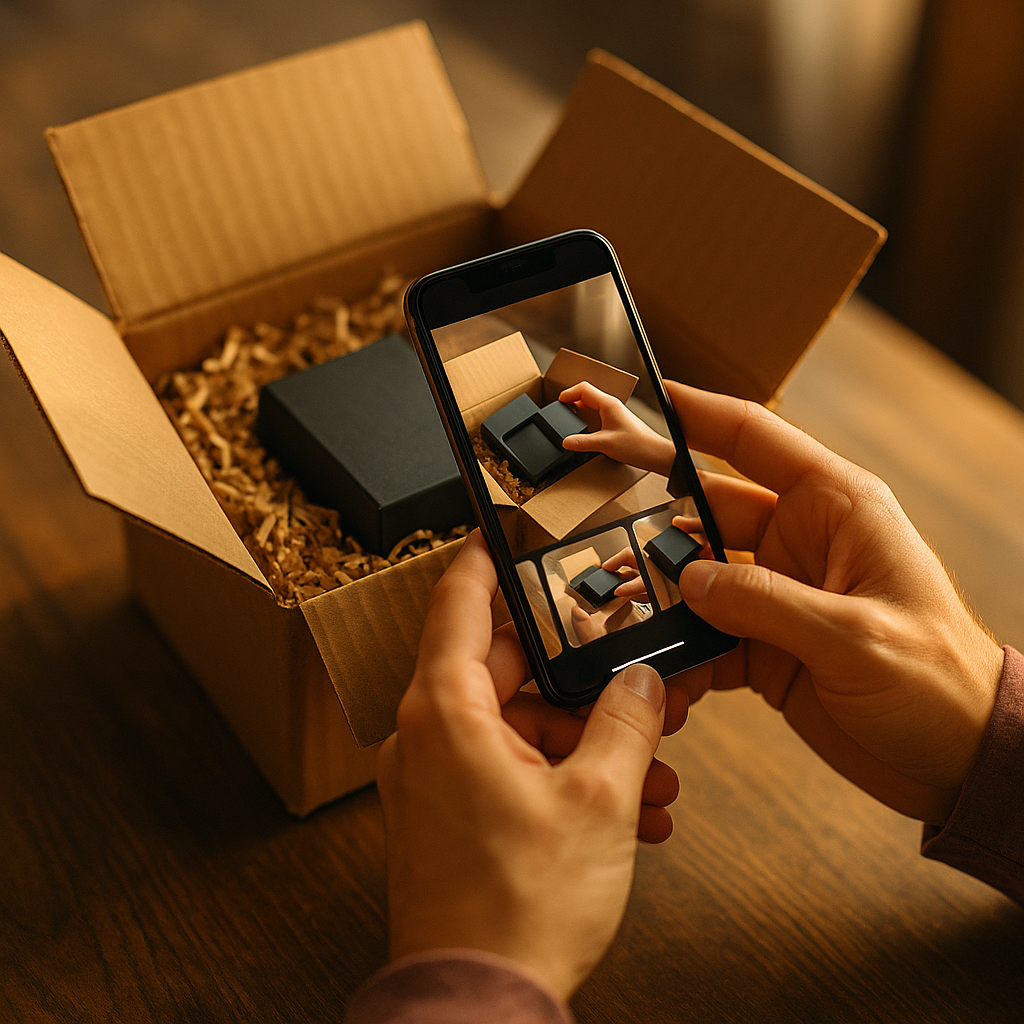
Carousels with a “swipe to reveal” structure save at nearly twice the rate of single-image posts, according to internal benchmarking most agencies now treat as gospel. Why? Because curiosity is a loop the brain won’t close until it swipes. The swipe to reveal carousel format turns a static product shot into a mini unboxing experience, and for brands sitting on packaging redesigns or ingredient stories, that’s a gift. The question isn’t whether to use it. It’s whether you’re scripting it with any discipline.
Why This Format Outperforms the Standard Product Grid
Most brand carousels still read like a digital catalog. Slide one, hero shot. Slide two, lifestyle shot. Slide three, call to action. It’s fine. It’s also forgettable.
The swipe to reveal format breaks that pattern by withholding information. Slide one poses a question or teases a transformation. Each subsequent slide answers a little more, until the final slide delivers the payoff: the ingredient list, the packaging redesign, the before and after. That structure exploits what behavioral researchers call the Zeigarnik effect, our tendency to remember and feel compelled to finish incomplete tasks. A swipe sequence is an unfinished task every time.
Saves happen when a user decides they’ll need this information later. Reveal formats manufacture that decision by making the payoff feel earned rather than handed over.
This matters more in a feed environment where algorithms on Instagram and TikTok increasingly weight saves and shares above likes. Meta has said publicly that it looks at signals like saves as a proxy for content that’s “meaningful” to a user, which is algorithm-speak for “worth showing to more people.” A format engineered to produce saves isn’t just a creative choice. It’s a distribution strategy.
The Anatomy of a Reveal Carousel That Actually Converts
A reveal carousel isn’t just slides in a logical order. It’s a script with beats, same as any other ad format. Here’s the structure that’s held up across packaging and ingredient campaigns we’ve tracked:
- Slide one: the hook question. Not “new packaging!” but something like “guess what’s actually in this before you buy it again.” Curiosity, not announcement.
- Slide two: context or tension. Establish why this matters. A complaint, a myth, a comparison point.
- Slides three to five: the build. Each slide adds one layer of reveal: ingredient category, sourcing detail, packaging material. Never dump everything at once.
- Second-to-last slide: the twist or proof point. This is where you differentiate from competitors or debunk an assumption.
- Final slide: the payoff and CTA. Full reveal plus a reason to save (a formula, a comparison chart, a QR code) and a soft action prompt.
Notice what’s missing from that list: a slide that just says “buy now.” Reveal carousels aren’t direct response ads. They’re trust-building assets that happen to drive consideration. If your CTA slide feels like a hard sell, you’ve broken the format’s implicit promise, which is “stick with me and I’ll tell you something useful.”
Scripting the Ingredient Reveal Without Sounding Like a Nutrition Label
Ingredient reveals are tricky because the content is, frankly, boring on its own. Nobody saves a carousel because it lists “sodium benzoate” in slide four. You need a narrative device.
The highest-performing ingredient reveal scripts we’ve seen use one of three framings:
- Myth versus reality. “You’ve been told X causes Y. Here’s what’s actually in the formula and why.”
- Origin story. “This ingredient traveled from [specific place] before it reached your shelf.” Sourcing transparency plays well with skincare and food brands especially.
- Comparison reveal. Show your ingredient panel next to a generic competitor’s, slide by slide, without naming the competitor directly (legal will thank you).
Each of these gives the ingredient list a reason to exist beyond compliance copy. This pairs well with the proof-driven approach covered in product demo skits that drive proof, where the goal is similarly to turn dry product facts into something worth sitting through.
Packaging Reveals: Give the Design a Reason, Not Just a Debut
Packaging redesigns are a classic case of brands assuming the audience cares as much as the design team does. They usually don’t, at least not without context.
The fix is to script the “why” before the “what.” Slide one: “We changed something you touch every single day.” Slide two: the problem with the old packaging (hard to recycle, hard to pour, hard to store). Slides three and four: the new solution, piece by piece. Final slide: the full product shot with the redesign in full glory, plus a save-worthy detail like a size comparison chart or a recyclability guide.
That recyclability or functional angle matters more than you’d think. Consumers increasingly save content that helps them make a decision later, not just content that looks nice in the moment, a pattern seen clearly in shoppable Pinterest pin strategies where utility drives the save far more than aesthetics alone.
Where Creators Fit Into the Reveal Format
Should brands build these carousels in-house or hand them to creators? Both, but for different jobs.
Brand-owned channels should run the polished version: clean typography, consistent brand colors, legally reviewed ingredient copy. Creator-run versions should feel rougher, more personal, more “I found this out and had to tell you” in tone. The native, slightly imperfect version tends to outperform the polished one on trust metrics, a pattern well documented in native creator ad formats that beat polished ROI.
When briefing creators on reveal carousels, resist the urge to hand them a locked script. Give them the beat structure (hook, context, build, twist, payoff) and let them write the actual copy in their voice. A creator who sounds like your brand’s internal memo will tank engagement faster than a bad ingredient reveal.
A reveal carousel briefed too tightly produces a creator ad that reads like a press release wearing a creator’s face. Audiences can tell, and saves drop accordingly.
Pacing Mistakes That Kill the Swipe
Three mistakes show up constantly in underperforming reveal carousels, and all three are fixable at the scripting stage, not the design stage.
- Revealing too much too soon. If slide two already shows the final product, there’s no reason to swipe further. Hold back.
- Too many slides. Instagram supports up to 20 images in a carousel, but reveal formats lose momentum past seven or eight. Six to eight slides is the sweet spot for most packaging and ingredient stories.
- Weak final slide. The payoff has to feel proportionate to the buildup. If you’ve teased for five slides and the reveal is underwhelming, you’ve trained that audience to swipe past your next carousel faster.
There’s also a disclosure consideration worth flagging now rather than after a campaign launches. If any slide uses AI-generated imagery, whether for a “concept” version of packaging or a stylized ingredient render, that needs to be labeled clearly per FTC endorsement guidance. Brands leaning on AI mockups for reveal slides should look at the disclosure framework laid out in AI generated asset overlay disclosure before publishing.
Measuring What Actually Matters
Saves are the headline metric for this format, but they’re not the only one worth tracking. Pair save rate with completion rate (what percentage of users swipe to the final slide) and with profile visits generated from the post. A carousel with high saves but low completion is often front-loaded wrong: the hook works, but the middle slides lose people.
Platforms like Meta Business Suite and native TikTok analytics both surface slide-level drop-off for carousel and photo post formats, so there’s no excuse for flying blind on pacing. If you’re running paid amplification behind these carousels, cross-reference performance against benchmarks from eMarketer or Sprout Social to see whether your save rate is actually competitive or just looks good in isolation.
For teams managing this across markets, pairing the visual reveal structure with silent, caption-led pacing (useful for sound-off scrolling) borrows a few tricks from silent content that sells without sound, since a huge share of carousel views happen with no audio context at all.
FAQs
A quick reference for the questions brand teams ask most often when building out this format.
Frequently Asked Questions
How many slides should a swipe to reveal carousel have?
Six to eight slides tends to perform best for packaging and ingredient reveals. Fewer slides can feel rushed, while more than eight often loses momentum before the payoff.
Does this format work better organically or as a paid ad?
It works for both, but the scripting differs slightly. Organic reveal carousels can lean fully into curiosity without a hard CTA until the final slide. Paid versions usually need a clearer value proposition earlier, often by slide three, to satisfy platform ad policies and justify spend.
Should the final slide always include a CTA?
Yes, but keep it soft. A prompt to save, share, or visit a link performs better than a direct “buy now,” since the format’s strength is trust-building, not hard selling.
Can creators write their own reveal scripts, or should brands lock the copy?
Give creators the beat structure (hook, context, build, twist, payoff) and let them write in their own voice. Locked scripts tend to sound unnatural and underperform on saves and completion rate.
What’s the biggest mistake brands make with ingredient reveal carousels?
Treating the ingredient list as the content instead of the payoff. The list needs a narrative frame, like myth versus reality or an origin story, or it reads like a nutrition label nobody asked for.
Next step: pull your last three underperforming product carousels, rewrite them using the hook, context, build, twist, payoff structure, and A/B test save rate against the originals before scaling the format across your next packaging or ingredient launch.
Top Influencer Marketing Agencies
The leading agencies shaping influencer marketing in 2026
Agencies ranked by campaign performance, client diversity, platform expertise, proven ROI, industry recognition, and client satisfaction. Assessed through verified case studies, reviews, and industry consultations.
Moburst

-
2

The Shelf
Boutique Beauty & Lifestyle Influencer AgencyA data-driven boutique agency specializing exclusively in beauty, wellness, and lifestyle influencer campaigns on Instagram and TikTok. Best for brands already focused on the beauty/personal care space that need curated, aesthetic-driven content.Clients: Pepsi, The Honest Company, Hims, Elf Cosmetics, Pure LeafVisit The Shelf → -
3

Audiencly
Niche Gaming & Esports Influencer AgencyA specialized agency focused exclusively on gaming and esports creators on YouTube, Twitch, and TikTok. Ideal if your campaign is 100% gaming-focused — from game launches to hardware and esports events.Clients: Epic Games, NordVPN, Ubisoft, Wargaming, Tencent GamesVisit Audiencly → -
4

Viral Nation
Global Influencer Marketing & Talent AgencyA dual talent management and marketing agency with proprietary brand safety tools and a global creator network spanning nano-influencers to celebrities across all major platforms.Clients: Meta, Activision Blizzard, Energizer, Aston Martin, WalmartVisit Viral Nation → -
5

The Influencer Marketing Factory
TikTok, Instagram & YouTube CampaignsA full-service agency with strong TikTok expertise, offering end-to-end campaign management from influencer discovery through performance reporting with a focus on platform-native content.Clients: Google, Snapchat, Universal Music, Bumble, YelpVisit TIMF → -
6

NeoReach
Enterprise Analytics & Influencer CampaignsAn enterprise-focused agency combining managed campaigns with a powerful self-service data platform for influencer search, audience analytics, and attribution modeling.Clients: Amazon, Airbnb, Netflix, Honda, The New York TimesVisit NeoReach → -
7

Ubiquitous
Creator-First Marketing PlatformA tech-driven platform combining self-service tools with managed campaign options, emphasizing speed and scalability for brands managing multiple influencer relationships.Clients: Lyft, Disney, Target, American Eagle, NetflixVisit Ubiquitous → -
8

Obviously
Scalable Enterprise Influencer CampaignsA tech-enabled agency built for high-volume campaigns, coordinating hundreds of creators simultaneously with end-to-end logistics, content rights management, and product seeding.Clients: Google, Ulta Beauty, Converse, AmazonVisit Obviously →