


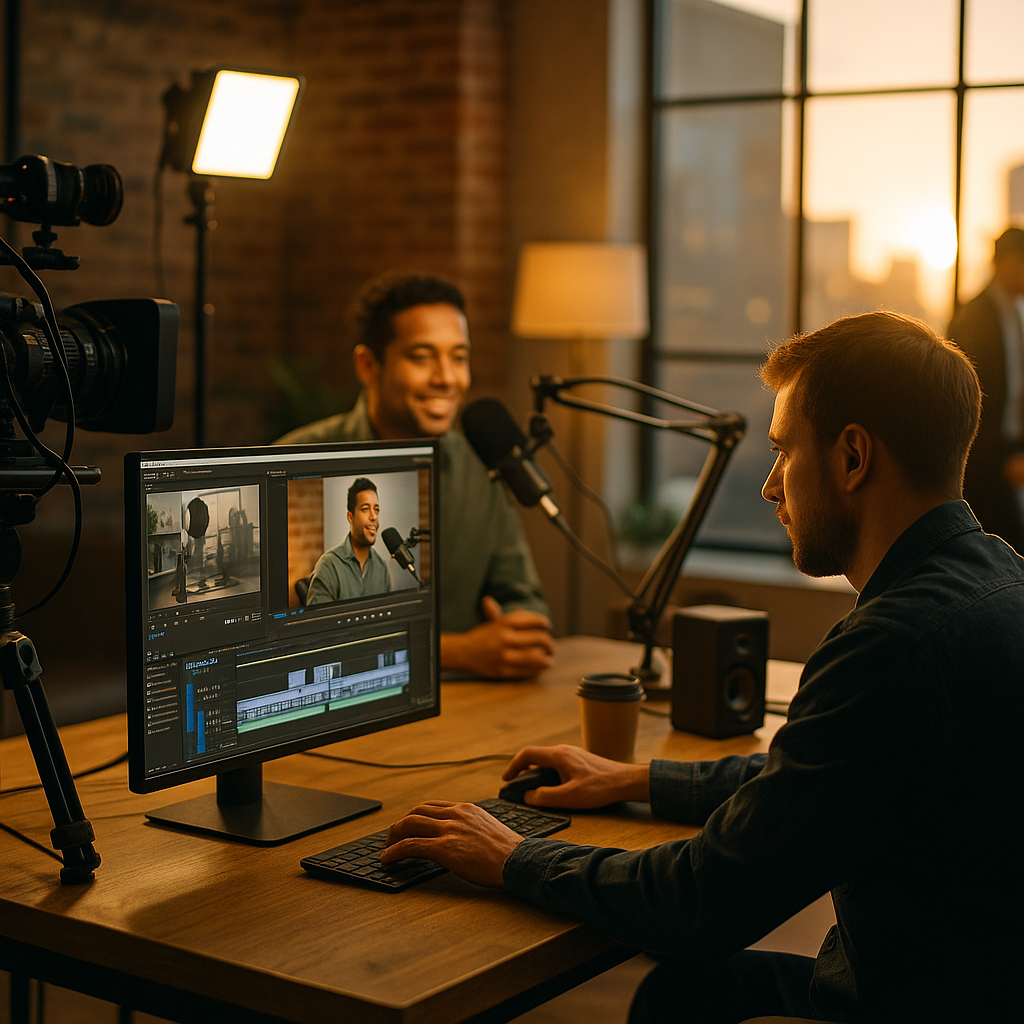
Nearly every major media company now runs an internal creator studio, and most of them are profitable within eighteen months. That’s not a side hustle anymore. It’s a core business line, and it’s rewriting who brands call first when they need influencer content. The question isn’t whether media companies will keep building these units. It’s whether your agency roster can still compete with them on price, speed, or reach.
The Pivot: Why Media Companies Are Building Creator Studios Now
Linear ad revenue keeps shrinking. Streaming subscriptions have plateaued in most mature markets. So where do media conglomerates find growth? They look at the creator economy’s margins and realize they already own the infrastructure to compete: editing talent, legal teams, distribution deals, and audience data. Building a creator studio inside an existing media company costs a fraction of what an independent MCN would spend, because the overhead (HR, finance, compliance, sales) already exists.
This mirrors a trend covered in newsrooms poaching creator talent, where traditional publishers started hiring creators directly instead of just covering them. The studio model takes that one step further: it’s not just hiring talent, it’s packaging that talent into a sellable product line with its own P&L.
Media companies aren’t entering the creator economy to make friends with influencers. They’re entering it because owned-and-operated creator content converts better than third-party licensing, and the margins beat traditional ad sales by a wide margin.
What’s Actually Inside These Studios?
These aren’t scrappy two-person content shops. A typical media-company creator studio now includes:
- In-house production teams that shoot, edit, and distribute short-form content at scale
- Talent management arms that sign creators to exclusive or first-look deals
- Brand partnership sales teams that pitch bundled packages (creator plus editorial plus paid media)
- Data and analytics units that tie content performance back to subscription or ad revenue
That structure looks a lot like what’s described in studios bringing creator hiring in house: companies want to own the IP, control the output cadence, and avoid the slow negotiation cycles that come with freelance talent. When a media company owns the creator relationship outright, it also owns the licensing rights, which it can resell to brands at a premium.
Some of this growth is also procedural. Media companies have learned from TV’s shift toward shorter, faster content cycles, a pattern documented in TV adopting creator pacing. Studios built around that pacing can turn around branded content in days, not weeks, which is exactly what performance-driven marketers want.
The Revenue Math: Production Fees, Ad Splits, and IP Licensing
How do these studios actually make money? Three primary streams dominate:
- Production fees: Brands pay the studio directly for creator content, often bypassing agencies entirely.
- Revenue share on distribution: Media companies keep a cut of ad revenue generated when branded content runs across their owned platforms (YouTube channels, CTV apps, podcast networks).
- IP and format licensing: Studios that develop a successful creator-led series license the format or the creator’s likeness to other markets or brands, similar to how traditional TV formats get licensed internationally.
According to eMarketer’s creator economy forecasts, brand spend on influencer content continues to outpace traditional digital ad growth, which is exactly the pressure point media companies are exploiting. They’re not competing with influencers anymore. They’re competing with agencies for the brand dollar, and they’re winning because they can offer production, distribution, and media buying under one contract.
This bundling pattern is already changing agency economics. As covered in studios selling creator packages, agencies that once controlled the full influencer workflow are losing budget share to media companies that can underbid them on scale alone.
Why This Matters for Brand Safety and Compliance
Here’s the catch nobody talks about at the pitch meeting: when a media company’s creator studio produces your branded content, who’s liable if a disclosure requirement gets missed, or if a creator says something that triggers an FTC inquiry? Contracts with in-house studios often look different from standard influencer agreements. Some media companies push liability back onto the brand’s media agreement language, not the individual creator’s contract.
That shift tracks with what’s outlined in brand safety shifting from scripts to contracts. Legal teams now need to read studio partnership agreements as closely as they’d read a traditional media buy, because the liability clauses, usage rights, and disclosure obligations can be buried in boilerplate that wasn’t written with influencer marketing regulation in mind.
If your legal team is still reviewing creator studio contracts the same way they review a TV ad buy, you’re missing the disclosure and usage-rights clauses that actually create risk.
What This Means for Brand and Agency Budgets
Brands now face a genuine fork in the road: build relationships directly with media-company studios, keep working through independent agencies, or run both in parallel. Each path has tradeoffs.
Going direct with a media studio often means faster turnaround and built-in distribution, but less flexibility in creator selection. You get who’s on their roster, not necessarily who fits your brand voice best. Independent agencies still win on customization and niche creator access, a point reinforced in full-cycle agencies merging talent and media buying, where agencies respond to studio competition by consolidating their own services rather than ceding ground.
The budget conversation also can’t ignore measurement. A persistent problem across the industry, as detailed in 37 percent of brands unable to prove influencer ROI, is that marketers still struggle to tie creator spend to business outcomes. Media companies pitching studio packages often lean on proprietary platform data (view-through rates, subscriber lift) to sell their value, but that data isn’t always portable or comparable to your existing attribution model. Ask for raw numbers, not dashboards, before you sign anything.
Tools like Sprout Social and reporting frameworks from HubSpot can help normalize studio-reported metrics against your own CRM data, which is a worthwhile step before committing multi-quarter budget to any single studio partner.
Questions to Ask Before Signing with a Media Studio
- Who owns the content and usage rights after the campaign ends?
- Does the studio disclose creator exclusivity terms, or can the same talent appear for a competitor next month?
- What’s the actual CPM or CPA benchmark, not just the reach number?
- Who’s legally responsible for FTC-compliant disclosure on each piece of content?
Platforms themselves are adjusting too. Meta’s business tools now surface more granular creator partnership data, which brands can use to cross-check studio claims before renewing contracts.
The Takeaway
Media companies turning creator studios into revenue lines isn’t a passing trend, it’s a structural shift in who controls creator supply. Before your next renewal cycle, audit whether a direct studio deal actually beats your agency’s rate card once you factor in IP rights, exclusivity, and measurement access, not just the sticker price.
FAQs
What is a media company creator studio?
It’s an in-house division within a media company that produces, manages, and sells creator-led content directly to brands, combining production, talent management, and distribution under one business unit.
Why are media companies building creator studios instead of just licensing influencer content?
Owning the studio lets media companies control IP rights, cut out third-party licensing costs, and resell bundled packages (content plus distribution plus media buying) at higher margins than a simple licensing deal would offer.
Are media-company creator studios cheaper than hiring an agency?
Often, yes, on a per-project basis, because studios bundle production and distribution. But brands should compare total contract value, including usage rights and exclusivity terms, not just the headline production fee.
Who is liable for FTC disclosure compliance when a media studio produces branded content?
Liability depends on the contract language. Brands should confirm in writing whether the studio or the brand holds responsibility for disclosure compliance before content goes live.
How should brands measure ROI from a media studio partnership?
Request raw performance data, not just studio-reported dashboards, and cross-reference it against your own CRM or attribution platform to confirm the numbers hold up outside the studio’s proprietary metrics.
Top Influencer Marketing Agencies
The leading agencies shaping influencer marketing in 2026
Agencies ranked by campaign performance, client diversity, platform expertise, proven ROI, industry recognition, and client satisfaction. Assessed through verified case studies, reviews, and industry consultations.
Moburst

-
2

The Shelf
Boutique Beauty & Lifestyle Influencer AgencyA data-driven boutique agency specializing exclusively in beauty, wellness, and lifestyle influencer campaigns on Instagram and TikTok. Best for brands already focused on the beauty/personal care space that need curated, aesthetic-driven content.Clients: Pepsi, The Honest Company, Hims, Elf Cosmetics, Pure LeafVisit The Shelf → -
3

Audiencly
Niche Gaming & Esports Influencer AgencyA specialized agency focused exclusively on gaming and esports creators on YouTube, Twitch, and TikTok. Ideal if your campaign is 100% gaming-focused — from game launches to hardware and esports events.Clients: Epic Games, NordVPN, Ubisoft, Wargaming, Tencent GamesVisit Audiencly → -
4

Viral Nation
Global Influencer Marketing & Talent AgencyA dual talent management and marketing agency with proprietary brand safety tools and a global creator network spanning nano-influencers to celebrities across all major platforms.Clients: Meta, Activision Blizzard, Energizer, Aston Martin, WalmartVisit Viral Nation → -
5

The Influencer Marketing Factory
TikTok, Instagram & YouTube CampaignsA full-service agency with strong TikTok expertise, offering end-to-end campaign management from influencer discovery through performance reporting with a focus on platform-native content.Clients: Google, Snapchat, Universal Music, Bumble, YelpVisit TIMF → -
6

NeoReach
Enterprise Analytics & Influencer CampaignsAn enterprise-focused agency combining managed campaigns with a powerful self-service data platform for influencer search, audience analytics, and attribution modeling.Clients: Amazon, Airbnb, Netflix, Honda, The New York TimesVisit NeoReach → -
7

Ubiquitous
Creator-First Marketing PlatformA tech-driven platform combining self-service tools with managed campaign options, emphasizing speed and scalability for brands managing multiple influencer relationships.Clients: Lyft, Disney, Target, American Eagle, NetflixVisit Ubiquitous → -
8

Obviously
Scalable Enterprise Influencer CampaignsA tech-enabled agency built for high-volume campaigns, coordinating hundreds of creators simultaneously with end-to-end logistics, content rights management, and product seeding.Clients: Google, Ulta Beauty, Converse, AmazonVisit Obviously →