


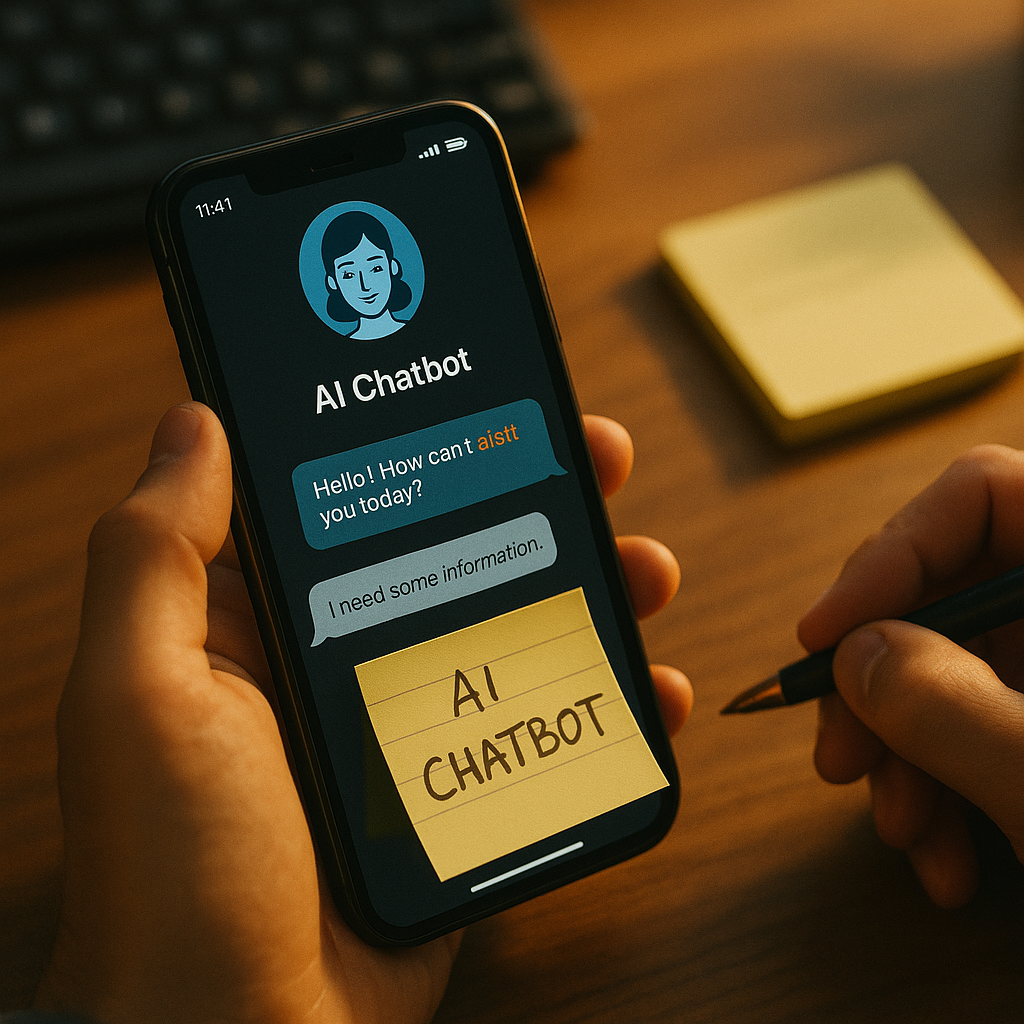
Would you rather watch a skincare review or argue with it? A growing slice of Gen Z audiences is choosing the argument. Interactive AI chat personas embedded in creator content, chatbot characters viewers can question, challenge, or flirt with inside a video or link-in-bio experience, are pulling engagement rates that flat video can’t touch. Brands that ignore this format are leaving dwell time on the table.
What an Interactive AI Chat Persona Actually Is
Strip away the jargon and it’s simple: a creator builds (or licenses) an AI-driven character, trained on a script, tone, and knowledge base, then embeds it where audiences already scroll. Think a TikTok Live overlay where fans type questions to a “brand mascot” trained on product specs. Or an Instagram DM automation that role-plays as a creator’s skincare-obsessed alter ego. Or a standalone web experience linked from a bio, where users chat with a persona before being routed to checkout.
Unlike a static FAQ bot, these personas have personality baked in. They joke, they deflect, they stay in character. That’s the entire appeal, and the entire risk.
Why This Format Is Spiking Right Now
Three forces converged. First, generative AI tools got cheap and fast enough that a mid-tier creator can spin up a trained persona in an afternoon using off-the-shelf chatbot builders. Second, platforms rewarded interactive formats with more reach, Meta and TikTok have both signaled that time-on-content and reply volume feed their ranking signals. Third, audiences, especially younger ones, are fatigued by passive ad watching. They want to poke at the content, not just consume it.
Early adopter brands are reporting session times three to five times longer than standard video ads when a chat persona is involved, though most of that data is self-reported and hasn’t been independently audited yet.
That gap between self-reported wins and audited proof is exactly why brand teams need a format guide before they greenlight a budget line.
The Brand Use Cases Worth Testing
- Pre-purchase Q&A personas. A chatbot trained on product specs and FAQs, voiced in the creator’s tone, sits inside a shoppable post and answers objections in real time.
- Character-led storytelling. A recurring AI character (a mascot, a “brand friend”) appears across a creator’s content series, building familiarity the way a sitcom character does.
- Live event companions. During a livestream or drop, an AI persona handles overflow questions the human creator can’t get to, keeping engagement high without burning out the talent.
- Post-purchase support extensions. The persona continues the relationship after checkout, answering usage questions in the creator’s voice instead of a generic support ticket.
Notice what’s missing from that list: nothing here replaces the human creator. The strongest implementations use AI personas as an extension of the creator’s presence, not a substitute. Brands that try to swap in a chatbot instead of a real creator relationship tend to see trust metrics collapse fast.
Scripting the Persona Before You Build It
Here’s the mistake most brand teams make: they jump straight to tooling and skip the script. A chat persona without a written personality brief will drift off-message within a week of live interactions. Treat the persona build the way you’d treat confessional booth testimonials, with a clear voice document, boundary list, and approved talking points before a single line of code gets written.
A workable persona brief needs four things:
- Voice and tone rules. Sentence length, humor level, slang boundaries. Write it like a style guide, not a vibe description.
- Knowledge boundaries. What the persona knows, what it deflects, what it escalates to a human. This is your legal safety net.
- Disclosure language. How and when the persona reveals it’s AI, not a human creator. More on this below, it’s non-negotiable.
- Escalation triggers. Keywords or question patterns that route the conversation to a real support rep or pause the bot entirely.
If your team has scripted myth busting scripts before, the discipline transfers directly. You’re pre-answering objections, just in a conversational interface instead of a monologue.
Disclosure Isn’t Optional, It’s the Whole Game
The FTC has already made clear that AI-generated endorsements and AI personas acting as spokespeople fall under existing endorsement guidance. If a viewer reasonably believes they’re chatting with a human creator and they’re not, that’s a disclosure failure, full stop. The FTC’s endorsement guidance doesn’t carve out an exception for chatbots with charming personalities.
The UK’s regulatory posture is similarly strict. The ICO treats conversational AI that collects user input as a data processing activity, which means your chat persona might trigger privacy obligations most marketing teams aren’t tracking. If the bot is logging what users type (and most are), you need a privacy notice baked into the first interaction, not buried in a terms page nobody reads.
Practical disclosure that doesn’t kill the vibe:
- A visible tag in the chat header: “AI persona, trained by [Creator Name].”
- A first-message disclosure before any product claims are made.
- No persona that implies it IS the human creator in first person without qualification (“I’m Sarah” instead of “I’m Sarah’s AI assistant” is a lawsuit waiting to happen).
This is the same disclosure discipline covered in our AI generated asset overlays guide, and it applies with even more force here because the interaction is two-way. A static overlay can’t accidentally make a false claim mid-conversation. A chat persona absolutely can, which is why your knowledge boundaries matter so much.
Where This Format Breaks (And How to Catch It Early)
Three failure modes show up repeatedly in early campaigns.
Hallucinated claims. The persona answers a product question with information that isn’t true, because the underlying model filled a gap in its training data. This is a brand safety nightmare if the claim touches health, safety, or financial outcomes. Lock the knowledge base tight and test adversarially before launch, meaning your team should try to break it with weird questions before a customer does.
Tone drift. Over weeks of interaction, the persona’s responses start sounding generic or off-brand as the model defaults to safe, bland phrasing. Schedule monthly tone audits, reading transcripts the way you’d review POV purchase decision scripts for consistency.
Audience backlash over authenticity. Some segments, particularly older millennials and anyone burned by chatbot customer service, react badly to discovering they were “talking to a bot.” Frame the persona as a feature, not a disguise, from the first interaction.
The brands winning with this format treat the AI persona as a clearly labeled character, not a stand-in for a real person. Audiences forgive artificiality. They don’t forgive deception.
Measuring Whether It’s Actually Working
Standard engagement metrics undersell this format and oversell it at the same time, depending on how you set up tracking. Views and likes tell you almost nothing. What matters:
- Conversation completion rate. Did users finish the intended flow (question asked, answer received, link clicked) or abandon mid-chat?
- Escalation rate. How often does the persona hand off to a human? High rates signal knowledge gaps or trust issues.
- Repeat interaction rate. Are the same users coming back to chat again, which signals genuine engagement rather than novelty clicks?
- Conversion lift versus a control group exposed to standard creator content without the chat layer.
Platforms like Sprout Social and HubSpot are starting to build conversational analytics into their dashboards, but most brand teams are still stitching together custom tracking for this format. Budget for that overhead. If you can’t measure it cleanly, you can’t defend the spend at your next budget review.
For comparison, teams running creator run ad formats already know that native-feeling content outperforms polished production on ROI. Chat personas take that logic further: the format itself is the interaction, not a wrapper around one.
Vetting Creators and Vendors for This Format
Not every creator should run their own AI persona, and not every AI vendor should be trusted with your brand’s voice. Ask these questions before signing anything:
- Who owns the training data and conversation logs, the creator, the vendor, or the brand?
- Can the persona be shut down instantly if it says something off-brand or false?
- What’s the data retention policy for user conversations, and does it comply with relevant privacy law in your target markets?
- Has the vendor had prior incidents of hallucinated claims or brand safety failures?
Treat this vetting with the same rigor you’d apply to AI generated creator assets contracts. The legal exposure is real, and most standard influencer agreements don’t address conversational AI liability at all. Get your legal team to update the template before the first persona goes live, not after a problem surfaces.
FAQs
Frequently Asked Questions
What is an interactive AI chat persona in creator content?
It’s an AI-driven character, built or trained by a creator, that audiences can converse with directly inside a video, livestream, or linked web experience, instead of just watching passive content.
Do brands need to disclose when a chat persona is AI, not a human creator?
Yes. Regulatory guidance from bodies like the FTC treats AI personas acting as spokespeople under existing endorsement rules, meaning clear disclosure is required before any product claims are made.
How is this different from a standard customer service chatbot?
Standard chatbots answer support queries in a neutral, functional tone. AI chat personas in creator content carry a specific personality, voice, and brand narrative, and they’re embedded directly inside the content experience rather than a separate support channel.
What’s the biggest risk with this format?
Hallucinated or false claims made mid-conversation, since a two-way chat can produce unscripted responses in ways a static video or post cannot.
How do brands measure success with AI chat personas?
Track conversation completion rate, escalation rate to human support, repeat interaction rate, and conversion lift against a control group, rather than relying on views or likes.
Start small: script one persona for a single use case, lock its knowledge boundaries tight, and run it for thirty days before scaling budget. The format rewards brands that treat disclosure and measurement as launch requirements, not afterthoughts.
Top Influencer Marketing Agencies
The leading agencies shaping influencer marketing in 2026
Agencies ranked by campaign performance, client diversity, platform expertise, proven ROI, industry recognition, and client satisfaction. Assessed through verified case studies, reviews, and industry consultations.
Moburst

-
2

The Shelf
Boutique Beauty & Lifestyle Influencer AgencyA data-driven boutique agency specializing exclusively in beauty, wellness, and lifestyle influencer campaigns on Instagram and TikTok. Best for brands already focused on the beauty/personal care space that need curated, aesthetic-driven content.Clients: Pepsi, The Honest Company, Hims, Elf Cosmetics, Pure LeafVisit The Shelf → -
3

Audiencly
Niche Gaming & Esports Influencer AgencyA specialized agency focused exclusively on gaming and esports creators on YouTube, Twitch, and TikTok. Ideal if your campaign is 100% gaming-focused — from game launches to hardware and esports events.Clients: Epic Games, NordVPN, Ubisoft, Wargaming, Tencent GamesVisit Audiencly → -
4

Viral Nation
Global Influencer Marketing & Talent AgencyA dual talent management and marketing agency with proprietary brand safety tools and a global creator network spanning nano-influencers to celebrities across all major platforms.Clients: Meta, Activision Blizzard, Energizer, Aston Martin, WalmartVisit Viral Nation → -
5

The Influencer Marketing Factory
TikTok, Instagram & YouTube CampaignsA full-service agency with strong TikTok expertise, offering end-to-end campaign management from influencer discovery through performance reporting with a focus on platform-native content.Clients: Google, Snapchat, Universal Music, Bumble, YelpVisit TIMF → -
6

NeoReach
Enterprise Analytics & Influencer CampaignsAn enterprise-focused agency combining managed campaigns with a powerful self-service data platform for influencer search, audience analytics, and attribution modeling.Clients: Amazon, Airbnb, Netflix, Honda, The New York TimesVisit NeoReach → -
7

Ubiquitous
Creator-First Marketing PlatformA tech-driven platform combining self-service tools with managed campaign options, emphasizing speed and scalability for brands managing multiple influencer relationships.Clients: Lyft, Disney, Target, American Eagle, NetflixVisit Ubiquitous → -
8

Obviously
Scalable Enterprise Influencer CampaignsA tech-enabled agency built for high-volume campaigns, coordinating hundreds of creators simultaneously with end-to-end logistics, content rights management, and product seeding.Clients: Google, Ulta Beauty, Converse, AmazonVisit Obviously →