


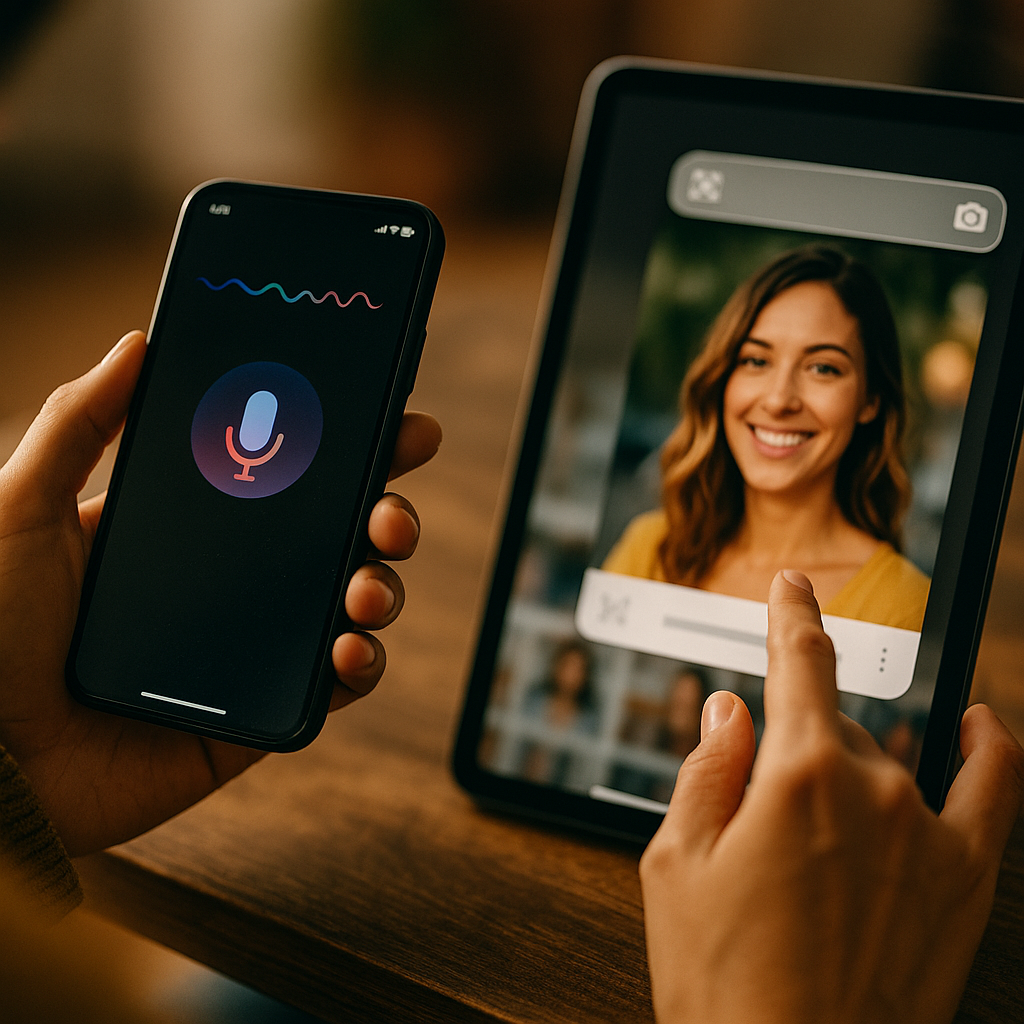
Here’s an uncomfortable number for anyone still running creator searches through a keyword box: Google reports that over a billion visual searches now happen every month through Lens alone, and voice assistants handle a growing share of product discovery queries across smart speakers and phones. Multimodal AI discovery, the practice of finding creators through voice queries, images, and video rather than typed keywords, isn’t a future trend. It’s already reshaping how talent teams source influencers, and brands clinging to tag-based search are missing creators their competitors found in seconds.
Keyword Search Is Running Out of Road
For a decade, creator discovery meant typing phrases into a platform’s search bar and hoping the tagging was accurate. It rarely was. A creator who makes “clean girl skincare” content might tag themselves under “beauty” or “self care” or nothing useful at all. Keyword search depends entirely on how well someone else labeled their own content, and that’s a shaky foundation for a budget decision.
We’ve covered this gap before: semantic creator search already solved part of the problem by matching intent instead of exact strings. Multimodal discovery pushes that evolution further by adding entirely new input types, your voice, a screenshot, a product photo, a reference video, so the search itself no longer depends on text at all.
What Multimodal AI Discovery Actually Means
Strip away the buzzword and the concept is simple. A multimodal system can accept and interpret several kinds of input at once: spoken language, images, video frames, and still text, then cross reference them against a creator’s actual content, not just their bio. Say “find me a creator who shoots like this” while holding up a reference photo, and the system parses lighting, color grading, pacing, and composition to surface matches. That’s a fundamentally different search behavior than typing “lifestyle creator warm tones.”
Multimodal discovery doesn’t replace the brief, it reads the brief the way a human creative director would: by looking and listening, not scanning tags.
Tools built on models like Google’s Gemini and OpenAI’s multimodal GPT systems can now ingest a video clip and describe aesthetic qualities, pacing, and even implied brand fit in natural language. That output feeds directly into matching engines, which is a very different workflow than the spreadsheet-and-hashtag era most talent teams grew up on.
Voice Search Changes How Buyers Find Creators
Voice queries are conversational and specific in ways typed searches rarely are. Instead of “fitness creator nyc,” a brand manager might say “find me a fitness creator in New York who talks about recovery, not just workouts, and has done a brand deal with an athleisure company before.” That’s five filters embedded in one natural sentence, and a voice-capable discovery tool parses all of them simultaneously.
This matters operationally. Procurement and legal teams increasingly want documented reasoning behind creator selection, not just a gut call. Voice-driven queries that get logged and transcribed actually create a cleaner audit trail than ad hoc keyword guessing, something compliance teams have flagged as a gap in creator match scores and audit trails.
- Faster briefing: marketers describe intent instead of translating it into search syntax.
- Better recall for non-English markets, where typed keyword search often underperforms due to dialect and spelling variance.
- More natural handoff between strategy teams and AI tools, since voice input mirrors how briefs are actually written and spoken in meetings.
Visual Matching: Finding the Look Before You Find the Name
Visual search flips discovery on its head. Instead of describing a creator in words, you show the system an image, a moodboard, a competitor’s campaign, a product shot, and it returns creators whose existing content visually aligns. This is enormously useful for categories where aesthetic consistency drives conversion: beauty, interior design, fashion, food styling.
Think about how often a brand brief includes phrases like “something in this vein” with a Pinterest board attached. Visual matching makes that board the actual query. No more translating a vibe into tags that may or may not exist in a platform’s taxonomy.
It also surfaces creators who are underpriced because they’re undertagged. A home renovation creator who never bothers to label their videos “mid century modern” still gets found if their actual footage matches that visual signature. That’s a real sourcing advantage, and it directly addresses the accuracy problems covered in creator matching scores hiding weak data.
The Data Problem Nobody Talks About
None of this works without clean underlying data. Multimodal systems need high-quality video, audio, and metadata to analyze, and plenty of creator profiles are still built on thin, inconsistent records. This is the same structural issue we flagged in coverage of the 44 percent data quality gap in AI creator matching: garbage input produces garbage matches, no matter how sophisticated the model doing the matching is.
Brands evaluating multimodal discovery vendors should ask a blunt question: how much of your match confidence comes from actual content analysis versus inferred metadata? If a vendor can’t answer that clearly, treat the output as a starting point, not a verdict.
Why This Matters for Compliance and Attribution
Discovery doesn’t exist in a vacuum. Every creator a multimodal tool surfaces eventually needs a contract, a disclosure review, and a performance tracking plan. Faster discovery that feeds into a weak contracting or attribution process just moves the bottleneck downstream. Legal teams already managing AI contract redlines with human checkpoints will need to extend that scrutiny to how creators were sourced in the first place, since regulators care about documented selection rationale as much as disclosure language.
There’s also an attribution angle. As search itself becomes less text-based, the customer journeys that follow creator content are getting harder to trace through traditional click paths, a trend explored in zero click search forcing brands to rebuild attribution. If discovery is voice and visual now, measurement needs to catch up to the same multimodal reality.
Building a Multimodal Discovery Stack
You don’t need to rip out your existing tools tomorrow. A practical rollout looks like this:
- Audit current creator database metadata for video and image completeness before layering any multimodal tool on top.
- Pilot visual search on one high-aesthetic category (beauty, fashion, home) where tagging gaps are worst and visual signal is strongest.
- Introduce voice query logging for brief intake so selection reasoning is captured automatically, not reconstructed later for legal review.
- Pair discovery output with a human QA pass, the same checkpoint discipline recommended for agentic AI briefs that move fast but miss relationship context.
According to industry data tracked by eMarketer, marketers are accelerating AI tool adoption faster than they’re building governance around it, a gap that shows up repeatedly in creator sourcing decisions. Platforms like Meta Business and TikTok Ads have both quietly expanded visual and conversational search features inside their creator marketplaces, so this shift is already live inside tools many teams use daily without labeling it “multimodal.”
What This Means for Smaller Teams
You might assume multimodal discovery is an enterprise-only capability. It’s not. Several mid-market platforms now bundle visual matching into standard creator marketplace tiers, and voice query interfaces are becoming a default feature rather than a premium add-on. The barrier isn’t cost anymore, it’s data readiness. Teams with messy creator databases will see mediocre results regardless of how advanced the discovery tool is, which circles back to the audit step above.
Research from HubSpot on AI adoption in marketing workflows consistently shows the same pattern: tools outperform expectations when paired with clean data and underperform badly without it. Multimodal discovery is not an exception to that rule.
Start small: pick one creator category, feed it through a visual matching tool, and compare the output against your last three manual searches. The gap you see will tell you exactly how much keyword search has been costing you.
Frequently Asked Questions
What is multimodal AI discovery in creator marketing?
It’s a search approach that lets brands find creators using voice queries, images, or video instead of relying only on typed keywords and platform tags, matching based on actual content analysis rather than self-reported labels.
How is visual search different from keyword tagging for creators?
Visual search analyzes the actual visual content of a creator’s posts, lighting, composition, color, pacing, rather than depending on whether a creator correctly labeled that content with relevant tags.
Does multimodal discovery replace human vetting?
No. It speeds up sourcing but still requires human review for brand fit, compliance, and relationship context, the same checkpoint discipline recommended for any AI-assisted creator workflow.
What data quality issues affect multimodal creator search?
Incomplete video, audio, or metadata on creator profiles weakens match accuracy regardless of how advanced the underlying AI model is, since the system can only analyze what’s actually available.
Is multimodal discovery only useful for visual categories like beauty and fashion?
It’s strongest in aesthetic-driven categories, but voice query capabilities benefit any vertical by letting marketers describe nuanced creator requirements in natural language instead of rigid search syntax.
Top Influencer Marketing Agencies
The leading agencies shaping influencer marketing in 2026
Agencies ranked by campaign performance, client diversity, platform expertise, proven ROI, industry recognition, and client satisfaction. Assessed through verified case studies, reviews, and industry consultations.
Moburst

-
2

The Shelf
Boutique Beauty & Lifestyle Influencer AgencyA data-driven boutique agency specializing exclusively in beauty, wellness, and lifestyle influencer campaigns on Instagram and TikTok. Best for brands already focused on the beauty/personal care space that need curated, aesthetic-driven content.Clients: Pepsi, The Honest Company, Hims, Elf Cosmetics, Pure LeafVisit The Shelf → -
3

Audiencly
Niche Gaming & Esports Influencer AgencyA specialized agency focused exclusively on gaming and esports creators on YouTube, Twitch, and TikTok. Ideal if your campaign is 100% gaming-focused — from game launches to hardware and esports events.Clients: Epic Games, NordVPN, Ubisoft, Wargaming, Tencent GamesVisit Audiencly → -
4

Viral Nation
Global Influencer Marketing & Talent AgencyA dual talent management and marketing agency with proprietary brand safety tools and a global creator network spanning nano-influencers to celebrities across all major platforms.Clients: Meta, Activision Blizzard, Energizer, Aston Martin, WalmartVisit Viral Nation → -
5

The Influencer Marketing Factory
TikTok, Instagram & YouTube CampaignsA full-service agency with strong TikTok expertise, offering end-to-end campaign management from influencer discovery through performance reporting with a focus on platform-native content.Clients: Google, Snapchat, Universal Music, Bumble, YelpVisit TIMF → -
6

NeoReach
Enterprise Analytics & Influencer CampaignsAn enterprise-focused agency combining managed campaigns with a powerful self-service data platform for influencer search, audience analytics, and attribution modeling.Clients: Amazon, Airbnb, Netflix, Honda, The New York TimesVisit NeoReach → -
7

Ubiquitous
Creator-First Marketing PlatformA tech-driven platform combining self-service tools with managed campaign options, emphasizing speed and scalability for brands managing multiple influencer relationships.Clients: Lyft, Disney, Target, American Eagle, NetflixVisit Ubiquitous → -
8

Obviously
Scalable Enterprise Influencer CampaignsA tech-enabled agency built for high-volume campaigns, coordinating hundreds of creators simultaneously with end-to-end logistics, content rights management, and product seeding.Clients: Google, Ulta Beauty, Converse, AmazonVisit Obviously →