


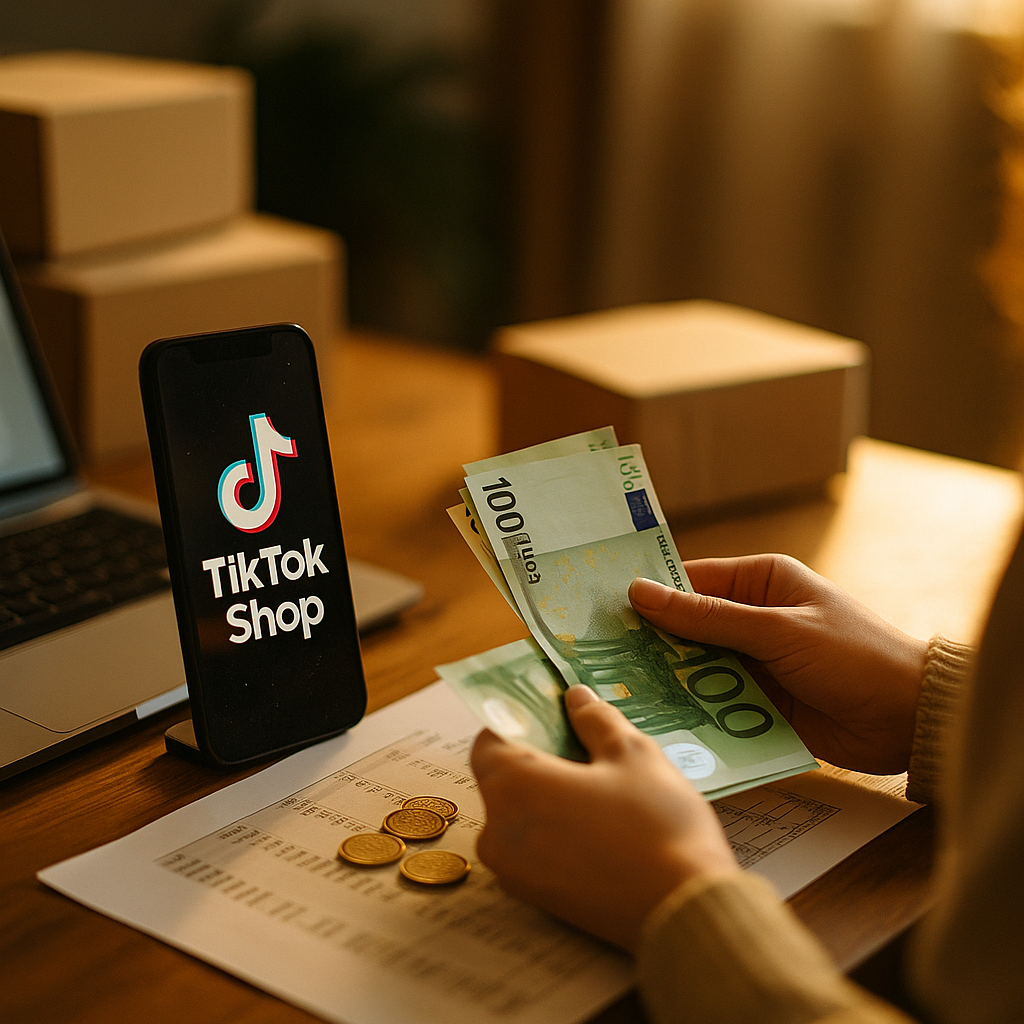
500 million euros. That’s the gross merchandise value TikTok Shop has reportedly pushed through its European storefronts since launch, a number that would have sounded like marketing fantasy two years ago. TikTok Shop Europe is no longer a pilot program brands dabble in. It’s a distribution channel with its own logic, its own creator economics, and its own risks. If your influencer strategy still treats TikTok as a top-of-funnel awareness play, you’re already behind.
This milestone isn’t just a vanity metric for TikTok’s sales deck. It signals a structural shift in how creator commerce works across the continent, and it has direct implications for budget allocation, creator contracts, and attribution models that marketing leaders need to understand now, not next quarter.
Why 500 Million Euros Actually Matters
Numbers like this get thrown around constantly in trade press, so it’s fair to ask: so what? The answer is that TikTok Shop’s growth trajectory in Europe has outpaced its own US rollout timeline, and it’s doing so in markets (UK, Germany, France, Spain, Italy) with wildly different consumer habits, regulatory environments, and influencer fee structures. Hitting this threshold means the platform has crossed from experimental to operational for a critical mass of brands.
Retailers and DTC brands aren’t just running affiliate links anymore. They’re building dedicated TikTok Shop assortments, negotiating exclusive creator partnerships tied to live shopping events, and reallocating budget that used to sit in traditional paid social. Agencies report that TikTok Shop conversations now open brand pitch meetings instead of appearing as a footnote.
When a platform’s commerce layer starts outperforming its ad layer on attributable revenue, procurement teams stop asking “should we test this” and start asking “how fast can we scale it.”
The Creator Economics Are Changing Underneath You
Here’s what brand teams are discovering the hard way: TikTok Shop creator deals don’t look like traditional sponsored content deals. Commission structures, affiliate percentages, and bonus thresholds for hitting GMV targets have replaced flat sponsorship fees for a growing share of partnerships. Creators who once charged a flat rate for a dedicated video are now negotiating hybrid deals, part fixed fee, part revenue share, because the upside on a viral shoppable video can dwarf a standard brand deal.
This mirrors a broader trend Influencers Time has tracked across markets: creators pricing by output rather than by reach alone. TikTok Shop just accelerates that shift because performance is instantly measurable. A creator’s shoppable video either converts or it doesn’t, and the platform shows both sides the receipts in real time.
It also means the old habit of benchmarking fees off follower count is breaking down fast. Influencers Time’s own data on rising median influencer fees already shows upward pressure across Europe, and TikTok Shop’s commission model adds a second, more volatile variable brands have to model for: conversion rate, not just impressions.
What This Means for Budget Planning
- Shift a portion of fixed sponsorship budgets toward performance-based commission pools tied to GMV.
- Build in minimum guarantees for top-tier creators who won’t accept pure commission risk.
- Track cost per acquisition by creator, not just engagement rate, inside your reporting dashboards.
- Reassess agency fee structures if your agency still bills on a flat retainer unrelated to shop performance.
Attribution Is Still the Weak Link
Brands love to talk about TikTok Shop’s revenue numbers, but ask any marketing ops lead how clean that attribution actually is, and you’ll get a more complicated answer. In-app purchase data is solid for last-click conversions inside TikTok itself, but cross-platform journeys, someone sees a TikTok Shop video, researches on Google, buys on the brand’s own site a week later, remain messy. This isn’t a new problem. It’s the same attribution gap that has plagued influencer marketing broadly, as Influencers Time covered in depth around brands struggling to prove influencer ROI.
TikTok Shop’s closed-loop commerce model improves on this somewhat because purchase and content live in the same ecosystem. But brands running omnichannel campaigns still need a unified measurement framework that reconciles TikTok’s native analytics with Google Analytics, Shopify data, and CRM records. Tools like HubSpot and platform-native solutions help, but the reconciliation work still falls on marketing ops teams, and most aren’t staffed for it yet.
Compare this to Meta’s ecosystem, where attribution advantages have kept Facebook and Instagram ROI ahead of competitors for years. TikTok Shop is closing that gap, but brands shouldn’t assume parity yet. Build your measurement stack accordingly, and don’t let a single platform’s dashboard be the only source of truth for budget decisions.
Compliance and Brand Safety Can’t Be an Afterthought
Live shopping events and affiliate links create new disclosure obligations that a lot of brands are quietly ignoring. Regulators in the UK and across the EU have been explicit that paid promotion, including commission-based affiliate content, requires clear disclosure, not a buried hashtag. The ICO and equivalent EU bodies have signaled increasing scrutiny of influencer commerce specifically because the money trail is now so visible on-platform.
This connects directly to a theme Influencers Time has flagged repeatedly: brand safety has shifted from scripts to contracts and disclosure. If your TikTok Shop creator agreements don’t explicitly spell out disclosure requirements, commission reporting, and content usage rights, you’re exposed. And with deepfake risk rising across short-form video, the conversation Influencers Time covered around creator insurance is becoming relevant to shop-focused partnerships too, especially as commission dollars at stake grow larger.
Practical steps worth taking this quarter:
- Audit existing TikTok Shop creator contracts for disclosure language that meets both FTC and local EU regulatory standards.
- Require creators to use TikTok’s built-in paid partnership labels on every shoppable video, no exceptions.
- Document commission structures in writing to avoid disputes when GMV bonuses trigger.
Is TikTok Shop Cannibalizing Your Other Influencer Spend?
This is the question CMOs should be asking in budget meetings. If a brand is simply moving dollars from Instagram Reels sponsorships into TikTok Shop commission pools without a net increase in total creator spend, that’s not growth, it’s reallocation with extra reporting complexity. The brands seeing real incremental revenue are the ones treating TikTok Shop as a distinct commerce channel with its own creator roster, not a reskin of their existing influencer program.
That often means working with a different tier of creator entirely. Micro and mid-tier creators with highly engaged, purchase-ready audiences tend to outperform mega-influencers on TikTok Shop conversion rates, a pattern consistent with findings in Influencers Time’s coverage of scaled creator rosters cutting CPM and risk. Diversifying across dozens of smaller creators spreads conversion risk and tends to produce steadier GMV than betting everything on a handful of big names.
Finding those creators efficiently is its own operational headache. Spanish marketers alone reported serious friction here, something Influencers Time documented in its piece on creator discovery challenges. TikTok Shop’s affiliate marketplace helps surface creators already generating sales for similar products, but it’s not a substitute for a proper vetting process on brand fit and compliance history.
What Smart Brands Are Doing Right Now
The brands pulling ahead on TikTok Shop share a few habits. They’re running dedicated creator briefs for shoppable content, separate from awareness-focused briefs, aligned with the broader shift toward performance briefs replacing awareness KPIs. They’re negotiating multi-month commitments with top-performing affiliate creators rather than one-off posts, echoing the trend toward multi-quarter creator contracts. And they’re using platform-native analytics alongside tools like Sprout Social or eMarketer benchmarking data to validate that TikTok’s own numbers hold up against third-party research.
What Comes Next
TikTok Shop Europe crossing 500 million euros isn’t the ceiling, it’s a checkpoint. Expect the platform to push harder into live shopping formats, expand its affiliate marketplace tooling, and court larger retail brands who’ve been watching from the sidelines. Expect also tighter regulatory attention as commission-driven content scales, particularly around transparency of paid partnerships during live streams where disclosure can get lost in real-time chat.
For marketing leaders, the practical question isn’t whether to participate. It’s whether your contracts, attribution stack, and creator vetting process can handle the volume and complexity this channel now demands.
Frequently Asked Questions
What does TikTok Shop’s 500 million euro milestone actually measure?
It reflects cumulative gross merchandise value, the total value of products sold through TikTok Shop’s European storefronts, including creator-driven affiliate sales and live shopping events, since the feature launched in these markets.
How is TikTok Shop changing influencer fee structures?
Many creator deals now blend a fixed fee with commission based on sales generated, replacing the flat sponsorship rates that dominated traditional influencer marketing. This ties creator compensation directly to conversion performance rather than reach alone.
Is TikTok Shop attribution reliable for measuring ROI?
In-platform attribution for purchases made directly within TikTok is generally solid, but cross-channel customer journeys involving external research or purchases on a brand’s own site remain harder to track and require a unified measurement framework.
What compliance risks should brands watch for with TikTok Shop creators?
Brands need to ensure creators use TikTok’s native paid partnership labels, clearly disclose affiliate or commission relationships, and that contracts specify disclosure obligations in line with both FTC and relevant EU and UK regulatory guidance.
Should brands shift budget from other influencer channels into TikTok Shop?
Only if it drives incremental revenue rather than simply reallocating existing spend. Brands seeing the strongest results treat TikTok Shop as a distinct commerce channel with its own creator roster and briefs, not a repackaged version of existing influencer programs.
Top Influencer Marketing Agencies
The leading agencies shaping influencer marketing in 2026
Agencies ranked by campaign performance, client diversity, platform expertise, proven ROI, industry recognition, and client satisfaction. Assessed through verified case studies, reviews, and industry consultations.
Moburst

-
2

The Shelf
Boutique Beauty & Lifestyle Influencer AgencyA data-driven boutique agency specializing exclusively in beauty, wellness, and lifestyle influencer campaigns on Instagram and TikTok. Best for brands already focused on the beauty/personal care space that need curated, aesthetic-driven content.Clients: Pepsi, The Honest Company, Hims, Elf Cosmetics, Pure LeafVisit The Shelf → -
3

Audiencly
Niche Gaming & Esports Influencer AgencyA specialized agency focused exclusively on gaming and esports creators on YouTube, Twitch, and TikTok. Ideal if your campaign is 100% gaming-focused — from game launches to hardware and esports events.Clients: Epic Games, NordVPN, Ubisoft, Wargaming, Tencent GamesVisit Audiencly → -
4

Viral Nation
Global Influencer Marketing & Talent AgencyA dual talent management and marketing agency with proprietary brand safety tools and a global creator network spanning nano-influencers to celebrities across all major platforms.Clients: Meta, Activision Blizzard, Energizer, Aston Martin, WalmartVisit Viral Nation → -
5

The Influencer Marketing Factory
TikTok, Instagram & YouTube CampaignsA full-service agency with strong TikTok expertise, offering end-to-end campaign management from influencer discovery through performance reporting with a focus on platform-native content.Clients: Google, Snapchat, Universal Music, Bumble, YelpVisit TIMF → -
6

NeoReach
Enterprise Analytics & Influencer CampaignsAn enterprise-focused agency combining managed campaigns with a powerful self-service data platform for influencer search, audience analytics, and attribution modeling.Clients: Amazon, Airbnb, Netflix, Honda, The New York TimesVisit NeoReach → -
7

Ubiquitous
Creator-First Marketing PlatformA tech-driven platform combining self-service tools with managed campaign options, emphasizing speed and scalability for brands managing multiple influencer relationships.Clients: Lyft, Disney, Target, American Eagle, NetflixVisit Ubiquitous → -
8

Obviously
Scalable Enterprise Influencer CampaignsA tech-enabled agency built for high-volume campaigns, coordinating hundreds of creators simultaneously with end-to-end logistics, content rights management, and product seeding.Clients: Google, Ulta Beauty, Converse, AmazonVisit Obviously →