


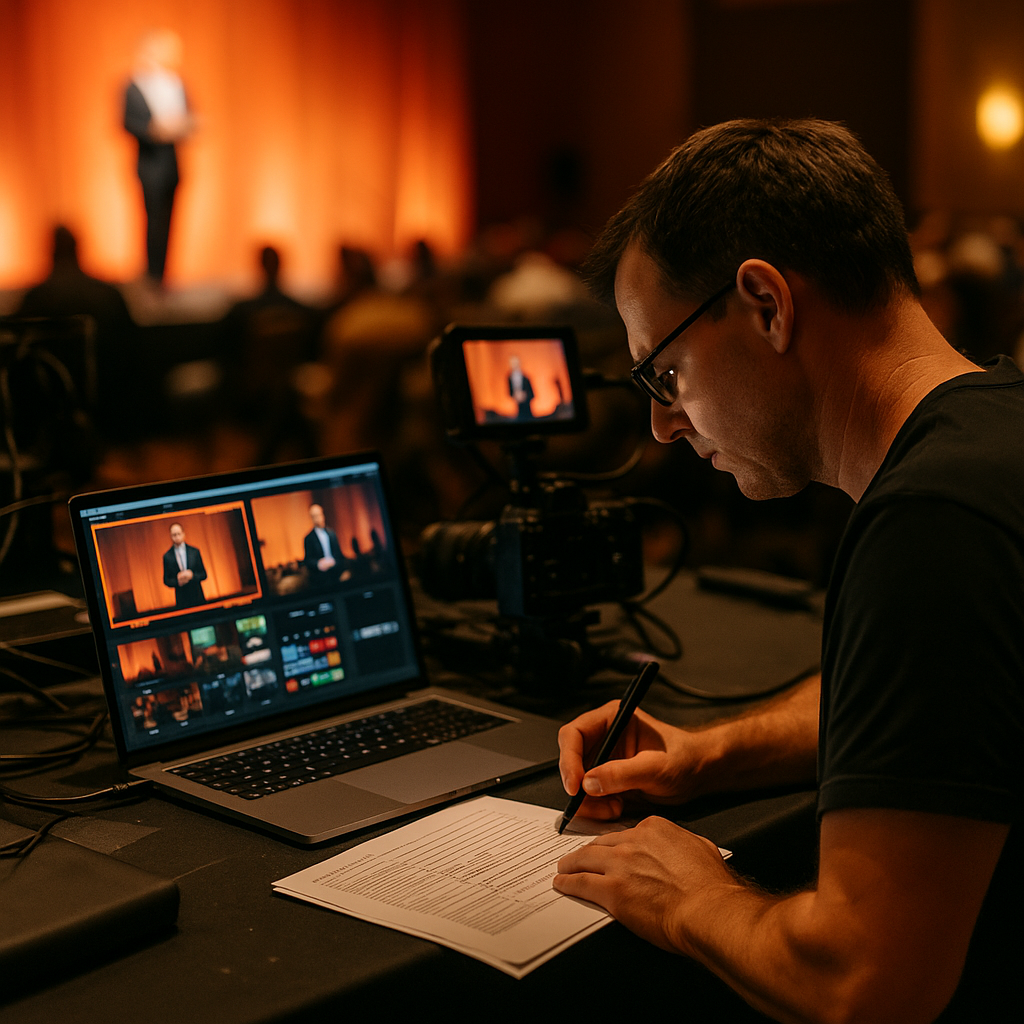
Here’s an uncomfortable truth: the average live event generates hours of footage and maybe three minutes of usable social content. That’s not a bad luck problem, it’s a planning problem. Scripting live events for clip worthy moments isn’t about scripted authenticity (nobody wants that), it’s about engineering the structural beats that make a moment portable before the cameras ever roll.
Brands spend six figures on activations, summits, and product launches, then hand the clipping job to an intern scrubbing through four hours of raw video the next morning. That’s backwards. The clip strategy has to exist in the run of show, not in the editing suite.
Why “Just Film It and See What Sticks” Doesn’t Scale
Live content is unpredictable by nature, and that unpredictability is exactly why most teams treat it as uncontrollable. But unpredictability and lack of structure aren’t the same thing. A comedian doesn’t know exactly how an audience will react to a bit, but they still build the bit with a setup, a turn, and a punchline. Live events need the same architecture.
Without that architecture, you get footage that’s technically usable but structurally useless for short-form platforms. A 45-minute fireside chat might contain a genuinely great 20-second answer, but if it’s buried in rambling context with no clean in-point or out-point, your editor either butchers it or skips it. Multiply that across a two-day summit and you understand why so much event content dies in a shared drive.
A clip is only as good as its boundaries. If a moment doesn’t have a clean start and a clean end, it’s not a clip, it’s a clipping problem waiting to happen in the edit bay.
This is the same discipline that makes clippable content design work for scripted social video. Live events just add the complication of real-time unpredictability on top of it.
Build the Clip Map Before the Event, Not After
Every run of show should have a parallel document: the clip map. It lists every segment, who’s speaking, the expected duration, and a flagged “clip opportunity” with a one-line description of what the moment should deliver. This isn’t a script in the theatrical sense. Nobody is reading lines. It’s a production blueprint that tells your video team where to point cameras and when to expect gold.
A practical clip map includes:
- Named beats: each segment gets a label (hot take, data reveal, audience Q&A, product demo) so editors can search footage by beat type instead of timestamp guesswork.
- Anticipated soundbite prompts: moderators get 2-3 pointed questions designed to produce a quotable 15-30 second answer, not an open-ended ramble.
- Visual cue notes: flag moments where a product, graphic, or physical reveal happens on camera, since these outperform talking-head footage on platforms like Instagram and TikTok.
- B-roll windows: scheduled gaps where a second camera can capture crowd reaction, product close-ups, or venue atmosphere for cutaways.
This structure mirrors what works in CXO interview series content, where executives sound more authentic when the moderator has engineered the question, not when the exec is handed a script to recite.
Moderators Are Your Most Underused Production Asset
Most brands treat the moderator as a logistics role: keep time, introduce speakers, don’t let anyone ramble too long. That’s a waste of a strategic asset. A well-briefed moderator is doing the scripting work in real time, steering panelists toward answers that are quotable, visual, and bounded.
Train moderators to ask questions that invite a specific, compact answer rather than a philosophical essay. “What’s the one metric you’d kill a campaign over?” produces a better clip than “Tell us about your approach to measurement.” The first gets you a 12-second soundbite with a strong hook. The second gets you four minutes of context that an editor has to hunt through.
This is the exact same mechanic behind reaction video scripts that balance spontaneity with brand safety. You’re not scripting the words. You’re scripting the conditions that make a great unscripted answer more likely.
The Three Second Rule Still Applies on Stage
Short-form platforms reward hooks that land in the first three seconds, and that logic doesn’t disappear just because the content originated live. When you’re clipping a panel answer, the in-point matters enormously. Start the clip on the answer’s strongest sentence, not the moderator’s question or the speaker’s throat-clearing preamble.
If you’ve read our breakdown of three second hook formulas, the same principle applies here: the first frame of a live clip needs to work as a standalone hook, because most viewers will never see the full session.
Design the Physical Moment, Not Just the Dialogue
Audio only gets you halfway. Distributed reach on platforms like TikTok and Instagram Reels rewards visual spectacle, so your run of show should include physical beats that look good on a vertical phone screen, not just a wide conference shot.
Think about what actually goes viral from live events: the surprise guest walkout, the product unveiled under a sheet, the live poll results flashing on a giant screen, the crowd reaction shot during a big reveal. None of that happens by accident. Someone decided the lighting, the camera angle, and the timing in advance.
If you’re running a product launch or brand activation, borrow from blind box reveal videos logic: build suspense into the staging itself. A countdown, a physical barrier removed on cue, a dramatic pause before the number drops. These are cheap production choices that pay off disproportionately in shareability.
According to eMarketer, short-form video continues to capture the largest share of social video time among adults under 35, which means your live event’s afterlife matters more than the live event itself for reaching that audience.
Multi-Camera Setups Aren’t Optional Anymore
A single wide shot of a stage is dead on arrival for vertical platforms. You need at minimum a tight shot on the speaker’s face for emotional close-ups, a wide shot for context, and a floating camera for crowd reactions and B-roll. Budget for this before the event, not as an afterthought when your social team asks why the footage looks flat.
If your event includes a panel format, consider shooting it the way you’d shoot a versus format script, with clean cuts between speakers that create natural, punchy back-and-forth energy in the edit. Panels that are shot flat and wide almost always get edited into boring, static clips. Panels shot with coverage get edited into dynamic, scroll-stopping ones.
Platforms like Meta Business Suite and TikTok Ads Manager both reward native-feeling vertical content over repurposed widescreen footage, so plan your camera package with the final platform in mind, not just the in-room AV needs.
Compliance Doesn’t Disappear Because It’s Live
Live events with sponsored talent, paid speakers, or brand ambassadors still carry FTC disclosure obligations once that footage gets clipped and distributed as marketing content. A spontaneous comment from an influencer on stage is still a paid endorsement if there’s a commercial relationship, and the FTC’s endorsement guidance doesn’t carve out an exception for “it happened live.” Brief your legal and comms teams on this before the event, not after a clip starts trending.
Build disclosure language into your clip map the same way you’d build it into any other influencer content plan. If a creator mentions your product on stage, the caption and on-screen text when it’s clipped need the same disclosure rigor you’d apply to a scripted UGC style video ad.
Post-Event: The Clipping Sprint That Determines Your ROI
Here’s where most teams lose the race. Attention spans for event recap content are short, and the half-life of relevance on a live moment is measured in days, not weeks. If your editing team doesn’t turn around first clips within 24 to 48 hours, you’ve lost most of the distributed reach the event could have generated.
Set a sprint structure: within 4 hours of each major session ending, a rough cut of the top 2-3 moments should exist. Within 24 hours, polished clips with captions, disclosure text, and platform-specific formatting should be scheduled. Within a week, a longer recap or highlight reel can go out for audiences who want more context, following the same arc logic used in decision led long form storytelling.
Tools like Sprout Social and HubSpot can help coordinate the publishing calendar across platforms so clips don’t all drop on the same channel at the same time, which cannibalizes reach instead of compounding it.
What to Measure (And Why Views Alone Lie)
Views tell you a clip got seen. They don’t tell you it drove anything your CFO cares about. Track completion rate, share rate, and click-through to whatever conversion point matters, whether that’s a landing page, a demo request, or a product page. A clip with modest views but a high share rate is often more valuable than a viral clip with no downstream action, because shares indicate the content is doing distribution work on your behalf.
Tie clip performance back to the original session so you can learn which speakers, formats, and staging choices actually produce distributable content. Over two or three events, this data becomes a genuine playbook, not a guess.
Next Step
Before your next live event, build the clip map first and the run of show second. The moderator questions, camera coverage, and staging decisions should all serve the clip map, not the other way around. Get that sequencing right, and you’ll stop hoping for viral moments and start manufacturing them on schedule.
Frequently Asked Questions
What is a clip map and how is it different from a run of show?
A clip map is a parallel planning document to the run of show that identifies specific moments designed for short-form distribution, including expected soundbite questions, visual cues, and B-roll windows. The run of show manages logistics and timing, while the clip map manages content opportunity.
How soon after a live event should clips be published?
Aim for rough cuts within 4 hours of a session ending and polished, captioned clips within 24 to 48 hours. Relevance for event recap content drops quickly, so speed matters more than perfection in the first wave of publishing.
Do FTC disclosure rules apply to unscripted moments captured live?
Yes. If a paid creator, speaker, or ambassador mentions a product on stage, that comment still counts as an endorsement once it’s clipped and distributed, and standard disclosure requirements apply regardless of how spontaneous the moment felt.
What camera setup is minimum for clippable live content?
At minimum, plan for a tight shot on the speaker, a wide establishing shot, and a roaming camera for crowd reactions or B-roll. A single static wide shot rarely produces usable vertical content for platforms like TikTok or Instagram Reels.
How do you train moderators to produce better clips?
Brief moderators with specific, pointed questions designed to elicit compact, quotable answers rather than open-ended prompts. A well-structured question does most of the scripting work without ever putting words in the speaker’s mouth.
Top Influencer Marketing Agencies
The leading agencies shaping influencer marketing in 2026
Agencies ranked by campaign performance, client diversity, platform expertise, proven ROI, industry recognition, and client satisfaction. Assessed through verified case studies, reviews, and industry consultations.
Moburst

-
2

The Shelf
Boutique Beauty & Lifestyle Influencer AgencyA data-driven boutique agency specializing exclusively in beauty, wellness, and lifestyle influencer campaigns on Instagram and TikTok. Best for brands already focused on the beauty/personal care space that need curated, aesthetic-driven content.Clients: Pepsi, The Honest Company, Hims, Elf Cosmetics, Pure LeafVisit The Shelf → -
3

Audiencly
Niche Gaming & Esports Influencer AgencyA specialized agency focused exclusively on gaming and esports creators on YouTube, Twitch, and TikTok. Ideal if your campaign is 100% gaming-focused — from game launches to hardware and esports events.Clients: Epic Games, NordVPN, Ubisoft, Wargaming, Tencent GamesVisit Audiencly → -
4

Viral Nation
Global Influencer Marketing & Talent AgencyA dual talent management and marketing agency with proprietary brand safety tools and a global creator network spanning nano-influencers to celebrities across all major platforms.Clients: Meta, Activision Blizzard, Energizer, Aston Martin, WalmartVisit Viral Nation → -
5

The Influencer Marketing Factory
TikTok, Instagram & YouTube CampaignsA full-service agency with strong TikTok expertise, offering end-to-end campaign management from influencer discovery through performance reporting with a focus on platform-native content.Clients: Google, Snapchat, Universal Music, Bumble, YelpVisit TIMF → -
6

NeoReach
Enterprise Analytics & Influencer CampaignsAn enterprise-focused agency combining managed campaigns with a powerful self-service data platform for influencer search, audience analytics, and attribution modeling.Clients: Amazon, Airbnb, Netflix, Honda, The New York TimesVisit NeoReach → -
7

Ubiquitous
Creator-First Marketing PlatformA tech-driven platform combining self-service tools with managed campaign options, emphasizing speed and scalability for brands managing multiple influencer relationships.Clients: Lyft, Disney, Target, American Eagle, NetflixVisit Ubiquitous → -
8

Obviously
Scalable Enterprise Influencer CampaignsA tech-enabled agency built for high-volume campaigns, coordinating hundreds of creators simultaneously with end-to-end logistics, content rights management, and product seeding.Clients: Google, Ulta Beauty, Converse, AmazonVisit Obviously →