


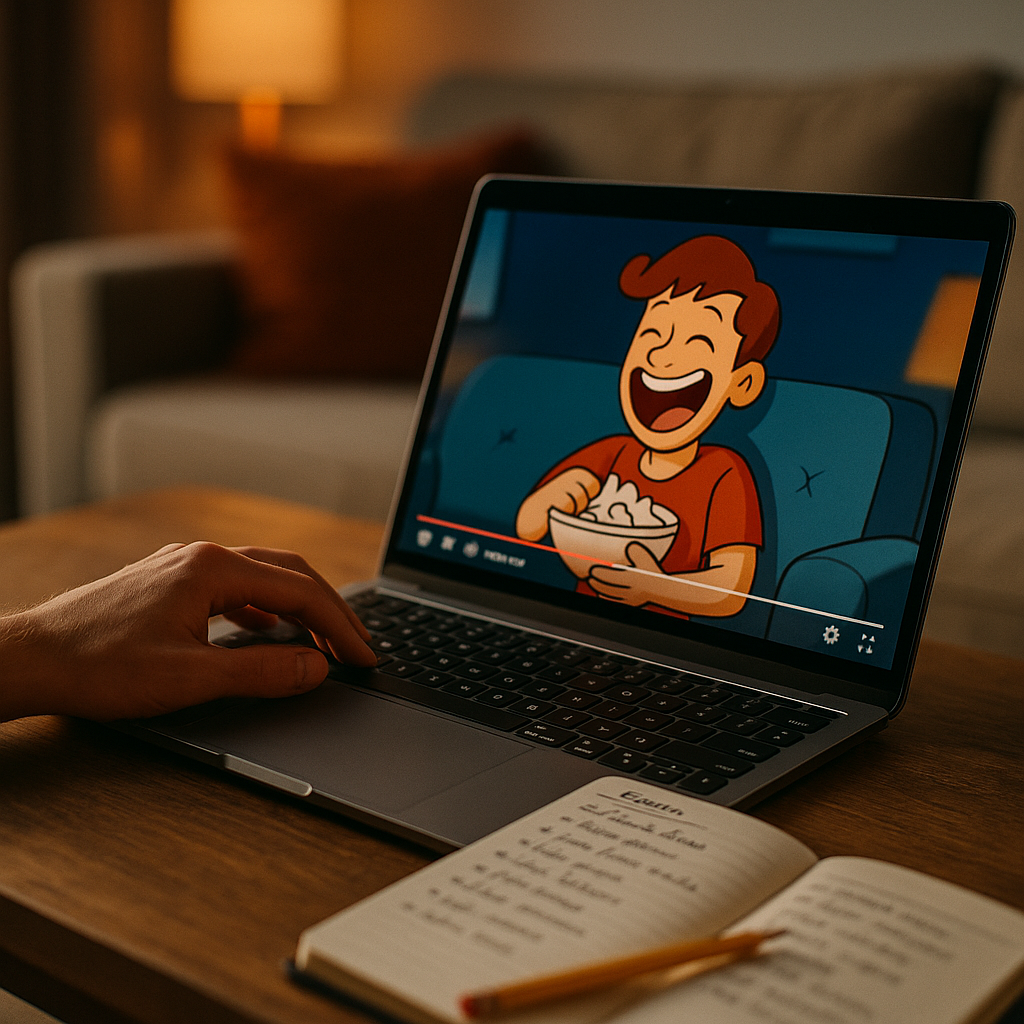
Try not to laugh. That dare has powered one of YouTube’s longest-running comedy formats, and now it’s quietly reshaping how brands script short-form video. Animated micro series ads built on the “Prova a Non Ridere” (try not to laugh) structure are showing up in feeds from fintech apps to snack brands, because the format solves a problem paid media teams have fought for years: getting people to watch past the first three seconds and then watch again.
The appeal isn’t just comedic. It’s structural. A compilation of escalating gags, delivered in animation instead of live action, sidesteps a dozen production headaches while still producing the rewatch behavior platforms reward. Here’s how to script it properly, and where brand and legal teams need to pay attention before greenlighting a series.
What Makes the “Try Not to Laugh” Format Different
The original format is simple: stitch together a run of short, self-contained jokes and dare the viewer to make it through without cracking a smile. Each joke is a discrete unit, usually five to twelve seconds, with its own setup and punchline. There’s no overarching plot to track, which means viewers can drop in at any point and still get the payoff.
For brand content, that modularity is the whole point. Instead of producing one hero video and hoping it performs, you’re producing a bank of interchangeable comedic beats that can be recombined into dozens of cuts. Animation removes the constraints of live-action scheduling, talent availability, and set logistics. You’re not booking actors or locations. You’re briefing a storyboard artist and an animator, which is faster and considerably cheaper to iterate on.
Treat each joke as a standalone asset, not a scene in a longer story. That single decision is what lets one micro series generate twenty paid variations instead of one.
This is the same modular logic behind clippable content design, where discrete, shareable segments outperform a single continuous narrative. The difference here is that animation gives you full control over timing, which matters enormously for comedic beats where a half-second of hesitation kills the punchline.
Scripting the Joke Bank Before You Script the Ad
Don’t start by writing a 30-second ad. Start by writing twenty jokes, then pick the best eight to twelve for your first cut. This is counterintuitive for teams used to briefing a single linear script, but it’s how comedy writers’ rooms actually work, and it’s how you avoid the trap of forcing a mediocre joke into the final edit because it’s the only one you wrote.
Each joke needs three components: a visual setup that reads instantly (animation is unforgiving here, if the audience needs a caption to understand the premise, the joke is broken), a twist that lands in under two seconds, and a visual tag that reinforces the brand without derailing the laugh. The tag is where most brand-scripted versions fail. Marketers want the logo bigger, the product mentioned twice, the CTA baked into the punchline. Resist that. The product should be the mechanism of the joke, not an interruption to it.
A financial app, for example, built a six-joke animated series where every gag hinged on a tiny animated character avoiding an obviously bad money decision, like setting cash on fire to “diversify into ash.” The app’s icon appeared as the escape hatch in each joke’s final frame. No voiceover, no CTA card, just the punchline doing the branding. That’s the discipline the format demands.
Pacing Rules That Actually Hold Attention
- Open with your strongest joke, not your safest one. The scroll-stop window is brutal, and three second hook formulas apply just as much to animated comedy as to live-action UGC.
- Vary joke length deliberately. If every gag runs eight seconds, the rhythm becomes predictable and predictability kills comedic tension.
- Build in one “reset” joke around the midpoint, something slower or quieter, so the escalation doesn’t flatten into noise.
- End on your second-strongest joke, not your weakest. Viewers remember the last beat more than the brief dip before it.
Brand Safety in a Format Built on Risk-Taking Humor
Comedy and compliance rarely get along, and animated micro series ads raise a specific wrinkle: animation gives creative teams permission to push further than they would in live action, because nobody’s real face or reputation is on the line. That permission is exactly why legal review needs to be tighter, not looser.
Run every joke through three filters before production: does the punchline rely on a protected characteristic or stereotype, does it make an implied performance claim about the product (a surprising number of “funny” product jokes accidentally become unsubstantiated claims), and does the visual gag resemble a competitor closely enough to trigger a comparative advertising issue. The FTC’s endorsement and advertising guidance still applies even when the spokesperson is an animated character rather than a creator, particularly around implied efficacy claims.
This is the same scrutiny that governs myth busting video scripts and split screen comparison ads: humor doesn’t exempt a brand from substantiation requirements, and a cute animated mascot making a false claim is just as actionable as a creator saying it on camera.
Why Animation Over Live Action for This Format
Three operational reasons dominate here, and they’re all about risk reduction and speed, not just aesthetics.
First, revision cost. Reshooting a live-action joke that doesn’t land in testing means rebooking talent, location, and crew. Revising an animated joke means adjusting a storyboard and re-rendering, often within the same production week. That turnaround difference compounds fast when you’re producing a joke bank of twenty-plus assets and expect half of them to get cut after initial testing.
Second, localization. An animated character doesn’t need accent coaching or regional casting to work across markets. Swap the on-screen text, adjust a cultural reference in the visual gag, and you’ve got a localized version without a reshoot. For global brands running the same micro series across five markets, this alone can cut production budgets substantially compared to live-action equivalents, a gap eMarketer has flagged as a growing driver of animated format adoption in performance marketing.
Third, consistency of IP control. There’s no creator contract to renegotiate, no likeness rights to manage, no risk of a presenter’s personal controversy retroactively damaging the ad bank. The brand owns the character outright. This is a meaningful difference from formats like green screen duet brand format content, where rights management is a constant operational line item.
Testing and Measurement: Treat Jokes Like Ad Variants
The joke bank approach only pays off if you’re disciplined about testing. Launch with three to four cuts pulling different joke combinations, and track completion rate and rewatch rate separately from click-through. Rewatch rate is the signal that matters most here, because it’s the metric unique to this format. A joke that gets watched twice by the same user before they scroll away is doing something a straight product demo rarely does.
A joke bank isn’t a creative exercise, it’s a testing framework. Each gag is a hypothesis about what makes your audience laugh, and the data tells you which hypotheses were wrong.
Platforms like TikTok Ads Manager and Meta’s ad tools both surface rewatch and loop metrics that most teams ignore in favor of standard CTR. For this format specifically, pull those numbers weekly. A joke that performs poorly on completion but strongly on rewatch might be confusing rather than funny, which is a scripting fix, not a media buying one. Tools covered by Sprout Social’s content performance reporting can help normalize these metrics across platforms if you’re running the same bank on multiple channels.
Worth noting: this format pairs well with serialized release strategy. Instead of dumping the full joke bank at once, some brands release two or three jokes per week as a recurring series, which borrows the habit-forming mechanics covered in serialized mini dramas, minus the narrative continuity requirement. Viewers come back for the next joke the way they’d come back for the next episode, without needing to remember a plot.
Where This Format Fits (and Where It Doesn’t)
Animated micro series ads work best for brands with a product that can be visually simplified into an icon, action, or outcome: fintech, food and beverage, apps, insurance, consumer tech. They work less well for considered B2B purchases where the buying committee needs substantive proof points rather than a laugh, cases better served by formats like decision led long form storytelling or CXO interview series content.
There’s also a tonal risk worth naming plainly: comedy ages fast, and a joke bank that feels fresh this quarter can feel stale within a few months if the brand doesn’t keep producing new entries. Budget for ongoing production, not a one-off campaign, or the format’s habit-forming advantage works against you when the series goes quiet.
Next Step
Start small: script ten jokes, animate the three strongest, and test rewatch rate before committing to a full series. If the data holds, scale the joke bank monthly rather than greenlighting a massive production run upfront.
Frequently Asked Questions
What is an animated micro series ad?
It’s a short-form video ad built from a bank of discrete, self-contained animated jokes or gags, typically five to twelve seconds each, that can be combined into multiple cuts rather than relying on a single linear story.
How is this different from a regular animated explainer video?
An explainer video walks through a product’s features in sequence. A “try not to laugh” style micro series is modular by design, each joke stands alone, which lets brands test and recombine assets far more flexibly than a fixed-narrative explainer allows.
Is animated comedy content subject to the same FTC disclosure rules as creator content?
Yes. Implied product claims, comparative jokes referencing competitors, and endorsement-style messaging are all subject to FTC advertising guidance regardless of whether the spokesperson is a human creator or an animated character.
How many jokes should be in an initial joke bank?
Most teams start with fifteen to twenty scripted jokes, animate the eight to twelve strongest after internal review, then let performance data determine which survive into paid rotation.
What metric matters most for this format?
Rewatch rate, tracked separately from completion rate and click-through. It’s the clearest signal that the comedic structure is actually working rather than just being tolerated.
Which brands should avoid this format?
Brands selling considered, high-stakes B2B purchases typically see better performance from proof-driven formats, since comedic micro series tend to build awareness and recall rather than close complex buying decisions.
FAQs (Structured Data)
Top Influencer Marketing Agencies
The leading agencies shaping influencer marketing in 2026
Agencies ranked by campaign performance, client diversity, platform expertise, proven ROI, industry recognition, and client satisfaction. Assessed through verified case studies, reviews, and industry consultations.
Moburst

-
2

The Shelf
Boutique Beauty & Lifestyle Influencer AgencyA data-driven boutique agency specializing exclusively in beauty, wellness, and lifestyle influencer campaigns on Instagram and TikTok. Best for brands already focused on the beauty/personal care space that need curated, aesthetic-driven content.Clients: Pepsi, The Honest Company, Hims, Elf Cosmetics, Pure LeafVisit The Shelf → -
3

Audiencly
Niche Gaming & Esports Influencer AgencyA specialized agency focused exclusively on gaming and esports creators on YouTube, Twitch, and TikTok. Ideal if your campaign is 100% gaming-focused — from game launches to hardware and esports events.Clients: Epic Games, NordVPN, Ubisoft, Wargaming, Tencent GamesVisit Audiencly → -
4

Viral Nation
Global Influencer Marketing & Talent AgencyA dual talent management and marketing agency with proprietary brand safety tools and a global creator network spanning nano-influencers to celebrities across all major platforms.Clients: Meta, Activision Blizzard, Energizer, Aston Martin, WalmartVisit Viral Nation → -
5

The Influencer Marketing Factory
TikTok, Instagram & YouTube CampaignsA full-service agency with strong TikTok expertise, offering end-to-end campaign management from influencer discovery through performance reporting with a focus on platform-native content.Clients: Google, Snapchat, Universal Music, Bumble, YelpVisit TIMF → -
6

NeoReach
Enterprise Analytics & Influencer CampaignsAn enterprise-focused agency combining managed campaigns with a powerful self-service data platform for influencer search, audience analytics, and attribution modeling.Clients: Amazon, Airbnb, Netflix, Honda, The New York TimesVisit NeoReach → -
7

Ubiquitous
Creator-First Marketing PlatformA tech-driven platform combining self-service tools with managed campaign options, emphasizing speed and scalability for brands managing multiple influencer relationships.Clients: Lyft, Disney, Target, American Eagle, NetflixVisit Ubiquitous → -
8

Obviously
Scalable Enterprise Influencer CampaignsA tech-enabled agency built for high-volume campaigns, coordinating hundreds of creators simultaneously with end-to-end logistics, content rights management, and product seeding.Clients: Google, Ulta Beauty, Converse, AmazonVisit Obviously →