


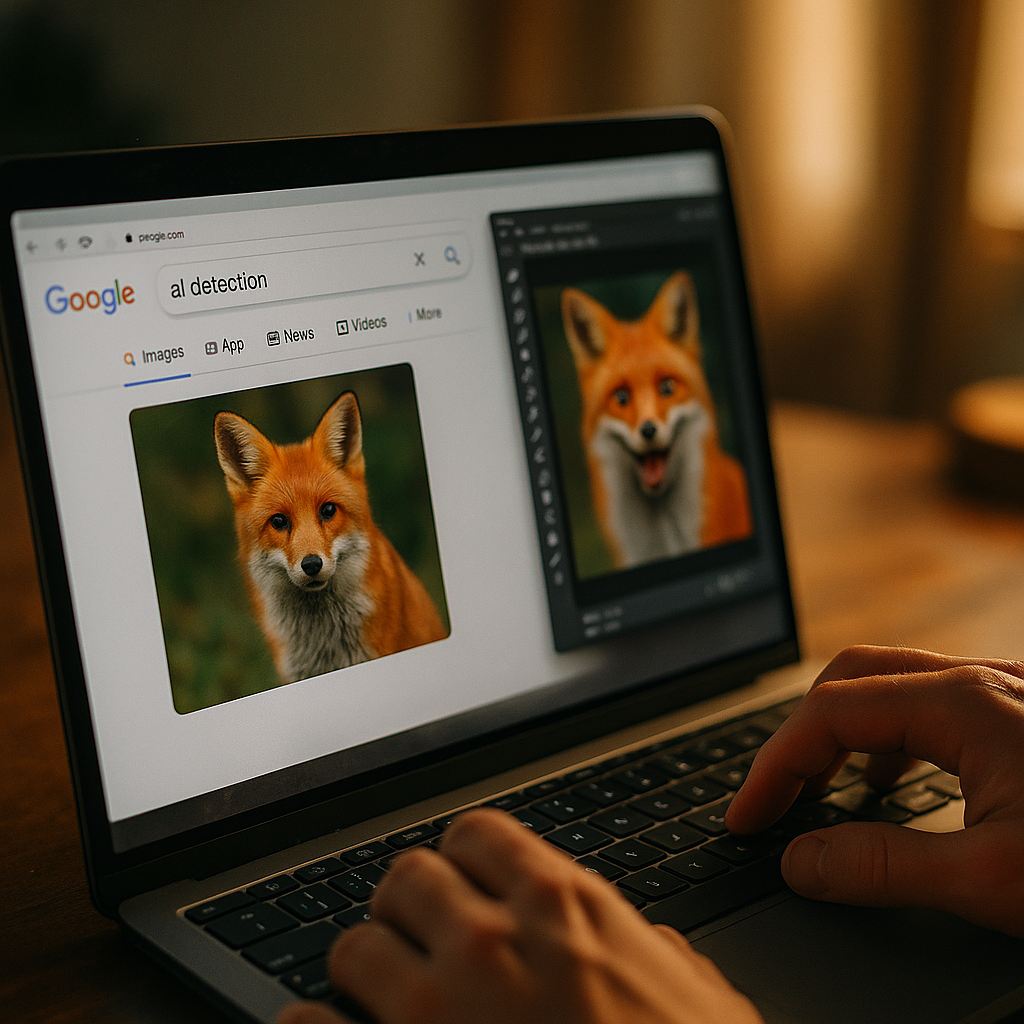
Can ChatGPT tell the difference between a sponsored post written by a human creator and one spit out by an AI tool in four seconds? According to Foxxr’s new AI search test, the answer is: barely, and inconsistently. Foxxr ran hundreds of pieces of creator content through major generative engines to see if detection claims hold up. For brands betting compliance programs on “AI content is detectable,” the results are a wake up call.
Why Foxxr Ran This Experiment
Foxxr, a martech research outfit that benchmarks AI tools for marketing teams, built the test after fielding the same question from a dozen brand clients: if generative engines are now the front door to product discovery, do they treat AI generated creator content differently than human written posts? That matters more than it sounds. Google’s AI Overviews, Perplexity, and ChatGPT search are increasingly the first stop for consumers researching products, and they lean on creator content, reviews, and social posts as source material. If an engine can’t tell authentic creator voice from synthetic text, brands lose a layer of trust signal they’ve relied on for years.
The stakes aren’t theoretical. eMarketer has tracked a steady climb in consumers starting product research inside AI chat interfaces rather than traditional search. If those interfaces can’t distinguish genuine creator opinion from AI generated filler, the entire value proposition of influencer marketing, that a real person tried this and has an opinion, starts to erode.
The Setup: 400 Posts, Four Engines, One Blind Test
Foxxr’s methodology was straightforward. Researchers compiled 400 pieces of creator content: half written by human creators across beauty, tech, and fitness verticals, half generated by popular AI writing tools (including general purpose LLMs and creator-specific content generators) and lightly edited to mimic typical publishing workflows. They fed the content, stripped of metadata, into four generative search engines and asked each to assess authenticity, flag AI generated text, and rate “trustworthiness” as a source.
No engine was told which samples were synthetic. That blind structure is what makes the results credible rather than a marketing stunt.
Across all four engines tested, average detection accuracy for AI generated creator content landed at just 61%, barely better than a coin flip when content had been lightly human edited.
What the Engines Got Right
The good news first. When AI content was raw, unedited, and copy-pasted straight from a generator, detection accuracy jumped above 80%. Generic LLM output still has tells: repetitive sentence structures, overly balanced pro/con framing, and a certain flatness that engines seem to pick up on through pattern matching. If your team is publishing unedited AI drafts under a creator’s name, you’re taking a real detection risk.
Engines also performed better on long-form content (think 800 word blog style reviews) than on short-form captions. More text gives the model more statistical signal to work with. A two-sentence Instagram caption is nearly impossible to classify reliably, human or machine.
Where Detection Fell Apart
Here’s where it gets uncomfortable for brands relying on AI content tools. The moment a human editor touched the AI draft, even lightly, detection accuracy cratered to roughly 52%. Swap a few adjectives, add a personal anecdote, break up a paragraph, and the statistical fingerprint that engines look for mostly disappears.
That’s a critical finding. Most creator teams and agencies already run AI drafts through a human pass before publishing, whether for brand voice, legal review, or basic quality control. Foxxr’s test suggests that standard workflow is enough to make AI generated content functionally indistinguishable from human writing to the engines consumers now use for research. This ties directly into the broader shift toward answer engine optimization, where the content layer and the trust layer are no longer the same thing.
Why This Matters for Brand Risk, Not Just Curiosity
This isn’t an academic exercise. Three concrete risks fall out of Foxxr’s data for marketing leaders:
- Disclosure exposure. If a generative engine can’t tell AI content from human content, regulators certainly aren’t going to take your word for it either. The FTC’s endorsement guidance already requires clear disclosure of material connections and, increasingly, scrutiny of how content is produced. Brands that lean hard on AI generated “creator” content without disclosure are sitting on compliance risk that detection tools won’t save them from.
- Attribution confusion. If search engines weight AI and human content similarly in citations, the premium brands pay for authentic creator voice stops showing up as a ranking or trust advantage. That undercuts the ROI case for paying real creators over synthetic alternatives.
- Platform policy drift. Meta, TikTok, and Google have all signaled intent to label AI generated content more aggressively. If their internal detection is only marginally better than Foxxr’s test engines, expect false positives and false negatives to hit real creator accounts, including accurate human content wrongly flagged.
Add this to a growing pile of evidence that AI tooling is outrunning the governance built to manage it. Similar gaps showed up when autonomous UGC buying tools launched without review layers, and when agentic AI started citing creator reviews without verifying their origin first.
What This Means for Your Content Operation
If your team uses AI to draft creator briefs, caption variations, or full review copy, the Foxxr test isn’t a reason to panic. It’s a reason to formalize your workflow rather than treat AI assistance as a gray area.
A few operational moves worth making now:
- Document the human contribution. Keep a record of what a creator or editor actually changed in AI assisted drafts. This protects you if disclosure questions ever come up, and it’s good practice regardless of what engines can or can’t detect.
- Don’t rely on detection tools as a compliance strategy. If Foxxr’s test engines, built by some of the most resourced AI companies on earth, can only hit 61% accuracy, third party “AI detector” plugins marketed to marketing teams deserve heavy skepticism.
- Separate disclosure policy from detection capability. Whether or not a search engine can tell your content is AI assisted has nothing to do with your legal obligation to disclose it. Treat these as independent requirements, not one dependent on the other.
- Audit your creator content pipeline. Know which posts in your program involve AI drafting, at what stage, and with what human oversight. Teams that have already built this kind of tracking into creator audit trails are in a far stronger position than those improvising after the fact.
The Bigger Picture: Trust Signals Are Shifting Underneath Everyone
Search behavior has moved fast. HubSpot’s own research on AI search adoption shows a meaningful share of consumers now treat chatbot answers as a primary research step, not a supplement to traditional search. That shift puts generative engines in the position of gatekeeper for brand discovery, and Foxxr’s test suggests that gatekeeper has a blind spot exactly where it matters most: distinguishing real creator opinion from synthetic text designed to mimic it.
It’s worth pairing this with other recent findings on AI content quality. Work on AI video quality scoring and generative creative variation tools shows the industry is getting better at scaling AI assisted content production. Detection and verification tooling simply hasn’t kept pace with generation tooling, and that gap is where brand risk lives right now.
There’s also a strategic opening here. Brands that lean into transparent, well-documented human-AI collaboration, rather than hiding it or over-relying on it, build a trust moat that’s harder for competitors flooding feeds with unlabeled synthetic content to replicate. Authenticity, ironically, becomes more valuable precisely because it’s harder to verify algorithmically.
What Brands Should Watch Next
Expect generative search platforms to improve detection accuracy over the next product cycles, pressured by regulators and advertiser demand alike. But “improve” doesn’t mean “solve.” Foxxr’s researchers noted that as detection models get better, so do the AI writing tools designed to evade them, an arms race pattern familiar from spam filtering and ad fraud detection before it. Related work on bot follower audit tools and AI outreach guardrails shows this same cat and mouse dynamic playing out across adjacent corners of the creator economy.
For now, the practical conclusion is simple: don’t wait for the engines to catch up before you build your own house in order.
Frequently Asked Questions
What was Foxxr’s AI search test actually measuring?
Foxxr tested whether four major generative search engines could correctly identify AI generated creator content versus human written creator content when both were presented without labels or metadata, measuring overall detection accuracy and trustworthiness scoring.
How accurate were the engines at spotting AI content?
Average detection accuracy came in around 61% across all tested engines, dropping to roughly 52% once AI drafts had been lightly edited by a human, which is close to a random guess.
Does this mean brands can use AI content without disclosure risk?
No. Detection difficulty by search engines has no bearing on legal disclosure requirements. The FTC’s endorsement guidelines still apply regardless of whether a generative engine can technically identify AI assisted content.
Why did human editing make AI content harder to detect?
Light human edits, like added anecdotes or restructured sentences, remove the repetitive statistical patterns that detection models rely on, making edited AI drafts nearly indistinguishable from fully human written text.
What should marketing teams do with this information?
Formalize documentation of AI involvement in creator content, avoid relying on third party AI detectors as a compliance safeguard, and keep disclosure policy separate from detection capability.
The takeaway isn’t that detection will save you, it’s that documentation will. Build your AI disclosure and editing audit trail now, before a regulator, platform, or reporter asks you to produce one on short notice.
Top Influencer Marketing Agencies
The leading agencies shaping influencer marketing in 2026
Agencies ranked by campaign performance, client diversity, platform expertise, proven ROI, industry recognition, and client satisfaction. Assessed through verified case studies, reviews, and industry consultations.
Moburst

-
2

The Shelf
Boutique Beauty & Lifestyle Influencer AgencyA data-driven boutique agency specializing exclusively in beauty, wellness, and lifestyle influencer campaigns on Instagram and TikTok. Best for brands already focused on the beauty/personal care space that need curated, aesthetic-driven content.Clients: Pepsi, The Honest Company, Hims, Elf Cosmetics, Pure LeafVisit The Shelf → -
3

Audiencly
Niche Gaming & Esports Influencer AgencyA specialized agency focused exclusively on gaming and esports creators on YouTube, Twitch, and TikTok. Ideal if your campaign is 100% gaming-focused — from game launches to hardware and esports events.Clients: Epic Games, NordVPN, Ubisoft, Wargaming, Tencent GamesVisit Audiencly → -
4

Viral Nation
Global Influencer Marketing & Talent AgencyA dual talent management and marketing agency with proprietary brand safety tools and a global creator network spanning nano-influencers to celebrities across all major platforms.Clients: Meta, Activision Blizzard, Energizer, Aston Martin, WalmartVisit Viral Nation → -
5

The Influencer Marketing Factory
TikTok, Instagram & YouTube CampaignsA full-service agency with strong TikTok expertise, offering end-to-end campaign management from influencer discovery through performance reporting with a focus on platform-native content.Clients: Google, Snapchat, Universal Music, Bumble, YelpVisit TIMF → -
6

NeoReach
Enterprise Analytics & Influencer CampaignsAn enterprise-focused agency combining managed campaigns with a powerful self-service data platform for influencer search, audience analytics, and attribution modeling.Clients: Amazon, Airbnb, Netflix, Honda, The New York TimesVisit NeoReach → -
7

Ubiquitous
Creator-First Marketing PlatformA tech-driven platform combining self-service tools with managed campaign options, emphasizing speed and scalability for brands managing multiple influencer relationships.Clients: Lyft, Disney, Target, American Eagle, NetflixVisit Ubiquitous → -
8

Obviously
Scalable Enterprise Influencer CampaignsA tech-enabled agency built for high-volume campaigns, coordinating hundreds of creators simultaneously with end-to-end logistics, content rights management, and product seeding.Clients: Google, Ulta Beauty, Converse, AmazonVisit Obviously →