


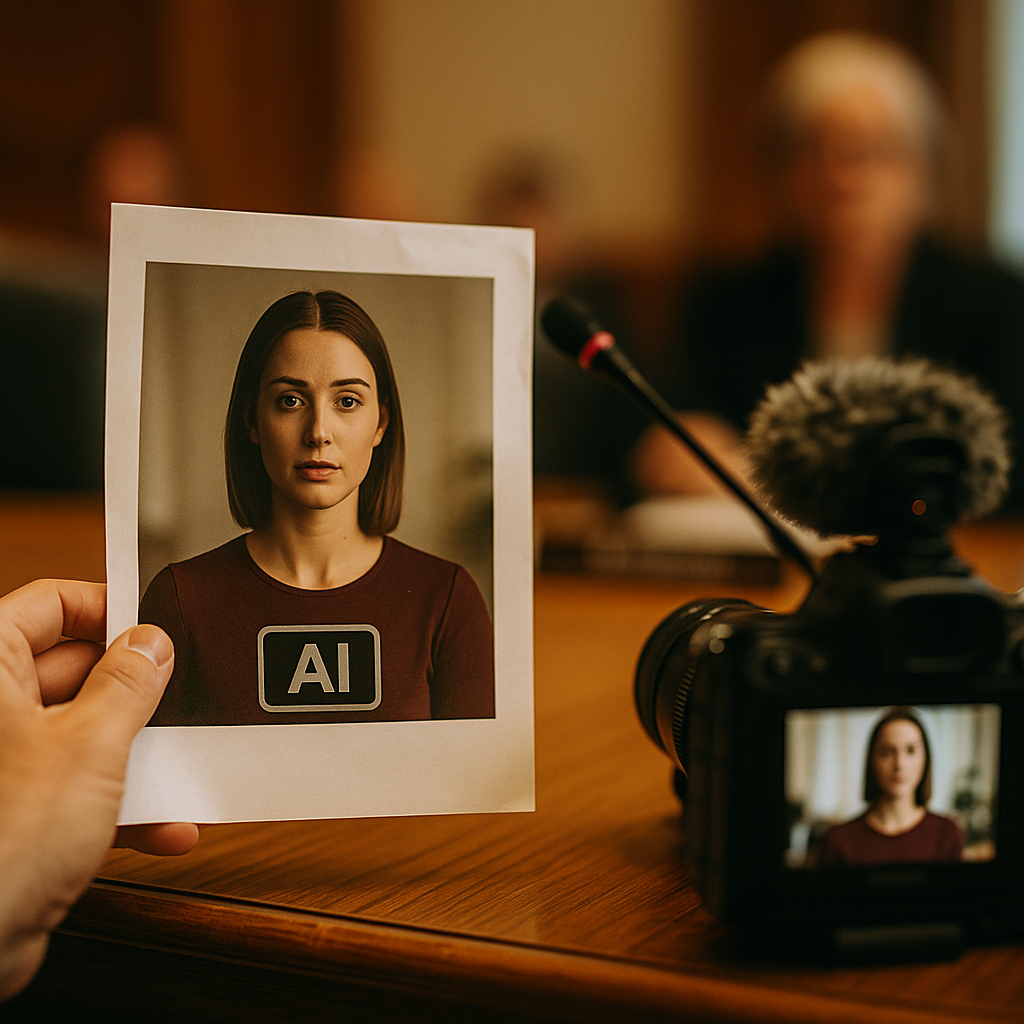
Would you know a synthetic spokesperson if you saw one? Most consumers wouldn’t, and that’s exactly the problem regulators are circling. Synthetic spokesperson disclosure has quietly become one of the thorniest compliance questions in influencer marketing, because the FTC never wrote rules specifically for AI avatars, yet its existing endorsement framework already covers them. Brands running AI-generated UGC without a disclosure plan are gambling with enforcement exposure they probably don’t realize they’re carrying.
The Gap Nobody Budgeted For
AI-generated UGC looks like a budget dream. No scheduling conflicts, no usage rights negotiations, no creator who ghosts you mid-campaign. Tools that generate synthetic faces delivering product testimonials have moved from novelty to line item in a single year, and performance marketing teams love the speed. The trouble is that speed outpaced the paperwork. Marketing teams adopted synthetic UGC generators faster than legal teams could write policy around them, which means a lot of brands are running campaigns right now with zero disclosure framework for content that isn’t real.
That’s not a hypothetical risk. The FTC’s Endorsement Guides already state that any material connection between a brand and the person (or persona) making a claim must be disclosed clearly and conspicuously. A synthetic avatar reciting a glowing product review is, functionally, an endorsement. The fact that no human being actually used the product doesn’t exempt it. If anything, it adds a second layer of required disclosure: the AI generation itself.
If your AI spokesperson makes a claim a real person would need to disclose as sponsored, the synthetic version needs the same disclosure, plus a label confirming it isn’t human.
What FTC Guidance Actually Says About AI Spokespeople
There’s no standalone “AI influencer rule” sitting on the books. Instead, the FTC has been explicit that its existing authority under Section 5 of the FTC Act and the Endorsement Guides already applies to AI-generated content. The agency has brought enforcement actions against companies for deceptive AI claims broadly, and its public statements make clear that synthetic endorsers fall under the same deceptive advertising umbrella as paid human influencers who fail to disclose.
Three principles matter most for brands:
- Material connection disclosure still applies. If a brand paid for, scripted, or directed an AI-generated testimonial, that’s a material connection requiring clear disclosure, same as a human sponsored post.
- Deceptive impersonation is independently actionable. If viewers reasonably believe a synthetic spokesperson is a real customer or real creator, that’s a separate deception problem even if a “#ad” tag is present.
- Platform labels don’t satisfy FTC requirements. A small “AI-generated” watermark buried in a video doesn’t meet the “clear and conspicuous” standard the FTC has enforced for over a decade.
This is the same logic that’s driven state-level action too. The California AI content labeling law adds its own disclosure triggers on top of federal guidance, which means national campaigns now need to satisfy overlapping standards rather than picking whichever is more convenient.
“It’s Just a Demo” Isn’t a Legal Defense
Brand teams love to argue that synthetic UGC is obviously fake, so disclosure is redundant. Obvious to whom? A marketer who spends all day looking at AI avatars has pattern-recognition most consumers simply don’t. According to research tracked by eMarketer, consumer trust in video testimonials remains high precisely because viewers assume a real person is behind the camera. That assumption is the entire value proposition of UGC-style advertising, and it’s also exactly what makes undisclosed synthetic spokespeople deceptive under FTC standards.
Think about the mechanics of a typical AI UGC ad: a synthetic “customer” sits in what looks like a bedroom, holds up a product, and says it changed their skin or their sleep or their sales numbers. No disclaimer. No label. That’s not a gray area. That’s the exact pattern the Endorsement Guides were written to prevent, just executed with a generative model instead of a paid actor.
Brands that think they’re clever by avoiding a human endorser entirely are actually increasing their risk profile, not reducing it. A real influencer at least has a name, a face, and accountability. A synthetic one has none of that, which means if the claim is false or the disclosure is missing, the brand owns the entire liability with no creator to share it.
Building a Disclosure Workflow That Actually Holds Up
Treat synthetic spokesperson disclosure like you’d treat any other compliance workstream: documented, repeatable, auditable. A few things that separate brands with real programs from brands winging it:
- Label at the point of first impression. Disclosure text needs to appear before or during the first few seconds of viewing, not buried in a caption nobody expands.
- Use dual disclosure language. State both the material connection (“Paid partnership”) and the synthetic nature (“AI-generated spokesperson”) as separate, plain-language statements.
- Keep generation logs. Save prompts, model versions, and approval chains for every synthetic UGC asset. If the FTC or a state AG comes asking, you want a paper trail, not a shrug.
- Audit platform-native tools separately. Many AI scheduling agents now plug directly into UGC studios, and their default export settings often strip disclosure metadata. Don’t assume the tool handles compliance for you.
This isn’t just about avoiding fines. HubSpot’s trust research consistently shows disclosure transparency correlates with higher purchase intent, not lower. Hiding the AI doesn’t make the ad perform better. It just delays the moment someone figures it out and posts a screenshot.
Who’s On the Hook When Synthetic UGC Goes Wrong?
This is where a lot of marketing leaders get a nasty surprise. FTC enforcement actions have historically gone after brands, not just the agencies or vendors who built the content. If you commissioned the synthetic UGC, approved the script, or paid for the placement, you’re a named party in any investigation regardless of who ran the AI tool.
That liability doesn’t dilute even when the content runs through multiple hands. A brand that hires an agency, which hires a UGC studio, which uses a third-party generation platform, still sits at the top of the accountability chain. The pattern mirrors what’s already playing out with human creators: the same questions about record-keeping and audit trails that apply to creator content retention policy now apply to synthetic content too, arguably with higher stakes because there’s no creator contract to point to as a backstop.
With human influencers, brands can at least push some liability downstream through contracts. With synthetic spokespeople, the brand is the only party left standing when regulators come knocking.
There’s also a comparative claims angle worth flagging. Synthetic spokespeople are increasingly used to make side-by-side product comparisons, “this beat the leading brand” style claims that already draw FTC scrutiny for human creators under the same rules covered in our tier list rankings FTC comparative claims gap piece. Add an AI avatar making the same claim, and you’ve stacked two compliance risks into one fifteen-second clip.
Where This Intersects With Existing Creator Compliance Programs
If your brand already runs a mature influencer compliance program, synthetic spokesperson disclosure isn’t a separate system. It’s an extension of what you’re already tracking. Teams that maintain structured content archives for multi year UGC libraries should fold AI-generated assets into the same retention and labeling schema, flagged distinctly so they can be audited or pulled independently of human-created content.
The same logic applies to paid amplification. Brands already managing disclosure for boosted creator posts need to apply identical scrutiny when the “post” being boosted features a synthetic spokesperson instead of a real one. Ad spend doesn’t change the disclosure obligation, it just increases the audience size exposed to a potential violation.
According to Statista tracking of generative AI adoption in marketing, usage of AI avatars in paid social creative has climbed steadily, and Sprout Social’s industry surveys show consumer skepticism toward branded content is rising in parallel. Those two trend lines moving in opposite directions is exactly the environment where disclosure failures turn into headlines.
The Practical Takeaway
Treat every synthetic spokesperson the way you’d treat your highest-risk human endorser: assume regulators will see it, assume disclosure is mandatory, and document the decision chain before the asset ever runs. Build the label into your creative brief, not as an afterthought bolted on after legal flags it.
Frequently Asked Questions
Does the FTC require disclosure for AI-generated spokespeople?
Yes. The FTC’s existing Endorsement Guides apply to any paid or material-connection endorsement, including those delivered by a synthetic AI avatar rather than a human creator.
Is an “AI-generated” watermark enough to satisfy disclosure requirements?
Not by itself. The FTC requires disclosures to be clear and conspicuous, meaning a small watermark buried in a frame typically won’t meet the standard, especially if it isn’t paired with a sponsorship disclosure.
Who is liable if a synthetic UGC ad makes a false claim?
The brand that commissioned, approved, or paid for the content generally carries primary liability, even if an agency or third-party platform produced the asset.
Do state laws add extra requirements beyond FTC guidance?
Yes. Several states, including California, have introduced AI content labeling requirements that layer additional disclosure obligations on top of federal endorsement rules.
Should synthetic spokespeople be used for comparative advertising claims?
Only with extreme caution. Comparative claims already draw heightened FTC scrutiny, and pairing them with an undisclosed synthetic endorser compounds the compliance risk.
FAQs
Does the FTC require disclosure for AI-generated spokespeople?
Yes. The FTC’s existing Endorsement Guides apply to any paid or material-connection endorsement, including those delivered by a synthetic AI avatar rather than a human creator.
Is an “AI-generated” watermark enough to satisfy disclosure requirements?
Not by itself. The FTC requires disclosures to be clear and conspicuous, meaning a small watermark buried in a frame typically won’t meet the standard, especially if it isn’t paired with a sponsorship disclosure.
Who is liable if a synthetic UGC ad makes a false claim?
The brand that commissioned, approved, or paid for the content generally carries primary liability, even if an agency or third-party platform produced the asset.
Do state laws add extra requirements beyond FTC guidance?
Yes. Several states, including California, have introduced AI content labeling requirements that layer additional disclosure obligations on top of federal endorsement rules.
Should synthetic spokespeople be used for comparative advertising claims?
Only with extreme caution. Comparative claims already draw heightened FTC scrutiny, and pairing them with an undisclosed synthetic endorser compounds the compliance risk.
Top Influencer Marketing Agencies
The leading agencies shaping influencer marketing in 2026
Agencies ranked by campaign performance, client diversity, platform expertise, proven ROI, industry recognition, and client satisfaction. Assessed through verified case studies, reviews, and industry consultations.
Moburst

-
2

The Shelf
Boutique Beauty & Lifestyle Influencer AgencyA data-driven boutique agency specializing exclusively in beauty, wellness, and lifestyle influencer campaigns on Instagram and TikTok. Best for brands already focused on the beauty/personal care space that need curated, aesthetic-driven content.Clients: Pepsi, The Honest Company, Hims, Elf Cosmetics, Pure LeafVisit The Shelf → -
3

Audiencly
Niche Gaming & Esports Influencer AgencyA specialized agency focused exclusively on gaming and esports creators on YouTube, Twitch, and TikTok. Ideal if your campaign is 100% gaming-focused — from game launches to hardware and esports events.Clients: Epic Games, NordVPN, Ubisoft, Wargaming, Tencent GamesVisit Audiencly → -
4

Viral Nation
Global Influencer Marketing & Talent AgencyA dual talent management and marketing agency with proprietary brand safety tools and a global creator network spanning nano-influencers to celebrities across all major platforms.Clients: Meta, Activision Blizzard, Energizer, Aston Martin, WalmartVisit Viral Nation → -
5

The Influencer Marketing Factory
TikTok, Instagram & YouTube CampaignsA full-service agency with strong TikTok expertise, offering end-to-end campaign management from influencer discovery through performance reporting with a focus on platform-native content.Clients: Google, Snapchat, Universal Music, Bumble, YelpVisit TIMF → -
6

NeoReach
Enterprise Analytics & Influencer CampaignsAn enterprise-focused agency combining managed campaigns with a powerful self-service data platform for influencer search, audience analytics, and attribution modeling.Clients: Amazon, Airbnb, Netflix, Honda, The New York TimesVisit NeoReach → -
7

Ubiquitous
Creator-First Marketing PlatformA tech-driven platform combining self-service tools with managed campaign options, emphasizing speed and scalability for brands managing multiple influencer relationships.Clients: Lyft, Disney, Target, American Eagle, NetflixVisit Ubiquitous → -
8

Obviously
Scalable Enterprise Influencer CampaignsA tech-enabled agency built for high-volume campaigns, coordinating hundreds of creators simultaneously with end-to-end logistics, content rights management, and product seeding.Clients: Google, Ulta Beauty, Converse, AmazonVisit Obviously →