


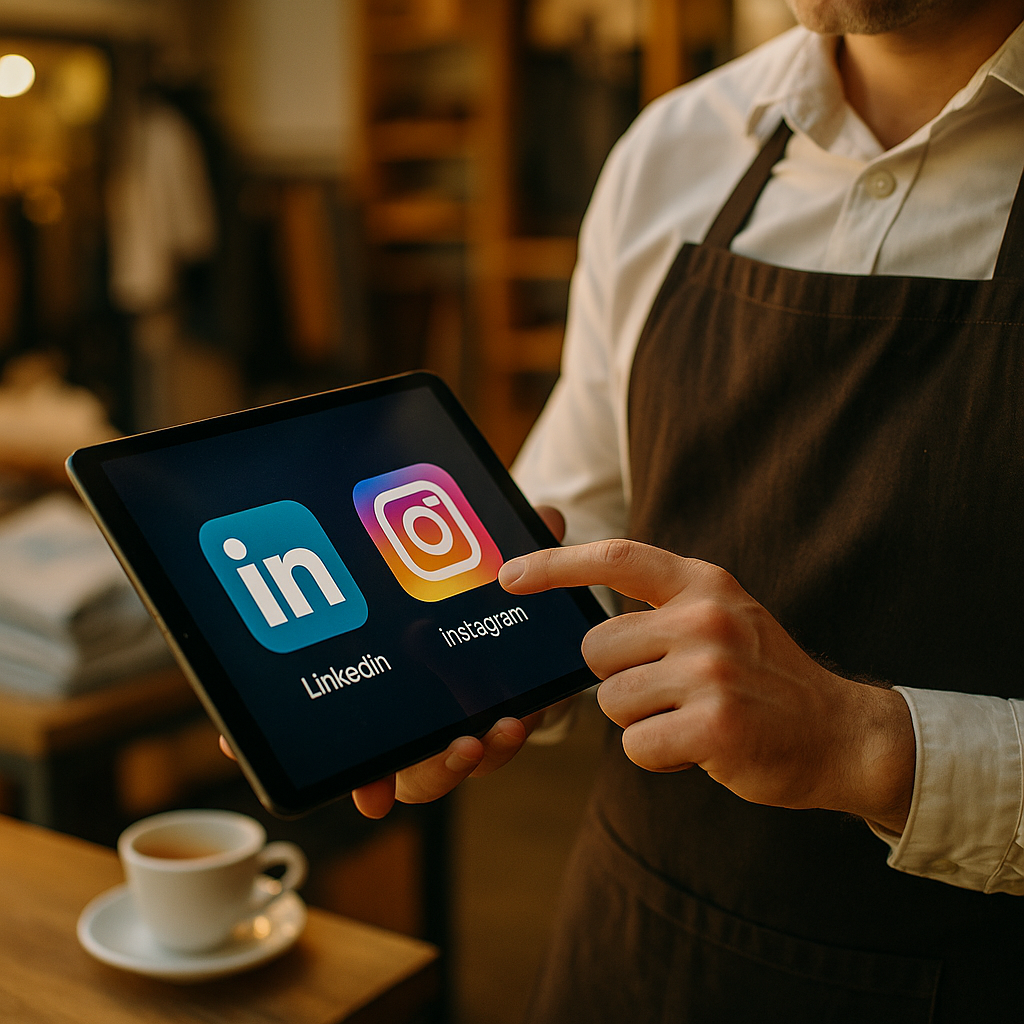
Retail and hospitality marketers just watched a decade of platform logic flip. LinkedIn engagement rates in these two sectors now beat Instagram by a measurable margin, according to multiple benchmark reports tracked across the past year. If your media plan still treats LinkedIn as “the B2B platform” and Instagram as the default for lifestyle brands, you’re optimizing for a market that no longer exists.
The Numbers Behind the Shift
Here’s the uncomfortable part for anyone who built their content calendar around Instagram Reels. Engagement benchmarks compiled by Sprout Social and corroborated by independent agency data show LinkedIn posts from retail and hospitality brand pages now generating engagement rates that outpace Instagram counterparts, particularly among mid-size and enterprise accounts. Instagram isn’t collapsing. It’s just gotten crowded, algorithmically noisy, and saturated with paid placements that crowd out organic reach.
LinkedIn, meanwhile, has spent the past two years rewarding native video, employee advocacy, and founder-led content with disproportionate distribution. A hospitality group posting behind-the-scenes renovation updates or a retail chain sharing supply chain wins is getting more comments, shares, and dwell time on LinkedIn than the same brand gets on a polished Instagram carousel.
Brands chasing Instagram’s old engagement formula are now spending more to get less, while LinkedIn’s underpriced attention is quietly compounding for early movers in retail and hospitality.
Why Retail and Hospitality Specifically?
These two sectors share something most B2C categories don’t: a workforce story that doubles as brand content. Retail has supply chains, store openings, frontline staff, and seasonal hiring surges. Hospitality has renovations, chef hires, sustainability initiatives, and local community ties. That’s catnip for LinkedIn’s algorithm, which still favors professional milestones, company updates, and employee-generated posts over polished product shots.
Instagram was built for aspiration. LinkedIn, oddly, has become the platform where operational transparency performs. A regional hotel brand announcing a staff promotion or a retailer highlighting a warehouse automation project now reliably outperforms a product flat-lay on Instagram, both in reach and in the quality of engagement (comments from industry peers, journalists, and potential partners, not just customers).
This matters for procurement teams too. If you’re reclassifying influencer spend as media, LinkedIn’s lower CPMs relative to engagement quality make it an easier line item to justify internally than another round of Instagram boosted posts.
What Changed on Instagram
Instagram’s engagement decline in these categories isn’t mysterious. Meta has leaned harder into Reels and algorithmic recommendation, which means organic brand posts compete against an endless scroll of creator content optimized purely for watch time. Retail and hospitality brand pages, which tend to post product and ambiance content rather than entertainment-first video, lose that fight structurally.
There’s also fatigue. Consumers have seen a decade of polished restaurant plating shots and store aesthetic reels. The format has become wallpaper. Compare that to TikTok’s engagement advantage over Instagram, already documented elsewhere on this site. Instagram is getting squeezed from both directions: TikTok on entertainment, LinkedIn on trust and authority.
None of this means pull your Instagram budget tomorrow. It means the engagement-per-dollar calculus has shifted, and your media mix should reflect that shift rather than inertia.
The Content That’s Actually Working
Scroll through top-performing retail and hospitality LinkedIn posts and a pattern emerges fast:
- Founder and executive commentary on industry trends, not corporate press releases
- Employee spotlights that read like genuine recognition, not HR theater
- Operational transparency: sustainability metrics, local sourcing updates, staff training investments
- Short native video (under 90 seconds) filmed on location, minimally edited
- Data-backed thought leadership on consumer trends, posted by named executives rather than brand accounts
Notice what’s missing: traditional product promotion. LinkedIn users tolerate self-promotion far less than Instagram users do. The platform rewards brands that show up as industry participants, not advertisers. This echoes a broader trend we’ve covered in founder content outperforming brand pages, where personal accounts consistently beat corporate handles on reach and trust signals.
Reallocating Budget Without Overcorrecting
The temptation after a benchmark shift like this is to swing the pendulum hard. Resist it. LinkedIn’s audience skews toward B2B decision makers, suppliers, and industry press, which is valuable but different from Instagram’s consumer reach. The smarter move is a blended strategy where LinkedIn carries your brand reputation and recruitment narrative while Instagram and TikTok carry consumer-facing promotion.
That said, budget conversations are changing. If you’re building a conversion-blended creator plan, LinkedIn deserves a dedicated line rather than an afterthought slice of your “other social” budget. Several retail CMOs we’ve spoken with now run quarterly LinkedIn content sprints specifically timed around earnings calls, store openings, or seasonal hiring pushes, treating it as a PR and trust channel that happens to also drive engagement.
Hospitality brands have an added incentive: LinkedIn’s professional audience includes corporate travel bookers, event planners, and B2B partnership decision makers who never see your Instagram at all. Engagement there isn’t just vanity metric territory. It’s pipeline.
Measurement Gaps You Need to Close
Here’s where most teams stumble. LinkedIn’s native analytics are solid for reach and engagement but weaker on downstream conversion tracking compared to what marketers are used to on Meta’s ad platform. If your reporting stack was built entirely around Instagram and TikTok attribution, you’ll need to extend it.
Pair LinkedIn’s own LinkedIn Business tools with UTM-tagged links and a CRM that can trace engagement back to inbound inquiries, applications, or partnership requests. Retail brands using store locator click-throughs and hospitality brands using booking page visits as the conversion event will get the clearest read on whether this engagement actually moves revenue, not just likes.
This measurement discipline matters more now that budgets have grown faster than measurement capability across the creator economy broadly. Don’t repeat that mistake on a new platform just because the engagement numbers look good on the surface.
Is This Trend Durable or a Temporary Blip?
Fair question. Platform engagement cycles shift constantly, and what’s true this benchmark cycle may not hold in eighteen months. But the structural reasons behind LinkedIn’s advantage in retail and hospitality (algorithmic favoritism toward professional content, Instagram’s saturation, and a growing consumer appetite for operational transparency) aren’t going away soon.
eMarketer’s ongoing platform usage data suggests LinkedIn’s user base and time-spent metrics continue climbing even as its ad load increases, which usually precedes further brand investment rather than a pullback. If anything, early movers in retail and hospitality are building an audience moat while LinkedIn remains comparatively underpriced for brand content, much like Instagram was a decade ago.
Worth watching alongside this: how persona matching reshapes creator casting, since LinkedIn’s professional context rewards a different creator profile than Instagram’s lifestyle-first casting approach.
Next Step
Audit your last quarter of LinkedIn posts against Instagram engagement rates before you touch next quarter’s budget. If the gap mirrors the 2026 benchmarks, move one test campaign, employee spotlight series, executive thought leadership, or store opening coverage, fully onto LinkedIn and measure it against your Instagram baseline for sixty days.
Frequently Asked Questions
Why is LinkedIn outperforming Instagram specifically in retail and hospitality?
These sectors generate natural workforce and operational content (hiring, store openings, renovations, sustainability updates) that LinkedIn’s algorithm favors, while Instagram has become saturated with paid and entertainment-first content that crowds out organic brand posts.
Should retail brands move their entire social budget to LinkedIn?
No. LinkedIn works best for brand reputation, recruitment, and B2B audiences like partners or corporate travel bookers. Consumer-facing promotion still belongs on Instagram and TikTok, so a blended strategy outperforms a full reallocation.
What type of content performs best for hospitality brands on LinkedIn?
Short native video, employee spotlights, executive commentary on industry trends, and operational transparency posts consistently outperform traditional promotional content on the platform.
How should brands measure LinkedIn engagement against revenue impact?
Pair LinkedIn’s native analytics with UTM-tagged links and CRM tracking tied to specific conversion events, such as store locator clicks or booking page visits, rather than relying on engagement metrics alone.
Is this LinkedIn engagement advantage likely to last?
The structural drivers, Instagram saturation and LinkedIn’s algorithmic preference for professional and transparent content, appear durable in the near term, though marketers should still monitor benchmarks quarterly rather than assume permanence.
Top Influencer Marketing Agencies
The leading agencies shaping influencer marketing in 2026
Agencies ranked by campaign performance, client diversity, platform expertise, proven ROI, industry recognition, and client satisfaction. Assessed through verified case studies, reviews, and industry consultations.
Moburst

-
2

The Shelf
Boutique Beauty & Lifestyle Influencer AgencyA data-driven boutique agency specializing exclusively in beauty, wellness, and lifestyle influencer campaigns on Instagram and TikTok. Best for brands already focused on the beauty/personal care space that need curated, aesthetic-driven content.Clients: Pepsi, The Honest Company, Hims, Elf Cosmetics, Pure LeafVisit The Shelf → -
3

Audiencly
Niche Gaming & Esports Influencer AgencyA specialized agency focused exclusively on gaming and esports creators on YouTube, Twitch, and TikTok. Ideal if your campaign is 100% gaming-focused — from game launches to hardware and esports events.Clients: Epic Games, NordVPN, Ubisoft, Wargaming, Tencent GamesVisit Audiencly → -
4

Viral Nation
Global Influencer Marketing & Talent AgencyA dual talent management and marketing agency with proprietary brand safety tools and a global creator network spanning nano-influencers to celebrities across all major platforms.Clients: Meta, Activision Blizzard, Energizer, Aston Martin, WalmartVisit Viral Nation → -
5

The Influencer Marketing Factory
TikTok, Instagram & YouTube CampaignsA full-service agency with strong TikTok expertise, offering end-to-end campaign management from influencer discovery through performance reporting with a focus on platform-native content.Clients: Google, Snapchat, Universal Music, Bumble, YelpVisit TIMF → -
6

NeoReach
Enterprise Analytics & Influencer CampaignsAn enterprise-focused agency combining managed campaigns with a powerful self-service data platform for influencer search, audience analytics, and attribution modeling.Clients: Amazon, Airbnb, Netflix, Honda, The New York TimesVisit NeoReach → -
7

Ubiquitous
Creator-First Marketing PlatformA tech-driven platform combining self-service tools with managed campaign options, emphasizing speed and scalability for brands managing multiple influencer relationships.Clients: Lyft, Disney, Target, American Eagle, NetflixVisit Ubiquitous → -
8

Obviously
Scalable Enterprise Influencer CampaignsA tech-enabled agency built for high-volume campaigns, coordinating hundreds of creators simultaneously with end-to-end logistics, content rights management, and product seeding.Clients: Google, Ulta Beauty, Converse, AmazonVisit Obviously →