


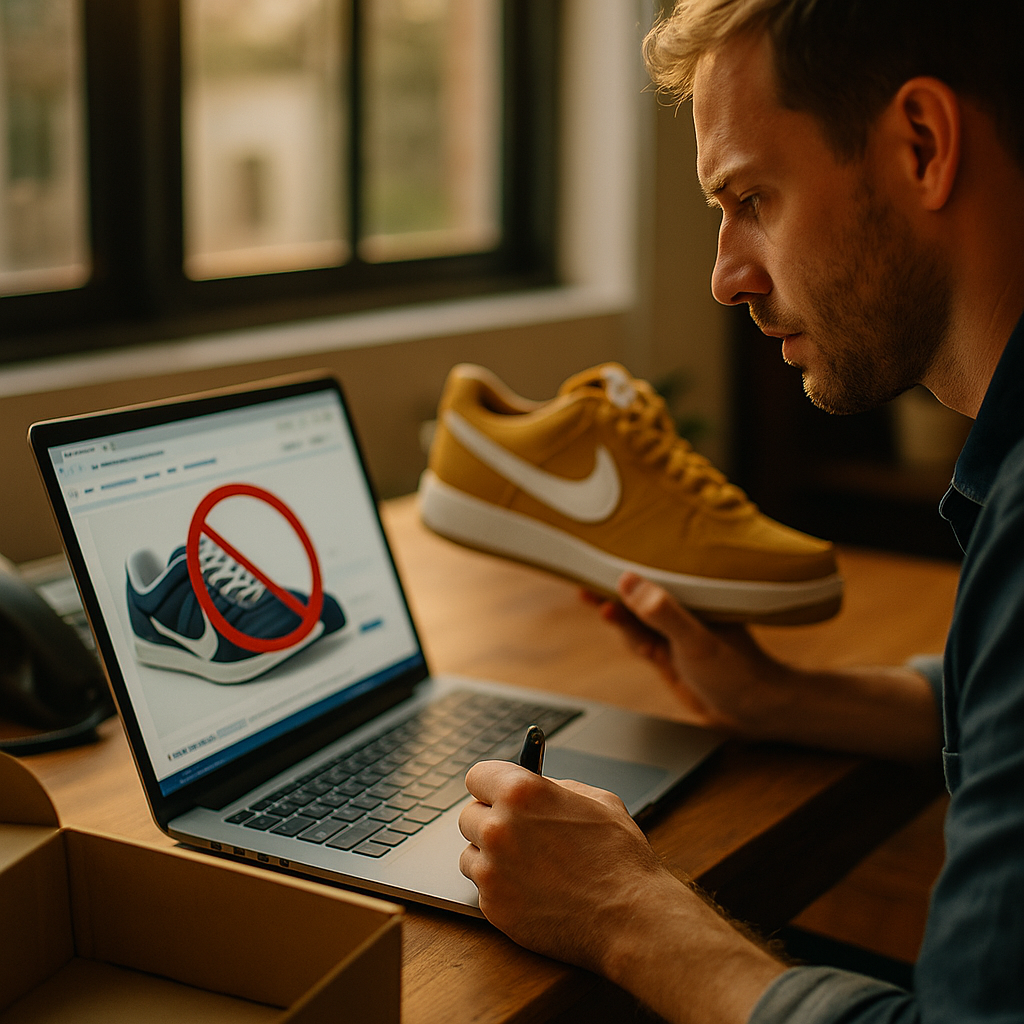
Counterfeit sellers listed a fake version of a DTC skincare brand’s best-selling serum on a major marketplace, undercutting the real price by 40%. It stayed live for eleven days. By the time legal got involved, the brand had absorbed hundreds of one-star reviews, a chargeback spike, and a Reddit thread questioning whether the “real” product even worked. This is the counterfeit listing takedown problem in miniature, and it is why more brand protection teams are now building a 48 hour SLA into their operations instead of treating takedowns as a reactive legal chore.
Why Speed Is the Whole Game
Counterfeiters do not need your product to be good. They need it to be findable before you notice. Every hour a fake listing stays live, it accumulates reviews, impressions, and search ranking signals that are brutally hard to unwind later. A listing that sits for two weeks has often already been indexed by shopping algorithms, screenshotted by influencers unaware it’s fake, and linked in affiliate roundups.
Marketplaces like Amazon, Walmart, and Etsy all have takedown mechanisms. None of them are fast by default. Amazon’s Brand Registry reporting tool, for instance, can process a clean IP complaint in under 24 hours, but only if your submission is airtight and you’re enrolled correctly. Most brands aren’t optimized for that speed. They’re optimized for “we’ll get to it eventually,” which is exactly the posture counterfeiters count on.
A counterfeit listing left live for ten days doesn’t just cost ten days of lost sales. It costs the trust of every customer who bought the fake and blamed you for it.
What a 48 Hour SLA Actually Means
An SLA isn’t a wish. It’s a documented, measurable commitment with owners, escalation paths, and a clock that starts the moment detection happens, not the moment someone remembers to check. A real 48 hour brand protection SLA has four components:
- Detection within hours, not weeks. You need automated monitoring across marketplaces, social commerce, and search ads, not a quarterly manual sweep.
- A pre-approved evidence package. Trademark registration numbers, product images, authorized seller lists, and a template complaint ready to file without legal review each time.
- A single accountable owner. Not “the legal team” in the abstract. One named person or role who files the takedown and tracks it to resolution.
- Escalation tiers. If a platform doesn’t act within the SLA window, there’s a predefined next step, whether that’s a priority support channel, outside counsel, or a public complaint.
Without all four, you don’t have an SLA. You have a hope.
The Detection Layer Nobody Budgets For
Most brands discover counterfeits by accident: a customer complaint, a sharp-eyed social media manager, an influencer tagging the wrong product link. That’s not a strategy, it’s luck. Tools like Red Points, Pattern, and Marqvision scan marketplaces, social platforms, and search ads continuously, flagging suspicious listings based on image matching, seller behavior, and pricing anomalies.
The ROI case here is straightforward. If a mid-size brand loses even 2% of category revenue to counterfeit diversion (a conservative figure cited across multiple brand protection reports), the cost of a detection subscription is trivial by comparison. According to Statista’s research on counterfeit goods trade, the global trade in counterfeit and pirated goods remains a multi-hundred-billion-dollar problem, and e-commerce has only made listing fakes cheaper and faster.
Why Legal Alone Can’t Hit 48 Hours
Here’s the uncomfortable truth: if every takedown request has to route through outside counsel before filing, you will never hit 48 hours. Legal review matters for edge cases, counterfeit versus gray market, trademark dispute, parody account, but the bulk of counterfeit listings are obvious. Same logo, same packaging, wrong seller, no authorization. Those should move through a pre-cleared template that legal signs off on once, not every single time.
This is where a lot of brand protection programs stall. They treat every takedown like a novel legal question instead of a repeatable operational workflow. Build the template. Get it blessed once by counsel. Then let the operations team run it on volume.
Building the Workflow: Step by Step
A workable 48 hour SLA generally breaks into four stages, each with its own clock.
- Hours 0 to 4: Detection and triage. Automated alert fires, a human confirms it’s genuinely counterfeit (not a legitimate reseller or parallel import), and severity is scored. Is it a safety issue, a trademark issue, or both?
- Hours 4 to 12: Evidence assembly and filing. Using the pre-approved package, the owner files the complaint through the platform’s official brand protection portal, not a generic contact form.
- Hours 12 to 36: Platform processing. This is largely out of your hands, but it’s where tracking matters. Log the submission, set a reminder, and do not assume silence means progress.
- Hours 36 to 48: Escalation if unresolved. If the listing is still live, escalate through a priority channel or account manager. Document everything for the rare cases that end up needing outside counsel or a cease and desist letter.
Notice what’s missing from this list: nobody asking “whose job is this?” That question should never exist inside an active SLA. If it does, your workflow was never finished in the first place.
Where Influencer Marketing Fits In
This is a trade publication for influencer marketing professionals, so here’s the part that gets overlooked: counterfeit listings don’t just hurt e-commerce revenue, they poison influencer campaigns. An influencer links to “the product” in a link-in-bio tool, a shopping aggregator pulls the cheapest listing available, and suddenly your paid creator is unknowingly driving traffic to a fake. The creator didn’t do anything wrong. Your detection and takedown process failed before the campaign even launched.
Brands running affiliate and promo code programs should treat counterfeit monitoring as part of campaign QA, not a separate legal function. If you’re already tracking promo code attribution for performance, cross-reference those same product pages against your counterfeit watchlist before a campaign goes live. It takes minutes and it prevents a very public, very preventable embarrassment.
A counterfeit listing that surfaces during a paid influencer campaign isn’t a legal problem first. It’s a media buying problem, because it’s burning your paid traffic on someone else’s inventory.
There’s also a contractual angle worth tightening. If your influencer agreements include whitelisting or paid amplification clauses, make sure they specify that creators link only to brand-verified storefronts, and build in a process for swapping links fast if a counterfeit surfaces mid-flight. The same operational discipline that governs whitelisting renewal clauses should extend to counterfeit contingency planning.
The Compliance and Reputation Layer
Counterfeit products create downstream compliance headaches that extend well past the original IP violation. Fake products that cause injury or allergic reaction open brands to liability even when the counterfeit was never theirs to begin with, because consumers often can’t tell the difference and regulators sometimes don’t either. The Federal Trade Commission has increasingly scrutinized how brands respond to counterfeit harm, particularly when there’s evidence the brand knew and was slow to act.
This connects to a broader pattern Influencers Time has covered extensively: regulators expect documented, timely response, not good intentions. The same audit trail logic that applies to disclosure compliance in state influencer disclosure laws applies here. If you can’t produce a timestamped record showing you acted within a reasonable window, “we took it seriously” doesn’t hold up well in a regulatory inquiry or a class action deposition.
Keep records the same way you’d keep them for any compliance function: dated, centralized, and accessible to whoever needs them during an audit. A content retention policy built for disclosure compliance is a useful model to borrow from when designing your counterfeit incident log.
What Good Reporting Looks Like Internally
A monthly brand protection report should answer three questions for leadership: how many counterfeit listings were detected, what percentage were resolved within the 48 hour window, and what’s the estimated revenue and reputational exposure from listings that missed the SLA. If your team can’t produce those three numbers on demand, the SLA exists on paper only.
Tools like Sprout Social and similar social listening platforms can help extend detection into influencer and UGC content, catching unauthorized product claims or counterfeit tags that marketplace-only tools miss. Pair that with marketplace-specific brand registry tools for full coverage.
Common Pitfalls That Blow Up the Timeline
- Treating every listing as a legal emergency. This creates bottlenecks and burns goodwill with counsel. Reserve legal review for genuinely ambiguous cases.
- No single owner. Shared responsibility becomes no responsibility, especially on a Friday afternoon.
- Weak evidence packages. Platforms reject vague complaints. A filing without registered trademark numbers or clear image comparison gets bounced back, resetting your clock.
- Ignoring repeat offenders. The same seller account often relists within days under a slightly different name. Track seller IDs, not just listing URLs.
- No escalation plan. If 48 hours passes with no action, what happens next? If the answer is “we wait,” the SLA has already failed.
Counterfeit activity also tends to spike around high-volume commerce periods, which means SLA readiness can’t be a project you revisit annually. According to eMarketer’s e-commerce trend coverage, seasonal shopping surges consistently correlate with increased marketplace fraud activity, which means your detection tools need to be running hardest exactly when your team is most stretched thin.
FAQs
Frequently Asked Questions
What counts as a counterfeit listing versus a legitimate reseller?
A counterfeit listing uses your trademark, brand name, or product imagery to sell a product that was not manufactured or authorized by you. A legitimate reseller sells genuine product obtained through proper channels, even without a direct distribution agreement. The distinction matters because takedown processes for trademark infringement differ from policies governing unauthorized resale of authentic goods.
How fast can marketplaces actually process a takedown request?
Major platforms with dedicated brand registry programs can process clear-cut counterfeit complaints within 24 to 48 hours when the submission includes complete documentation. Complaints lacking registered trademark proof, clear product comparison images, or seller identification typically take longer and often get rejected on the first attempt, resetting the clock.
Do we need outside counsel for every counterfeit takedown?
No. Most counterfeit listings are clear enough to resolve through a pre-approved evidence template and internal brand protection staff. Reserve outside counsel for ambiguous cases, repeat offenders who ignore platform takedowns, or situations requiring a formal cease and desist letter.
What’s the realistic cost of not having a takedown SLA?
Beyond direct lost sales, unresolved counterfeit listings generate customer complaints, damage product ratings, and can surface inside paid influencer or ad campaigns, wasting media spend. Brands that measure this often find the reputational cost outweighs the direct revenue loss.
How does counterfeit monitoring connect to influencer marketing specifically?
Influencer campaigns often drive traffic to product pages through link aggregators or shoppable posts, and counterfeit listings can intercept that traffic if they outrank or mimic the authentic listing. Brands should cross-check product URLs against counterfeit watchlists before launching paid creator campaigns.
Building a 48 hour counterfeit listing takedown SLA isn’t a legal nice-to-have, it’s an operational commitment that protects revenue, creator trust, and brand equity in equal measure. Start by auditing your current detection-to-resolution timeline this quarter, then assign one accountable owner before the next high-volume sales period hits.
Frequently Asked Questions
Top Influencer Marketing Agencies
The leading agencies shaping influencer marketing in 2026
Agencies ranked by campaign performance, client diversity, platform expertise, proven ROI, industry recognition, and client satisfaction. Assessed through verified case studies, reviews, and industry consultations.
Moburst

-
2

The Shelf
Boutique Beauty & Lifestyle Influencer AgencyA data-driven boutique agency specializing exclusively in beauty, wellness, and lifestyle influencer campaigns on Instagram and TikTok. Best for brands already focused on the beauty/personal care space that need curated, aesthetic-driven content.Clients: Pepsi, The Honest Company, Hims, Elf Cosmetics, Pure LeafVisit The Shelf → -
3

Audiencly
Niche Gaming & Esports Influencer AgencyA specialized agency focused exclusively on gaming and esports creators on YouTube, Twitch, and TikTok. Ideal if your campaign is 100% gaming-focused — from game launches to hardware and esports events.Clients: Epic Games, NordVPN, Ubisoft, Wargaming, Tencent GamesVisit Audiencly → -
4

Viral Nation
Global Influencer Marketing & Talent AgencyA dual talent management and marketing agency with proprietary brand safety tools and a global creator network spanning nano-influencers to celebrities across all major platforms.Clients: Meta, Activision Blizzard, Energizer, Aston Martin, WalmartVisit Viral Nation → -
5

The Influencer Marketing Factory
TikTok, Instagram & YouTube CampaignsA full-service agency with strong TikTok expertise, offering end-to-end campaign management from influencer discovery through performance reporting with a focus on platform-native content.Clients: Google, Snapchat, Universal Music, Bumble, YelpVisit TIMF → -
6

NeoReach
Enterprise Analytics & Influencer CampaignsAn enterprise-focused agency combining managed campaigns with a powerful self-service data platform for influencer search, audience analytics, and attribution modeling.Clients: Amazon, Airbnb, Netflix, Honda, The New York TimesVisit NeoReach → -
7

Ubiquitous
Creator-First Marketing PlatformA tech-driven platform combining self-service tools with managed campaign options, emphasizing speed and scalability for brands managing multiple influencer relationships.Clients: Lyft, Disney, Target, American Eagle, NetflixVisit Ubiquitous → -
8

Obviously
Scalable Enterprise Influencer CampaignsA tech-enabled agency built for high-volume campaigns, coordinating hundreds of creators simultaneously with end-to-end logistics, content rights management, and product seeding.Clients: Google, Ulta Beauty, Converse, AmazonVisit Obviously →