


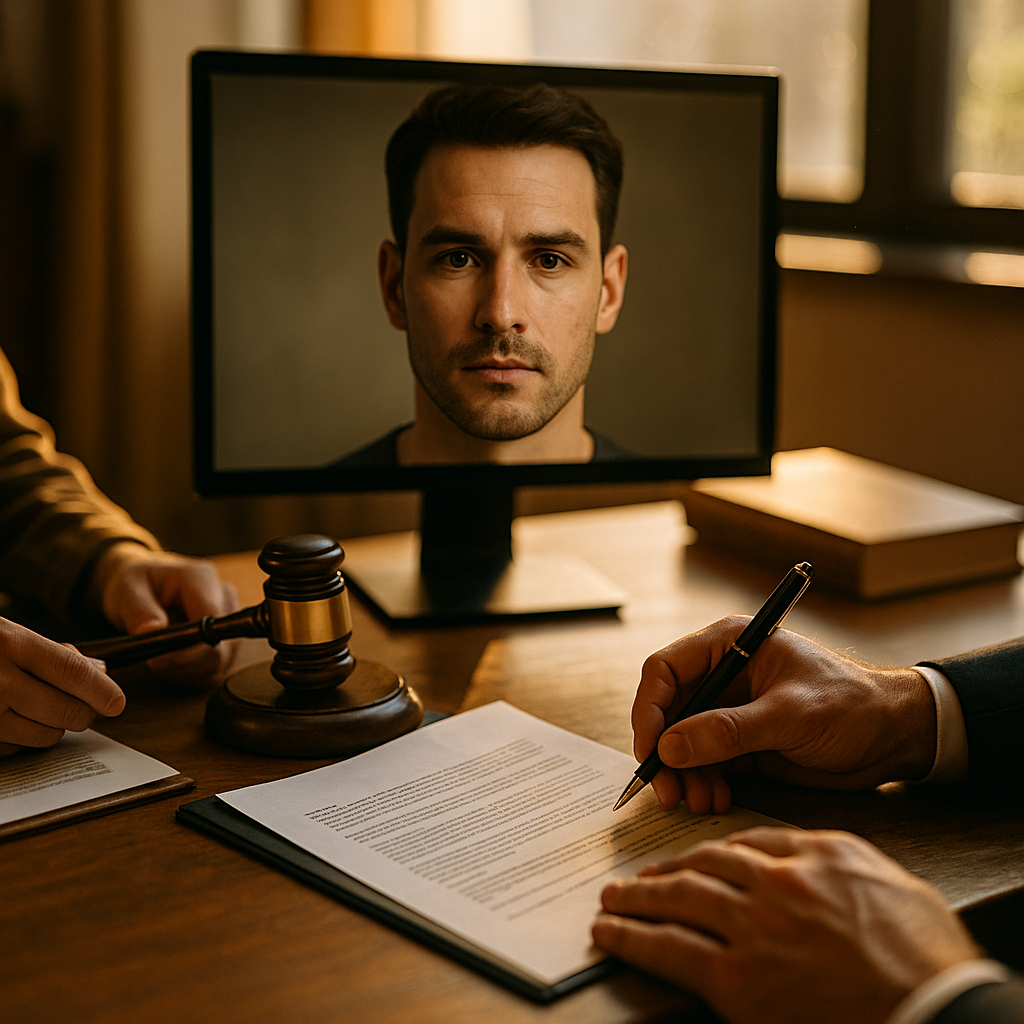
Ninety-one percent of marketers say they’ve tested AI-generated video for at least one campaign, yet fewer than a third have a lawyer review the licensing terms before launch. That gap is where lawsuits live. Licensing AI actor likeness for UGC isn’t a checkbox, it’s a contract negotiation with stakes most brands haven’t priced in yet.
Synthetic video tools like Synthesia, HeyGen, Colossyan, and Arcads have made it absurdly easy to generate a “creator” who never signed a release, never saw the script, and never agreed to appear next to your competitor’s product next quarter. The technology moved fast. The contracts didn’t catch up.
Why This Suddenly Matters to Every Brand Running UGC
Two years ago, synthetic actors were a novelty reserved for explainer videos and internal training. Now they’re showing up in paid social, shoppable ads, and influencer-style testimonials that mimic organic UGC almost perfectly. The line between “real creator” and “licensed digital likeness” has blurred enough that most consumers can’t tell, and regulators are paying attention.
Tennessee’s ELVIS Act, California’s likeness protections, and New York’s Civil Rights Law amendments all expanded publicity rights specifically in response to AI voice and face cloning. Add in FTC guidance on deceptive endorsements, and you’ve got a compliance minefield that most synthetic video vendor agreements simply don’t address.
A standard SaaS terms-of-service agreement from a synthetic video platform almost never includes the publicity rights warranties a brand actually needs. That gap gets inherited by whoever hits “publish.”
This is why the contract conversation has shifted from “can we use this tool” to “what does the licensing agreement actually promise us.” Those are very different questions, and only one of them protects your brand legally.
The Five Clauses Every Synthetic Likeness Agreement Needs
Whether you’re licensing a stock AI avatar, a custom-trained digital twin of a real actor, or a fully synthetic persona built from scratch, the contract should cover the same ground. Skip any of these and you’re carrying risk you didn’t agree to.
- Consent chain documentation. If the avatar is based on a real human (even partially), the agreement must prove that person signed an informed consent release covering commercial synthetic use, not just the original footage capture.
- Scope of use limitations. Platform, geography, duration, and content category all need explicit definition. A license for “social media use” is not the same as a license for paid political ads or alcohol marketing.
- Indemnification for publicity and right of likeness claims. The vendor, not just the brand, needs skin in the game if the underlying consent turns out to be flawed.
- Revocation and takedown mechanics. What happens if the real person behind the likeness withdraws consent mid-campaign? The contract needs a defined SLA for pulling content.
- Disclosure and labeling requirements. Who’s responsible for AI labeling compliance, the brand or the vendor, and does that obligation survive into derivative assets like cutdowns and whitelisted ads?
Miss the consent chain clause and you’re one discovery request away from a lawsuit you can’t settle cheaply. This isn’t theoretical. Voice actors and background performers have already filed suits against AI dubbing and avatar companies for unauthorized likeness training, and SAG-AFTRA’s post-strike agreements now mandate explicit, separately bargained consent for any AI replica use.
Scope of Use: The Clause That Kills More Deals Than Price
Here’s where most negotiations actually stall. Brands want broad, perpetual rights to reuse synthetic content across every channel forever. Vendors (and any real person whose likeness underlies the model) want tight, renewable windows. Split the difference wrong and you either overpay for rights you won’t use or underbuy rights you’ll desperately need six months later.
The fix isn’t complicated, it’s just rarely done. Define scope along three axes: platform (paid social, owned channels, broadcast, retail media), duration (12, 18, 24 months with renewal options), and derivative use (can the footage be re-cut, translated, or repurposed into new formats). Vague scope language is the single biggest source of post-campaign disputes, right alongside expired licenses nobody tracked. For a deeper look at how renewal terms specifically trip up legal teams, see our breakdown of whitelisting renewal clauses and the expired license problem they create.
If your synthetic UGC strategy involves building a library of reusable assets, don’t negotiate scope deal by deal. Build a master framework upfront. Our piece on multi year UGC libraries covers how rights retention gaps quietly accumulate when brands treat each asset as a one-off instead of part of a system.
Indemnification Isn’t Optional, It’s the Whole Point
Ask any synthetic video vendor what happens if the underlying likeness consent gets challenged in court. Most will point you to a liability cap buried in section 14 that’s lower than your campaign media spend. That’s not protection, that’s exposure with extra steps.
A real indemnification clause should require the vendor to defend and cover costs for any claim arising from:
- Inadequate or missing consent from the person whose likeness was used to train the model
- Misrepresentation of the synthetic content as a real, unsponsored endorsement (an FTC flashpoint)
- Use of the likeness outside the agreed scope due to vendor platform defaults or template reuse
Brands that skip this negotiation often assume their own media liability or E&O insurance will cover a dispute. It might not. Insurers are increasingly carving out AI-generated content from standard advertising injury coverage, which means your indemnification clause with the vendor is doing work your insurance policy no longer will. We’ve covered how this plays out operationally in AI negotiated creator contracts and the insurance liability gap they’re creating industry-wide.
If your synthetic video vendor won’t put real indemnification language in writing, that’s a signal about how confident they are in their own consent documentation.
Disclosure Obligations Don’t Disappear Because the Actor Isn’t Real
There’s a persistent myth that AI-generated spokespeople sidestep FTC endorsement rules because no human is “endorsing” anything. That’s backwards. The FTC has made clear that synthetic testimonials implying real customer experience or expert opinion still trigger disclosure requirements, arguably more so, because the deception risk is higher.
Your licensing agreement should specify who owns the labeling obligation: the brand, the agency, or the platform. It should also address whether disclosure requirements (like clear and conspicuous AI labeling) apply uniformly across every market you operate in, since state-level rules are diverging fast. California’s content labeling statute, for instance, imposes requirements that don’t map neatly onto federal guidance. Our analysis of the California AI content labeling law walks through where that gap shows up in practice, and our piece on AI spokesperson disclosure breaks down the enforcement gap directly.
Building this into the contract upfront is cheaper than retrofitting disclosure language across a live campaign. It also protects you if the vendor’s platform changes its default labeling behavior, which happens more often than most legal teams realize.
Revocation Rights: What Happens When Someone Changes Their Mind
Real people whose likeness underlies a synthetic model can, and sometimes do, withdraw consent. Maybe they signed a broad release early in their career and regret it. Maybe their public image shifted and they don’t want to be associated with your brand category anymore. Whatever the reason, your contract needs a defined process for what happens next.
A functional revocation clause specifies: the notice period the vendor must give you, the takedown SLA across all platforms where the content lives, and whether you’re entitled to a pro-rated refund or replacement asset. Without this, you’re relying on the vendor’s goodwill to pull content fast enough to avoid a publicity claim. Goodwill is not a legal strategy.
This connects directly to broader right of publicity exposure, which varies wildly by state and is getting stricter, not looser. If you’re running synthetic UGC across multiple markets, read our deep dive on right of publicity law before you finalize any multi-state campaign using licensed likeness.
Vendor Due Diligence: The Questions That Actually Matter
Before signing with any synthetic video platform, your procurement and legal teams should be asking pointed questions, not reading marketing copy. Here’s a shortlist that separates vendors who’ve done the work from vendors who are hoping you won’t ask:
- Can you provide documentation of the original consent release for any likeness used to train your avatar models?
- Does your indemnification clause cover publicity rights claims specifically, or just general IP infringement?
- What’s your SLA for content takedown if a likeness consent is revoked?
- Who owns the AI disclosure obligation when content is whitelisted or boosted as paid media?
- Do your terms update automatically, and if so, how are brands notified of material changes to licensing scope?
If a vendor can’t answer these clearly, that’s your answer. According to industry market data from Statista, the synthetic media and AI avatar market is expanding fast enough that vendor quality is going to vary enormously over the next few years. Due diligence now saves you from being the test case in someone else’s lawsuit later.
It’s also worth treating this the same way you’d treat any creator partnership audit. Platforms like Sprout Social and HubSpot both publish guidance on influencer vetting workflows that apply surprisingly well to synthetic vendor evaluation, since the underlying risk (unauthorized use of a persona to sell your product) is structurally the same.
Where This Intersects With Your Broader Compliance Stack
Licensing AI actor likeness doesn’t happen in isolation. It touches your data processing agreements if the vendor stores biometric training data, your content retention policy for audit trail purposes, and your broader creator contract templates if you’re running synthetic and human UGC side by side.
Treat it as one more workstream in your compliance architecture rather than a special case. Teams that already have mature frameworks for creator cancellation insurance and scandal risk budgeting tend to adapt faster to synthetic likeness risk, because the underlying muscle (allocating liability before launch, not after) is the same.
Next Step
Don’t let your synthetic video vendor’s default terms become your brand’s liability exposure. Pull your current AI avatar agreements, check them against the five clauses above, and flag any gaps to legal before your next campaign goes live, not after.
FAQs
Do we need a separate license if the AI avatar is based on a real person versus a fully synthetic character?
Yes. Fully synthetic characters built without a real person’s data carry lower publicity rights risk, but you still need IP ownership clarity from the vendor. Avatars trained on a real person’s face, voice, or mannerisms require documented, informed consent covering commercial synthetic use specifically, not just the original footage or performance capture.
Can a brand be held liable if a synthetic video tool used an actor’s likeness without proper consent?
Potentially, yes. Liability often flows downstream to whoever publishes and profits from the content, even if the vendor was the one that failed to secure consent. This is exactly why indemnification language in your licensing contract matters so much, it determines who actually pays if a claim surfaces.
How long should an AI likeness license last before renewal is required?
Most brands negotiate 12 to 24 month terms with renewal options rather than perpetual licenses. Shorter terms give you leverage to renegotiate pricing and scope as the market shifts, and they reduce exposure if the underlying consent or vendor terms change.
Does FTC disclosure guidance apply to AI generated spokespeople the same way it applies to human influencers?
Yes, and arguably more strictly. The FTC treats synthetic testimonials that could be mistaken for genuine customer or expert opinion as subject to the same clear and conspicuous disclosure standards as human endorsements, with added scrutiny because of the deception potential.
What’s the single most overlooked clause in synthetic video licensing agreements?
Revocation rights. Brands negotiate hard on price and scope but rarely define what happens if the person behind a licensed likeness withdraws consent mid-campaign. Without a defined takedown SLA, you’re exposed for as long as it takes the vendor to act.
Top Influencer Marketing Agencies
The leading agencies shaping influencer marketing in 2026
Agencies ranked by campaign performance, client diversity, platform expertise, proven ROI, industry recognition, and client satisfaction. Assessed through verified case studies, reviews, and industry consultations.
Moburst

-
2

The Shelf
Boutique Beauty & Lifestyle Influencer AgencyA data-driven boutique agency specializing exclusively in beauty, wellness, and lifestyle influencer campaigns on Instagram and TikTok. Best for brands already focused on the beauty/personal care space that need curated, aesthetic-driven content.Clients: Pepsi, The Honest Company, Hims, Elf Cosmetics, Pure LeafVisit The Shelf → -
3

Audiencly
Niche Gaming & Esports Influencer AgencyA specialized agency focused exclusively on gaming and esports creators on YouTube, Twitch, and TikTok. Ideal if your campaign is 100% gaming-focused — from game launches to hardware and esports events.Clients: Epic Games, NordVPN, Ubisoft, Wargaming, Tencent GamesVisit Audiencly → -
4

Viral Nation
Global Influencer Marketing & Talent AgencyA dual talent management and marketing agency with proprietary brand safety tools and a global creator network spanning nano-influencers to celebrities across all major platforms.Clients: Meta, Activision Blizzard, Energizer, Aston Martin, WalmartVisit Viral Nation → -
5

The Influencer Marketing Factory
TikTok, Instagram & YouTube CampaignsA full-service agency with strong TikTok expertise, offering end-to-end campaign management from influencer discovery through performance reporting with a focus on platform-native content.Clients: Google, Snapchat, Universal Music, Bumble, YelpVisit TIMF → -
6

NeoReach
Enterprise Analytics & Influencer CampaignsAn enterprise-focused agency combining managed campaigns with a powerful self-service data platform for influencer search, audience analytics, and attribution modeling.Clients: Amazon, Airbnb, Netflix, Honda, The New York TimesVisit NeoReach → -
7

Ubiquitous
Creator-First Marketing PlatformA tech-driven platform combining self-service tools with managed campaign options, emphasizing speed and scalability for brands managing multiple influencer relationships.Clients: Lyft, Disney, Target, American Eagle, NetflixVisit Ubiquitous → -
8

Obviously
Scalable Enterprise Influencer CampaignsA tech-enabled agency built for high-volume campaigns, coordinating hundreds of creators simultaneously with end-to-end logistics, content rights management, and product seeding.Clients: Google, Ulta Beauty, Converse, AmazonVisit Obviously →