


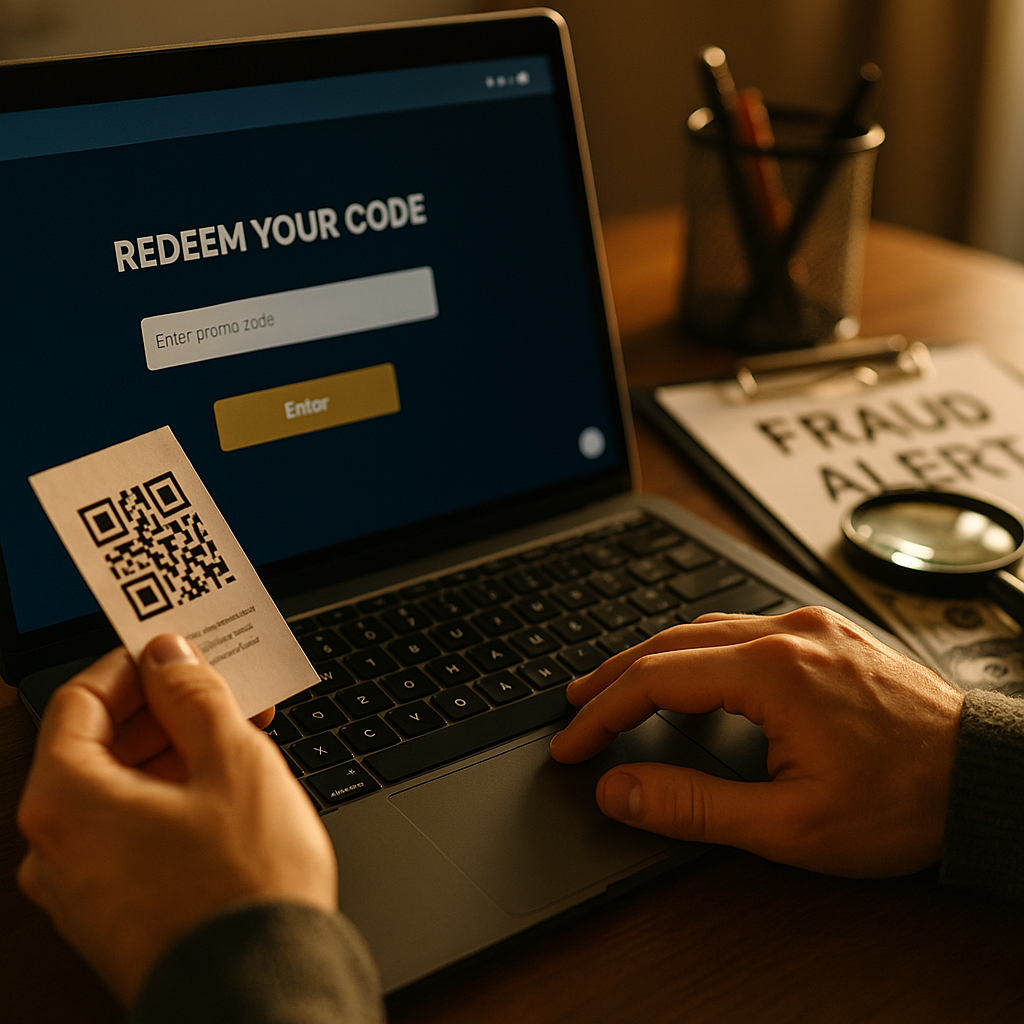
One unvetted promo code can quietly burn 20% of an influencer campaign’s budget before anyone notices. That’s not a hypothetical. It’s the kind of number that shows up when attribution teams finally run a real promo code redemption fraud audit instead of trusting the dashboard. Codes get screenshotted, resold on coupon aggregator sites, self-redeemed by the creator’s own household, or farmed by bot networks chasing the discount, not the brand. If your verification process ends at “redemptions went up,” you’re not measuring performance. You’re measuring leakage.
Why Promo Codes Are the Weakest Link in Attribution
Promo codes feel like the cleanest attribution signal in influencer marketing. A unique string, a redemption count, a tidy revenue number to report to the CMO. That simplicity is exactly why fraud thrives there. Unlike affiliate links with click-level tracking, a promo code only tells you that a code was entered at checkout. It says nothing about who entered it, whether they saw the creator’s content, or whether they would have bought anyway.
Compare that to the affiliate link ecosystem, which at least generates a click trail, device fingerprint, and referral timestamp. Promo codes generate none of that by default. They’re portable, shareable, and screenshot-friendly, which makes them a magnet for the exact behaviors attribution teams are supposed to catch: code leakage onto deal forums, influencer self-redemption to inflate payout tiers, and coordinated redemption by bot farms gaming performance-based contracts.
A code with no redemption velocity cap and no geographic fencing is not a tracking mechanism. It’s an open invitation.
The Five Fraud Patterns Attribution Teams Actually See
Most fraud audits fail because teams look for one thing (bots) and miss four other patterns hiding in plain sight. Here’s what shows up repeatedly across retail, DTC, and subscription verticals.
- Self-redemption inflation: The creator or their team redeems their own code repeatedly, sometimes through multiple accounts, to hit a CPA bonus threshold baked into the contract.
- Code leakage to coupon aggregators: Sites like RetailMeNot or Honey style browser extensions surface the code to shoppers who never watched the content, destroying the attribution link entirely.
- Household and device cycling: Family members or coordinated groups redeem the same code from different accounts but the same IP range or shipping address.
- Bot driven redemption bursts: Automated scripts hit the checkout endpoint in rapid succession, often overnight, to simulate organic demand and pad a creator’s numbers before a renewal negotiation.
- Cross-campaign code reuse: A code meant for one platform or one audience segment gets reused across unrelated campaigns, muddying which partnership actually drove the sale.
Each pattern leaves a slightly different fingerprint. That’s good news for attribution teams, because it means a layered verification process can catch most of them without needing a forensic data science team on staff.
What Does Verified Redemption Actually Look Like?
Verification isn’t a single check. It’s a stack. The strongest attribution teams layer at least four signals before they’ll certify a redemption as “real” for payout or reporting purposes.
- Velocity thresholds. Set a maximum redemption rate per hour and per day for each code based on the creator’s historical engagement rate. A sudden spike that outpaces their audience size by 3x or more should trigger a manual review, not an automatic payout.
- IP and device correlation. Cross-reference redemption IPs against known VPN exit nodes and datacenter ranges. Legitimate consumer traffic rarely clusters around AWS or DigitalOcean blocks.
- Geographic plausibility. If a creator’s audience is 80% US based per platform analytics, a redemption surge from a single foreign region is a red flag, not a growth story.
- Cross-platform identity matching. Tie the redemption back to a verified customer profile where possible, so the same person isn’t double counted across codes or campaigns. This is where creator identity graphs become genuinely useful, not just a compliance buzzword.
None of this requires exotic tooling. Most ecommerce platforms (Shopify, BigCommerce, Salesforce Commerce Cloud) already log IP and device metadata at checkout. The gap isn’t data availability. It’s that nobody on the attribution team is pulling it, or the raw logs sit unused because nobody built the query.
Building the Audit Checklist
A promo code audit should run on a cadence, not as a one-off reaction to a suspicious spike. Monthly for active campaigns, weekly during high-spend launch windows. Here’s the baseline checklist worth institutionalizing.
- Pull raw redemption logs with timestamp, IP, device ID, and shipping region for every active code.
- Flag any code where redemption velocity exceeds 2x the creator’s 30 day engagement baseline.
- Cross-check redemption IPs against a commercial VPN/proxy detection list.
- Compare redemption geography against the creator’s audience geography reported by the platform’s native analytics.
- Run a duplicate shipping address check across all redemptions tied to a single code.
- Audit payout tier thresholds. If a creator cleared a bonus tier within the first 48 hours of a code going live, review manually before releasing payment.
- Document findings in a shared audit log that legal and finance can both access, not just marketing.
That last point matters more than it sounds. Fraud findings that live only in a marketing Slack channel don’t protect the brand when a creator disputes a withheld payment. Build the paper trail as if it’s going to end up in front of a contracts attorney, because eventually it might.
Contract Language That Actually Protects You
Verification processes are only as strong as the contract backing them. If the influencer agreement doesn’t explicitly grant the brand audit rights and the authority to withhold payment pending review, the entire checklist above is unenforceable goodwill. Three clauses are non-negotiable now:
- Audit access rights: The brand or its attribution vendor can request raw redemption data and request a hold on disputed payouts for a defined review window, typically 10 to 15 business days.
- Fraud forfeiture clause: Redemptions found to be self-generated, bot driven, or sourced from unauthorized coupon aggregators are excluded from performance calculations, full stop.
- Code exclusivity terms: The creator agrees not to share, sublicense, or submit the code to third party deal sites, with specific financial penalties for violation.
This overlaps with broader attribution integrity work happening across the industry right now. Our earlier piece on promo code attribution consent gaps covers the data privacy angle in more depth, which is worth reading alongside this verification playbook since the two issues (fraud and consent) often surface in the same contract negotiation.
What About Platforms That Promise Built-In Fraud Detection?
Several affiliate and influencer platforms now market fraud detection as a core feature. That’s progress, but treat it as a first filter, not a final verdict. Most of these systems are tuned to catch obvious bot traffic and known VPN ranges. They’re far weaker at catching slow drip self-redemption or household cycling, which looks statistically normal unless you’re specifically checking for duplicate shipping addresses or billing names across a single code’s redemption history.
The honest answer: no platform tool replaces a human review pass on your top 10 to 15 highest spending creator relationships each quarter. Automate the first filter, but budget analyst time for manual spot checks on the partnerships where the dollar exposure is highest.
It also helps to understand how platforms handle data sharing agreements with brands, since that determines how much raw redemption data you’re even entitled to pull. If your contract with the platform itself is thin on this point, the platform data sharing audit gap is worth reviewing before your next renewal.
The ROI Case for Taking This Seriously
Marketing leaders sometimes treat promo code fraud as a rounding error. It isn’t. Industry estimates on affiliate and coupon fraud consistently point to double digit percentage losses in unverified programs, and promo codes carry a similar risk profile because they’re even easier to leak than tracked links. According to eMarketer research on influencer spend growth, brands are pouring more budget into creator partnerships every year, which means the dollar exposure from unverified redemption only compounds. A 10% fraud rate on a $50,000 monthly program is $5,000 a month evaporating into fake performance metrics, and that’s before you count the compounding effect on influencer renewal decisions made using that inflated data.
There’s a reputational cost too. If finance discovers after the fact that a “top performing” creator relationship was substantially inflated by self-redemption, every subsequent attribution report from that team gets questioned. Trust, once lost internally, is expensive to rebuild. Running regular social performance benchmarking alongside redemption audits gives attribution teams a sanity check: does the redemption volume actually track with the engagement and reach data the platform reports natively?
Finally, don’t overlook the tax and reporting exposure sitting adjacent to this problem. Inflated redemption numbers that drive bonus payouts can create downstream 1099 reporting headaches if the payout amounts don’t match the actual verified performance. Our coverage of commission reporting gaps on TikTok Shop is a useful companion read for teams managing both promo code and affiliate commission structures simultaneously.
Next Step
Pick your three highest spend creator codes from the last 30 days and run the velocity, IP, and shipping address checks this week. If even one flags an anomaly, you’ve already justified the hour it took, and you’ve found the next line item to renegotiate in that creator’s contract.
FAQs
What is promo code redemption fraud in influencer marketing?
It refers to any manipulation of unique discount codes assigned to a creator partnership, including self-redemption by the creator, code leakage to third party coupon sites, bot driven redemption bursts, and household or device cycling designed to inflate performance metrics or payout tiers.
How can attribution teams detect fake promo code redemptions?
Layer multiple signals: redemption velocity against historical engagement baselines, IP and device correlation against known VPN or datacenter ranges, geographic plausibility compared to the creator’s actual audience, and duplicate shipping or billing address checks across a single code’s redemption history.
Should brands withhold payment while investigating suspicious redemptions?
Only if the influencer contract explicitly grants audit rights and a defined review window for withholding disputed payouts. Without that clause, withholding payment can trigger a breach of contract claim from the creator, regardless of how strong the fraud evidence looks internally.
Do platform-native fraud detection tools catch everything?
No. Most native tools are tuned for obvious bot traffic and flagged VPN ranges but miss slower patterns like household cycling or gradual self-redemption. Treat built-in detection as a first filter and budget manual review time for your highest spend creator relationships each quarter.
What contract clauses protect brands from promo code fraud?
Three are essential: audit access rights allowing the brand to request raw redemption data and hold disputed payments, a fraud forfeiture clause excluding manipulated redemptions from performance calculations, and code exclusivity terms barring the creator from sharing codes with third party deal sites.
Top Influencer Marketing Agencies
The leading agencies shaping influencer marketing in 2026
Agencies ranked by campaign performance, client diversity, platform expertise, proven ROI, industry recognition, and client satisfaction. Assessed through verified case studies, reviews, and industry consultations.
Moburst

-
2

The Shelf
Boutique Beauty & Lifestyle Influencer AgencyA data-driven boutique agency specializing exclusively in beauty, wellness, and lifestyle influencer campaigns on Instagram and TikTok. Best for brands already focused on the beauty/personal care space that need curated, aesthetic-driven content.Clients: Pepsi, The Honest Company, Hims, Elf Cosmetics, Pure LeafVisit The Shelf → -
3

Audiencly
Niche Gaming & Esports Influencer AgencyA specialized agency focused exclusively on gaming and esports creators on YouTube, Twitch, and TikTok. Ideal if your campaign is 100% gaming-focused — from game launches to hardware and esports events.Clients: Epic Games, NordVPN, Ubisoft, Wargaming, Tencent GamesVisit Audiencly → -
4

Viral Nation
Global Influencer Marketing & Talent AgencyA dual talent management and marketing agency with proprietary brand safety tools and a global creator network spanning nano-influencers to celebrities across all major platforms.Clients: Meta, Activision Blizzard, Energizer, Aston Martin, WalmartVisit Viral Nation → -
5

The Influencer Marketing Factory
TikTok, Instagram & YouTube CampaignsA full-service agency with strong TikTok expertise, offering end-to-end campaign management from influencer discovery through performance reporting with a focus on platform-native content.Clients: Google, Snapchat, Universal Music, Bumble, YelpVisit TIMF → -
6

NeoReach
Enterprise Analytics & Influencer CampaignsAn enterprise-focused agency combining managed campaigns with a powerful self-service data platform for influencer search, audience analytics, and attribution modeling.Clients: Amazon, Airbnb, Netflix, Honda, The New York TimesVisit NeoReach → -
7

Ubiquitous
Creator-First Marketing PlatformA tech-driven platform combining self-service tools with managed campaign options, emphasizing speed and scalability for brands managing multiple influencer relationships.Clients: Lyft, Disney, Target, American Eagle, NetflixVisit Ubiquitous → -
8

Obviously
Scalable Enterprise Influencer CampaignsA tech-enabled agency built for high-volume campaigns, coordinating hundreds of creators simultaneously with end-to-end logistics, content rights management, and product seeding.Clients: Google, Ulta Beauty, Converse, AmazonVisit Obviously →