


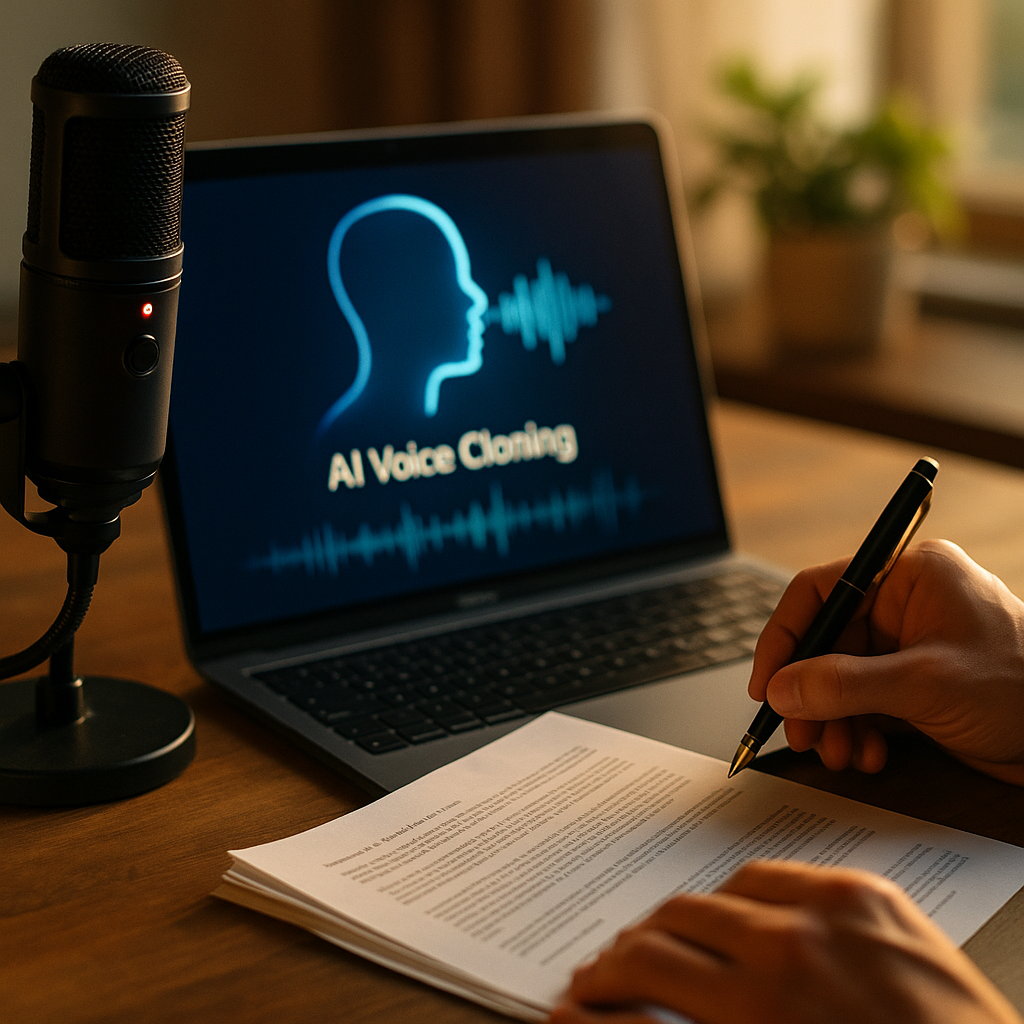
One cloned voice, used without proper licensing, cost an advertiser a six-figure settlement last year. Nobody noticed until a creator’s agent flagged it in a podcast ad rotation. AI voice cloning licensing has quietly become the compliance battleground brands didn’t budget for, and the tools racing to solve it are reshaping how audio ads get made.
Why Audio Ads Suddenly Need a Licensing Conversation
Audio was supposed to be the easy channel. Podcasts, Spotify spots, in-app audio ads: lower production costs, faster turnaround, less visual compliance baggage than video. Then generative voice tools got good enough to clone a creator’s actual voice from a few minutes of sample audio, and the whole category got complicated fast.
Brands now have two paths for creator audio. Book the real human, pay their rate, wait on their calendar. Or license a synthetic version of their voice and generate unlimited variations on demand. The second path is cheaper and faster. It’s also where most of the legal risk hides, because voice licensing terms are rarely as airtight as brands assume.
This isn’t a hypothetical future problem. ElevenLabs, Respeecher, and Resemble AI have all built commercial licensing layers specifically because enterprise clients demanded clearer rights chains before they’d touch the tech. That demand came from legal teams, not creative ones.
A cloned voice without a documented, scoped license is a liability sitting in your media plan, not a cost saving.
What These Licensing Tools Actually Do
Voice cloning platforms aren’t just generating audio anymore. The enterprise-grade ones are building entire rights management layers around the models themselves. That typically includes:
- Consent capture at the source. Creators record an explicit consent statement before their voice print is trained, timestamped and stored as proof.
- Usage scoping. Licenses now specify platform, duration, geography, and ad spend ceiling rather than a vague “commercial use” checkbox.
- Revocation mechanics. Creators (or their reps) can pull a license mid-campaign, which forces brands to build kill switches into their media buys.
- Royalty tracking. Usage-based payout models that meter how many ad impressions or minutes of generated audio ran against a licensed voice.
Think of it as the audio equivalent of a stock photo license, except the “photo” is someone’s identity and the misuse penalties are reputational, not just financial. This shift mirrors what’s happening across synthetic media more broadly, where AI spokescharacter tools expose affiliate disclosure gaps that brands are only now scrambling to close.
The ROI Case: Why Brands Are Moving Fast Anyway
Despite the risk, the economics are hard to ignore. A single licensed voice clone can generate hundreds of localized or personalized ad variants without re-booking talent, re-recording sessions, or paying studio time per cut. For a brand running seasonal promos across a dozen markets, that’s the difference between one voice actor session and a dozen.
eMarketer has tracked rising advertiser interest in AI-generated audio and video as production costs climb and campaign cadence shortens. The pitch to CMOs is straightforward: same creator voice, dramatically lower marginal cost per variant. That math is similar to what’s already playing out in video, where AI UGC video costs versus creator rates are forcing brands to rebuild their production budgets from scratch.
Voice cloning licensing tools also solve a scheduling problem that’s plagued creator audio for years. Real creators have limited bandwidth. A licensed voice model doesn’t call in sick, doesn’t need a redo because of a cold, and can generate a 15-second spot at 2am before a campaign launch. For brands running rapid variant sprints instead of slow A/B tests, that speed matters more than most creative teams admit.
Where the Licensing Gets Messy
Here’s the uncomfortable part: “I licensed the voice” doesn’t mean what most marketers think it means. Licensing terms vary wildly by platform, and a lot of brands are signing agreements without fully understanding the scope.
Common gaps that show up in audits:
- Undefined output limits. Some licenses cap total generated minutes, others cap impressions, and a surprising number cap neither, which creates runaway liability if a campaign scales unexpectedly.
- No geographic restriction. A voice licensed for use in one region can end up running in another through programmatic buys, triggering local right-of-publicity violations the brand never anticipated.
- Ambiguous AI disclosure requirements. The FTC has been explicit that synthetic endorsements need clear disclosure, but “clear” is doing a lot of work in that guidance, and audio has far fewer disclosure conventions than video.
- Talent agency clawback clauses. Several major talent agencies have started inserting clauses that let creators terminate voice licenses on short notice, which can blow up an in-flight media schedule.
Check the FTC’s endorsement guidance before assuming your disclosure language is sufficient for a synthetic voice spot. Most brands haven’t updated their legal templates since this tech arrived.
Who’s Actually Building This Infrastructure
The licensing tooling market is still young, but a few patterns are emerging. ElevenLabs has pushed hardest on enterprise voice licensing with its Voice Marketplace, which lets creators opt in and set usage terms rather than handing over blanket rights. Resemble AI has focused on localization-friendly licensing, useful for brands running multi-market campaigns who need one creator voice adapted across languages without re-recording.
Respeecher has leaned into entertainment-grade consent documentation, the kind of audit trail that holds up if a dispute ends up in front of a judge. None of these platforms have fully solved the problem. But they’re each building pieces of what will eventually be a standard rights-management layer for synthetic audio, similar to how music licensing evolved after Napster forced the industry to build real infrastructure instead of ignoring the problem.
Brands evaluating these platforms should treat vendor selection the way they’d treat any agentic ops tool vetting process: ask for the consent documentation, not just the demo.
Building a Vetting Checklist Before You License a Single Voice
Marketing teams don’t need a law degree to protect themselves here. They need a short, non-negotiable checklist before any voice cloning license gets signed.
- Confirm the license specifies exact usage scope: platforms, geographies, duration, and spend thresholds.
- Get documented proof of creator consent, not just a vendor’s assurance that “it’s handled.”
- Clarify disclosure requirements for every platform the audio will run on, since TikTok, Meta, and podcast networks each have different synthetic media policies.
- Build a revocation protocol into the media plan so a pulled license doesn’t mean scrambling to pause live campaigns.
- Audit royalty or usage-based payout terms quarterly, especially if the campaign scales beyond initial projections.
This is the same discipline that’s already reshaping contract workflows elsewhere in influencer marketing, where AI agents draft creator contracts but humans still have to close the gaps the automation misses. Voice licensing deserves the same scrutiny, maybe more, because audio misuse is harder to catch in real time than a visibly wrong video.
If your legal team hasn’t reviewed a voice cloning license in the last quarter, assume your current agreements are already outdated.
What This Means for Creator Relationships
There’s a trust dimension here that brands underestimate. Creators who license their voice are effectively renting out their identity at scale, and the ones who’ve been burned (or watched peers get burned) are getting pickier about terms. Expect more creators to demand usage caps, approval rights over scripts generated with their cloned voice, and transparent royalty reporting.
Smart brands are getting ahead of this by treating voice licensing negotiations the way they’d treat any high-value contract, with clear terms upfront rather than hoping ambiguity works in their favor later. That approach tends to produce better long-term creator relationships and fewer public disputes. Marketing teams using HubSpot or similar CRM systems to manage creator relationships should start tagging voice licensing status the same way they track contract renewal dates.
The Compliance Clock Is Running
Regulatory attention on synthetic voice is accelerating, not slowing down. State-level right-of-publicity laws are being updated specifically to address AI voice cloning, and the UK’s Information Commissioner’s Office has signaled interest in how biometric voice data gets consented and stored. Brands running audio campaigns across multiple jurisdictions can’t rely on a single licensing template anymore.
This is the same dynamic playing out with AI localization pipelines that still fumble dubbing and compliance, where speed-to-market ambitions keep outrunning the legal groundwork. Voice licensing is following an identical curve, just a step or two behind.
The takeaway for 2026 planning: treat voice cloning licensing as a procurement category with its own vetting process, not a creative shortcut bolted onto existing production budgets. Build the checklist now, before a legal team finds the gap for you.
Frequently Asked Questions
What is AI voice cloning licensing?
It’s the legal and contractual framework that governs how a brand or agency can use a synthetic, AI-generated replica of a real person’s voice, including creators, in advertising. It typically covers consent, usage scope, duration, geography, and compensation.
Is it legal to clone a creator’s voice for an ad without permission?
No. Using a cloned voice without documented consent exposes brands to right-of-publicity claims, and in some jurisdictions, specific AI likeness laws. Always secure a written license before generating or running synthetic voice content tied to a real person.
How much does AI voice cloning licensing typically cost?
Pricing varies by platform and usage scope, often structured around either a flat licensing fee, a per-minute generation cost, or a royalty tied to ad impressions or spend. Enterprise agreements with named creators tend to cost more but include stronger consent documentation.
Do synthetic voice ads need an AI disclosure?
In most cases, yes. The FTC’s endorsement guidelines require clear disclosure when an ad uses a synthetic or AI-generated voice to represent a real person’s endorsement. Platform-specific policies on TikTok, Meta, and podcast networks may add further requirements.
Which platforms offer enterprise voice cloning licensing?
ElevenLabs, Resemble AI, and Respeecher are among the more established players offering consent-based licensing layers built for commercial and enterprise use, though the market is still maturing and terms differ significantly between vendors.
Can a creator revoke a voice license mid-campaign?
Yes, and increasingly they do. Many licensing agreements now include revocation clauses, so brands should build contingency plans into their media buys in case a license is pulled while a campaign is live.
Frequently Asked Questions
Top Influencer Marketing Agencies
The leading agencies shaping influencer marketing in 2026
Agencies ranked by campaign performance, client diversity, platform expertise, proven ROI, industry recognition, and client satisfaction. Assessed through verified case studies, reviews, and industry consultations.
Moburst

-
2

The Shelf
Boutique Beauty & Lifestyle Influencer AgencyA data-driven boutique agency specializing exclusively in beauty, wellness, and lifestyle influencer campaigns on Instagram and TikTok. Best for brands already focused on the beauty/personal care space that need curated, aesthetic-driven content.Clients: Pepsi, The Honest Company, Hims, Elf Cosmetics, Pure LeafVisit The Shelf → -
3

Audiencly
Niche Gaming & Esports Influencer AgencyA specialized agency focused exclusively on gaming and esports creators on YouTube, Twitch, and TikTok. Ideal if your campaign is 100% gaming-focused — from game launches to hardware and esports events.Clients: Epic Games, NordVPN, Ubisoft, Wargaming, Tencent GamesVisit Audiencly → -
4

Viral Nation
Global Influencer Marketing & Talent AgencyA dual talent management and marketing agency with proprietary brand safety tools and a global creator network spanning nano-influencers to celebrities across all major platforms.Clients: Meta, Activision Blizzard, Energizer, Aston Martin, WalmartVisit Viral Nation → -
5

The Influencer Marketing Factory
TikTok, Instagram & YouTube CampaignsA full-service agency with strong TikTok expertise, offering end-to-end campaign management from influencer discovery through performance reporting with a focus on platform-native content.Clients: Google, Snapchat, Universal Music, Bumble, YelpVisit TIMF → -
6

NeoReach
Enterprise Analytics & Influencer CampaignsAn enterprise-focused agency combining managed campaigns with a powerful self-service data platform for influencer search, audience analytics, and attribution modeling.Clients: Amazon, Airbnb, Netflix, Honda, The New York TimesVisit NeoReach → -
7

Ubiquitous
Creator-First Marketing PlatformA tech-driven platform combining self-service tools with managed campaign options, emphasizing speed and scalability for brands managing multiple influencer relationships.Clients: Lyft, Disney, Target, American Eagle, NetflixVisit Ubiquitous → -
8

Obviously
Scalable Enterprise Influencer CampaignsA tech-enabled agency built for high-volume campaigns, coordinating hundreds of creators simultaneously with end-to-end logistics, content rights management, and product seeding.Clients: Google, Ulta Beauty, Converse, AmazonVisit Obviously →