


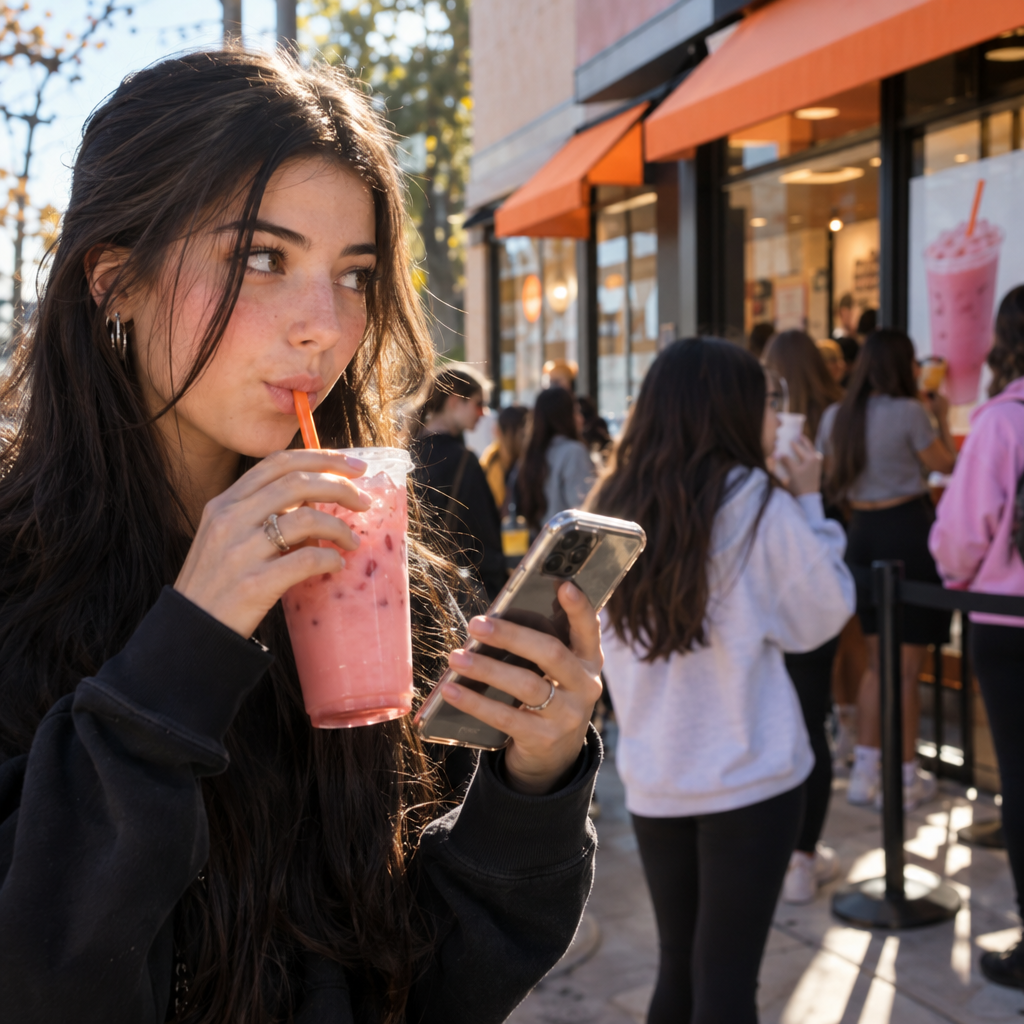
One drink order. One teenage TikTok star. A reported 57 percent single-day spike in app downloads and a brand that suddenly mattered to Gen Z again. The Dunkin and Charli D’Amelio playbook remains the textbook example brands cite when pitching creator-led product drops, and years later marketers are still trying to reverse-engineer why it worked so well. The Charli D’Amelio Dunkin sales lift wasn’t luck. It was math, timing, and an audience that already trusted the messenger.
What Actually Happened When The Charli Launched
Dunkin didn’t invent this moment out of nowhere. Charli D’Amelio had been posting herself ordering Dunkin iced coffee for months before the brand noticed the pattern and leaned in. The company signed her as a brand ambassador, then built an actual menu item around her order: cold brew, whole milk, three pumps of caramel swirl. They named it The Charli.
That’s the part brands forget. The product came from organic behavior, not a creative brief. Dunkin didn’t ask an agency to dream up a drink that felt authentic to a teenager. They watched what a teenager was already doing and productized it.
The Charli drink launch worked because the creator didn’t change her behavior to fit the brand. The brand changed its menu to fit the creator.
The Numbers Behind the Hype
On launch day, Dunkin’s app reportedly jumped to the top of the Apple App Store charts, and downloads rose by more than half compared to a typical day. That’s not a vanity metric. App installs for a quick-service restaurant translate directly into loyalty program signups, first-party data, and repeat purchase behavior, three things every CMO is still chasing hard today.
Same-store sales data from that period showed measurable lift tied directly to the item, and Dunkin reportedly sold through initial supply projections faster than forecasted. For a legacy QSR brand competing against Starbucks for a younger demographic, that kind of immediate, trackable response to a single creator partnership was rare. Most influencer deals at the time were measured in impressions and engagement rate. This one moved units.
Industry trackers like eMarketer have since pointed to the Dunkin and Charli moment as an early proof point that creator partnerships could drive hard commerce metrics, not just brand awareness. That shift in how marketers justified influencer budgets started here, or at least it’s where a lot of CFOs first paid attention.
Why This Worked: Audience Overlap and Authentic Fandom
Charli D’Amelio’s audience skewed young, largely Gen Z, and heavily overlapped with Dunkin’s growth target. Starbucks already owned the older millennial coffee shopper. Dunkin needed relevance with a demographic that hadn’t formed brand loyalty yet, and D’Amelio’s followers were exactly that cohort.
More importantly, the fandom around her was parasocial in a way traditional celebrity endorsements rarely achieve. Her followers didn’t see her as a spokesperson reading a script. They saw her as someone whose actual coffee order became a menu item, which made ordering The Charli feel like participating in her life rather than consuming an ad.
This is the same dynamic that shows up in other creator-led product launches. Pop Mart’s Labubu drops lean on the same collector-fandom energy, where owning the product signals belonging to a community, not just buying an item. Dunkin tapped the quick-service equivalent of that dynamic years before it became a recognized playbook.
Could Brands Replicate This Today?
Partially. The platform landscape has changed significantly. TikTok’s algorithm, creator saturation, and audience skepticism toward obvious brand deals all make the same formula harder to pull off cleanly now. Consumers in 2026 are faster to spot a paid partnership and faster to discount it if it feels manufactured.
What hasn’t changed is the underlying mechanic: find organic behavior, then formalize it. Brands running smart creator programs today still look for the equivalent of “the drink someone’s already ordering” rather than inventing a campaign concept from scratch. Blenders Eyewear turned a single creator’s content into actual product strategy using the same logic. Watch first, productize second.
Fast food in particular has gotten more aggressive about this. Subway and McDonald’s recent growth shows legacy QSR chains still chasing the hyperlocal, creator-driven relevance that Dunkin found early with D’Amelio, though most haven’t matched the clean cause-and-effect sales story.
The Risk Side: What This Case Study Doesn’t Show You
Every brand loves retelling the success. Fewer talk about the exposure that comes with tying a product directly to one person’s name and face. If a creator’s reputation takes a hit, or their relevance simply fades, as happens fast in the creator economy, the brand is left holding a menu item or product line named after someone who no longer moves culture the way they once did.
There’s also a compliance layer brands sometimes skip in the excitement of a big launch. Any paid partnership tied to a named product needs clear, consistent disclosure under FTC guidelines, and that disclosure needs to persist across every piece of content referencing the item, not just the initial announcement post. Brands that get sloppy here expose themselves to regulatory risk precisely at the moment their campaign is getting the most visibility.
Naming a product after a creator isn’t a one-time campaign decision. It’s a long-term brand commitment to that person’s trajectory, for better or worse.
The broader lesson shows up in how other brands have managed similar exposure. Liquid Death’s approach to shock-value creators spreads risk across a roster rather than betting the brand narrative on a single face, which is a more defensible long-term structure for most companies that don’t have Dunkin’s PR muscle to absorb a misstep.
Turning a Viral Moment Into a Repeatable Program
The real measure of whether Dunkin’s Charli moment was strategy or a one-off is what came after. Dunkin didn’t stop at one drink. They built a recurring cadence of creator-driven menu items and ambassador deals, treating the original launch as proof of concept rather than a singular campaign.
That’s the operational discipline most brands miss. A viral win feels like a destination. For a mature marketing organization, it’s supposed to be the start of a repeatable system: identify organic creator behavior, validate it with a limited release, measure the sales response, then scale the model with new creators and new products. Programs built this way, similar to how Scrub Daddy structured its open affiliate model, treat creator partnerships as an always-on commerce channel rather than a campaign calendar line item.
Attribution tools have also matured considerably since the original Charli launch. Where Dunkin largely relied on app download spikes and point-of-sale correlation, brands now have access to platform-level commerce data through TikTok’s advertising tools and social listening platforms like Sprout Social that can tie specific content directly to purchase behavior. That means the next brand chasing a Charli-level moment has far better visibility into whether it’s actually working, in near real time rather than after a quarterly earnings call.
What This Means for Your Budget Allocation
If you’re a brand strategist building next year’s creator budget, the Dunkin case still offers a useful allocation lesson: concentrate meaningful spend behind proven organic signal rather than spreading thin bets across dozens of unproven creators hoping one sticks. Dunkin didn’t run a scattershot influencer campaign. They found the signal, then committed.
That said, concentration without a hedge is risky. The smarter version of this playbook today pairs one flagship creator partnership with a broader bench of mid-tier and nano creators who can sustain momentum if the flagship relationship cools. Brands like e.l.f. have built exactly this kind of layered model, vetting thousands of smaller creators while still running marquee partnerships. It’s a structure worth studying before you bet your next product launch on a single name.
FAQs
How much did Dunkin’s sales actually increase after the Charli launch?
Dunkin reported a significant spike in app downloads, reportedly more than 50 percent in a single day, along with measurable same-store sales lift tied to the item. Exact revenue figures from the item alone were not broken out publicly, but the correlation between the launch and the app activity spike was widely reported at the time.
Why did Dunkin choose Charli D’Amelio specifically?
D’Amelio was already posting organically about her Dunkin orders before any formal partnership existed. Dunkin noticed the pattern, saw the audience overlap with its younger growth target, and formalized the relationship rather than scripting a campaign from scratch.
Can smaller brands replicate the Dunkin and Charli model?
Yes, though scale matters less than the underlying mechanic. Brands with limited budgets can apply the same logic by identifying nano or mid-tier creators who are already organically engaging with their product, then formalizing that relationship into a named product or limited release rather than relying on a top-tier celebrity deal.
What are the main risks of naming a product after a creator?
The biggest risk is reputational exposure. If the creator’s public image changes or their relevance declines, the brand’s product is tied to that outcome. Brands also need to maintain consistent FTC-compliant disclosure across all content referencing the partnership, not just the launch announcement.
How do brands measure ROI on a creator-led product launch today?
Modern attribution relies on platform commerce data, app download tracking, and social listening tools that can tie specific content to purchase behavior in near real time, a significant improvement over the correlation-based measurement brands used during the original Dunkin and Charli launch.
FAQs
How much did Dunkin’s sales actually increase after the Charli launch? Dunkin reported a significant spike in app downloads, reportedly more than 50 percent in a single day, along with measurable same-store sales lift tied to the item. Exact revenue figures from the item alone were not broken out publicly, but the correlation between the launch and the app activity spike was widely reported at the time.
Why did Dunkin choose Charli D’Amelio specifically? D’Amelio was already posting organically about her Dunkin orders before any formal partnership existed. Dunkin noticed the pattern, saw the audience overlap with its younger growth target, and formalized the relationship rather than scripting a campaign from scratch.
Can smaller brands replicate the Dunkin and Charli model? Yes, though scale matters less than the underlying mechanic. Brands with limited budgets can apply the same logic by identifying nano or mid-tier creators who are already organically engaging with their product, then formalizing that relationship into a named product or limited release rather than relying on a top-tier celebrity deal.
What are the main risks of naming a product after a creator? The biggest risk is reputational exposure. If the creator’s public image changes or their relevance declines, the brand’s product is tied to that outcome. Brands also need to maintain consistent FTC-compliant disclosure across all content referencing the partnership, not just the launch announcement.
How do brands measure ROI on a creator-led product launch today? Modern attribution relies on platform commerce data, app download tracking, and social listening tools that can tie specific content to purchase behavior in near real time, a significant improvement over the correlation-based measurement brands used during the original Dunkin and Charli launch.
The lesson for your next planning cycle is simple: stop briefing creators on what to say and start watching what they’re already doing with your product. The brands still winning with this model treat organic behavior as the research phase, not an afterthought.
Top Influencer Marketing Agencies
The leading agencies shaping influencer marketing in 2026
Agencies ranked by campaign performance, client diversity, platform expertise, proven ROI, industry recognition, and client satisfaction. Assessed through verified case studies, reviews, and industry consultations.
Moburst

-
2

The Shelf
Boutique Beauty & Lifestyle Influencer AgencyA data-driven boutique agency specializing exclusively in beauty, wellness, and lifestyle influencer campaigns on Instagram and TikTok. Best for brands already focused on the beauty/personal care space that need curated, aesthetic-driven content.Clients: Pepsi, The Honest Company, Hims, Elf Cosmetics, Pure LeafVisit The Shelf → -
3

Audiencly
Niche Gaming & Esports Influencer AgencyA specialized agency focused exclusively on gaming and esports creators on YouTube, Twitch, and TikTok. Ideal if your campaign is 100% gaming-focused — from game launches to hardware and esports events.Clients: Epic Games, NordVPN, Ubisoft, Wargaming, Tencent GamesVisit Audiencly → -
4

Viral Nation
Global Influencer Marketing & Talent AgencyA dual talent management and marketing agency with proprietary brand safety tools and a global creator network spanning nano-influencers to celebrities across all major platforms.Clients: Meta, Activision Blizzard, Energizer, Aston Martin, WalmartVisit Viral Nation → -
5

The Influencer Marketing Factory
TikTok, Instagram & YouTube CampaignsA full-service agency with strong TikTok expertise, offering end-to-end campaign management from influencer discovery through performance reporting with a focus on platform-native content.Clients: Google, Snapchat, Universal Music, Bumble, YelpVisit TIMF → -
6

NeoReach
Enterprise Analytics & Influencer CampaignsAn enterprise-focused agency combining managed campaigns with a powerful self-service data platform for influencer search, audience analytics, and attribution modeling.Clients: Amazon, Airbnb, Netflix, Honda, The New York TimesVisit NeoReach → -
7

Ubiquitous
Creator-First Marketing PlatformA tech-driven platform combining self-service tools with managed campaign options, emphasizing speed and scalability for brands managing multiple influencer relationships.Clients: Lyft, Disney, Target, American Eagle, NetflixVisit Ubiquitous → -
8

Obviously
Scalable Enterprise Influencer CampaignsA tech-enabled agency built for high-volume campaigns, coordinating hundreds of creators simultaneously with end-to-end logistics, content rights management, and product seeding.Clients: Google, Ulta Beauty, Converse, AmazonVisit Obviously →