


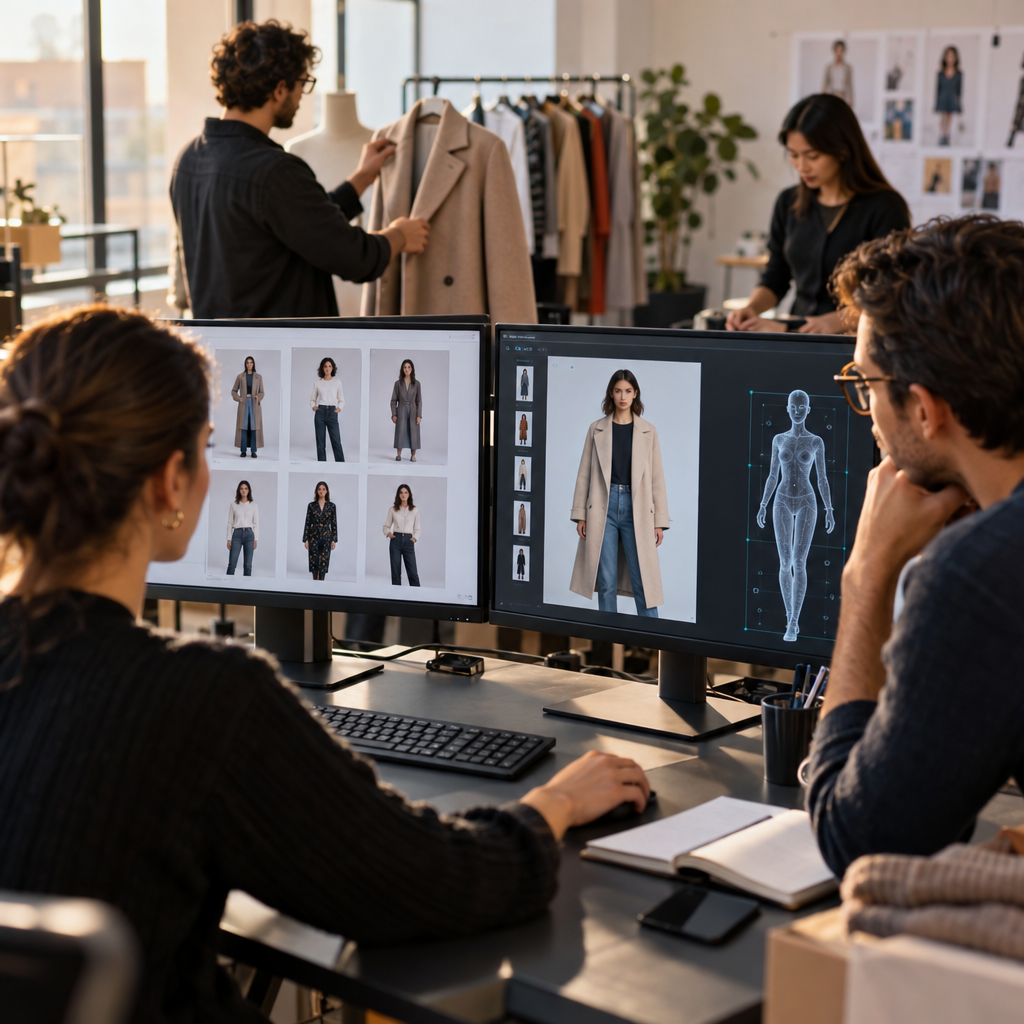
Zalando now produces an estimated 90% of its product imagery and a growing share of marketing content using generative AI, according to company disclosures. That number should make every brand marketer pause. Is this the future of retail content, or a cautionary tale about what happens when efficiency outruns authenticity? Zalando’s AI-scaled content strategy offers a rare, real-world test case for both questions at once.
Why Zalando Went All In on AI Content
Scale is the honest answer. Zalando lists products from more than 6,000 brands across 25 markets, which means hundreds of thousands of SKUs needing fresh imagery, copy, and localized variants every season. Shooting that volume with human models and photographers was never sustainable, not at the speed fast fashion demands.
So Zalando built an internal AI content engine capable of generating product shots, model variations, and even styling suggestions at a fraction of traditional production cost and time. Internally, teams have cited reductions in content production time from weeks to days for certain catalog categories. That’s not a marginal efficiency gain. That’s a structural shift in how a retailer operates its entire content supply chain.
Zalando’s experiment proves AI can compress content production timelines dramatically, but it also exposes the limits of automation when authenticity and trust are the product being sold.
The Authenticity Problem Nobody Talks About Enough
Here’s the tension. Fashion and lifestyle retail sell aspiration, but they also sell trust. Shoppers want to see how a garment drapes on a real body, moves in real light, fits a real life. AI-generated imagery, however polished, can feel subtly off. Uncanny valley isn’t just a visual glitch anymore. It’s a conversion risk.
Consumer sentiment data backs this up. Surveys from firms like eMarketer have repeatedly shown that shoppers trust peer-generated and creator content more than brand-produced or synthetic assets, especially for purchase decisions involving fit, texture, or quality. That’s a problem Zalando can’t automate its way out of entirely, and it hasn’t tried to. The company has kept real creator and influencer partnerships running alongside the AI pipeline rather than replacing them outright.
Influencers Time readers have seen this authenticity gap play out elsewhere. Our coverage of AI generated UGC tests at e.l.f. found similar friction: synthetic content performs fine on reach metrics but lags on the trust signals that actually drive conversion. Zalando’s situation rhymes with that finding almost exactly.
Where the Hybrid Model Actually Lives
Zalando’s real innovation isn’t “AI replaces creators.” It’s a deliberate split of labor based on what each format does best.
- AI handles volume: base product photography, color and size variants, seasonal catalog refreshes, and localized asset adaptation across markets.
- Creators handle trust: try-on content, styling edits, honest reviews, and the kind of imperfect, human footage that signals “this is a real person wearing this.”
- Human teams handle judgment: brand safety review, cultural nuance across 25 markets, and quality control on anything AI-generated that touches a live product page.
This division isn’t accidental. It mirrors a pattern showing up across retail and CPG brands that have scaled creator programs without losing authenticity. e.l.f. Beauty, for instance, built a system to vet thousands of nano creators precisely because volume and authenticity require different operational muscles. Zalando’s version applies the same logic to content production rather than creator sourcing.
What This Means for Your Budget and Operating Model
If you’re a brand strategist reading this wondering what to actually do with your 2026 content budget, here’s the practical breakdown.
First, audit where AI content genuinely saves money without hurting trust. Catalog imagery, size-chart variants, background swaps for localization: these are low-risk, high-volume use cases where shoppers don’t expect or need a human touch. Reallocate budget here first. The savings are real and the authenticity risk is near zero.
Second, protect creator budget for anything touching purchase intent directly. Try-on hauls, honest reviews, unboxing, and styling content still outperform synthetic alternatives on engagement and conversion, particularly in fashion and beauty categories where fit and texture matter. Estee Lauder’s approach to centralizing creator operations across multiple brands offers a useful template for how to scale this side without losing quality control.
The brands winning this transition aren’t choosing AI or creators. They’re building operating models that route the right content type to the right production method, then measuring both against the same ROI bar.
Third, build a disclosure and compliance layer now, not later. Regulators are paying attention. The FTC has signaled increased scrutiny of synthetic media and endorsement disclosures, and the ICO in the UK has flagged AI-generated content as a growing compliance concern for data and consumer protection. If your AI-generated product imagery blurs into something that reads as an implied endorsement, you need clear labeling practices before a regulator or a viral TikTok forces the issue.
Measuring What Actually Works
Zalando reportedly tracks AI content performance against traditional benchmarks using the same conversion and return-rate metrics it applies to human-shot imagery. That’s a smart discipline, and one a lot of brands skip. Too many marketing teams treat AI adoption as a cost-cutting exercise and stop measuring once the budget line shrinks. That’s a mistake.
Return rates matter enormously in fashion retail, and if AI-generated imagery creates a gap between expectation and reality, returns climb and the “savings” evaporate fast. Track return rate by content source, not just conversion rate. A product page with a lower click-through but a lower return rate might be the better long-term bet, even if it looks worse on a surface-level dashboard.
Platforms like Sprout Social and enterprise creator management tools are increasingly building AI-versus-human content comparison dashboards into their reporting suites, which makes this kind of split testing more accessible than it was even a year or two ago. If your current stack can’t segment performance by production method, that’s a gap worth closing before you scale AI content further.
The Risk Nobody’s Pricing In Yet
There’s a subtler risk in Zalando’s model worth flagging. As AI content volume grows, the contrast with creator content becomes starker, and shoppers notice. A feed that mixes obviously synthetic product shots with genuine try-on videos can actually highlight the gap rather than smooth it over. Brands need to think about sequencing and placement, not just production split.
This is where companies managing creator holding structures and long-term talent relationships have an edge. Groups built around sustained creator partnerships, like those discussed in our piece on creator holding companies, tend to produce more consistent, trust-building content over time because the relationship isn’t transactional. Zalando’s AI pipeline is efficient, but efficiency without relationship depth on the creator side risks hollowing out the exact trust signal that makes influencer content valuable in the first place.
Pay structures matter here too. Brands that compensate creators for ongoing presence rather than one-off posts, a model explored in our coverage of how Ryse Supplements pays creators to stay, tend to generate content libraries with more consistent authenticity signals. That consistency is hard to fake with AI alone, no matter how good the model gets.
The Takeaway for Marketing Leaders
Zalando’s AI-scaled content strategy isn’t a template to copy wholesale. It’s a signal of where the industry is headed: AI absorbing high-volume, low-trust content categories while creator partnerships hold the line on authenticity and conversion. Start by auditing your own content mix against that same split, then build measurement that tracks returns and trust, not just output volume and cost per asset.
FAQs
What percentage of Zalando’s content is AI-generated?
Zalando has disclosed that roughly 90% of its product imagery now involves AI generation or augmentation, though marketing and brand campaign content still relies heavily on human creators and traditional production.
Does AI-generated content hurt conversion rates in fashion retail?
Not universally. AI content performs well for catalog and product-variant imagery where shoppers expect standardized visuals. It tends to underperform for content requiring trust signals, such as fit, texture, or honest review context, where creator-produced content still wins on conversion.
How can brands balance AI content with creator authenticity?
Route high-volume, low-trust content (product variants, localization, catalog refreshes) to AI, and reserve creator budget for content types that drive purchase intent, like try-on videos, styling content, and reviews. Measure both against the same conversion and return-rate benchmarks.
Are there legal risks to using AI-generated content in marketing?
Yes. Regulators including the FTC and the UK’s ICO have increased scrutiny of synthetic media disclosure practices. Brands should establish clear labeling policies for AI-generated imagery, especially where it could be mistaken for genuine endorsement or testimonial content.
What metrics should brands track when comparing AI and creator content?
Beyond standard engagement and click-through metrics, track conversion rate and return rate segmented by content production source. This reveals whether AI content’s cost savings hold up once post-purchase outcomes like returns are factored in.
Top Influencer Marketing Agencies
The leading agencies shaping influencer marketing in 2026
Agencies ranked by campaign performance, client diversity, platform expertise, proven ROI, industry recognition, and client satisfaction. Assessed through verified case studies, reviews, and industry consultations.
Moburst

-
2

The Shelf
Boutique Beauty & Lifestyle Influencer AgencyA data-driven boutique agency specializing exclusively in beauty, wellness, and lifestyle influencer campaigns on Instagram and TikTok. Best for brands already focused on the beauty/personal care space that need curated, aesthetic-driven content.Clients: Pepsi, The Honest Company, Hims, Elf Cosmetics, Pure LeafVisit The Shelf → -
3

Audiencly
Niche Gaming & Esports Influencer AgencyA specialized agency focused exclusively on gaming and esports creators on YouTube, Twitch, and TikTok. Ideal if your campaign is 100% gaming-focused — from game launches to hardware and esports events.Clients: Epic Games, NordVPN, Ubisoft, Wargaming, Tencent GamesVisit Audiencly → -
4

Viral Nation
Global Influencer Marketing & Talent AgencyA dual talent management and marketing agency with proprietary brand safety tools and a global creator network spanning nano-influencers to celebrities across all major platforms.Clients: Meta, Activision Blizzard, Energizer, Aston Martin, WalmartVisit Viral Nation → -
5

The Influencer Marketing Factory
TikTok, Instagram & YouTube CampaignsA full-service agency with strong TikTok expertise, offering end-to-end campaign management from influencer discovery through performance reporting with a focus on platform-native content.Clients: Google, Snapchat, Universal Music, Bumble, YelpVisit TIMF → -
6

NeoReach
Enterprise Analytics & Influencer CampaignsAn enterprise-focused agency combining managed campaigns with a powerful self-service data platform for influencer search, audience analytics, and attribution modeling.Clients: Amazon, Airbnb, Netflix, Honda, The New York TimesVisit NeoReach → -
7

Ubiquitous
Creator-First Marketing PlatformA tech-driven platform combining self-service tools with managed campaign options, emphasizing speed and scalability for brands managing multiple influencer relationships.Clients: Lyft, Disney, Target, American Eagle, NetflixVisit Ubiquitous → -
8

Obviously
Scalable Enterprise Influencer CampaignsA tech-enabled agency built for high-volume campaigns, coordinating hundreds of creators simultaneously with end-to-end logistics, content rights management, and product seeding.Clients: Google, Ulta Beauty, Converse, AmazonVisit Obviously →