


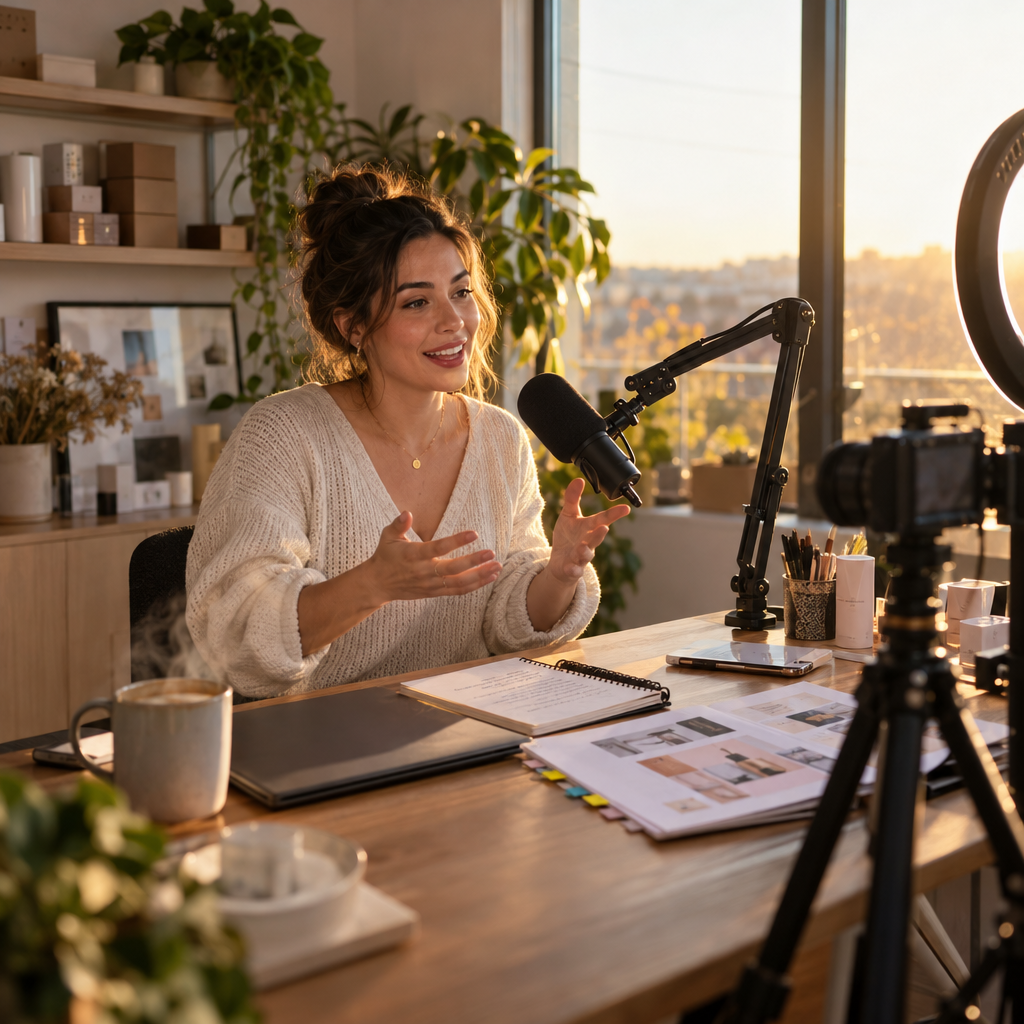
Your best creator content just sent shoppers to a landing page, then lost them at the cart. Amazon Live creator-hosted events remove that gap: the viewer watches, taps and buys without leaving the stream. For brands weighing a Prime Day alternative, that changes what you can run and what you must brief. Here is the playbook.
Why a creator-hosted event can stand in for Prime Day
Prime Day is a rented crowd. Every brand in your category bids for the same shoppers, the same ad inventory and the same deal-page real estate. Prices compress, and so do margins.
A creator-hosted event on Amazon Live flips that logic. You are not competing for a slot on a deal grid. You are building a scheduled, owned moment around a host who already has an audience, and the product sits in a carousel under the video. Amazon’s creator hub describes Amazon Live as a place where Amazon Influencers and Selling Partners use livestreams and shoppable video to engage shoppers, and its guidance indicates influencers need to be enrolled in the Amazon Influencer Program to stream. Confirm current eligibility and feature availability in your Seller Central or Vendor account before you commit budget, because platform programs shift quickly.
The honest framing: this is an alternative, not a replacement. You will not match Prime Day traffic. What you can get is a cleaner read on creator-driven conversion, tighter control of your offer, and a calendar slot that does not collide with every competitor’s discounting.
A creator-hosted event does not need to beat Prime Day’s reach. It needs to beat your own Prime Day margin, and to teach you which creators actually move product at checkout.
How on-platform checkout rewrites the creator brief
The old influencer brief ends with a link and a promo code. That is a traffic brief. On-platform checkout turns it into a conversion brief, and the differences are bigger than most teams expect.
Think about what the creator controls in a live checkout environment. They cannot tell viewers to “click the link in bio.” They control timing, demonstration, objection handling and urgency. So the brief should stop prescribing talking points and start prescribing a sequence.
- Product order and dwell time. Which SKU leads, which is the hero, and how long the creator should spend on each before the carousel pushes the next one.
- Offer mechanics. Coupons, bundles or Subscribe and Save framing that exist inside Amazon, not a code from your own store.
- Objection library. The five questions your reviews and customer service logs show buyers asking before they purchase. The host should answer them live, unprompted.
- Conversion moments. Two or three planned calls to action, spaced across the stream, not one at the end when half the audience has left.
- Chat protocol. Who moderates, which questions get escalated to your team, and what the creator can and cannot say about claims.
Does that make the brief longer? Yes. Does it make creators feel micromanaged? Only if you script words instead of structure. Give them the run of show and the facts, and let them own the delivery.
Pick hosts for live behavior, not follower count
Short-form polish and live fluency are different skills. A creator who produces gorgeous Reels can freeze for 40 minutes with a chat scrolling past.
Before you shortlist, watch two or three of their past livestreams in full. Look for these signals:
- Do they respond to chat by name, or do they talk past it?
- Can they handle dead air without padding?
- Do they demonstrate the product physically, or just hold it up?
- Does their audience already buy through commerce surfaces, such as shoppable video or storefronts?
If you are running live commerce on more than one platform, the operational questions multiply. Our guide to live commerce simulcasting covers staffing and sequencing when one host appears in several places at once. And if you are comparing formats, the TikTok Shop live shopping conversion breakdown is a useful benchmark for what a live checkout funnel demands.
Run of show: a 60-minute template
Most failed live events fail on pacing. Here is a structure that works as a starting point. Adjust it to your category.
- Minutes 0-5: Hook and event-only offer. State the reason to stay.
- Minutes 5-25: Hero product demo with a real use case, followed by live Q and A.
- Minutes 25-45: Secondary SKUs and bundles. This is where average order value rises.
- Minutes 45-55: Customer proof, such as reviews or a side-by-side comparison.
- Minutes 55-60: Final offer reminder and a recap of what is in the carousel.
Rehearse once. Not a full script read, just a 15-minute technical check: audio, lighting, product handling, and a test of how the carousel looks on mobile. Most problems show up there.
Plan inventory like it is a mini Prime Day. If the hero SKU sells out at minute 12, you have a host with nothing to sell and an audience watching a dead carousel. Set the stock buffer before the event, not during it.
Disclosure and compliance in a live format
Live is where disclosure gets sloppy. Creators relax, chat moves fast, and viewers drop in mid-stream.
The FTC’s influencer guidance addresses this directly: FTC Disclosures 101 for Social Media Influencers says that when an endorsement happens in a live stream, the disclosure should be repeated periodically so viewers who see only part of the stream still get it. Put that in the brief as a rule, with a specific cadence, rather than leaving it to judgment.
Also decide up front how you handle claims. Pre-approve the language on performance, ingredients and comparisons, and give the host a one-page “do not say” list. Live content cannot be edited after the fact, so your review process has to happen before the camera turns on. If you later plan to repurpose clips as ads, the rights and approval questions in our creator content compliance playbook apply here too.
Measure it like a retail event, not a campaign
Views are a vanity metric in a checkout environment. Build the scorecard around commerce outcomes:
- Units and revenue attributed to the event window
- Conversion rate from viewer to buyer, compared across hosts
- Average order value, and the share of orders that were bundles
- New-to-brand customers versus repeat buyers
- Cost per incremental order after creator fees, discounts and commissions
- Replay performance in the days after the stream
Run at least three events with different hosts before drawing conclusions. One stream is an anecdote. Three give you a pattern you can defend to a CFO.
Retail media teams should also think about what lives around the stream. Pairing creator video with owned detail-page assets matters, a theme we explore in the creator pairing guide for retail rich media.
Next step: Pick one hero SKU, shortlist three hosts you have watched live, and rewrite your brief as a run of show with a disclosure cadence before you book a date.
FAQs
What is an Amazon Live creator-hosted event?
It is a scheduled livestream in which a creator presents products while viewers watch and buy through a shoppable carousel on Amazon. Brands can work with creators to host these streams, subject to Amazon’s program rules and current feature availability.
Can Amazon Live really replace Prime Day for my brand?
Not in reach. It works as a complement or alternative when you want more control over offer, timing and margin. Treat it as a way to test creator-driven conversion without depending on Prime Day’s crowded deal environment.
How does on-platform checkout change the creator brief?
The brief shifts from driving clicks to driving purchases inside the stream. That means specifying product sequence, in-platform offers, objection handling, planned calls to action and chat moderation, rather than a link and a promo code.
What disclosure rules apply to livestream endorsements?
The FTC advises that in a live stream the disclosure be repeated periodically so that viewers who join partway still see it. Build a specific cadence into the brief and have someone on your team monitor compliance during the event.
How many events should I run before judging results?
At least three, with different hosts and the same core measurement framework. A single stream is too noisy to separate host skill from offer strength or product fit.
What should I measure after a live event?
Track attributed units and revenue, viewer-to-buyer conversion, average order value, new-to-brand share and cost per incremental order after fees and discounts. Include replay sales, since viewers often buy after the live window closes.
Is the same playbook usable on other live commerce platforms?
The run of show, host vetting and disclosure cadence transfer well. Checkout mechanics, offer tools and rules differ by platform, so review each one’s requirements. For Meta, see our checkout prep guide for live video ads.
Top Influencer Marketing Agencies
The leading agencies shaping influencer marketing in 2026
Agencies ranked by campaign performance, client diversity, platform expertise, proven ROI, industry recognition, and client satisfaction. Assessed through verified case studies, reviews, and industry consultations.
Moburst

-
2

The Shelf
Boutique Beauty & Lifestyle Influencer AgencyA data-driven boutique agency specializing exclusively in beauty, wellness, and lifestyle influencer campaigns on Instagram and TikTok. Best for brands already focused on the beauty/personal care space that need curated, aesthetic-driven content.Clients: Pepsi, The Honest Company, Hims, Elf Cosmetics, Pure LeafVisit The Shelf → -
3

Audiencly
Niche Gaming & Esports Influencer AgencyA specialized agency focused exclusively on gaming and esports creators on YouTube, Twitch, and TikTok. Ideal if your campaign is 100% gaming-focused — from game launches to hardware and esports events.Clients: Epic Games, NordVPN, Ubisoft, Wargaming, Tencent GamesVisit Audiencly → -
4

Viral Nation
Global Influencer Marketing & Talent AgencyA dual talent management and marketing agency with proprietary brand safety tools and a global creator network spanning nano-influencers to celebrities across all major platforms.Clients: Meta, Activision Blizzard, Energizer, Aston Martin, WalmartVisit Viral Nation → -
5

The Influencer Marketing Factory
TikTok, Instagram & YouTube CampaignsA full-service agency with strong TikTok expertise, offering end-to-end campaign management from influencer discovery through performance reporting with a focus on platform-native content.Clients: Google, Snapchat, Universal Music, Bumble, YelpVisit TIMF → -
6

NeoReach
Enterprise Analytics & Influencer CampaignsAn enterprise-focused agency combining managed campaigns with a powerful self-service data platform for influencer search, audience analytics, and attribution modeling.Clients: Amazon, Airbnb, Netflix, Honda, The New York TimesVisit NeoReach → -
7

Ubiquitous
Creator-First Marketing PlatformA tech-driven platform combining self-service tools with managed campaign options, emphasizing speed and scalability for brands managing multiple influencer relationships.Clients: Lyft, Disney, Target, American Eagle, NetflixVisit Ubiquitous → -
8

Obviously
Scalable Enterprise Influencer CampaignsA tech-enabled agency built for high-volume campaigns, coordinating hundreds of creators simultaneously with end-to-end logistics, content rights management, and product seeding.Clients: Google, Ulta Beauty, Converse, AmazonVisit Obviously →