


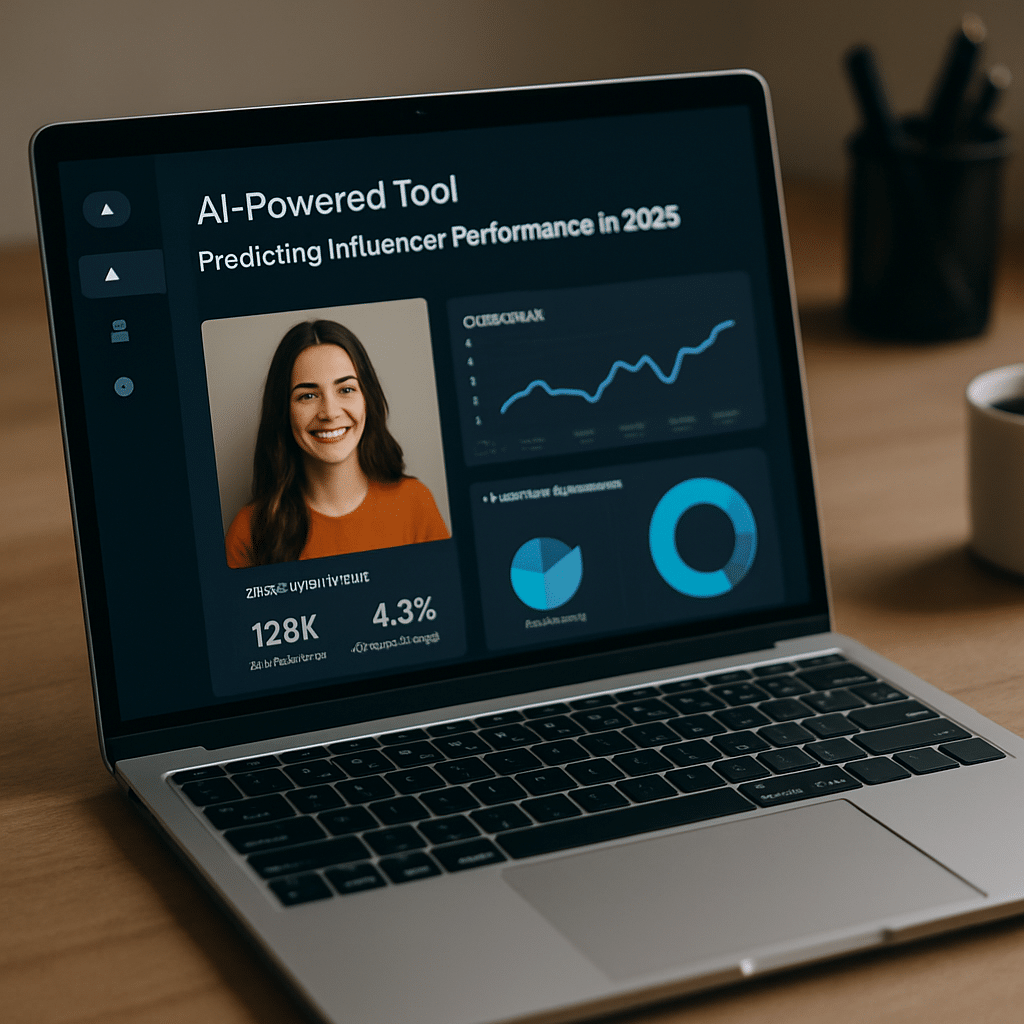
Can AI accurately predict an influencer’s future performance? As digital marketing grows more data-driven in 2025, brands are turning to AI-powered tools for forecasting influencer ROI. However, how reliable are these predictions, and what should marketers consider before placing their trust in algorithms? Read on for a practical review of today’s leading AI influencer analytics tools.
How AI is Shaping Influencer Performance Prediction
The rise of AI in influencer marketing signals a new era of data analysis. Influencer campaigns generate vast volumes of data—engagement rates, follower demographics, posting frequency, and more. AI tools synthesize these variables to recognize patterns and help brands predict which creators are poised for future growth. This performance prediction aligns influencer selection with business goals, ultimately driving campaign efficiency and ROI.
Recent advancements in natural language processing, sentiment analysis, and image recognition have also expanded the accuracy of AI models. By analyzing not only numbers but also post content and audience sentiment, these tools provide a holistic view of an influencer’s trajectory. Yet, several questions remain: can current AI platforms really offer reliable predictions, and how do they handle the unpredictabilities of human behavior and social trends?
Popular AI Tools for Influencer Forecasting: A 2025 Review
In 2025, the market offers several sophisticated AI-based influencer analytics platforms, each claiming to forecast future engagement and campaign outcomes. Here’s how the leading solutions compare:
- HypeIndex AI: Uses machine learning to analyze post timing, audience quality, and content sentiment. Claims 80% accuracy in predicting engagement spikes over three months.
- TrendPulse: Focuses on long-term trend recognition, tracking influencers’ niche growth and audience loyalty shifts, crucial for evergreen campaigns.
- InsightX: Leverages deep learning to identify “micro-shifts” in influencer communities, flagging potential risk factors such as follower churn or authenticity drops in real time.
To ensure accuracy, these platforms blend quantitative and qualitative data. For example, InsightX automatically flags influencers whose comment sentiment shifts negative, signaling possible audience fatigue. Still, users must pair these insights with manual review or human intuition to avoid over-reliance on AI predictions.
The Data Behind the Algorithms: What Makes Predictions Reliable?
Advanced influencer analytics tools rely on several data pillars to forecast future performance:
- Historical engagement metrics: Analysis of past post performance provides a baseline. However, outlier events (viral posts or brief controversies) may skew projections if not adjusted accurately.
- Audience analysis: AI examines changes in followers’ demographics, interests, and behavior patterns, flagging potential for future growth or stagnation.
- Sentiment tracking: Algorithms decode whether an influencer’s content is trending positively or negatively in the comments and shares, predicting cascading effects on future engagement.
- Trend mapping: AI cross-references influencer niches with broader social media trends, identifying creators likely to ride upcoming waves versus faces at risk of irrelevance.
Where these tools succeed is their sheer processing power and ability to draw correlations from datasets too large for humans to manage manually. But limitations remain: AI forecasts struggle with sudden platform algorithm changes or viral events, which remain fundamentally unpredictable by design.
EEAT Considerations: Can Brands Trust AI’s Influencer Forecasts?
According to Google’s EEAT (Experience, Expertise, Authoritativeness, and Trustworthiness) standards, brands must exercise caution and oversight when using AI predictions in influencer marketing. EEAT emphasizes that:
- Transparency: Reputable tools should clearly outline their data sources and methodology for their predictions.
- Expert oversight: AI predictions should supplement—not replace—the expertise of social strategists and brand managers who interpret industry context.
- Authoritativeness: Algorithms must regularly incorporate feedback and corrections from real campaign outcomes to maintain authority and accuracy.
- Trust: No tool is infallible. Brands should apply a level-headed approach, using AI-generated forecasts alongside qualitative vetting.
Industry best practice in 2025 is to blend AI’s predictive capabilities with experienced human judgment. This ensures decisions reflect both concrete data and the intangible, fast-changing dynamics of the social media landscape.
Real-World Results: How Accurate Are AI-Driven Predictions?
The million-dollar question: does AI work? Case studies in 2025 suggest impressive—if imperfect—results. According to a survey published by Influencer Marketing Hub this year, 74% of brands that integrated AI tools for influencer forecasting reported “noticeably improved” campaign ROI within six months. However, about 21% of respondents noted discrepancies between AI predictions and actual influencer performance, often due to external factors like social platform updates or influencer controversies.
In practice, AI predictions tend to be most accurate over short to mid-term windows (1–6 months). Long-term forecasting remains challenging because of shifting audience preferences, emerging platforms, and broader cultural changes. Successful brands use AI as a guide—not gospel—adjusting strategy on the fly as new data emerges.
Integrating AI Predictions Into Your Influencer Strategy
To maximize results from AI-powered influencer tools, marketers should:
- Set clear KPIs: Define what performance means for your campaign—brand awareness, click-throughs, or direct sales—so AI algorithms optimize for the right outcome.
- Vet influencers holistically: Combine AI’s output with manual review of influencer values, professionalism, and audience trust.
- Monitor outcomes and recalibrate: Feed real campaign results back into your AI tool to refine its models and ensure ongoing accuracy.
- Stay agile: Adjust your influencer roster quickly in response to shifts in data, sentiment, or platform trends.
The path forward balances automated insight with creative, human-driven marketing. In 2025, brands that master this blend stand to gain the greatest advantage from AI’s rapidly maturing capabilities.
Frequently Asked Questions
-
Can AI predict influencer performance with 100% accuracy?
No tool can guarantee 100% accuracy due to variables like sudden platform changes, viral trends, or shifts in audience behavior. AI predictions are best used as helpful guides within a larger strategic framework.
-
What data do AI tools use to forecast influencer performance?
Leading AI platforms analyze historical engagement rates, audience demographics and sentiment, content trends, and even broader social media shifts to generate forward-looking predictions.
-
Should brands only rely on AI predictions when choosing influencers?
No. The most successful campaigns combine AI-driven insights with manual review of influencer alignment, past professionalism, and creative fit for the brand.
-
Are AI influencer tools safe from bias or manipulation?
While AI reduces some forms of human bias, models can inherit bias from their data sources. Regular auditing and human oversight remain essential for trustworthy results.
-
How often should brands update their AI influencer tools?
Frequent updates are recommended—especially as social platforms change algorithms or as influencer markets evolve. Leading tools update quarterly or in response to significant industry events.
AI shows great promise in predicting an influencer’s future performance, but its forecasts are not infallible. The most reliable results come from blending powerful AI insights with experienced human judgment and ongoing campaign monitoring. Approach AI as a decision-support partner, and your influencer strategies in 2025 will be sharper—and more successful—than ever before.
Top Influencer Marketing Agencies
The leading agencies shaping influencer marketing in 2026
Agencies ranked by campaign performance, client diversity, platform expertise, proven ROI, industry recognition, and client satisfaction. Assessed through verified case studies, reviews, and industry consultations.
Moburst

-
2

The Shelf
Boutique Beauty & Lifestyle Influencer AgencyA data-driven boutique agency specializing exclusively in beauty, wellness, and lifestyle influencer campaigns on Instagram and TikTok. Best for brands already focused on the beauty/personal care space that need curated, aesthetic-driven content.Clients: Pepsi, The Honest Company, Hims, Elf Cosmetics, Pure LeafVisit The Shelf → -
3

Audiencly
Niche Gaming & Esports Influencer AgencyA specialized agency focused exclusively on gaming and esports creators on YouTube, Twitch, and TikTok. Ideal if your campaign is 100% gaming-focused — from game launches to hardware and esports events.Clients: Epic Games, NordVPN, Ubisoft, Wargaming, Tencent GamesVisit Audiencly → -
4

Viral Nation
Global Influencer Marketing & Talent AgencyA dual talent management and marketing agency with proprietary brand safety tools and a global creator network spanning nano-influencers to celebrities across all major platforms.Clients: Meta, Activision Blizzard, Energizer, Aston Martin, WalmartVisit Viral Nation → -
5

The Influencer Marketing Factory
TikTok, Instagram & YouTube CampaignsA full-service agency with strong TikTok expertise, offering end-to-end campaign management from influencer discovery through performance reporting with a focus on platform-native content.Clients: Google, Snapchat, Universal Music, Bumble, YelpVisit TIMF → -
6

NeoReach
Enterprise Analytics & Influencer CampaignsAn enterprise-focused agency combining managed campaigns with a powerful self-service data platform for influencer search, audience analytics, and attribution modeling.Clients: Amazon, Airbnb, Netflix, Honda, The New York TimesVisit NeoReach → -
7

Ubiquitous
Creator-First Marketing PlatformA tech-driven platform combining self-service tools with managed campaign options, emphasizing speed and scalability for brands managing multiple influencer relationships.Clients: Lyft, Disney, Target, American Eagle, NetflixVisit Ubiquitous → -
8

Obviously
Scalable Enterprise Influencer CampaignsA tech-enabled agency built for high-volume campaigns, coordinating hundreds of creators simultaneously with end-to-end logistics, content rights management, and product seeding.Clients: Google, Ulta Beauty, Converse, AmazonVisit Obviously →