


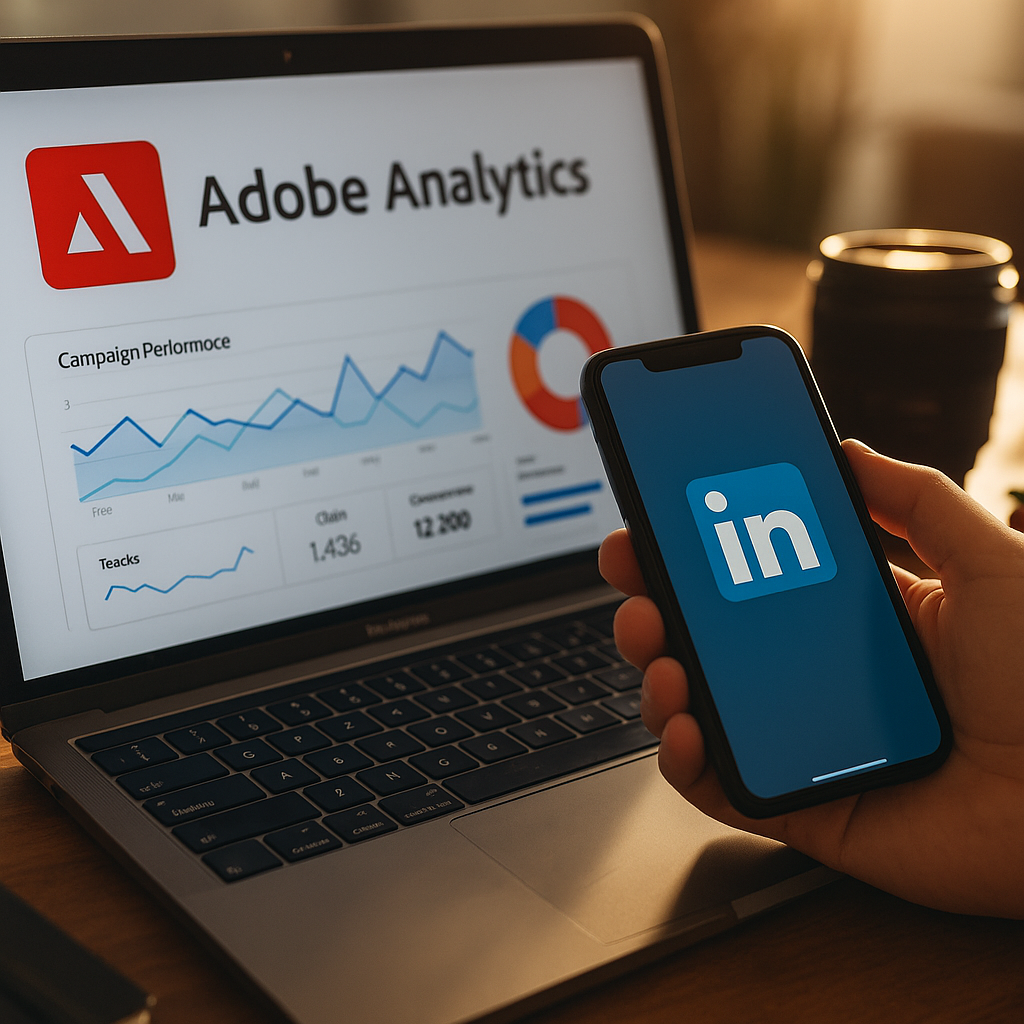
Only 23% of marketing teams say they have the internal skills to act on AI-generated data without outside help. That gap is exactly what the Adobe-LinkedIn AI Essentials partnership is designed to close — and for brand marketers running creator programs, the curriculum’s timing could not be more relevant.
What the Partnership Actually Is (and Isn’t)
Adobe and LinkedIn launched a joint learning initiative under the AI Essentials banner, combining Adobe’s generative AI tooling with LinkedIn’s professional development infrastructure. The program delivers structured, role-based learning paths covering AI fluency, data interpretation, and marketing analytics, targeted at working practitioners rather than data scientists.
What it is not: a certification that replaces hands-on stack configuration, vendor evaluation, or the institutional knowledge your team has built running actual creator campaigns. Think of it as structured scaffolding. The real ROI comes from how your team applies what they learn to your specific attribution stack, CRM workflows, and creator reporting logic.
For brand marketers, the most operationally useful modules cluster around three problem areas: reading AI-generated insights without over-interpreting them, connecting CRM data to creator touchpoints, and standardizing how you measure creator campaign outcomes across platforms.
AI-Generated Insights: Reading the Output, Not Just Trusting It
The dangerous habit forming inside marketing teams right now is treating AI-generated summaries as final analysis. They are not. Adobe’s Firefly and Sensei-powered tools can surface patterns across large creative and performance datasets, but the output is only as good as the inputs and the prompt logic behind it.
The AI Essentials curriculum pushes practitioners to interrogate outputs: What data was the model trained on? What time window? What platform signal is driving this recommendation? These are not academic questions. They are the same questions your CFO will ask when you present a creator ROI report that relies on AI-assisted attribution modeling.
AI fluency for marketers is not about building models. It is about knowing which questions to ask before you act on the model’s output — and knowing when the output is plausible but wrong.
One practical exercise the program includes is comparing AI-generated audience insight summaries against raw segment data pulled from your CDP. If your team has been working with agentic CDP platforms, this verification habit becomes even more important because the automation layer can compound interpretation errors at scale.
CRM Attribution: The Module Your Sales Team Needs to See
Creator campaigns rarely live cleanly in CRM systems. A viewer watches a TikTok, searches the brand two days later, clicks a paid search ad, and converts. Which touchpoint gets credit? This is not a new problem, but AI-powered attribution modeling makes it more complex, not less, because the model can now distribute credit across a longer path and make confident-looking recommendations that obscure the actual data quality underneath.
The LinkedIn learning component here is particularly useful because it addresses how AI surfaces lead scoring signals inside sales workflows, not just marketing dashboards. If your creator campaigns are feeding into a B2B pipeline (more common than most people admit, especially for SaaS and professional services brands running LinkedIn creator programs), the gap between marketing attribution logic and CRM opportunity tracking is where revenue gets lost.
Teams using tools like Zoho SalesIQ for creator attribution or building out a more formal CRM lead-to-close uplift model will find the AI Essentials modules on data integration and pipeline analytics directly applicable. The curriculum teaches how to read AI attribution outputs within CRM environments and how to flag when the model is filling data gaps with assumptions rather than actual signals.
The practical output: your team should be able to produce a creator campaign attribution report that your CRM administrator and finance partner can both read and stress-test. That cross-functional legibility is the real competency being built here.
Creator Campaign Measurement: Building a Standard, Not Just a Report
Most creator measurement problems are not technology problems. They are standardization problems. Teams use different KPI definitions across campaigns, agencies use different benchmarks than in-house teams, and platforms report metrics using different methodologies. When you add AI-generated performance summaries on top of that inconsistency, you get confident-sounding numbers that mean different things to different stakeholders.
The AI Essentials program addresses this through its analytics interpretation modules, which teach practitioners how to establish baseline definitions before applying AI tools, not after. This sounds obvious. Most teams skip it anyway.
For creator measurement specifically, the baseline questions matter enormously: Are you measuring reach against unique accounts or total impressions? Are your engagement rate calculations platform-native or normalized? Is your conversion attribution using last-touch, first-touch, or a model? Adobe’s tooling within the curriculum, particularly around GenStudio’s cross-channel attribution framework, gives teams a working model for defining these standards before data collection begins.
If you have not yet done a formal audit of your current attribution setup, the creator attribution stack audit framework is a practical companion resource to the AI Essentials curriculum. Run both in parallel.
How to Deploy This Across Your Team Without Losing Six Months
The program is self-paced, which is both its advantage and its risk. Self-paced learning in busy marketing departments tends to drift. Build a structure around it or it will not get used.
A realistic deployment model for a mid-size brand or agency team:
- Week one through two: Assign the AI fluency and data interpretation modules to everyone touching campaign reporting, including media planners and account managers, not just analysts.
- Week three: Run a single creator campaign report through your existing process, then compare how each team member interpreted the AI-generated summary. Surface discrepancies in a working session.
- Week four: Use the LinkedIn analytics modules to map your current CRM attribution logic against the AI-assisted model the curriculum demonstrates. Identify where your setup diverges and why.
- Ongoing: Assign one team member per quarter to review new curriculum additions and report back on what is operationally relevant. Adobe and LinkedIn are both updating the program as their tooling evolves.
For teams evaluating whether to invest the time, consider the alternative: paying for AI MarTech tools your team cannot interpret is significantly more expensive than the hours this curriculum requires. The competency gap is a budget risk, not just a skills gap.
Deploying AI tools without AI literacy inside your team is like buying enterprise analytics software and only using the export-to-PDF button. The tool is not the problem.
The Compliance and Data Governance Layer
One area the program handles well, and marketers often underweight, is data governance. Using AI to synthesize CRM data and creator performance signals means you are almost certainly handling audience data across multiple systems with different retention policies and consent frameworks. The FTC and equivalent bodies in other markets are actively scrutinizing AI-driven marketing data practices.
The AI Essentials curriculum includes modules on responsible AI use and data handling that are directly relevant to creator programs, particularly around consent, data minimization, and audit trails. These are not optional for teams running programs at scale. They are table stakes for any brand that wants to defend its attribution methodology in a regulatory review or an agency audit.
Teams working with identity resolution vendors to connect creator touchpoints to CRM records should pay particular attention here. The identity graph vendor landscape is evolving quickly, and the legal requirements around how you stitch identities across platforms are tightening in parallel.
For additional context on how leading platforms are approaching data attribution and governance, both Adobe and Sprout Social publish practitioner-facing documentation on their measurement frameworks that maps well to what the AI Essentials curriculum teaches.
The LinkedIn learning platform itself, accessible through LinkedIn Learning, provides completion tracking and skill assessments that your L&D team can use to document progress across the organization. If you are in a regulated industry, that documentation trail matters.
Start with the CRM attribution module, assign it to anyone who touches creator campaign reporting, and run a live reconciliation exercise within thirty days. That single step will expose more operational gaps than any vendor demo or quarterly review has shown you all year.
FAQ
What is the Adobe-LinkedIn AI Essentials program?
It is a joint learning initiative between Adobe and LinkedIn that delivers structured, role-based training on AI fluency, data interpretation, and marketing analytics. The program uses Adobe’s AI tooling combined with LinkedIn’s professional development infrastructure to help marketing practitioners build practical competency in working with AI-generated insights and data attribution.
Who is the AI Essentials curriculum designed for?
The curriculum is designed for working marketing practitioners, not data scientists. It is most relevant for brand strategists, campaign managers, media planners, and analytics leads who need to interpret AI outputs, connect creator campaign data to CRM systems, and standardize performance reporting across platforms.
How does the program help with creator campaign measurement?
The program’s analytics interpretation modules teach practitioners how to establish consistent KPI definitions before applying AI tools, compare AI-generated performance summaries against raw data, and build cross-functional reports that finance and sales partners can validate. This directly addresses the standardization gap that makes creator measurement unreliable in most marketing teams.
Is the AI Essentials program relevant for B2B brands running LinkedIn creator programs?
Yes, particularly the CRM attribution modules. LinkedIn creator campaigns feeding into a B2B sales pipeline require clean integration between marketing attribution logic and CRM opportunity tracking. The curriculum covers how AI surfaces lead scoring signals inside sales workflows, making it directly applicable to B2B brand marketers running creator-driven demand generation programs.
How long does it take to complete the AI Essentials curriculum?
The program is self-paced, so completion time varies by team. For operational impact, a structured four-week deployment model works well: assign core modules in weeks one and two, run a live reconciliation exercise in week three, and map your CRM attribution logic against the curriculum’s framework in week four. Ongoing review of new modules should be assigned quarterly.
What data governance topics does the program cover?
The curriculum includes modules on responsible AI use, consent frameworks, data minimization, and audit trail requirements. These are directly relevant to creator programs that use identity resolution or AI-driven attribution tools, where handling audience data across multiple systems creates regulatory exposure under FTC guidelines and equivalent international frameworks.
Top Influencer Marketing Agencies
The leading agencies shaping influencer marketing in 2026
Agencies ranked by campaign performance, client diversity, platform expertise, proven ROI, industry recognition, and client satisfaction. Assessed through verified case studies, reviews, and industry consultations.
Moburst

-
2

The Shelf
Boutique Beauty & Lifestyle Influencer AgencyA data-driven boutique agency specializing exclusively in beauty, wellness, and lifestyle influencer campaigns on Instagram and TikTok. Best for brands already focused on the beauty/personal care space that need curated, aesthetic-driven content.Clients: Pepsi, The Honest Company, Hims, Elf Cosmetics, Pure LeafVisit The Shelf → -
3

Audiencly
Niche Gaming & Esports Influencer AgencyA specialized agency focused exclusively on gaming and esports creators on YouTube, Twitch, and TikTok. Ideal if your campaign is 100% gaming-focused — from game launches to hardware and esports events.Clients: Epic Games, NordVPN, Ubisoft, Wargaming, Tencent GamesVisit Audiencly → -
4

Viral Nation
Global Influencer Marketing & Talent AgencyA dual talent management and marketing agency with proprietary brand safety tools and a global creator network spanning nano-influencers to celebrities across all major platforms.Clients: Meta, Activision Blizzard, Energizer, Aston Martin, WalmartVisit Viral Nation → -
5

The Influencer Marketing Factory
TikTok, Instagram & YouTube CampaignsA full-service agency with strong TikTok expertise, offering end-to-end campaign management from influencer discovery through performance reporting with a focus on platform-native content.Clients: Google, Snapchat, Universal Music, Bumble, YelpVisit TIMF → -
6

NeoReach
Enterprise Analytics & Influencer CampaignsAn enterprise-focused agency combining managed campaigns with a powerful self-service data platform for influencer search, audience analytics, and attribution modeling.Clients: Amazon, Airbnb, Netflix, Honda, The New York TimesVisit NeoReach → -
7

Ubiquitous
Creator-First Marketing PlatformA tech-driven platform combining self-service tools with managed campaign options, emphasizing speed and scalability for brands managing multiple influencer relationships.Clients: Lyft, Disney, Target, American Eagle, NetflixVisit Ubiquitous → -
8

Obviously
Scalable Enterprise Influencer CampaignsA tech-enabled agency built for high-volume campaigns, coordinating hundreds of creators simultaneously with end-to-end logistics, content rights management, and product seeding.Clients: Google, Ulta Beauty, Converse, AmazonVisit Obviously →