


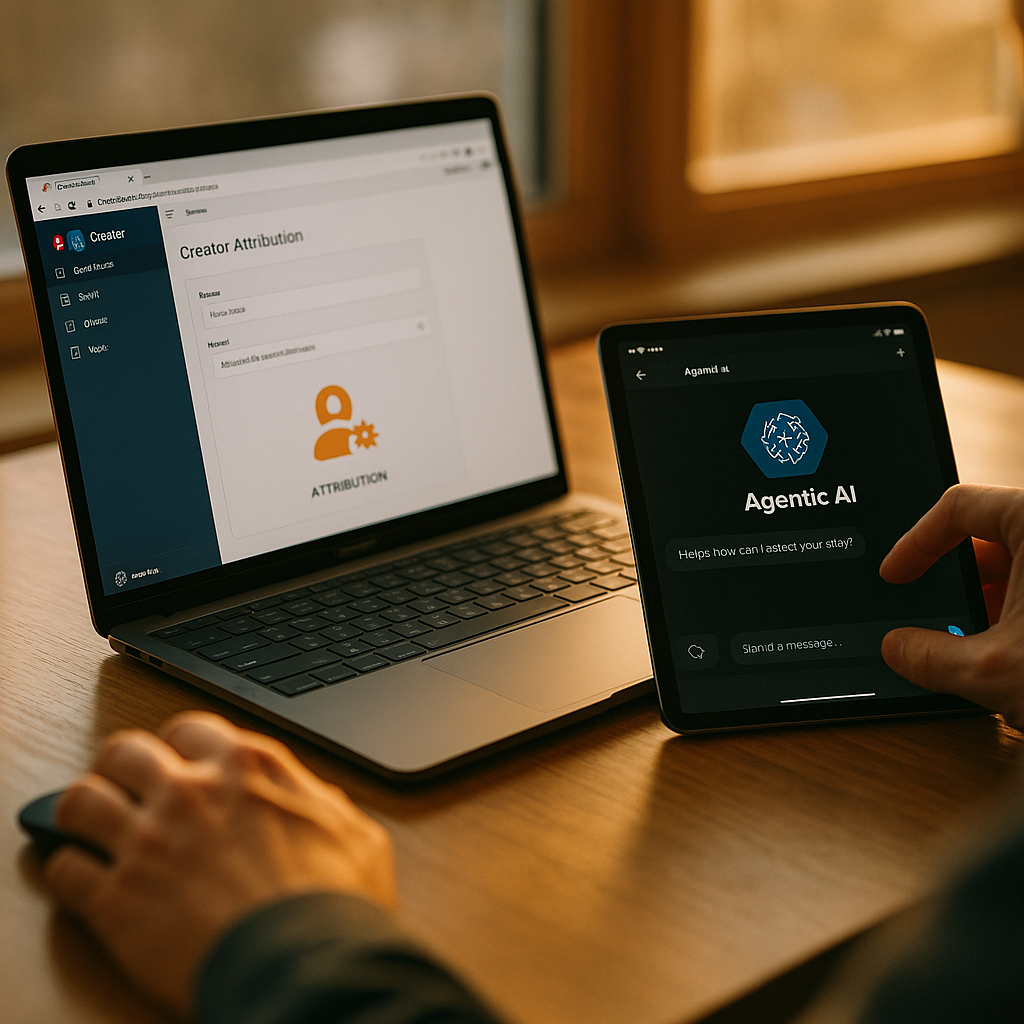
Most Brands Can’t Answer This Question
Which creator drove that enterprise demo request? Not “which campaign” — which specific creator, which piece of content, which audience segment converted into a qualified pipeline opportunity? If your answer involves spreadsheet gymnastics, you have an attribution gap that’s costing you budget and credibility. Zoho SalesIQ’s agentic intelligence layer is one of the more underexamined tools for closing that gap in B2B and DTC creator programs alike.
What Agentic Intelligence Actually Means in This Context
The term gets overused. In Zoho SalesIQ’s case, agentic intelligence refers to the platform’s ability to autonomously trigger contextual actions based on visitor behavior, without waiting for a human operator to intervene. A visitor arriving from a specific creator’s affiliate link gets a different chat prompt, a different bot flow, and a different lead qualification sequence than organic or paid search traffic. The system reads the signal, infers intent, and acts.
That’s a meaningful operational shift for brands running multi-creator programs. Instead of a generic “How can I help you?” widget, your site interaction layer becomes a personalized funnel extension. The creator has already done the trust-building work. SalesIQ picks up the handoff.
Compare this to a standard live chat deployment, where the CRM receives a lead record with source tagged as “direct” because the UTM degraded. Agentic systems address that degradation problem by combining first-party session data, behavioral signals, and CRM context into a unified visitor profile before the conversation starts.
The Creator Attribution Problem Is a Data Architecture Problem
Attribution in influencer marketing has always suffered from the same structural flaw: the platforms where creators publish (TikTok, Instagram, YouTube) are not the platforms where conversion happens. That gap creates a measurement void. UTM parameters help, but they break on link aggregators, swipe-ups, and multi-device journeys. Pixel-based attribution misses in-app browsers. Last-click models penalize the creators who do the heavy awareness lifting.
When creator-driven traffic enters your site, it often looks anonymous to your CRM. The visitor came from a bio link, clicked through a story, or typed your URL from memory after seeing a post three days ago. Without identity resolution at the session layer, that creator’s contribution vanishes from your attribution model.
This is where a platform like Zoho SalesIQ, when integrated properly with Zoho CRM or a third-party CRM via API, adds real operational value. The chat interaction creates a first-party data event. The user’s contact record gets enriched with behavioral data from that session: pages visited, time on site, content consumed, questions asked. Now you have a profile, not a click.
For brands serious about connecting creators to revenue, this connects directly to the broader work of AI-powered identity resolution across the customer journey, and it reinforces why session-level data capture matters as much as post-campaign reporting.
Empathetic Context-Aware Interaction: Real or Marketing Language?
Zoho markets SalesIQ’s newer capabilities under phrases like “empathetic AI” and “context-aware conversations.” Evaluated skeptically, what does that mean in practice for a brand team?
Context-awareness, in measurable terms, means the bot knows: where the visitor came from, what they’ve viewed on your site, whether they’re a returning visitor with a CRM record, what stage of the funnel they’re likely in, and what the creator they followed typically endorses. When those signals combine, the conversation prompt can shift from generic to specific. A visitor arriving via a tech YouTuber’s review link who has already visited your pricing page three times gets a different prompt than a cold traffic visitor on the homepage.
Empathy is harder to verify. Zoho’s sentiment analysis features allow the bot to detect frustration or confusion signals in text and escalate to a human agent. For high-ticket B2B brands or premium DTC categories, that escalation logic is genuinely useful. For most mid-market deployments, it’s a nice-to-have rather than a core differentiator.
The honest evaluation: context-awareness delivers ROI. Sentiment-based empathy is directionally valuable but not yet a primary purchase criterion. Evaluate it accordingly.
How to Build the Creator-to-Revenue Attribution Stack Around SalesIQ
Zoho SalesIQ doesn’t operate in isolation. The attribution value it creates depends entirely on how cleanly it integrates with your upstream and downstream data infrastructure. Here’s the architecture that actually works:
- UTM discipline at the creator level: Every creator gets a unique UTM structure, not just campaign-level tags. Source, medium, campaign, content, and term parameters should all map to individual creators and content pieces.
- SalesIQ visitor tracking with CRM sync: Enable the Zoho CRM integration so that every chat interaction, even anonymous ones, creates or enriches a CRM contact record with session data attached.
- Bot flow segmentation by traffic source: Build separate SalesIQ bot flows triggered by creator-specific UTM parameters. This is the operational lever most brands miss entirely.
- Lead scoring that weights creator signals: Update your CRM lead scoring to include SalesIQ engagement depth (pages viewed, chat initiated, specific questions asked) as positive qualification signals.
- Closed-loop reporting: Connect SalesIQ lead creation events back to creator performance dashboards. Platforms like Viant’s AI attribution signals can supplement this with programmatic touchpoint data across the broader media mix.
This stack architecture also benefits from a structured audit process. Before deploying agentic intelligence layers, brands should run a creator attribution stack audit to identify where data drops off and where integration gaps exist in existing tools.
Competitive Positioning: Where SalesIQ Fits Against Intercom, Drift, and HubSpot Chat
Intercom and Drift are the default comparisons for enterprise marketing teams. Both have stronger brand recognition in North American markets and deeper native integrations with tools like Salesforce and Marketo. If your stack is Salesforce-centric, SalesIQ introduces integration overhead that needs honest budgeting.
Where SalesIQ wins on the creator attribution use case specifically: the native Zoho CRM integration is tighter, the total cost of ownership is substantially lower, and the UTM-to-visitor-profile pipeline requires less custom engineering. For mid-market brands running Zoho CRM as their system of record, SalesIQ is the obvious choice. For Salesforce shops, the ROI calculus gets more complicated.
HubSpot’s live chat and bot products have improved significantly but still treat creator traffic as undifferentiated inbound. The contact enrichment logic doesn’t natively distinguish a creator-referred visit from a Google ad click without significant workflow customization. SalesIQ’s visitor intelligence layer handles that differentiation more gracefully out of the box.
The platform that wins the creator attribution battle is not necessarily the most feature-rich. It’s the one that captures first-party data at the moment of creator-referred intent and connects it cleanly to a revenue outcome in your CRM.
Brands evaluating the broader agentic AI campaign stack should stress-test any chat platform against this specific use case, not just general lead volume or satisfaction scores.
Risk Considerations Brands Must Not Skip
Data privacy is non-negotiable. SalesIQ’s visitor tracking capabilities, particularly the anonymous visitor identification features, need careful review against UK GDPR and applicable state privacy laws if you’re tracking visitors before consent is established. Ensure consent management platform (CMP) integration is configured to suppress tracking for users who have not opted in.
Creator contract alignment is the other risk vector. If a creator’s agreement doesn’t explicitly address the use of their traffic data for CRM profiling and remarketing, you’re potentially in a gray zone. Update standard creator agreement templates to include data rights language covering downstream CRM use of referred traffic. The FTC’s disclosure guidelines address the creator side of this relationship, but data usage terms live in your contracts, not FTC rules.
For brands scaling into unified attribution models that cover both paid creators and organic UGC, these contractual and consent considerations become even more critical to document before a compliance review surfaces them.
Finally, consider vendor lock-in. Zoho’s ecosystem is cohesive but proprietary. If SalesIQ data lives only in Zoho CRM and you later migrate to HubSpot or Salesforce, creator interaction history may not port cleanly. Evaluate data export capabilities and API access before committing creator program data to any single-vendor CRM ecosystem. External resources from HubSpot’s CRM documentation and Zoho’s developer platform can clarify API parity and migration options. For additional benchmarking context on platform measurement dependencies, Sprout Social’s research on social data portability is worth reviewing.
If you’re making a platform decision this quarter, run a 30-day pilot with three creator campaigns using distinct UTM structures, SalesIQ bot flows segmented by source, and CRM lead scoring updated to include chat engagement signals. Measure lead quality by creator, not just lead volume, and you’ll have the data you need to defend budget allocation and platform investment to leadership.
Frequently Asked Questions
What is Zoho SalesIQ agentic intelligence and how does it differ from standard chatbots?
Zoho SalesIQ’s agentic intelligence refers to its ability to autonomously trigger personalized visitor interactions based on real-time behavioral signals, CRM data, and traffic source context. Unlike standard chatbots that deliver the same scripted flow to all visitors, SalesIQ’s agentic layer adapts the conversation prompt, bot flow, and lead qualification sequence based on where the visitor came from, what they’ve viewed, and what their CRM record indicates about their buyer stage. For creator programs, this means visitors arriving via a specific creator’s link receive a contextually relevant experience rather than a generic chat widget.
How does Zoho SalesIQ help with creator-to-revenue attribution?
SalesIQ captures first-party session data at the moment of creator-referred visits and syncs that data to Zoho CRM or integrated third-party CRMs via API. By building separate bot flows triggered by creator-specific UTM parameters, brands can track which creator drove which chat interaction, which interactions converted to qualified leads, and ultimately which leads closed as revenue. This creates a closed-loop attribution path that is far more reliable than last-click or campaign-level UTM reporting alone.
Can Zoho SalesIQ integrate with Salesforce or HubSpot for creator program attribution?
Zoho SalesIQ has native integration with Zoho CRM and offers API access for integration with Salesforce and HubSpot, but those non-native integrations require custom engineering work. For brands already running Salesforce or HubSpot as their CRM of record, the integration overhead should be factored into total cost of ownership before choosing SalesIQ over Intercom, Drift, or HubSpot’s native chat product. The creator attribution use case works most cleanly within the native Zoho ecosystem.
What data privacy risks should brands consider when using SalesIQ for creator traffic tracking?
SalesIQ’s anonymous visitor identification and behavioral tracking features must be reviewed against applicable privacy regulations including GDPR, UK GDPR, and US state privacy laws such as CCPA. Brands must ensure their consent management platform suppresses SalesIQ tracking for visitors who have not opted in. Additionally, creator contracts should explicitly address whether referred traffic data can be used for CRM profiling and downstream remarketing, as data usage rights are governed by contractual terms rather than FTC disclosure rules.
What lead scoring adjustments should brands make when integrating SalesIQ with creator campaigns?
Brands should update CRM lead scoring models to include SalesIQ-specific engagement signals as positive qualification indicators. Relevant signals include chat initiation from a creator-referred session, number of pages viewed before or during the chat, specific product or pricing pages visited, and questions asked that indicate purchase intent. Weighting these signals correctly allows sales teams to prioritize leads generated by creator campaigns rather than treating all inbound leads as equivalent regardless of traffic source quality.
Top Influencer Marketing Agencies
The leading agencies shaping influencer marketing in 2026
Agencies ranked by campaign performance, client diversity, platform expertise, proven ROI, industry recognition, and client satisfaction. Assessed through verified case studies, reviews, and industry consultations.
Moburst

-
2

The Shelf
Boutique Beauty & Lifestyle Influencer AgencyA data-driven boutique agency specializing exclusively in beauty, wellness, and lifestyle influencer campaigns on Instagram and TikTok. Best for brands already focused on the beauty/personal care space that need curated, aesthetic-driven content.Clients: Pepsi, The Honest Company, Hims, Elf Cosmetics, Pure LeafVisit The Shelf → -
3

Audiencly
Niche Gaming & Esports Influencer AgencyA specialized agency focused exclusively on gaming and esports creators on YouTube, Twitch, and TikTok. Ideal if your campaign is 100% gaming-focused — from game launches to hardware and esports events.Clients: Epic Games, NordVPN, Ubisoft, Wargaming, Tencent GamesVisit Audiencly → -
4

Viral Nation
Global Influencer Marketing & Talent AgencyA dual talent management and marketing agency with proprietary brand safety tools and a global creator network spanning nano-influencers to celebrities across all major platforms.Clients: Meta, Activision Blizzard, Energizer, Aston Martin, WalmartVisit Viral Nation → -
5

The Influencer Marketing Factory
TikTok, Instagram & YouTube CampaignsA full-service agency with strong TikTok expertise, offering end-to-end campaign management from influencer discovery through performance reporting with a focus on platform-native content.Clients: Google, Snapchat, Universal Music, Bumble, YelpVisit TIMF → -
6

NeoReach
Enterprise Analytics & Influencer CampaignsAn enterprise-focused agency combining managed campaigns with a powerful self-service data platform for influencer search, audience analytics, and attribution modeling.Clients: Amazon, Airbnb, Netflix, Honda, The New York TimesVisit NeoReach → -
7

Ubiquitous
Creator-First Marketing PlatformA tech-driven platform combining self-service tools with managed campaign options, emphasizing speed and scalability for brands managing multiple influencer relationships.Clients: Lyft, Disney, Target, American Eagle, NetflixVisit Ubiquitous → -
8

Obviously
Scalable Enterprise Influencer CampaignsA tech-enabled agency built for high-volume campaigns, coordinating hundreds of creators simultaneously with end-to-end logistics, content rights management, and product seeding.Clients: Google, Ulta Beauty, Converse, AmazonVisit Obviously →