


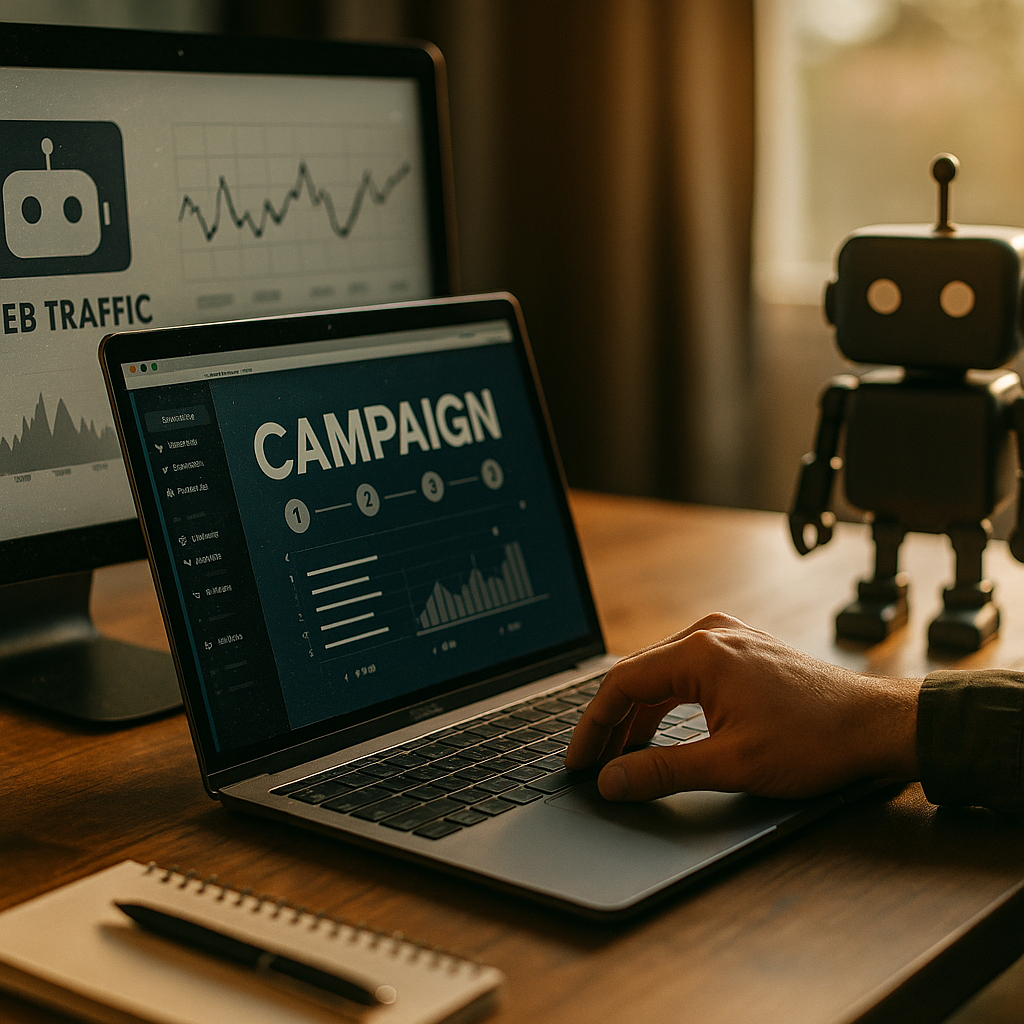
More than half the web’s traffic is no longer human. Recent web analytics research puts bot traffic at 57.4 percent of all web activity, officially making automated agents the dominant audience on the open internet. For brand teams still configuring campaign workflows and content recommendation infrastructure around human browsing behavior, that number should be a hard stop.
What “Agentic Web” Actually Means for Brand Infrastructure
The term gets thrown around loosely, but here is the practical definition: the agentic web is the layer of the internet that is navigated, consumed, and acted upon by AI agents rather than humans. These include LLM-powered research assistants, autonomous shopping bots, AI crawlers that feed retrieval-augmented generation (RAG) systems, and workflow automation agents that pull structured data on behalf of enterprise buyers.
This is not the spam-bot problem from 2015. Those were dumb crawlers gaming ad impressions. Today’s agents are purposeful. A procurement agent searching for a vendor, a GPT-4o-powered assistant summarizing product pages for a consumer, a Perplexity deep research module indexing your campaign landing page — these are all “reads” of your content that will never register as a human session but absolutely influence real purchase decisions downstream.
When an AI agent summaries your product page for a buyer who never visits your site directly, your content architecture, metadata, and structured data are doing the sales job your human-optimized UX was designed for. Most brand teams haven’t audited either.
The implication for influencer marketing and content strategy is significant. If the content your creators produce, the landing pages your campaigns drive to, and the product information you surface are not structured for machine readability, you are effectively invisible to more than half your potential reach.
Campaign Workflow Gaps Brands Are Ignoring
Most campaign workflow configurations were designed around a linear human journey: creator post, swipe-up link, landing page, checkout. That funnel assumed a person was doing the clicking. In an agentic web environment, multiple automated touchpoints exist between creator content publication and the final human decision. And most brands are completely unprepared for them.
Three specific gaps show up consistently:
- Unstructured campaign brief outputs: Creative briefs generated internally or by platforms like Grin, Aspire, or Sprinklr often produce narrative documents that human collaborators understand but that AI parsing systems cannot reliably extract structured signals from. When those briefs feed into automated content routing or creator matching tools, the data loss compounds.
- Metadata poverty on creator content: A high-performing creator video might generate significant organic reach, but if the brand’s associated landing page lacks schema markup, open graph completeness, or machine-readable product identifiers, AI shopping agents skip it entirely. The creator drove the intent; your infrastructure lost the conversion.
- Attribution models built for cookies: With bot-heavy traffic inflating raw session counts and cookie-based tracking degrading across browsers, last-click and even multi-touch models are increasingly unreliable. Brands relying on platform-native dashboards without independent measurement layers are making budget decisions on corrupted data.
Understanding the efficiency gap between AI-assisted and manual campaign operations becomes especially relevant here. The teams already automating creator matching, brief generation, and performance tagging have a structural advantage when agentic traffic dominates, because their data is already machine-formatted.
Content Recommendation Infrastructure: The Hidden Bottleneck
Content recommendation systems — both your own (on-site personalization, email sequencing) and external ones (Google Discover, TikTok’s For You logic, AI search summaries) — are increasingly arbitrated by agents, not algorithms responding to human clicks.
Google’s AI Overviews, Perplexity’s answer engine, and Microsoft Copilot’s shopping integrations all pull from structured content. If your influencer campaign generates a wave of creator posts but those posts point to content that lacks structured data, canonical tagging, and clear entity relationships, the recommendation infrastructure treats your campaign as noise.
The fix is not glamorous. It involves:
- Implementing full Schema.org markup on all campaign landing pages, not just product pages.
- Aligning creator content briefs to include specific product identifiers, brand entity tags, and structured claim language that downstream AI systems can verify and resurface.
- Conducting quarterly structured data audits using tools like Google Search Console and Screaming Frog to catch markup gaps before major campaigns launch.
- Coordinating with your SEO and martech teams, not just your social team, when creator campaigns go live.
This cross-functional coordination is exactly the skills gap many CMO-level teams are grappling with. Closing the agentic marketing skills gap is not just about hiring AI specialists — it’s about restructuring how campaign, content, and tech teams share responsibility for infrastructure decisions that used to sit siloed in SEO or web ops.
What This Means for B2B Influencer and Creator Strategy
B2B buyers have been using AI assistants to conduct vendor research for well over a year now. The implication is stark: a B2B brand running a creator program where thought leaders publish long-form LinkedIn content or YouTube deep-dives needs that content to be indexed, summarized, and retrievable by AI research agents, not just discoverable by human scrollers.
Concrete steps that matter here include ensuring creator content links to brand-owned pages with proper entity markup, that any PDF or downloadable asset referenced in creator content has an HTML equivalent (PDFs are notoriously difficult for AI agents to parse), and that product claims made in creator content match the structured claims on your website so that RAG systems don’t surface contradictory information.
For brands already thinking about AI-mediated buying journeys, this is the operational layer that makes or breaks whether creator-generated authority actually converts in an agentic environment.
Platform Behavior Is Already Shifting to Reflect This
Instagram’s algorithm changes, particularly around recommendation reach for non-follower audiences, are partly a response to the platform optimizing for engagement signals that distinguish human interest from automated crawl patterns. Brands running paid amplification on creator content need to understand how algorithm shifts affect paid media impact, especially as platform systems get better at filtering bot-inflated engagement metrics from genuine signals.
IAB frameworks are also evolving to address invalid traffic measurement in an agentic context. Brands that have built compliance into their measurement stack — rather than bolting it on post-campaign — will have cleaner data to make the case for creator program investment internally.
The 57.4 percent bot traffic figure is not a threat to ignore or a problem to route around. It’s a prompt to rebuild campaign and content infrastructure so that agentic systems work as distribution channels, not interference.
YouTube’s role as both a human-viewed and AI-indexed content repository makes it a critical infrastructure platform for brands in this context. Structured video metadata, closed captions, chapter markers, and linked product pages all function as machine-readable signals. Understanding how to allocate video budgets with this dual-audience reality in mind is quickly becoming a core planning competency.
The Measurement Overhaul You Can’t Defer
Standard vanity metrics — impressions, reach, follower counts — become even less reliable when a meaningful portion of those numbers reflect automated traffic. Brands need to shift measurement frameworks toward signals that are harder for bots to fake: purchase completions, email list additions with double opt-in, direct quote requests, and qualified lead submissions.
Third-party verification tools like DoubleVerify now offer bot traffic segmentation that gives brands cleaner signals on which creator placements are reaching actual humans. Building this layer into campaign reporting is not optional anymore, it’s basic due diligence.
Teams that have built AI-first program infrastructure are better positioned here because their data pipelines already separate automated signals from human engagement at the source, rather than trying to scrub it out retroactively.
Run a structured data audit on your top five campaign landing pages this week, cross-reference your current creator brief templates against what AI parsing systems actually extract, and flag every attribution model in your stack that still relies on third-party cookie data as a primary signal. That’s where the agentic web is costing you money right now.
FAQs
What is bot traffic and why does the 57.4 percent figure matter for brands?
Bot traffic refers to web sessions generated by automated programs rather than human users. These range from search engine crawlers to AI research agents and automated shopping tools. The 57.4 percent figure matters because campaign performance metrics, attribution models, and content distribution assumptions built on human browsing behavior are now structurally inaccurate for more than half of all web activity.
How does agentic web traffic affect influencer campaign performance measurement?
Agentic traffic inflates raw session counts, distorts engagement rate calculations, and can corrupt last-click attribution models. Brands measuring influencer campaign ROI purely through platform-native dashboards risk making budget decisions based on data that mixes human and automated behavior. Independent measurement layers with bot traffic filtering, such as those offered by DoubleVerify or similar verification tools, are increasingly necessary for accurate influencer ROI reporting.
What content changes should brands make to be visible to AI agents?
Brands should implement Schema.org structured data markup across all campaign landing pages, ensure open graph tags are complete, align creator content briefs to include structured product identifiers, and audit that product claims in creator posts match those on brand-owned web pages. HTML versions of any downloadable assets referenced in creator content are also important, as PDFs are poorly parsed by most AI systems.
Does this affect B2B influencer programs differently than B2C?
Yes. B2B buying journeys already rely heavily on AI research assistants used by procurement teams and senior decision-makers. B2B creator content that lacks machine-readable structure will be invisible in AI-generated vendor summaries, effectively removing the brand from consideration during the research phase. B2C is affected at the content recommendation and product discovery layer, particularly through AI shopping integrations in Google, Perplexity, and similar tools.
How should brands adjust campaign workflow configurations to account for agentic web dominance?
Campaign workflows should be updated to ensure brief outputs generate machine-readable structured data, that campaign landing pages have full schema markup before launch, and that cross-functional teams including SEO and martech are looped into creator campaign planning. Attribution models should be audited to remove reliance on third-party cookies, and measurement frameworks should prioritize bot-resistant signals like qualified lead submissions and purchase completions.
Top Influencer Marketing Agencies
The leading agencies shaping influencer marketing in 2026
Agencies ranked by campaign performance, client diversity, platform expertise, proven ROI, industry recognition, and client satisfaction. Assessed through verified case studies, reviews, and industry consultations.
Moburst

-
2

The Shelf
Boutique Beauty & Lifestyle Influencer AgencyA data-driven boutique agency specializing exclusively in beauty, wellness, and lifestyle influencer campaigns on Instagram and TikTok. Best for brands already focused on the beauty/personal care space that need curated, aesthetic-driven content.Clients: Pepsi, The Honest Company, Hims, Elf Cosmetics, Pure LeafVisit The Shelf → -
3

Audiencly
Niche Gaming & Esports Influencer AgencyA specialized agency focused exclusively on gaming and esports creators on YouTube, Twitch, and TikTok. Ideal if your campaign is 100% gaming-focused — from game launches to hardware and esports events.Clients: Epic Games, NordVPN, Ubisoft, Wargaming, Tencent GamesVisit Audiencly → -
4

Viral Nation
Global Influencer Marketing & Talent AgencyA dual talent management and marketing agency with proprietary brand safety tools and a global creator network spanning nano-influencers to celebrities across all major platforms.Clients: Meta, Activision Blizzard, Energizer, Aston Martin, WalmartVisit Viral Nation → -
5

The Influencer Marketing Factory
TikTok, Instagram & YouTube CampaignsA full-service agency with strong TikTok expertise, offering end-to-end campaign management from influencer discovery through performance reporting with a focus on platform-native content.Clients: Google, Snapchat, Universal Music, Bumble, YelpVisit TIMF → -
6

NeoReach
Enterprise Analytics & Influencer CampaignsAn enterprise-focused agency combining managed campaigns with a powerful self-service data platform for influencer search, audience analytics, and attribution modeling.Clients: Amazon, Airbnb, Netflix, Honda, The New York TimesVisit NeoReach → -
7

Ubiquitous
Creator-First Marketing PlatformA tech-driven platform combining self-service tools with managed campaign options, emphasizing speed and scalability for brands managing multiple influencer relationships.Clients: Lyft, Disney, Target, American Eagle, NetflixVisit Ubiquitous → -
8

Obviously
Scalable Enterprise Influencer CampaignsA tech-enabled agency built for high-volume campaigns, coordinating hundreds of creators simultaneously with end-to-end logistics, content rights management, and product seeding.Clients: Google, Ulta Beauty, Converse, AmazonVisit Obviously →