


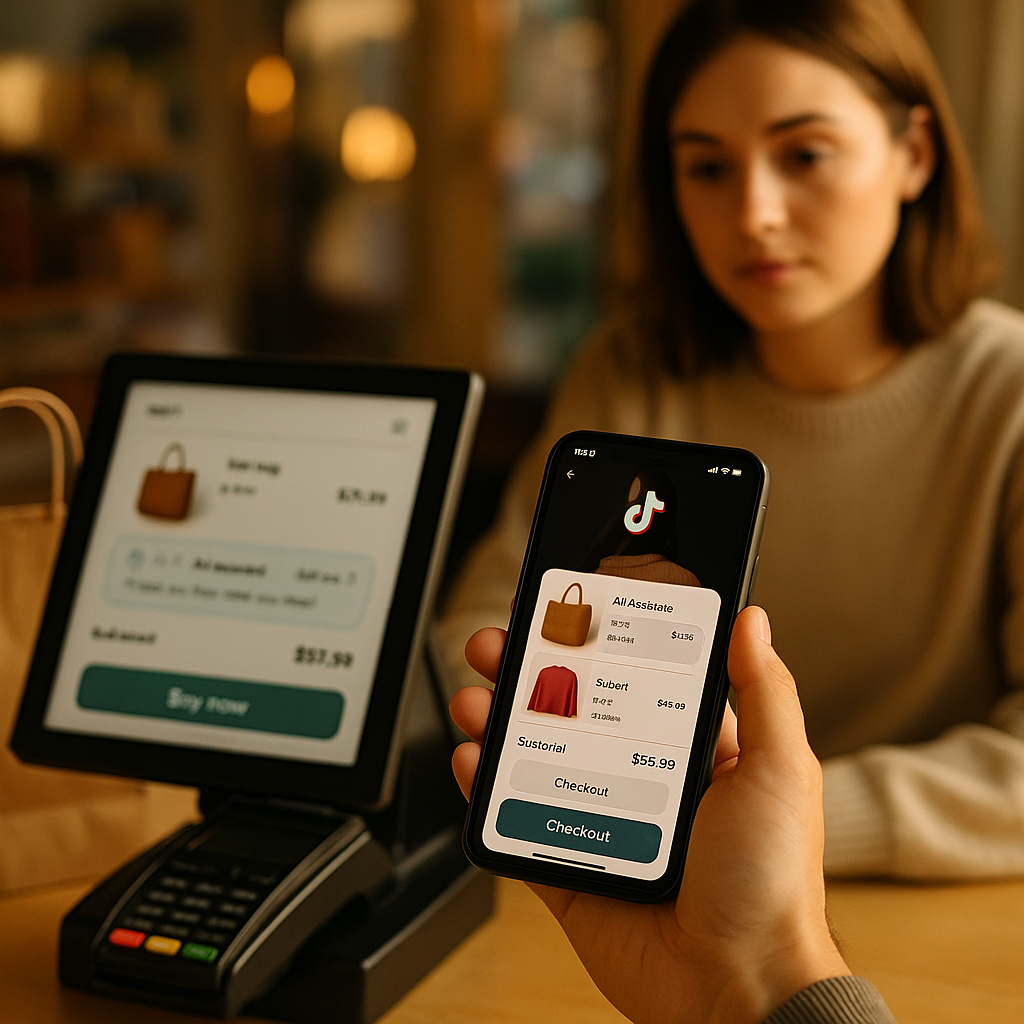
TikTok Shop’s average cart abandonment rate during live sessions still hovers well above standard ecommerce benchmarks. Viewers get hyped by a host, tap “add to cart,” then vanish into a sea of pop up forms, payment redirects, and shipping fields. That gap between impulse and purchase is exactly what AI powered livestream shopping assistants are now built to close. The question for brands isn’t whether to automate checkout, it’s how fast they can do it without losing the human spark that makes livestream selling work in the first place.
What an AI Powered Livestream Shopping Assistant Actually Does
Strip away the marketing language and these tools do three jobs: watch the stream, read buyer intent, and act on it before the viewer scrolls away. They sit on top of TikTok Shop’s native APIs, listening for comment triggers like “link please” or “size M,” then auto populate cart details, pre fill saved payment credentials, and push a one tap confirmation straight into the viewer’s feed.
This isn’t a chatbot bolted onto a livestream. It’s closer to an autonomous checkout operator, one that never gets overwhelmed when comment volume spikes during a flash sale. Brands like those covered in our breakdown of how TikTok AI assistants close sales are already seeing these systems handle thousands of simultaneous purchase intents that a single human moderator simply couldn’t keep pace with.
The Checkout Flow Was Always the Weak Link
Livestream commerce solved discovery. It never fully solved friction. A host can sell a product in fifteen seconds flat, but if checkout takes ninety seconds of app switching and form filling, you lose the sale to distraction, not disinterest.
Every additional step between “I want this” and “I bought this” costs brands real revenue, and on livestream, that window closes in under a minute.
TikTok Shop’s in app checkout already cut some of that friction compared to redirecting users to external sites. But native checkout still assumes the viewer is paying full attention, has their payment method ready, and isn’t juggling three other open apps. AI assistants remove those assumptions entirely by pre staging the transaction before the viewer even finishes typing their comment.
How the Automation Actually Works Behind the Scenes
Most platforms building these assistants follow a similar architecture, even if the branding differs:
- Intent detection: Natural language models parse live comments and voice cues for purchase signals, size requests, or color preferences in real time.
- Cart pre population: The system matches the detected intent to a specific SKU and stages it in the viewer’s TikTok Shop cart automatically.
- Payment orchestration: Saved payment tokens get pulled forward so the viewer confirms with a single tap instead of re entering card details mid stream.
- Fallback escalation: When intent is ambiguous (say, two viewers both type “that one”), the assistant flags the moment for the human host to clarify on camera.
That last point matters more than vendors like to admit. Full automation without a human fallback creates exactly the kind of mismatched order problem that drives return rates up and trust down. Our analysis of predictive SKU matching found that accuracy, not speed, is usually the metric that determines whether automated checkout actually lifts conversion or just lifts complaint volume.
Does Automated Checkout Actually Move the ROI Needle?
Early data from brands piloting these assistants suggests meaningful gains, though the numbers vary wildly by category. Beauty and fashion sellers running high comment volume streams report checkout completion lifts in the double digit percentage range when AI pre population replaces manual link sharing. Lower consideration categories see smaller but still real gains, mostly from reduced cart abandonment rather than new demand creation.
The honest framing here: AI checkout assistants don’t create buyers out of nowhere. They capture buyers who were already going to convert but would have dropped off during friction. That’s a retention play disguised as a growth tool, and brands should budget for it accordingly. For context on how automation reshapes the math on livestream staffing costs, see our piece on AI livestream hosts cutting costs while human sellers still close better on high ticket items.
Platform level benchmarking firms like eMarketer and Statista are starting to track livestream checkout conversion as its own category, separate from general social commerce metrics. That’s a signal worth watching if you’re building a board level case for budget.
Where It Breaks: Attribution, Compliance, and Trust
Here’s the part vendors gloss over in the demo. When an AI assistant closes the sale instead of the creator making a verbal pitch, who gets credit in your attribution model? This exact problem is already causing headaches, as we covered in depth around creator attribution blurring once automated agents enter the sales funnel.
If your creator payment structure is commission based, murky attribution isn’t an academic concern. It’s a contract dispute waiting to happen. Brands need to define, in writing, whether AI assisted conversions count toward creator commission before the first stream goes live, not after the first invoice dispute.
There’s also a compliance layer that too many teams skip. Auto filled payment data and AI driven purchase confirmations touch consumer protection rules around clear disclosure and consent. The FTC has been increasingly vocal about automated commerce flows needing the same transparency standards as any other sales mechanism. Build your disclosure language before legal asks for it, not after.
Scheduling reliability matters here too. An assistant can only automate checkout for a stream that actually happens on time with the right inventory loaded. Our coverage of how AI scheduling cuts livestream no shows is a useful companion read if your checkout automation keeps underperforming simply because streams start late or SKUs aren’t synced.
Rolling This Out Without Betting the Quarter on It
Don’t flip the switch on full automation across every stream. Pilot it on your highest volume, lowest complexity SKU category first, something with simple sizing and no variant confusion. Watch three numbers closely: checkout completion rate, post purchase return rate, and creator commission disputes. If all three move in the right direction over four to six weeks, expand.
Keep a human moderator in the loop for the first several months regardless of how confident the AI vendor’s accuracy claims sound. Conversational agent platforms built for action, not just reply, are evolving fast, and the ones with built in escalation paths (similar to what we documented in Braze’s conversational agents) tend to hold up better under real world comment chaos than fully autonomous setups.
Finally, read TikTok’s own commerce policy updates closely. TikTok for Business periodically adjusts API access and checkout permissions for third party tools, and a vendor losing API access mid campaign is a risk you don’t want discovered live on air. Social teams tracking broader platform shifts, including tools like Sprout Social, can help flag policy changes before they disrupt your automation stack.
Next step: run a two week pilot on one product category, track checkout completion against return rate, and get your creator commission language locked before the assistant goes live on a second stream.
Frequently Asked Questions
What is an AI powered livestream shopping assistant?
It’s a software layer that monitors live video comments and viewer behavior, detects purchase intent, and automatically pre fills or completes the checkout process on platforms like TikTok Shop, reducing the manual steps between interest and purchase.
Does automating TikTok Shop checkout actually increase sales?
It primarily reduces cart abandonment among viewers who already intended to buy, rather than generating new demand. Brands typically see higher checkout completion rates, not necessarily more total buyers.
Who gets attribution credit when an AI assistant closes the sale?
This varies by platform and contract. Brands should define attribution rules for AI assisted conversions in creator agreements before launching automated checkout, since commission disputes are common when this isn’t addressed upfront.
Are there compliance risks with AI driven checkout automation?
Yes. Automated payment pre population and purchase confirmations fall under consumer disclosure and consent standards, and regulators like the FTC have signaled closer scrutiny of automated commerce flows.
Should brands remove human moderators once AI checkout is live?
No. Human fallback for ambiguous purchase signals, such as multiple viewers requesting the same item, significantly reduces mismatched orders and return rates during the early rollout phase.
Top Influencer Marketing Agencies
The leading agencies shaping influencer marketing in 2026
Agencies ranked by campaign performance, client diversity, platform expertise, proven ROI, industry recognition, and client satisfaction. Assessed through verified case studies, reviews, and industry consultations.
Moburst

-
2

The Shelf
Boutique Beauty & Lifestyle Influencer AgencyA data-driven boutique agency specializing exclusively in beauty, wellness, and lifestyle influencer campaigns on Instagram and TikTok. Best for brands already focused on the beauty/personal care space that need curated, aesthetic-driven content.Clients: Pepsi, The Honest Company, Hims, Elf Cosmetics, Pure LeafVisit The Shelf → -
3

Audiencly
Niche Gaming & Esports Influencer AgencyA specialized agency focused exclusively on gaming and esports creators on YouTube, Twitch, and TikTok. Ideal if your campaign is 100% gaming-focused — from game launches to hardware and esports events.Clients: Epic Games, NordVPN, Ubisoft, Wargaming, Tencent GamesVisit Audiencly → -
4

Viral Nation
Global Influencer Marketing & Talent AgencyA dual talent management and marketing agency with proprietary brand safety tools and a global creator network spanning nano-influencers to celebrities across all major platforms.Clients: Meta, Activision Blizzard, Energizer, Aston Martin, WalmartVisit Viral Nation → -
5

The Influencer Marketing Factory
TikTok, Instagram & YouTube CampaignsA full-service agency with strong TikTok expertise, offering end-to-end campaign management from influencer discovery through performance reporting with a focus on platform-native content.Clients: Google, Snapchat, Universal Music, Bumble, YelpVisit TIMF → -
6

NeoReach
Enterprise Analytics & Influencer CampaignsAn enterprise-focused agency combining managed campaigns with a powerful self-service data platform for influencer search, audience analytics, and attribution modeling.Clients: Amazon, Airbnb, Netflix, Honda, The New York TimesVisit NeoReach → -
7

Ubiquitous
Creator-First Marketing PlatformA tech-driven platform combining self-service tools with managed campaign options, emphasizing speed and scalability for brands managing multiple influencer relationships.Clients: Lyft, Disney, Target, American Eagle, NetflixVisit Ubiquitous → -
8

Obviously
Scalable Enterprise Influencer CampaignsA tech-enabled agency built for high-volume campaigns, coordinating hundreds of creators simultaneously with end-to-end logistics, content rights management, and product seeding.Clients: Google, Ulta Beauty, Converse, AmazonVisit Obviously →