


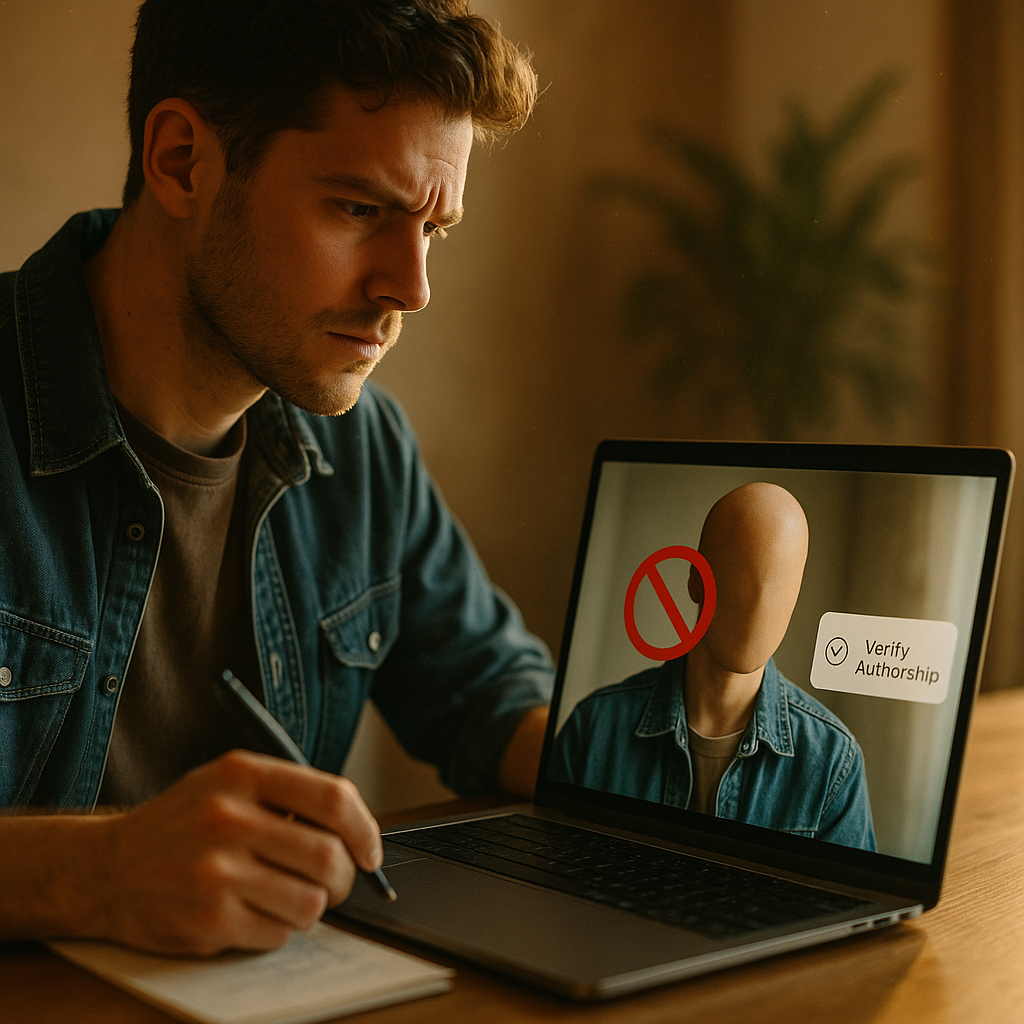
Platforms are quietly killing your paid media before it launches. TikTok, YouTube, and Instagram have each deployed algorithmic suppression layers that specifically target synthetic, faceless, AI-generated video content — and if your influencer brief doesn’t mandate authentic creator authorship verification, your campaign is already at risk of platform algorithm suppression.
The Suppression Is Real, and It’s Coordinated
This isn’t speculation. TikTok’s community guidelines now explicitly flag “AI-generated content that misleads users about its source,” and its recommendation engine has been observed significantly reducing distribution for videos that lack identifiable human presence. YouTube’s classifier systems — built on the same infrastructure behind its Content ID — have been trained to detect synthetic voice overlays and generated visual environments. Instagram’s Reels ranking algorithm, as confirmed by Meta’s own creator documentation at Meta Business, now deprioritizes content flagged as “low-originality” or lacking authentic human signal.
The result: brands running AI-generated faceless content are watching organic reach crater and paid amplification underperform against benchmarks, often without understanding why.
Platform suppression of AI-generated content isn’t a future threat. Brands auditing underperforming campaigns from the last two quarters are finding synthetic content as the common variable behind reach shortfalls of 40–60% versus human-authored equivalents.
Why Faceless AI Video Became a Brand Safety Problem
The explosion of faceless AI video was predictable. Cheap production, fast turnaround, scalable volume. Brands, particularly in DTC and performance marketing, leaned hard into tools like Synthesia, HeyGen, and Runway to produce pseudo-creator content at scale. Some agencies even pitched it as a cost efficiency win.
The problem isn’t just platform suppression. It’s layered. When audiences interact with what appears to be a creator but is actually a generated avatar with a synthetic script, the FTC’s endorsement disclosure framework at the FTC becomes murky at best, legally exposed at worst. There’s no human endorser. There’s no material connection to verify. The disclosure architecture brands have spent years building collapses entirely.
Then there’s audience trust. Research from Sprout Social consistently shows that authenticity is the primary driver of creator-driven purchase intent. Consumers are increasingly sophisticated at detecting generated content, and when they do, brand association goes negative fast.
How Each Platform’s Suppression System Actually Works
Understanding the mechanics helps brands prioritize mitigation. Each platform approaches this differently, and the signals they’re reading matter for brief construction.
TikTok uses a combination of its AI label detection (now mandatory for certain synthetic content categories under its updated policies) and behavioral signals. Content with low comment-to-view ratios and low watch-through rates, common in synthetic content that lacks authentic creator personality, gets caught in its secondary ranking pass. For brands investing in TikTok Shop or discovery campaigns, the implications are direct: see how authentic creator brief design affects TikTok’s AI recommendation layer to understand what signals you’re actually optimizing for.
YouTube is the most technically sophisticated suppressor. Its classifier stack assesses voice authenticity, on-camera human presence, and what it calls “creator consistency signals” — essentially, whether the content pattern matches an established channel identity. Channels that pivot to synthetic content after building organic audiences see algorithmic penalties that decay subscriber reach. Brands sponsoring such channels inherit that penalty. The YouTube Shorts brand safety settings guide covers related placement risk factors worth reviewing before any Shorts-heavy buy.
Instagram is perhaps the most commercially consequential because of its Reels monetization infrastructure. Meta has tied creator monetization eligibility — including the Reels bonus programs and shoppable features — to human authorship requirements. AI-generated content that fails originality checks gets excluded from recommendation surfaces. For brands building shoppable Reels campaigns, that means your product tags may never surface organically. The nuances of Instagram topic targeting in creator briefs become irrelevant if the content itself is getting suppressed before topic classification even runs.
What Authentic Creator Authorship Verification Means Operationally
This is where most marketing teams are underequipped. Verification isn’t just asking a creator “did you make this yourself?” It requires building verification into the brief, the approval workflow, and the contract.
At the brief stage, specify required human-presence elements: on-camera face time with a minimum threshold (many brands are now mandating at least 15 seconds of verified human face-on-camera in any video under 90 seconds), original voiceover recorded by the creator, and real-environment footage rather than virtual backgrounds. These aren’t aesthetic preferences. They are algorithmic compliance requirements.
At the contract stage, add an AI authorship warranty clause. The creator explicitly warrants that the content was principally authored by a human, that no AI-generated voice, face, or environment constitutes more than a defined percentage of the final cut, and that any AI-assisted editing tools used are disclosed to the brand. This gives legal recourse and creates a paper trail for compliance audits.
At the approval stage, implement a technical review layer. Tools like Hugging Face-powered detection models are increasingly accessible and can flag synthetic voice or generated imagery before content goes live. Some creator management platforms are beginning to integrate these checks natively. Until that’s standard, brands running high-volume programs need a manual or semi-automated checkpoint.
The brief is now your first line of algorithmic defense. If authentic human authorship isn’t specified as a deliverable requirement, not just a preference, you have no enforcement mechanism and no platform protection.
The ROI Case for Human Creator Investment
Some budget owners will push back. AI content is cheaper. The production math seems favorable. Here’s the counter-argument, grounded in platform economics rather than sentiment.
Paid amplification costs on all three platforms are calculated against organic quality scores. Suppressed organic content receives higher effective CPMs when boosted because the platform’s quality signal is already negative. You pay more to reach fewer people. A human-authored video with strong organic signals, by contrast, receives favorable quality scoring that reduces paid amplification costs. The short-form video budget allocation decisions brands are making at upfront negotiations need to account for this platform-quality premium.
The math is straightforward. If a synthetic video costs 60% less to produce but delivers 50% less organic reach and 20% higher boosted CPMs, the total cost-per-outcome is worse before you factor in brand safety exposure or FTC risk. According to data indexed on eMarketer, influencer content with verified human authorship continues to outperform display benchmarks on engagement-per-dollar across all major platforms.
Building This Into Your Influencer Program Architecture
Retrofitting verification into existing programs is harder than building it in. But the priority sequence is clear.
- Audit your current roster: Pull the last six months of content from every active creator partner and run it through an AI detection check. Flag any accounts where synthetic content ratios appear elevated.
- Update your master brief template: Add a human authorship section with specific requirements for face time, voice, and environment. Make it non-negotiable, not aspirational.
- Revise creator contracts: Add the AI warranty clause with clear cure rights if content is found non-compliant after delivery.
- Train your approval team: Reviewers need to know what synthetic content signals look like, including uncanny valley facial expressions, voice cadence inconsistencies, and background rendering artifacts.
- Brief your media agency: If they’re boosting creator content, they need to know that suppressed organic content will inflate their paid metrics negatively. Align on quality-first selection before spend decisions.
For programs using creator briefs as the primary campaign vehicle, the TikTok creator brief framework for discovery and conversion offers a structural model that can be adapted across platforms with the authorship verification layer added at the specification stage.
The platforms have made their position clear. Human-authored content gets distributed. Synthetic content gets suppressed. Build your verification process now, before your next campaign launch exposes the gap.
Frequently Asked Questions
What is platform algorithm suppression of AI-generated content?
Platform algorithm suppression refers to TikTok, YouTube, and Instagram’s use of automated classification systems to identify and reduce the distribution of content determined to be synthetically generated or lacking authentic human authorship. This includes content created with AI voice generators, generated avatars, virtual environments, and other synthetic production methods. Suppressed content receives lower organic reach, reduced recommendation placement, and in some cases higher paid amplification costs.
How can I tell if my creator’s content is triggering algorithmic suppression?
Common indicators include organic reach significantly below the creator’s historical average, low watch-through rates that don’t correlate with topic or format, underperforming paid amplification despite strong targeting parameters, and reduced comment and share velocity. Technically, you can use AI detection tools to analyze submitted content before publishing. Platforms like TikTok also now require AI content labels in certain categories, which itself signals algorithmic sensitivity.
Is it against platform policies to use AI-generated content in branded campaigns?
It depends on the platform and the type of AI use. All three major platforms (TikTok, YouTube, Instagram) permit AI-assisted editing and production tools. What triggers suppression is content where the primary author appears to be AI rather than a human creator, particularly synthetic faces, AI-generated voiceovers presented as real creator speech, and virtual environments used to simulate real creator presence. Disclosure requirements add another compliance layer, especially where FTC endorsement rules apply.
What should an authentic creator authorship verification clause include in a contract?
A robust AI authorship warranty clause should specify that the creator is the principal human author of the content, define the maximum permitted percentage of AI-generated elements in the final video, require disclosure to the brand of any AI-assisted tools used in production, establish cure rights if content is found non-compliant after delivery, and include a representation that the content meets the platform’s current authenticity and disclosure requirements at the time of publication.
Does this suppression affect paid media buys on creator content, not just organic?
Yes. When paid amplification is applied to content with a low organic quality score, which synthetic content typically receives, platforms charge higher effective CPMs to compensate for the quality deficit. Additionally, some platform advertising tools exclude content from certain placement types if it fails originality or authenticity checks. This means your paid media budget is working less efficiently when applied to suppressed content, making authentic creator investment a paid media efficiency issue as much as an organic reach issue.
Top Influencer Marketing Agencies
The leading agencies shaping influencer marketing in 2026
Agencies ranked by campaign performance, client diversity, platform expertise, proven ROI, industry recognition, and client satisfaction. Assessed through verified case studies, reviews, and industry consultations.
Moburst

-
2

The Shelf
Boutique Beauty & Lifestyle Influencer AgencyA data-driven boutique agency specializing exclusively in beauty, wellness, and lifestyle influencer campaigns on Instagram and TikTok. Best for brands already focused on the beauty/personal care space that need curated, aesthetic-driven content.Clients: Pepsi, The Honest Company, Hims, Elf Cosmetics, Pure LeafVisit The Shelf → -
3

Audiencly
Niche Gaming & Esports Influencer AgencyA specialized agency focused exclusively on gaming and esports creators on YouTube, Twitch, and TikTok. Ideal if your campaign is 100% gaming-focused — from game launches to hardware and esports events.Clients: Epic Games, NordVPN, Ubisoft, Wargaming, Tencent GamesVisit Audiencly → -
4

Viral Nation
Global Influencer Marketing & Talent AgencyA dual talent management and marketing agency with proprietary brand safety tools and a global creator network spanning nano-influencers to celebrities across all major platforms.Clients: Meta, Activision Blizzard, Energizer, Aston Martin, WalmartVisit Viral Nation → -
5

The Influencer Marketing Factory
TikTok, Instagram & YouTube CampaignsA full-service agency with strong TikTok expertise, offering end-to-end campaign management from influencer discovery through performance reporting with a focus on platform-native content.Clients: Google, Snapchat, Universal Music, Bumble, YelpVisit TIMF → -
6

NeoReach
Enterprise Analytics & Influencer CampaignsAn enterprise-focused agency combining managed campaigns with a powerful self-service data platform for influencer search, audience analytics, and attribution modeling.Clients: Amazon, Airbnb, Netflix, Honda, The New York TimesVisit NeoReach → -
7

Ubiquitous
Creator-First Marketing PlatformA tech-driven platform combining self-service tools with managed campaign options, emphasizing speed and scalability for brands managing multiple influencer relationships.Clients: Lyft, Disney, Target, American Eagle, NetflixVisit Ubiquitous → -
8

Obviously
Scalable Enterprise Influencer CampaignsA tech-enabled agency built for high-volume campaigns, coordinating hundreds of creators simultaneously with end-to-end logistics, content rights management, and product seeding.Clients: Google, Ulta Beauty, Converse, AmazonVisit Obviously →