


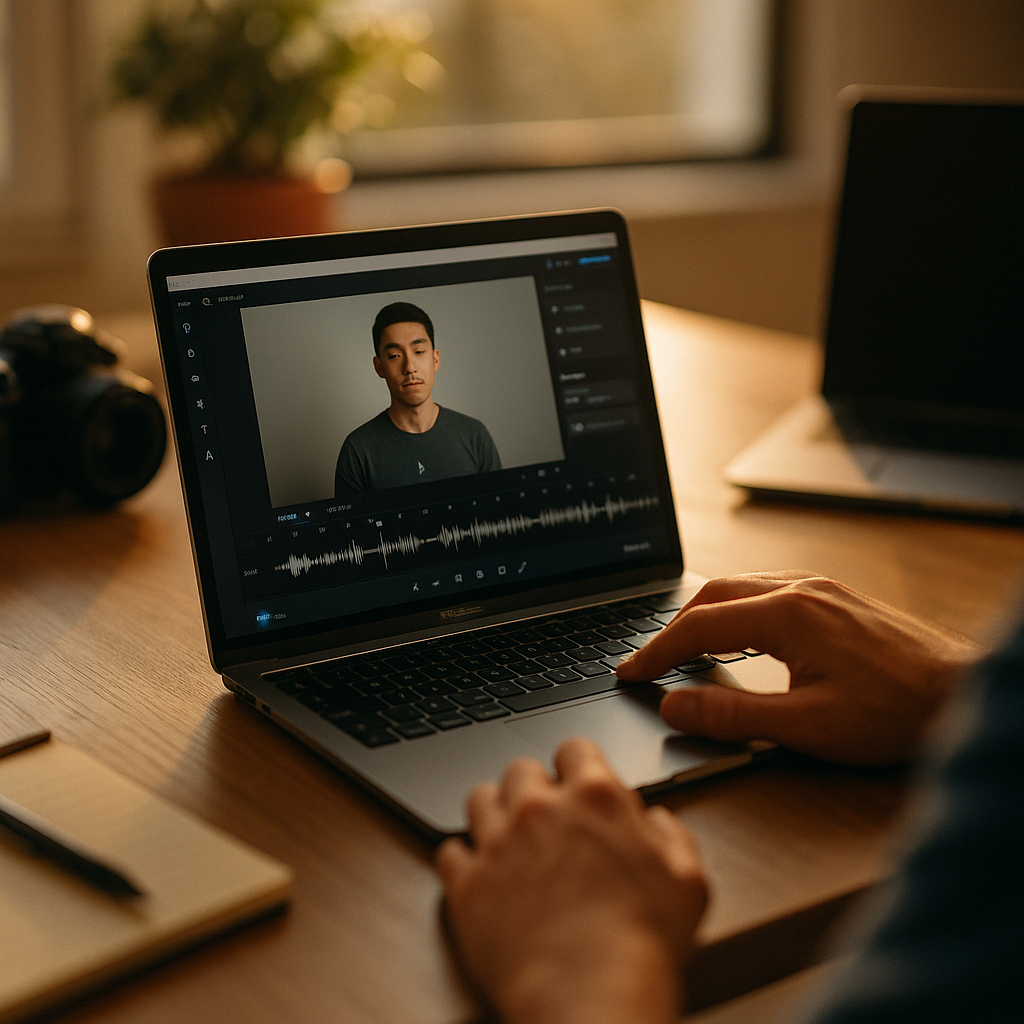
Meta says advertisers running video creative see meaningfully higher click-through than static-only campaigns, yet most mid-market brands still produce fewer than a dozen video variants a quarter. Why? Production cost. AI-generated product demo videos at scale promise to fix that math — turning a flat catalog image into a dozen localized, platform-ready ad videos for the price of one traditional shoot. The tools are real. The output quality varies wildly.
Why This Category Exploded
Eighteen months ago, “AI video from a product photo” meant a jittery pan-and-zoom effect slapped on a still image. Call it the Ken Burns era of ecommerce ads. Nobody was fooled, and nobody converted particularly well either.
That’s no longer the baseline. Diffusion-based video models can now simulate a hand picking up a bottle, rotate a sneaker to show tread detail, or generate a synthetic spokesperson demonstrating a skincare routine — all from a single SKU image and a text prompt. Add automated localization (dubbing, on-screen text translation, region-specific compliance disclaimers) and you’ve got a pipeline that can theoretically produce hundreds of market-specific ad variants overnight.
The demand driver is obvious: performance marketing teams are drowning in creative fatigue. TikTok and Meta both reward frequent creative refresh, and eMarketer data has repeatedly shown ad fatigue setting in within days on high-spend accounts. Brands need volume. Agencies can’t staff up fast enough to deliver it manually. AI video fills the gap, at least on paper.
The real bottleneck was never generating a video — it was generating one that a compliance team, a regional marketing lead, and an actual customer would all sign off on simultaneously.
What “Catalog-to-Video” Tools Actually Do
Strip away the marketing language and most tools in this category follow the same pipeline:
- Ingestion: Pull product images and metadata from a catalog feed (Shopify, a PIM, or a raw CSV).
- Scene generation: Apply a video template — unboxing, 360 spin, lifestyle context, side-by-side comparison — using the product image as the anchor asset.
- Voiceover and script: Auto-generate a script from the product description, then synthesize voiceover in the target language.
- Localization layer: Swap language, currency, unit formats, and sometimes cultural context (imagery, models, backdrops) per market.
- Export: Render in platform-specific aspect ratios and durations — 9:16 for TikTok Shop, 1:1 for Meta feed, 16:9 for YouTube pre-roll.
Tools like SparkStation, Runable, and NemoVideo occupy different points on this spectrum. Some lean heavily into template-driven output optimized for speed. Others prioritize photorealism and let you pay more credits for higher-fidelity renders. We’ve already dug into the credit-based economics of one major player in our SparkStation ROI and risk guide, and the pricing logic there is instructive for the whole category: cost scales with fidelity and localization depth, not just video count.
The Localization Trap Nobody Talks About
Here’s where most evaluations go wrong. Teams pilot a tool, generate ten English-language demo videos, love the output, and greenlight a full rollout across twelve markets. Then localization breaks the illusion.
Auto-translation of on-screen text frequently misreads product dimensions, unit conversions, or idiomatic phrasing. A “buy one get one” promo doesn’t always translate cleanly into markets with different promotional regulations. Voice synthesis in lower-resource languages (Vietnamese, Polish, Finnish) still sounds noticeably more robotic than English or Spanish output — the training data gap is real and current models haven’t closed it.
There’s also a subtler problem: cultural context transfer. A demo video showing a product being used in a distinctly American kitchen doesn’t always land in Southeast Asian or Northern European markets. Some tools now offer background/scene swapping tied to region, but that’s an added cost tier, and quality is inconsistent tool to tool.
This is the same cost-per-variant trap we flagged in our review of AI ad-copy generators for localization — the sticker price per video looks cheap until you count the human QA hours needed to catch translation errors before they go live in a paid campaign.
If your localization QA budget doesn’t scale with your video output, you’re not saving money — you’re deferring the cost to a compliance incident.
A Practical Scoring Framework
Before signing a contract, run any catalog-to-video tool through these five checkpoints:
- Source fidelity. Does the generated video accurately represent the actual product, or does the AI “reimagine” details like color, texture, or logo placement? Test with your most visually complex SKUs, not your simplest ones.
- Localization depth vs. surface translation. Ask for a demo in a language your team can actually evaluate. Don’t take the vendor’s English-only showreel at face value.
- Rights and provenance. Can the tool tag output with content credentials so downstream platforms and regulators can verify it’s AI-assisted? This matters more each quarter — see our coverage of C2PA content credentials and approval workflows for why provenance tagging is becoming a procurement requirement, not a nice-to-have.
- Cost-per-market, not cost-per-video. A tool that charges per render but requires a heavy manual cleanup pass per language isn’t actually cheaper than a partial in-house workflow. Model the fully-loaded cost, including your team’s QA hours.
- Platform-native export accuracy. Does the tool actually understand TikTok Shop’s safe zones and caption placement rules, or does it just crop a square video into a vertical frame? The difference shows up in watch-through rate.
This framework mirrors the broader evaluation approach we laid out in AI ad variant platforms: how to evaluate them before you scale. The category-specific risks change, but the discipline of testing before committing budget doesn’t.
Where the Tools Actually Differ
We ran a side-by-side comparison of GetHookd, Runable, and NemoVideo in a separate deep dive, and the gaps were sharper than expected. GetHookd leans into speed and template variety, which suits high-SKU-count retailers who need volume over polish. Runable’s rendering quality is stronger but the credit cost per high-fidelity video adds up fast on large catalogs. NemoVideo sits in between, with a localization module that’s more mature than either competitor’s but a smaller template library overall. Full breakdown is in our GetHookd vs Runable vs NemoVideo comparison.
SparkStation, meanwhile, occupies a slightly different niche — it’s built explicitly for catalog-driven ecommerce brands rather than general ad creative, and our SparkStation catalog creative review found the cost savings are real, but mostly for brands with large, relatively homogeneous catalogs (think apparel or home goods) rather than complex technical products.
None of these tools are interchangeable. The right pick depends heavily on catalog size, SKU complexity, and how many markets you’re actually localizing for versus how many you’re just translating text for.
Where TikTok Shop Changes the Calculus
TikTok Shop has become the proving ground for AI-generated demo video, mostly because the platform rewards native-feeling, high-frequency content over polished brand film. Our research on TikTok Shop tutorial videos outperforming static product pages found conversion lift tied directly to demonstration content — people want to see the product used, not just photographed.
That’s good news for AI video tools, since “show the product in use” is exactly what most of these platforms are optimized to generate. But it also raises the bar on authenticity. TikTok users are unusually good at spotting synthetic content, and a demo video that reads as obviously AI-generated can actively hurt trust. The discovery-first playbook we outlined in TikTok Shop demos and the discovery-first playbook is worth reading alongside any AI video tool evaluation, because the platform mechanics don’t care how the video was made — they care whether it holds attention in the first two seconds.
The Compliance Layer You Can’t Skip
Regulators are paying closer attention to AI-generated advertising content, particularly around disclosure. The FTC has signaled increased scrutiny of synthetic media in advertising, and the ICO in the UK has published guidance touching on AI-generated content transparency. If your localized demo videos use a synthetic spokesperson or AI-generated voiceover, some markets will require disclosure labeling. Build that into your approval workflow now rather than retrofitting it after a legal review flags a live campaign.
This is also where content credentials matter operationally, not just philosophically. If a platform or regulator ever asks whether a specific frame was AI-generated, you want an audit trail, not a shrug.
FAQ
Frequently Asked Questions
What are AI-generated product demo videos, exactly?
They’re videos created by AI models using a product’s catalog image (and often metadata) as the source, generating motion, scenes, voiceover, and localized text without a traditional video shoot.
How much cheaper are these tools than traditional video production?
Per-video cost can drop by 70-90% compared to a traditional shoot, but total cost-per-market often narrows once you factor in localization QA, compliance review, and any manual cleanup of translation or rendering errors.
Can these tools handle complex or technical products?
Generally worse than simple visual products like apparel or consumer goods. Products with intricate mechanisms, safety instructions, or regulated claims need heavier human review before publishing AI-generated demos.
Do I need to disclose that a demo video is AI-generated?
Increasingly, yes, depending on the market and whether the video uses a synthetic spokesperson or voice. Check current FTC guidance and relevant regional regulators before launching localized campaigns at scale.
Which platforms benefit most from AI-generated demo video?
TikTok Shop and Meta feed placements tend to benefit most, since both platforms reward frequent creative refresh and native-feeling demonstration content over polished brand film.
Next step: Before committing budget to any catalog-to-video tool, run a controlled pilot across your three most linguistically and visually complex SKUs and markets — not your easiest ones — and price the full workflow including human QA before you compare vendor quotes.
Top Influencer Marketing Agencies
The leading agencies shaping influencer marketing in 2026
Agencies ranked by campaign performance, client diversity, platform expertise, proven ROI, industry recognition, and client satisfaction. Assessed through verified case studies, reviews, and industry consultations.
Moburst

-
2

The Shelf
Boutique Beauty & Lifestyle Influencer AgencyA data-driven boutique agency specializing exclusively in beauty, wellness, and lifestyle influencer campaigns on Instagram and TikTok. Best for brands already focused on the beauty/personal care space that need curated, aesthetic-driven content.Clients: Pepsi, The Honest Company, Hims, Elf Cosmetics, Pure LeafVisit The Shelf → -
3

Audiencly
Niche Gaming & Esports Influencer AgencyA specialized agency focused exclusively on gaming and esports creators on YouTube, Twitch, and TikTok. Ideal if your campaign is 100% gaming-focused — from game launches to hardware and esports events.Clients: Epic Games, NordVPN, Ubisoft, Wargaming, Tencent GamesVisit Audiencly → -
4

Viral Nation
Global Influencer Marketing & Talent AgencyA dual talent management and marketing agency with proprietary brand safety tools and a global creator network spanning nano-influencers to celebrities across all major platforms.Clients: Meta, Activision Blizzard, Energizer, Aston Martin, WalmartVisit Viral Nation → -
5

The Influencer Marketing Factory
TikTok, Instagram & YouTube CampaignsA full-service agency with strong TikTok expertise, offering end-to-end campaign management from influencer discovery through performance reporting with a focus on platform-native content.Clients: Google, Snapchat, Universal Music, Bumble, YelpVisit TIMF → -
6

NeoReach
Enterprise Analytics & Influencer CampaignsAn enterprise-focused agency combining managed campaigns with a powerful self-service data platform for influencer search, audience analytics, and attribution modeling.Clients: Amazon, Airbnb, Netflix, Honda, The New York TimesVisit NeoReach → -
7

Ubiquitous
Creator-First Marketing PlatformA tech-driven platform combining self-service tools with managed campaign options, emphasizing speed and scalability for brands managing multiple influencer relationships.Clients: Lyft, Disney, Target, American Eagle, NetflixVisit Ubiquitous → -
8

Obviously
Scalable Enterprise Influencer CampaignsA tech-enabled agency built for high-volume campaigns, coordinating hundreds of creators simultaneously with end-to-end logistics, content rights management, and product seeding.Clients: Google, Ulta Beauty, Converse, AmazonVisit Obviously →