


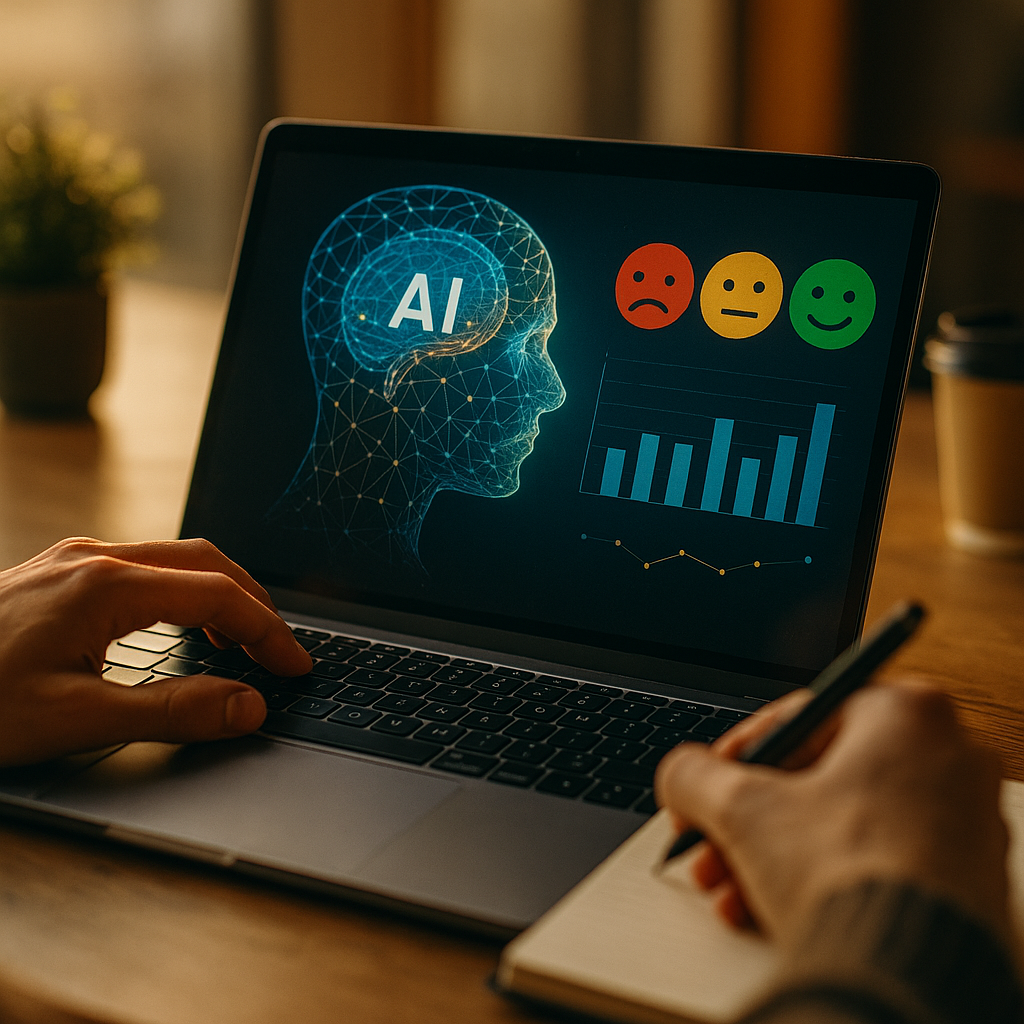
AI for sentiment analysis is revolutionizing how businesses and organizations understand human emotions in text. Moving beyond basic positive or negative tags, modern AI can now detect subtle tones, sarcasm, context, and complex emotions at scale. Discover how advanced sentiment analysis can unlock deeper insights and actionable data for your brand and customer experience.
Understanding AI-Driven Sentiment Analysis
In 2025, AI-powered sentiment analysis has evolved far past simple phrase tagging. By leveraging advanced natural language processing (NLP) algorithms, machine learning models can identify nuances in tone, emotion, and intent. Modern sentiment analysis tools don’t just label a review as “good” or “bad”—they extract context and emotional depth, offering a richer understanding of public opinion and customer feedback.
This is crucial for businesses aiming to decipher complex human language in sources such as social media, product reviews, and support interactions. By understanding not only what was said, but how and why, organizations can tailor their responses and strategies more effectively.
AI Sentiment Detection: From Surface to Depth
Traditional sentiment analysis categorized text into broad buckets: positive, negative, or neutral. While helpful, this method oversimplifies communication. Today’s AI sentiment detection techniques use deep learning to capture much richer information, including:
- Emotional gradients: Distinguishing between feelings like disappointment, frustration, enthusiasm, and amusement.
- Context awareness: Factoring in previous messages and cultural background to understand meaning.
- Sarcasm and irony detection: Recognizing indirect or contradictory expressions that confuse simpler models.
For example, when analyzing the phrase “Great, another repair call—just what I needed,” a state-of-the-art system infers frustration, not positivity. This ability to go beyond surface meaning empowers decision-makers to respond with greater empathy and precision.
Real-World Applications of Advanced Emotion Mining
Modern emotion mining unlocks practical benefits across industries. Here’s how businesses and organizations are putting advanced AI sentiment analysis to work:
- Customer experience management: Detect and address hidden dissatisfaction before escalations occur.
- Brand health tracking: Monitor evolving public perception with nuance, even as cultural meanings shift.
- Product development: Gather actionable feedback that highlights specific sources of frustration or delight, not just overall sentiment.
- Social listening: Identify viral trends, emerging crises, or influencer impact based on emotion, not just volume.
- Mental health monitoring: Screen for subtle mood shifts or distress in large-scale digital communication, providing early interventions.
These applications help organizations save time, protect their reputation, and deliver what customers truly want.
Sentiment Analytics Tools: Choosing the Right Solution
With the proliferation of sentiment analytics tools, selecting the right platform can be challenging. Consider these key factors to ensure your investment delivers value:
- Granularity: Does the tool detect various emotions, or just simple positive/negative tones?
- Multi-language support: Is it accurate across different languages and regions?
- Real-time capabilities: Can it process data streams instantly for agile response?
- Customizability: Can you train the AI to understand your industry’s unique language?
- Integration: Does it fit into your existing CRM or business intelligence platforms?
In 2025, leading platforms also emphasize data privacy, ethical usage, and explainability, aligning with modern regulatory standards and public trust.
Challenges in Interpreting Sentiment Using AI
Despite major advances, AI-driven sentiment detection is not without hurdles. Key challenges include:
- Ambiguity: Some language is inherently open to interpretation, even for humans.
- Cultural context: Slang, idioms, and tone differ across cultures and communities.
- Limited data: AI models trained on insufficient or biased data may misread emotions, especially for minority languages.
- Sarcasm and subtlety: Even with improvements, sarcasm remains difficult, especially when context is limited.
To address these, top-performing sentiment analytics companies continually retrain their models on fresh, diverse datasets. Transparent reporting of system confidence and flagging ambiguous cases are also now standard best practices.
Future Trends in AI Text Emotion Analysis
The future of AI text emotion analysis is bright and fast-moving. Key developments on the horizon include:
- Multimodal analysis: Combining text, audio, and visual cues for richer emotional insights.
- Explainability: AI systems increasingly provide understandable reasons behind emotional labels, boosting trust and accountability.
- Personalized models: Tailoring emotion detection to individual or demographic communication styles.
- Privacy-preserving AI: Leveraging federated learning and on-device processing to protect user data.
As organizations continue to harness these capabilities, sentiment analytics will become a core pillar in understanding and anticipating human behavior at scale.
In summary, AI for sentiment analysis now goes far beyond basic positive or negative tags. With nuanced detection and context-aware insights, modern sentiment analytics empowers businesses to humanize digital engagement, inform strategy, and improve experiences—setting them apart in today’s data-rich world.
FAQs: AI For Sentiment Analysis
- What is sentiment analysis in AI?
Sentiment analysis in AI refers to the automated process of identifying and categorizing emotions or opinions within text using machine learning and natural language processing. - How accurate is AI-powered sentiment analysis in 2025?
With advancements in deep learning and access to diverse data, leading sentiment analysis tools now achieve over 90% accuracy on well-resourced languages, though performance can vary by context and data quality. - Can AI detect sarcasm and complex emotions?
Yes, modern AI models are increasingly capable of recognizing sarcasm, irony, and nuanced feelings by analyzing context, word choice, and conversation history. - Which industries benefit most from advanced sentiment analytics?
Industries such as retail, hospitality, finance, healthcare, and technology use advanced sentiment analytics for customer experience management, brand monitoring, and product innovation. - Are there privacy concerns with sentiment analysis?
As with all AI applications, responsible sentiment analysis requires strong data privacy practices and compliance with regulations, a key focus of new platforms released in 2025.