


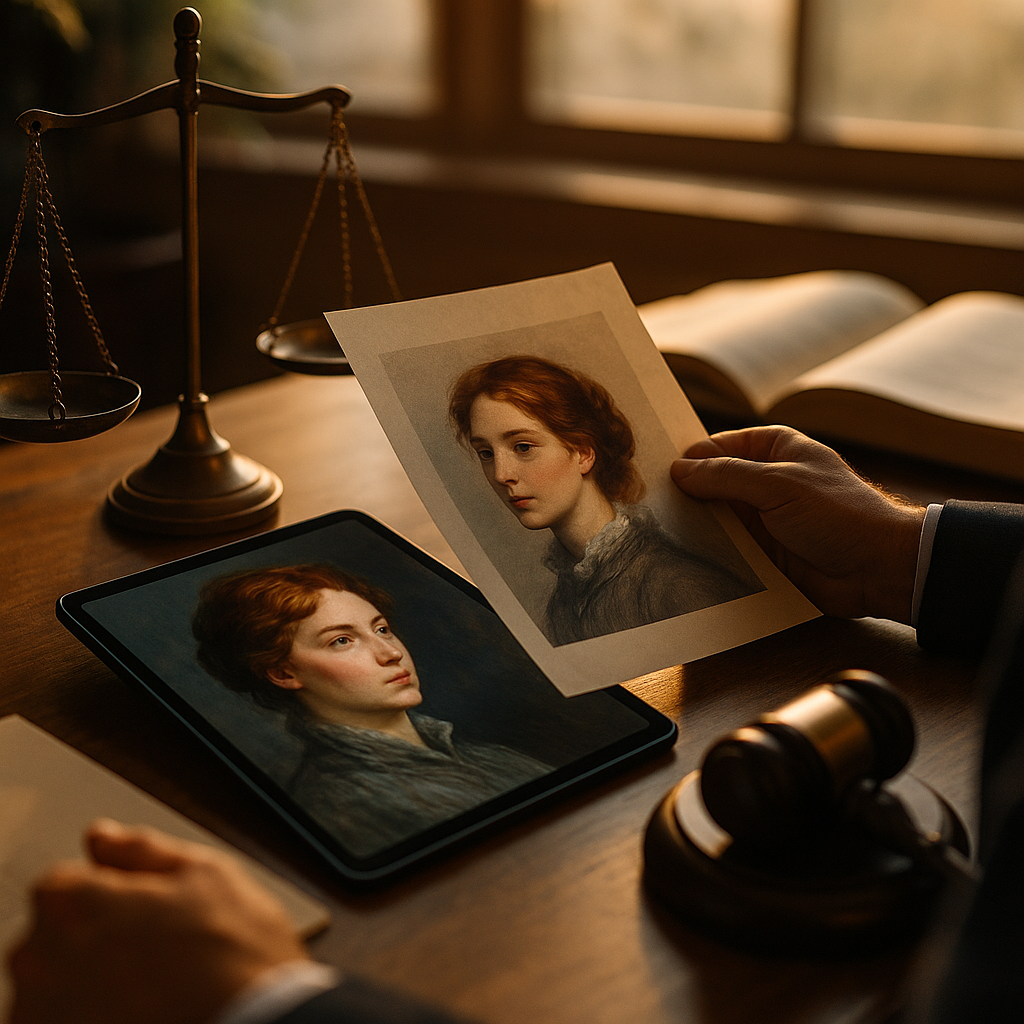
As AI technology evolves, the legal implications of AI-generated content that mimics a creator’s style are a critical concern for professionals and businesses in 2025. Content creators face new challenges in protecting their intellectual property as generative AI blurs the line between inspiration and imitation. Understanding these complexities is essential—so what legal protections actually apply today?
Defining AI-Generated Style Mimicry and Originality
The ability of AI models to replicate an individual’s writing style, visual art, or musical signature is advancing rapidly. Style mimicry now refers not only to abstract “inspired by” works, but to sophisticated outputs that closely resemble the hallmark traits of living creators. This raises a pivotal question: where is the line between homage and outright copying?
Legally, originality hinges on the expression of ideas, not the ideas themselves. Courts often examine whether the end product is “substantially similar” to the copyrighted work. Yet, when AI produces new content shaped by the style—but not direct excerpts—of a creator, establishing infringement becomes increasingly complex.
Coping with Copyright Laws and AI in 2025
As copyright law adapts to digital realities, its treatment of AI-generated content remains unsettled. In 2025, current copyright regimes worldwide acknowledge AI and intellectual property as an emerging frontier. Most notably, U.S. and international laws only grant copyright protection to works created with sufficient human authorship. This means AI-generated process outputs are not inherently copyrightable unless significant human creative input is evident.
Problems arise if an AI replicates the distinctive patterns of a creator’s output. If a work convincingly mimics a songwriter’s lyrical cadence or a novelist’s voice, the original creator may argue that their style constitutes an element of protectable expression. However, legal precedent rarely extends copyright to stylistic elements alone, requiring clear evidence of copied content—or “substantial similarity”—for a ruling of infringement.
Right of Publicity and Personality in AI-Imitation
Beyond copyright, the right of publicity presents another legal dimension. This right protects individuals from unauthorized commercial exploitation of their persona—including name, likeness, and in some jurisdictions, aspects of their distinctive style. If an AI is programmed specifically to generate works closely resembling a public figure, artist, or influencer, it may run afoul of these laws.
Recent high-profile lawsuits against deepfake technology demonstrate growing judicial concern over unauthorized AI-driven impersonation. In 2025, several U.S. states and global jurisdictions have expanded statutory definitions to include style mimicry—offering avenues for recourse when a creator’s identity is commercially exploited by algorithms.
Ethical and Moral Concerns for Content Creators
Legal frameworks are still catching up, but AI ethics in content creation are top-of-mind for organizations and creators. Key issues include:
- Attribution: Should AI-generated imitations transparently credit the stylistic source?
- Consent: When does mimicking someone’s creative “voice” cross a moral line?
- Economic Impact: If businesses or individuals monetize AI-generated imitations, does this harm the original creator’s livelihood or reputation?
Industry best practices increasingly call for transparent disclosures when using AI tools, especially if the output closely references a living creator. Such measures can help manage public trust, avoid legal risk, and foster a healthier creative ecosystem.
Enforcement Challenges and Emerging Legal Solutions
The legal challenges for AI content enforcement hinge on detection and attribution. Identifying AI-generated works that mimic a creator’s style without direct copying is technically difficult. Advances in watermarking, content provenance tools, and AI-detection services provide some support, but these solutions are not foolproof.
Meanwhile, lawmakers and courts are exploring hybrid solutions. Proposed approaches in 2025 include:
- Digital identity registries for creators’ works and styles
- Industry-specific codes of conduct for responsible AI deployment
- Contract-based agreements with clear permissions (or prohibition) of style imitation by AI developers
Proactive creators are increasingly securing trademarks on distinctive signatures—such as catchphrases or stylistic motifs—to further bolster legal protection in gray areas.
Best Practices for Businesses and Creators Navigating Legal Gray Zones
Given legal uncertainties, AI-generated content compliance requires diligence from both companies and creators. Experts recommend the following:
- Disclose when AI is used. Transparency with audiences reduces risk and fosters trust.
- Audit AI training data. Ensure datasets do not contain unauthorized copyrighted material or personal data.
- Implement ethical review boards. Regularly review AI outputs for compliance with both legal and moral guidelines.
- Update contracts. Specify terms for acceptable AI use and content ownership with collaborators and clients.
- Monitor for misuse. Use detection tools to identify potential infringements or misuse of your stylistic identity online.
These measures not only reduce exposure to litigation, but also support a more responsible and fair digital creative economy.
Conclusion
As AI-generated content increasingly mimics creators’ styles in 2025, understanding the intertwined legal, ethical, and technical challenges is essential. Proactive transparency and informed compliance are the best strategies to protect creative integrity and intellectual property in this evolving landscape.
Frequently Asked Questions
-
Can a creator’s style be copyrighted?
Generally, copyright law does not protect style alone—only the expression of ideas. However, if an AI-generated work copies distinctive, original content, infringement might be established. Some jurisdictions are expanding protection to certain elements of style under the right of publicity or trademark law.
-
Is using AI to mimic a living creator’s style illegal?
It depends on intent, jurisdiction, and how closely the output matches the original. Using someone’s style for commercial gain without consent may violate publicity or trademark rights, especially if the imitation misleads consumers or harms the creator’s reputation.
-
How can creators protect their style against AI imitation?
Creators can register trademarks for unique stylistic elements, monitor online platforms for misuse, and use digital registries to establish authorship. Contractual agreements and proactive communication with AI companies also help clarify boundaries.
-
What should businesses consider before deploying AI for content generation?
Businesses should perform legal and ethical audits of AI tools, ensure transparency about AI usage, avoid using copyrighted material or personal likenesses without permission, and update contracts to reflect new risks and obligations.
Top Influencer Marketing Agencies
The leading agencies shaping influencer marketing in 2026
Agencies ranked by campaign performance, client diversity, platform expertise, proven ROI, industry recognition, and client satisfaction. Assessed through verified case studies, reviews, and industry consultations.
Moburst

-
2

The Shelf
Boutique Beauty & Lifestyle Influencer AgencyA data-driven boutique agency specializing exclusively in beauty, wellness, and lifestyle influencer campaigns on Instagram and TikTok. Best for brands already focused on the beauty/personal care space that need curated, aesthetic-driven content.Clients: Pepsi, The Honest Company, Hims, Elf Cosmetics, Pure LeafVisit The Shelf → -
3

Audiencly
Niche Gaming & Esports Influencer AgencyA specialized agency focused exclusively on gaming and esports creators on YouTube, Twitch, and TikTok. Ideal if your campaign is 100% gaming-focused — from game launches to hardware and esports events.Clients: Epic Games, NordVPN, Ubisoft, Wargaming, Tencent GamesVisit Audiencly → -
4

Viral Nation
Global Influencer Marketing & Talent AgencyA dual talent management and marketing agency with proprietary brand safety tools and a global creator network spanning nano-influencers to celebrities across all major platforms.Clients: Meta, Activision Blizzard, Energizer, Aston Martin, WalmartVisit Viral Nation → -
5

The Influencer Marketing Factory
TikTok, Instagram & YouTube CampaignsA full-service agency with strong TikTok expertise, offering end-to-end campaign management from influencer discovery through performance reporting with a focus on platform-native content.Clients: Google, Snapchat, Universal Music, Bumble, YelpVisit TIMF → -
6

NeoReach
Enterprise Analytics & Influencer CampaignsAn enterprise-focused agency combining managed campaigns with a powerful self-service data platform for influencer search, audience analytics, and attribution modeling.Clients: Amazon, Airbnb, Netflix, Honda, The New York TimesVisit NeoReach → -
7

Ubiquitous
Creator-First Marketing PlatformA tech-driven platform combining self-service tools with managed campaign options, emphasizing speed and scalability for brands managing multiple influencer relationships.Clients: Lyft, Disney, Target, American Eagle, NetflixVisit Ubiquitous → -
8

Obviously
Scalable Enterprise Influencer CampaignsA tech-enabled agency built for high-volume campaigns, coordinating hundreds of creators simultaneously with end-to-end logistics, content rights management, and product seeding.Clients: Google, Ulta Beauty, Converse, AmazonVisit Obviously →