


One Platform, 200 Brands, and a Creative Workflow That No Longer Needs a Production Team
When a single AI video platform quietly crosses 200 active brand accounts, that’s not a product milestone — it’s a market signal. NemoVideo’s network growth is one of the clearest indicators yet that AI video agent adoption is moving from experimentation to operational infrastructure inside e-commerce marketing teams.
The question isn’t whether AI-generated video will be part of your creative stack. It already is, for your competitors.
What NemoVideo Actually Does (and Why Brands Are Paying Attention)
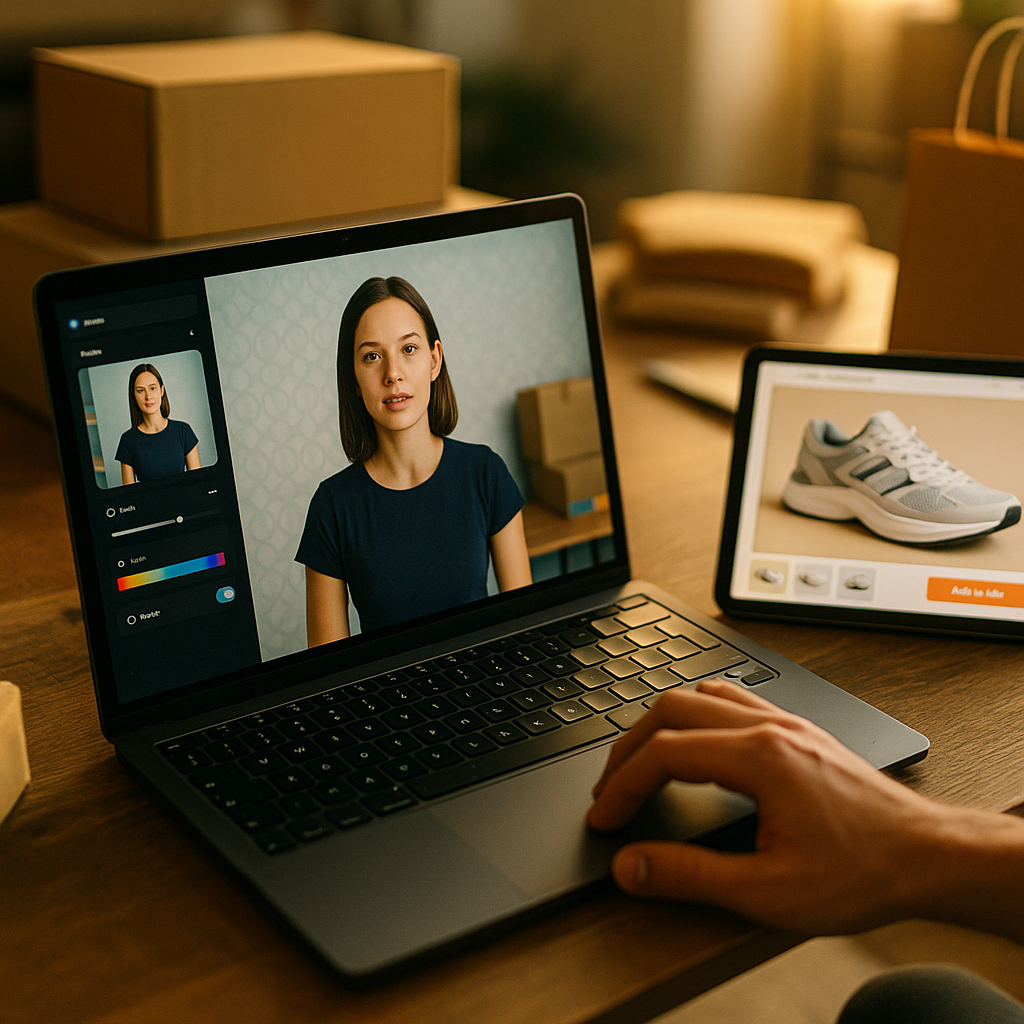
NemoVideo sits in a specific category: AI video agents purpose-built for product-driven content. Unlike general-purpose tools like Runway or Pika, NemoVideo focuses on converting product catalogs, SKU data, and brief inputs into shoppable, on-brand video at scale. For e-commerce teams managing hundreds or thousands of SKUs, that’s not a convenience feature. It’s a production model shift.
At 200 brands, NemoVideo has enough network density that its model is learning from a commercially significant dataset. Brands in that network aren’t just getting automation — they’re getting a system that improves based on what performs across a range of categories, formats, and audience types. That compounding effect is worth understanding before your team dismisses AI video as a shortcut for underfunded campaigns.
Platforms with cross-brand training data have a compounding performance advantage that point-in-time creative tools simply cannot replicate. The longer a brand waits to participate, the wider that gap becomes.
The E-Commerce Creative Problem AI Video Actually Solves
Traditional video production for e-commerce has always had an economics problem. Studio shoots are expensive. UGC is unpredictable in quality and availability. Motion graphics require skilled designers. The result: most brands produce fewer videos than their channel strategies actually require, then over-distribute the ones they have until performance craters.
AI video agents solve the volume-quality tension. They don’t replace creative direction — but they do make it possible to produce 40 variations of a product video instead of four, test them across placements, and iterate on winners without scheduling another shoot.
For context: eMarketer research has consistently shown that video ad frequency and variation are among the top predictors of conversion lift in paid social. Brands that can produce more variations, faster, without proportional cost increases, have a structural advantage in performance media.
That’s the operational case for AI video adoption. But the strategic case runs deeper.
What 200 Brands Signals About Creative Strategy Maturity
Here’s what’s actually interesting about NemoVideo’s network: the composition matters as much as the count. Early AI creative tool adoption skewed toward direct-to-consumer startups with lean teams and high content velocity requirements. If NemoVideo’s 200-brand network now includes mid-market retailers and established consumer goods brands, that’s a different signal entirely.
It means the “we need to evaluate this properly before committing” phase is ending. For brands in those categories, AI video agents are moving through procurement, legal review, and brand guidelines compliance — which means the tools have matured enough to meet enterprise standards, not just startup speed requirements.
This parallels what we’ve seen in creator economy consolidation: institutional capital and large brand adoption are the real validation events, not press coverage. If you’re a brand team still in a pilot phase with AI video, the window for treating this as an experiment is closing. For context on how similar consolidation dynamics played out in the creator space, see creator economy consolidation trends.
AI Video Agents and the Influencer Creative Relationship
One thing brands routinely get wrong: framing AI video agents as a replacement for creator content. They’re not. They’re a complement with a different job description.
Creator content carries trust signals, social proof, and audience affinity that AI-generated video doesn’t replicate. A NemoVideo-produced SKU video for a PDP or paid placement does a different job than a creator’s authentic review or tutorial. The mistake is treating them as competing line items in the budget rather than as distinct tools for distinct funnel stages.
The more sophisticated framing: AI video handles the bottom-of-funnel creative volume problem — retargeting variants, product page assets, A/B test permutations, localization — while creator content remains the primary trust and awareness engine. This two-layer model is already how leading e-commerce brands are structuring their creative operations. For a detailed look at how AI ad spend and creator investment should be sequenced, the strategic logic holds directly here.
Budget allocation follows from this. If AI video takes over high-frequency, low-differentiation creative production, it frees creator budget for fewer, higher-trust partnerships rather than volume plays. That’s a better use of creator relationships and a more defensible ROI model for both channels.
AI video doesn’t shrink the creator budget — it justifies concentrating it on fewer, higher-value partnerships where authenticity and audience trust are irreplaceable.
Compliance and Brand Safety at Scale
Any brand team scaling AI-generated video output needs a governance answer before the output volume outpaces review capacity. This isn’t hypothetical: auto-generated video that misrepresents product claims, uses unlicensed brand assets, or violates platform ad policies creates real liability at scale.
The FTC’s disclosure guidelines apply to AI-generated content in advertising contexts, and most brands haven’t fully mapped their AI creative workflows to their existing compliance processes. That’s a gap worth closing now, before volume makes it an audit problem.
Platform-side, both Meta’s ad policies and TikTok’s ad standards have explicit requirements around AI-generated content labeling in paid placements. If your AI video workflow doesn’t include a compliance checkpoint, you’re running undisclosed risk on every placement.
The brands using NemoVideo effectively are the ones that have built brand safety guardrails into the generation workflow itself — approved asset libraries, locked color and font systems, human review triggers for specific claim types. This is not AI-specific; it’s the same governance infrastructure brands have been formalizing for creator content. The principle transfers directly.
What to Watch as Adoption Scales
NemoVideo’s 200-brand network is a leading indicator, not a ceiling. As adoption scales, a few dynamics are worth monitoring.
- Creative differentiation risk: When many brands use the same AI video platform with similar inputs, output aesthetics can converge. Brand distinctiveness requires intentional creative direction on top of AI generation, not just template selection.
- Platform algorithmic treatment: There’s an open question about how platforms like TikTok and Meta will weight AI-generated video in organic and paid algorithms over time. Platform research on content signals suggests authenticity markers still drive organic reach, which keeps human-created content relevant at the top of funnel.
- Vendor concentration risk: Relying on a single AI video platform creates dependency risk similar to what we’ve seen in creator tool consolidation. Brands that diversify across two or three AI creative tools while standardizing their input and governance processes will be more resilient. The vendor risk frameworks developed for creator platforms apply directly here.
- Measurement standardization: AI-generated video performance metrics aren’t yet standardized across platforms. Brands need to define their own KPI hierarchy — view-through rate, conversion assist, cost-per-acquisition by placement — before scaling output, or they’ll optimize toward proxy metrics that don’t reflect business outcomes.
The broader e-commerce video market is growing fast enough that brands sitting on the sidelines aren’t waiting safely — they’re falling behind teams that are compounding learning right now. And for teams thinking through how AI platform signals translate to budget decisions, NemoVideo’s network scale is exactly the kind of operational data point that should move internal conversations forward.
If your creative strategy review is coming up, put AI video agent capacity on the agenda — not as a pilot item, but as a production infrastructure decision.
Frequently Asked Questions
What is NemoVideo and why does its 200-brand network matter for e-commerce brands?
NemoVideo is an AI video agent platform designed specifically for product-driven e-commerce content. Its 200-brand network signals that AI video generation has moved beyond startup experimentation into mainstream adoption among mid-market and enterprise brands, making it a relevant operational benchmark for brand teams evaluating their own creative infrastructure.
How does AI video agent adoption affect influencer marketing budgets?
AI video agents handle high-frequency, lower-differentiation creative tasks — retargeting variants, product page assets, localization — freeing up creator budget for fewer, higher-value influencer partnerships. Rather than cutting influencer spend, AI video allows brands to concentrate it where human trust and authenticity create the most impact.
What compliance risks should brands address when scaling AI-generated video?
Key risks include FTC disclosure requirements for AI-generated advertising content, platform-specific labeling policies on Meta and TikTok, and brand safety issues from auto-generated content that may misrepresent product claims. Brands should build compliance checkpoints directly into the AI video generation workflow before scaling output volume.
Can AI-generated video replace creator content in e-commerce marketing?
No. AI-generated video and creator content serve different funnel functions. Creator content builds trust, social proof, and audience affinity at the top of funnel. AI video is most effective for bottom-of-funnel conversion content, A/B test variants, and performance media placements where volume and iteration speed matter more than authenticity signals.
What should brand teams do to avoid creative convergence when using shared AI video platforms?
Brands using platforms like NemoVideo should invest in strong creative direction inputs — approved asset libraries, distinctive visual systems, and unique product narratives — rather than relying on default templates. The output quality and differentiation of AI-generated video is directly proportional to the quality of the creative brief and brand inputs provided.
Top Influencer Marketing Agencies
The leading agencies shaping influencer marketing in 2026
Agencies ranked by campaign performance, client diversity, platform expertise, proven ROI, industry recognition, and client satisfaction. Assessed through verified case studies, reviews, and industry consultations.
Moburst

-
2

The Shelf
Boutique Beauty & Lifestyle Influencer AgencyA data-driven boutique agency specializing exclusively in beauty, wellness, and lifestyle influencer campaigns on Instagram and TikTok. Best for brands already focused on the beauty/personal care space that need curated, aesthetic-driven content.Clients: Pepsi, The Honest Company, Hims, Elf Cosmetics, Pure LeafVisit The Shelf → -
3

Audiencly
Niche Gaming & Esports Influencer AgencyA specialized agency focused exclusively on gaming and esports creators on YouTube, Twitch, and TikTok. Ideal if your campaign is 100% gaming-focused — from game launches to hardware and esports events.Clients: Epic Games, NordVPN, Ubisoft, Wargaming, Tencent GamesVisit Audiencly → -
4

Viral Nation
Global Influencer Marketing & Talent AgencyA dual talent management and marketing agency with proprietary brand safety tools and a global creator network spanning nano-influencers to celebrities across all major platforms.Clients: Meta, Activision Blizzard, Energizer, Aston Martin, WalmartVisit Viral Nation → -
5

The Influencer Marketing Factory
TikTok, Instagram & YouTube CampaignsA full-service agency with strong TikTok expertise, offering end-to-end campaign management from influencer discovery through performance reporting with a focus on platform-native content.Clients: Google, Snapchat, Universal Music, Bumble, YelpVisit TIMF → -
6

NeoReach
Enterprise Analytics & Influencer CampaignsAn enterprise-focused agency combining managed campaigns with a powerful self-service data platform for influencer search, audience analytics, and attribution modeling.Clients: Amazon, Airbnb, Netflix, Honda, The New York TimesVisit NeoReach → -
7

Ubiquitous
Creator-First Marketing PlatformA tech-driven platform combining self-service tools with managed campaign options, emphasizing speed and scalability for brands managing multiple influencer relationships.Clients: Lyft, Disney, Target, American Eagle, NetflixVisit Ubiquitous → -
8

Obviously
Scalable Enterprise Influencer CampaignsA tech-enabled agency built for high-volume campaigns, coordinating hundreds of creators simultaneously with end-to-end logistics, content rights management, and product seeding.Clients: Google, Ulta Beauty, Converse, AmazonVisit Obviously →