


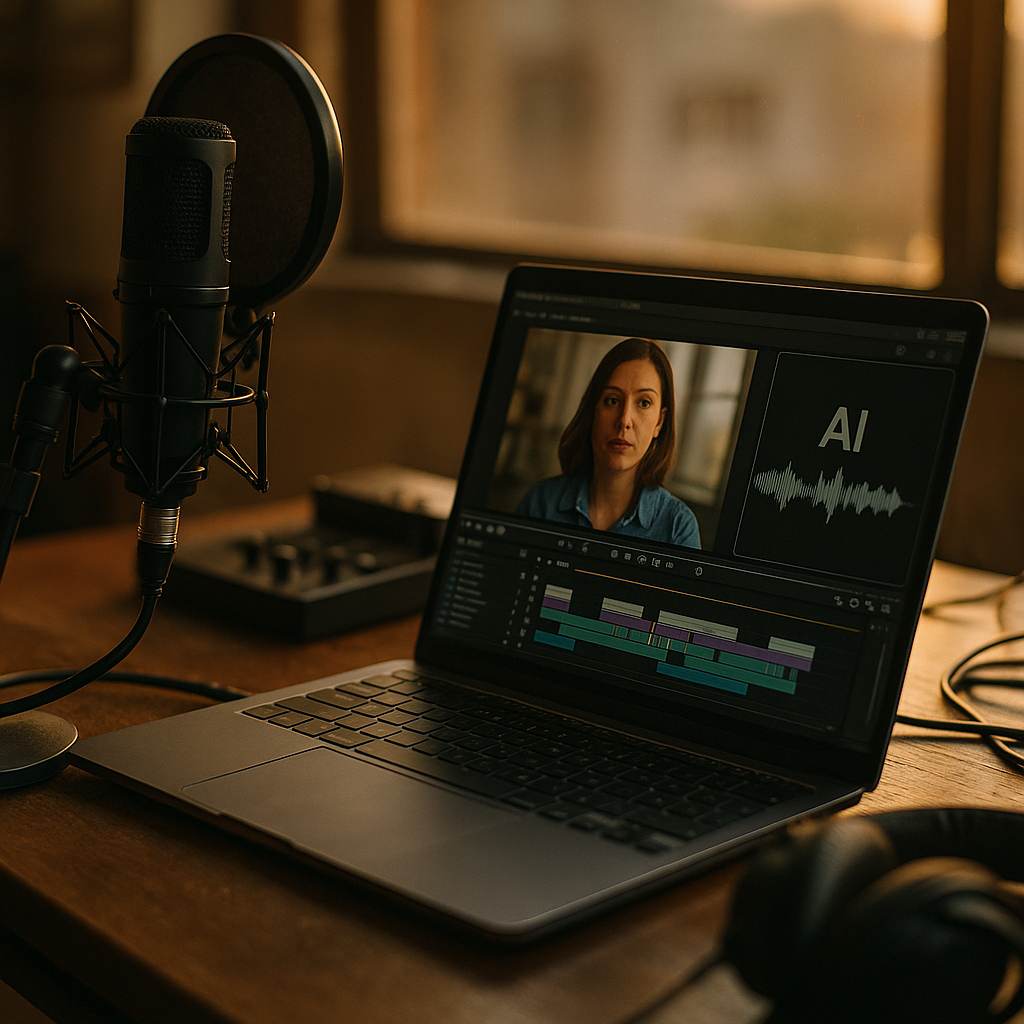
A 30-second ad dubbed into 12 languages used to take six weeks and a five-figure invoice. Now it takes days and a fraction of the budget. AI voice cloning has quietly become the default tool for localized ad dubbing, but the vendor landscape is messier than the demo reels suggest. If you’re running global campaigns, the platform you pick determines whether your brand sounds native in Berlin and Bangkok, or just gets flagged as synthetic and cheap.
This isn’t a “which tool is coolest” comparison. It’s a procurement question with legal, brand-safety, and margin implications baked in.
Why This Decision Landed on Marketing’s Desk
Voice cloning used to be a post-production line item, handled by whichever agency you retained for dubbing. That changed once platforms like ElevenLabs, Resemble AI, Speechify, and Deepdub started selling directly to brand marketing teams, promising same-day turnaround and per-minute pricing that undercuts traditional voice-over studios by 70% or more.
That shift moved the decision from procurement-and-legal into the marketing org, often without procurement or legal fully in the loop. Which is a problem, because these tools touch consent law, likeness rights, and platform disclosure rules simultaneously. A marketer picking a vendor based on voice quality alone is signing up for risk they didn’t budget for.
The real cost of AI voice cloning platforms isn’t the subscription fee — it’s the legal exposure from unclear consent chains and the brand damage from a dub that sounds uncanny in-market.
The Core Evaluation Criteria
Six factors separate a usable vendor from a liability. Score every platform against these before signing anything.
- Voice quality and prosody in target languages: English-to-Spanish dubbing is a solved problem. English-to-Mandarin or English-to-Arabic, with correct tonal inflection and emotional pacing, is where most platforms still stumble.
- Consent and rights management: Does the platform require documented, revocable consent from the original voice talent for every language and use case? Vague terms-of-service language here is a red flag, not a formality.
- Lip-sync and timing accuracy: For video ads, the dub has to match mouth movement closely enough that viewers don’t consciously notice the mismatch. Some vendors handle this natively; others require a separate lip-sync layer.
- Turnaround and scale: Can the vendor handle 40 language variants for a single 15-second spot inside a 48-hour launch window? Ask for proof, not a roadmap slide.
- Compliance posture: Watermarking, disclosure metadata, and audit trails matter more each quarter as regulators catch up. The FTC has already signaled scrutiny of AI-generated endorsements and synthetic media in advertising (see FTC guidance on AI and advertising), and the UK’s ICO has issued its own commentary on synthetic voice data handling via ICO data protection resources.
- Pricing model transparency: Per-minute, per-seat, or enterprise licensing — each has different implications at scale. A platform that’s cheap for one market can get punishing at 30 markets.
Where the Major Platforms Actually Differ
ElevenLabs remains the benchmark for raw voice quality and language breadth, with dozens of supported languages and strong emotional range. Its enterprise tier includes indemnification language and voice-consent workflows that legal teams tend to accept without much friction. The tradeoff: at high volume, per-character pricing adds up fast, and some regional dialects (parts of Southeast Asia, in particular) still sound noticeably synthetic.
Resemble AI leans harder into real-time and interactive use cases — think dynamic ad insertion for CTV — and its API integrates cleanly with existing ad tech stacks. That makes it attractive for teams already deep into programmatic localization. Quality in lower-resource languages, though, lags behind ElevenLabs.
Deepdub was built specifically for media localization, not general voice synthesis, which shows in its dubbing-specific tooling: automatic lip-sync alignment, scene-level emotional matching, and studio-grade output aimed at broadcast and streaming. It’s priced and positioned for larger campaigns, not quick social cuts.
Speechify and similar consumer-adjacent tools are fast and cheap, which makes them tempting for lower-stakes content. But their consent documentation and enterprise compliance features are thinner, and that gap becomes expensive the moment a regulator or a voice actor’s union asks questions.
What the “Cheap and Fast” Pitch Actually Costs You
Every vendor in this space pitches speed and cost savings. Neither matters if the output damages brand trust or triggers a legal claim. Consider three failure modes that show up repeatedly in brand-side postmortems.
First, uncanny valley dubbing. Viewers may not consciously identify a voice as synthetic, but they’ll register that something feels off, and that discomfort transfers to brand perception. eMarketer research on ad recall consistently shows that discomfort or distrust in creative execution suppresses message retention, even when viewers can’t articulate why.
Second, consent gaps. Several voice actors have filed complaints or gone public after discovering their cloned voices were used in markets or contexts they never approved. That’s not just a PR headache — it’s a contract dispute waiting to happen, and it’s exactly the kind of risk covered in AI disclosure requirements across major ad platforms.
Third, disclosure failure. Google, Meta, and TikTok have all rolled out AI-content disclosure requirements over the past year. A dubbed ad that doesn’t flag synthetic voice use can get flagged, throttled, or rejected outright depending on the platform’s current enforcement posture. Check current rules directly via Google’s ad policy support and Meta’s business advertising standards before you scale a campaign, not after.
Building the Vendor Scorecard
Don’t evaluate platforms on a demo alone. Run a structured pilot across three or four target languages, including at least one low-resource language relevant to your markets, and score against these dimensions:
- Native-speaker panel review of tone, accent authenticity, and cultural fit (not just translation accuracy)
- Documented consent chain for every voice used, with revocation terms spelled out
- API reliability and turnaround under real production deadlines, not sandbox conditions
- Total cost at your actual scale, projected across 12 months, not the introductory tier
- Compliance features: watermarking, metadata tagging, disclosure automation
This mirrors the same rigor brand teams are starting to apply to AI vendor vetting across the influencer and creator stack. Voice cloning shouldn’t get a pass just because it lives in the production department instead of the influencer budget line.
If your legal team hasn’t reviewed the consent workflow of your voice cloning vendor, you don’t have a localization strategy — you have an unquantified liability sitting in your media plan.
Localization Isn’t Just Translation Anymore
It’s tempting to treat voice cloning as a translation upgrade. It’s not. Localized dubbing done well accounts for regional humor, pacing conventions, and even the emotional register audiences expect from advertising in that market. A German ad that sounds appropriately understated can come across as flat and low-energy when dubbed with the same vocal delivery for a Brazilian audience, where ad tone tends to run warmer and more expressive.
The platforms that handle this well let you adjust prosody and emotional intensity per market, not just swap the language track. That’s a genuinely different product tier, and it’s usually reflected in enterprise pricing rather than the self-serve plan.
Governance matters here too. As voice cloning becomes another input into the broader AI marketing operating system brands are assembling, teams need a clear owner for vendor relationships, consent audits, and disclosure compliance across every market they operate in. Otherwise you end up with five regional teams using five different vendors, five different consent standards, and zero consistency in brand voice.
One more thing worth checking: how the vendor handles data retention. Cloned voice models are, in effect, biometric data. HubSpot’s marketing research and similar industry sources have flagged growing consumer sensitivity around biometric and voice data collection, which means your vendor’s retention and deletion policies deserve the same scrutiny you’d apply to any first-party data processor.
The Real Question for Global Brand Teams
It’s not “which platform sounds best in the demo.” It’s “which platform can we defend to legal, scale across 30 markets, and still sound authentically local when the CMO asks why engagement dropped in one region.” Run the pilot, document the consent chain, and price it at your real volume before you commit budget.
Frequently Asked Questions
What is AI voice cloning used for in ad dubbing?
Brands use AI voice cloning to generate localized voiceovers for video ads without re-recording with human talent in every market. It replicates a chosen voice’s tone and delivery in another language, often paired with lip-sync tools to match on-screen mouth movement.
Is AI voice cloning legal for advertising?
Yes, but it depends entirely on consent documentation and platform disclosure compliance. Brands need explicit, revocable consent from the original voice talent for each language and use case, plus adherence to ad platform rules on AI-generated content disclosure.
How much does AI voice cloning cost compared to traditional dubbing?
Most platforms price per-minute or per-character, typically running 60-80% cheaper than traditional studio dubbing with human voice actors per language. Costs scale quickly at high language counts, though, so enterprise contracts often make more sense than self-serve tiers past a certain volume.
Which AI voice cloning platform is best for global ad campaigns?
There’s no single best option. ElevenLabs leads on language breadth and quality, Deepdub specializes in studio-grade media localization, and Resemble AI fits real-time and programmatic use cases. The right choice depends on your target languages, volume, and compliance requirements.
Do ad platforms require disclosure for AI-dubbed voices?
Google, Meta, and TikTok have all introduced AI-content disclosure requirements, and enforcement is tightening. Brands should confirm current policy directly with each platform before launching dubbed campaigns at scale.
Visible FAQ (HTML)
See above.
Top Influencer Marketing Agencies
The leading agencies shaping influencer marketing in 2026
Agencies ranked by campaign performance, client diversity, platform expertise, proven ROI, industry recognition, and client satisfaction. Assessed through verified case studies, reviews, and industry consultations.
Moburst

-
2

The Shelf
Boutique Beauty & Lifestyle Influencer AgencyA data-driven boutique agency specializing exclusively in beauty, wellness, and lifestyle influencer campaigns on Instagram and TikTok. Best for brands already focused on the beauty/personal care space that need curated, aesthetic-driven content.Clients: Pepsi, The Honest Company, Hims, Elf Cosmetics, Pure LeafVisit The Shelf → -
3

Audiencly
Niche Gaming & Esports Influencer AgencyA specialized agency focused exclusively on gaming and esports creators on YouTube, Twitch, and TikTok. Ideal if your campaign is 100% gaming-focused — from game launches to hardware and esports events.Clients: Epic Games, NordVPN, Ubisoft, Wargaming, Tencent GamesVisit Audiencly → -
4

Viral Nation
Global Influencer Marketing & Talent AgencyA dual talent management and marketing agency with proprietary brand safety tools and a global creator network spanning nano-influencers to celebrities across all major platforms.Clients: Meta, Activision Blizzard, Energizer, Aston Martin, WalmartVisit Viral Nation → -
5

The Influencer Marketing Factory
TikTok, Instagram & YouTube CampaignsA full-service agency with strong TikTok expertise, offering end-to-end campaign management from influencer discovery through performance reporting with a focus on platform-native content.Clients: Google, Snapchat, Universal Music, Bumble, YelpVisit TIMF → -
6

NeoReach
Enterprise Analytics & Influencer CampaignsAn enterprise-focused agency combining managed campaigns with a powerful self-service data platform for influencer search, audience analytics, and attribution modeling.Clients: Amazon, Airbnb, Netflix, Honda, The New York TimesVisit NeoReach → -
7

Ubiquitous
Creator-First Marketing PlatformA tech-driven platform combining self-service tools with managed campaign options, emphasizing speed and scalability for brands managing multiple influencer relationships.Clients: Lyft, Disney, Target, American Eagle, NetflixVisit Ubiquitous → -
8

Obviously
Scalable Enterprise Influencer CampaignsA tech-enabled agency built for high-volume campaigns, coordinating hundreds of creators simultaneously with end-to-end logistics, content rights management, and product seeding.Clients: Google, Ulta Beauty, Converse, AmazonVisit Obviously →