


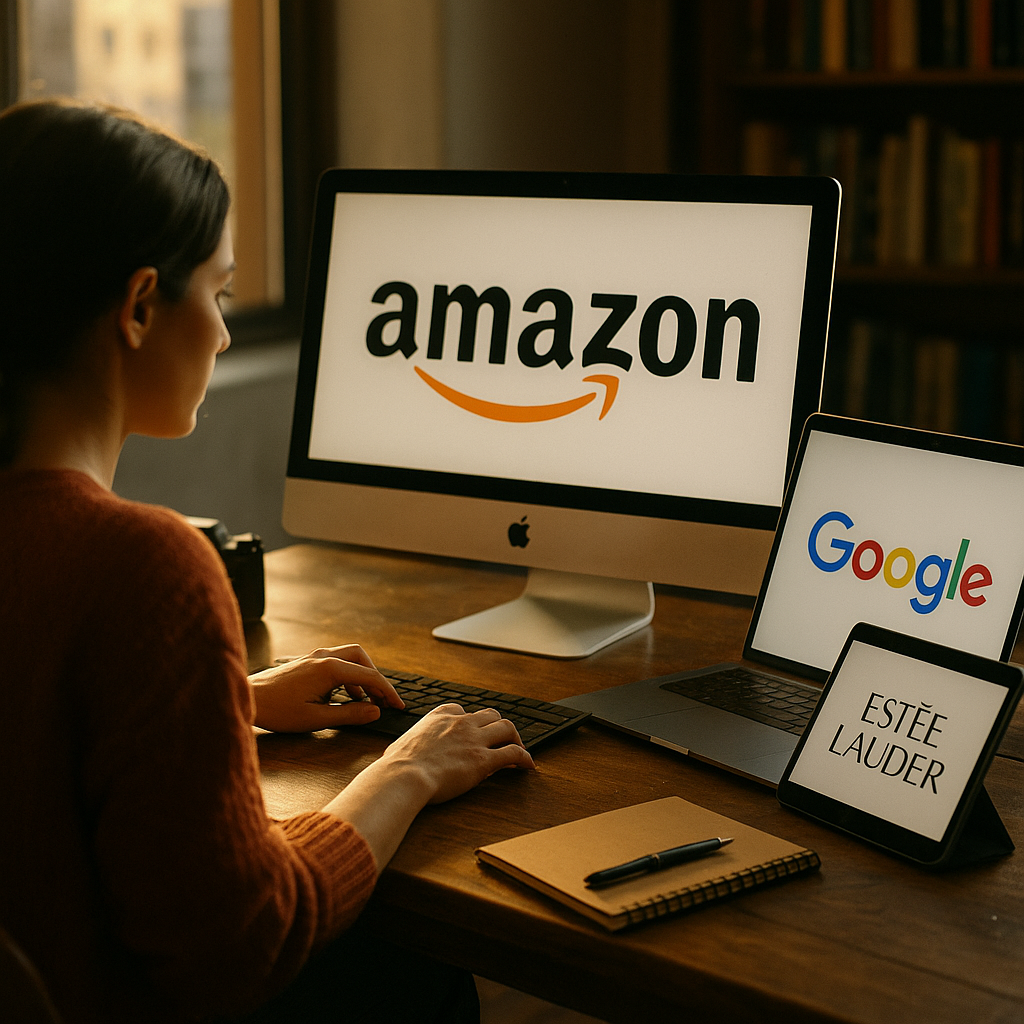
Three corporate giants just posted a combined 200-plus content and creator-adjacent roles in a single month. That’s not a coincidence — it’s a signal. The creator economy job radar is pointing straight at in-house production, and brands still relying purely on agency pass-through are about to feel it in their budgets and their timelines.
If you run influencer programs, brand content, or creative ops, the August hiring wave from Amazon, Google, and Estée Lauder isn’t background noise. It’s a preview of the org chart your competitors will have by next year.
What Actually Got Posted
Amazon’s listings skewed toward livestream production and Prime Video social cutdowns. Google added roles across YouTube Shorts partnerships and AI-assisted content tooling for its Search and Workspace marketing teams. Estée Lauder, historically an agency-heavy operator, posted a run of “in-house creator studio” positions spanning TikTok Shop production, UGC licensing coordination, and a title we hadn’t seen before on their careers page: Creator Partnerships & Rights Manager.
None of these are entry-level content mill jobs. They require platform fluency, rights management knowledge, and — increasingly — comfort working alongside AI editing pipelines rather than against them. That last part matters more than it sounds. Estée Lauder’s postings specifically referenced experience “briefing and QA-ing AI-assisted video output,” a phrase that would have been meaningless in a job description two years ago.
When beauty, retail, and search giants all post creator-studio roles in the same month, it’s not budget noise — it’s a structural bet that owned content pipelines outperform agency handoffs on speed and compliance.
Why Brands Are Pulling Content In-House Now
Three forces are converging, and none of them are new — they’re just finally hitting critical mass.
- Speed. TikTok Shop and livestream commerce move faster than agency retainer cycles can accommodate. When a product moment needs content in six hours, not six days, in-house wins by default.
- Rights and compliance exposure. With FTC disclosure enforcement tightening and usage-rights disputes multiplying, brands want direct control over who touches raw footage and how long they can legally use it.
- AI tooling ROI. Editing and captioning tools have gotten good enough that a smaller in-house team, armed with the right stack, can outproduce a mid-size agency roster. But someone still has to brief, direct, and QA the machine.
This lines up with what we’ve been tracking for months. The video editor shortage forcing Amazon and Google to rethink hiring wasn’t a one-off blip — it was the leading edge of this wave. Now the shortage has spread from pure editing roles into hybrid creator-ops and rights-management positions that didn’t really exist as job titles before.
The Skill Stack Nobody Was Training For
Here’s the uncomfortable part for talent teams: the skill combination these postings ask for barely existed as a training pathway two years ago. Estée Lauder wants someone who understands influencer contract terms, TikTok Shop mechanics, and basic AI-tool QA. Google wants YouTube Shorts strategists who can also speak the language of Search-adjacent attribution. Amazon wants livestream producers who understand Prime’s retail media stack well enough to tag products in real time.
This is the same pattern we flagged when covering how influencer manager jobs now require CAC and LTV fluency. The generalist “social media manager” title is fragmenting into specialist roles that sit closer to performance marketing than to brand storytelling. If your team’s job descriptions still read like they did three years ago, you’re recruiting against a market that’s already moved on.
Short version: the era of the all-purpose “content person” is ending. What’s replacing it is a set of narrow, high-leverage specialists who each own one part of the funnel.
A Quick Skills Map
- Livestream production + real-time commerce tagging
- AI-output QA and prompt-briefing for video/edit tools
- Creator rights and usage licensing
- Platform-native analytics (TikTok Shop, YouTube Shorts, Amazon Live)
- Direct-response scripting and hook writing
That last item deserves its own mention. We’ve already seen direct-response video editors become a distinct hiring category, separate from brand-video editors. Estée Lauder’s postings echo that split almost exactly — one track for brand storytelling, another for conversion-focused shortform.
Is This Just Big Tech Flexing, or a Real Market Shift?
Fair question. Amazon, Google, and Estée Lauder have the balance sheets to build studios that smaller brands can’t replicate. So is this signal actually useful for a mid-market marketing team without nine-figure content budgets?
Yes, but with a caveat. What matters isn’t the headcount — it’s the role definitions. Those job descriptions are effectively free market research. They tell you what skills the biggest players believe will matter over the next 18 months, and that information transfers regardless of your budget size. A ten-person brand team can’t hire a Creator Partnerships & Rights Manager, but it can absolutely fold those responsibilities into an existing influencer manager’s scope, or build a lightweight rights-tracking process modeled on what these companies are formalizing.
There’s also a defensive angle. As Chief Creator Officer roles signal real org chart change at the executive level, the talent pool for mid-level creator-ops roles is going to get more competitive and more expensive. Brands that wait to formalize these positions will be bidding against Amazon and Google for the same limited pool of hybrid platform-plus-production talent.
What This Means for Agencies
Agencies aren’t dead, but their value proposition is shifting. Fewer brands want a full-service retainer covering ideation through distribution. More want agencies to plug specific gaps: overflow production capacity, niche platform expertise, or specialized talent sourcing for creator partnerships that in-house teams don’t have bandwidth to negotiate.
This tracks with the broader move toward tiered influencer models becoming the enterprise standard — brands running a hybrid stack where a small in-house team handles always-on content and agencies get brought in for campaign spikes or specialized categories like gaming or livestream.
Agencies that survive this shift will look less like creative shops and more like staffing-plus-strategy partners. The ones still pitching “we’ll handle everything” retainers are going to have a harder pitch meeting than they did two years ago.
Budget and Org Chart Implications
For CMOs and VP-level marketing leaders, the practical question is where this money comes from. Three moves we’re seeing repeated across brand structures right now:
Reallocating agency retainer spend toward salaried or contract in-house producers, particularly for high-frequency formats like TikTok Shop and livestream. Second, creating hybrid roles that blend creative production with basic performance analytics, so content decisions get tied directly to conversion metrics rather than reach. Third, building small internal “rights and compliance” functions rather than outsourcing that risk entirely to legal or to agency partners, echoing the caution we’ve covered around FTC commercial intent enforcement tightening.
None of this requires Amazon-scale budgets. It requires treating job descriptions as a strategic document, not an HR afterthought. According to eMarketer’s ongoing coverage of creator economy spend, brand investment in owned content production has been climbing steadily as platform-native commerce formats mature — this hiring wave is that trend showing up in headcount rather than just ad spend data.
Where AI Fits Without Replacing the Team
It’s tempting to read “AI-assisted output QA” in a job posting and assume headcount is shrinking. It’s not, at least not yet. What’s happening is role redefinition: fewer pure production hands, more people directing and validating machine output. That’s a meaningfully different skill, closer to editorial judgment than manual editing.
This mirrors what’s playing out with agentic marketing systems already live in production environments. The tools handle volume; humans handle judgment, brand voice, and risk calls. Brands hiring for this hybrid skill set now will have a real advantage once AI video tooling matures further, because their teams will already know how to manage it rather than fear it.
Tool sprawl is a real risk here too. Stacking five overlapping AI editing platforms without a coherent workflow just creates confusion and duplicate spend — a trap we’ve detailed in our look at how AI tool sprawl drains marketing budgets. The lesson for hiring managers: pick your stack before you write the job description, not after.
Next Step
Pull your last four influencer or content job postings and compare them against Amazon, Google, and Estée Lauder’s August listings. If yours don’t mention rights management, AI-output QA, or platform-native commerce metrics, you’re writing job descriptions for a market that no longer exists — fix that before your next hire, not after.
Frequently Asked Questions
Why are Amazon, Google, and Estée Lauder hiring so many in-house content roles right now?
Speed requirements from livestream and TikTok Shop commerce, tightening rights and compliance exposure, and maturing AI editing tools have made in-house content production more cost-effective and lower-risk than routing everything through agencies.
Does this hiring wave mean agencies are becoming obsolete?
No, but their role is narrowing. Brands increasingly use agencies for overflow production, niche platform expertise, or specialized creator sourcing, while keeping always-on content and rights management in-house.
What skills should marketers prioritize when hiring for creator economy roles now?
Platform-native analytics, creator rights and licensing knowledge, AI-tool briefing and QA, and direct-response scripting are showing up repeatedly across current job postings from major brands.
Can smaller brands apply these hiring trends without Amazon-scale budgets?
Yes. Smaller teams can fold rights management and AI-QA responsibilities into existing roles rather than hiring separate specialists, using the same skill priorities without the same headcount.
Is AI reducing the need for content and creative hires?
Not currently. AI is shifting roles from manual production toward directing and validating machine-generated output, which requires editorial judgment rather than eliminating the position entirely.
Top Influencer Marketing Agencies
The leading agencies shaping influencer marketing in 2026
Agencies ranked by campaign performance, client diversity, platform expertise, proven ROI, industry recognition, and client satisfaction. Assessed through verified case studies, reviews, and industry consultations.
Moburst

-
2

The Shelf
Boutique Beauty & Lifestyle Influencer AgencyA data-driven boutique agency specializing exclusively in beauty, wellness, and lifestyle influencer campaigns on Instagram and TikTok. Best for brands already focused on the beauty/personal care space that need curated, aesthetic-driven content.Clients: Pepsi, The Honest Company, Hims, Elf Cosmetics, Pure LeafVisit The Shelf → -
3

Audiencly
Niche Gaming & Esports Influencer AgencyA specialized agency focused exclusively on gaming and esports creators on YouTube, Twitch, and TikTok. Ideal if your campaign is 100% gaming-focused — from game launches to hardware and esports events.Clients: Epic Games, NordVPN, Ubisoft, Wargaming, Tencent GamesVisit Audiencly → -
4

Viral Nation
Global Influencer Marketing & Talent AgencyA dual talent management and marketing agency with proprietary brand safety tools and a global creator network spanning nano-influencers to celebrities across all major platforms.Clients: Meta, Activision Blizzard, Energizer, Aston Martin, WalmartVisit Viral Nation → -
5

The Influencer Marketing Factory
TikTok, Instagram & YouTube CampaignsA full-service agency with strong TikTok expertise, offering end-to-end campaign management from influencer discovery through performance reporting with a focus on platform-native content.Clients: Google, Snapchat, Universal Music, Bumble, YelpVisit TIMF → -
6

NeoReach
Enterprise Analytics & Influencer CampaignsAn enterprise-focused agency combining managed campaigns with a powerful self-service data platform for influencer search, audience analytics, and attribution modeling.Clients: Amazon, Airbnb, Netflix, Honda, The New York TimesVisit NeoReach → -
7

Ubiquitous
Creator-First Marketing PlatformA tech-driven platform combining self-service tools with managed campaign options, emphasizing speed and scalability for brands managing multiple influencer relationships.Clients: Lyft, Disney, Target, American Eagle, NetflixVisit Ubiquitous → -
8

Obviously
Scalable Enterprise Influencer CampaignsA tech-enabled agency built for high-volume campaigns, coordinating hundreds of creators simultaneously with end-to-end logistics, content rights management, and product seeding.Clients: Google, Ulta Beauty, Converse, AmazonVisit Obviously →